
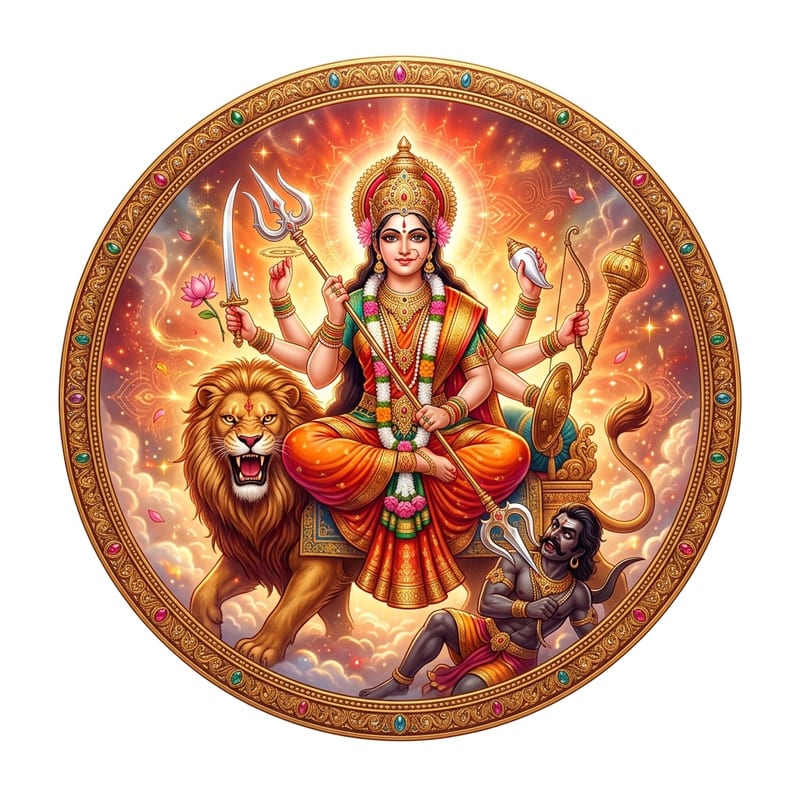
यामामनन्ति मुनयः प्रकृतिं पुराणीं
विद्येति यां श्रुतिरहस्यविदो वदन्ति ।
तामर्धपल्लवितशङ्कररूपमुद्रां
देवीमनन्यशरणः शरणं प्रपद्ये ॥ 1 ॥
विद्येति यां श्रुतिरहस्यविदो वदन्ति ।
तामर्धपल्लवितशङ्कररूपमुद्रां
देवीमनन्यशरणः शरणं प्रपद्ये ॥ 1 ॥
- yām āmananti = she whom they proclaim/declare (ā-√man)
- munayaḥ = the sages
- prakṛtiṃ purāṇīm = the ancient (purāṇī) Prakṛti (primordial Nature/Matter)
- vidyeti = as Vidyā (sacred knowledge, the luminous awareness that liberates)
- śruti-rahasya-vidaḥ = those who know (vid) the secrets (rahasya) of the Veda (śruti)
- tām = her
- (implied: I salute)
- the second half (not shown in the excerpt): describes her holding the triple world.
अम्ब स्तवेषु तव तावदकर्तृकाणि
कुण्ठीभवन्ति वचसामपि गुम्भनानि ।
डिम्भस्य मे स्तुतिरसावसमञ्जसापि
वात्सल्यनिघ्नहृदयां भवतीं धिनोतु ॥ 2 ॥
कुण्ठीभवन्ति वचसामपि गुम्भनानि ।
डिम्भस्य मे स्तुतिरसावसमञ्जसापि
वात्सल्यनिघ्नहृदयां भवतीं धिनोतु ॥ 2 ॥
- amba = O Mother
- staveṣu tava = in praises (stava) of you
- tāvad akartṛkāṇi = so completely powerless/without agency (a-kartṛka)
- kuṇṭhī bhavanti = they become dull/blunted (kuṇṭha = blunted)
- vacasām api gumbhanāni = even the powers of weaving/composing (gumbhana = braiding, composing) words (vacas)
- ḍimbhasya me = of me, a mere infant/child (ḍimbha)
- (implied: accept this with maternal indulgence)
- ajāte = O you who are unborn/birthless (a-jāta).
व्योमेति बिन्दुरिति नाद इतीन्दुलेखा-
-रूपेति वाग्भवतनूरिति मातृकेति ।
निःस्यन्दमानसुखबोधसुधास्वरूपा
विद्योतसे मनसि भाग्यवतां जनानाम् ॥ 3 ॥
-रूपेति वाग्भवतनूरिति मातृकेति ।
निःस्यन्दमानसुखबोधसुधास्वरूपा
विद्योतसे मनसि भाग्यवतां जनानाम् ॥ 3 ॥
- vyoma iti = as Vyoma (space/ether, the fifth element and the substratum of sound)
- bindur iti = as Bindu (the luminous pointthe undivided seed of consciousness in Tantric cosmology)
- nāda iti = as Nāda (primordial cosmic sound, the first vibration)
- indulekhā-rūpa iti = as having the form of Indu-lekhā (the crescent moonin the Śrīcakra, the 'moon-crescent' is the 16th kalā or subtle phase of the moon at the crown-chakra)
- vāgbhava-tanū iti = as the body of Vāgbhava (the first kūṭa of the Pañcadaśī mantra, associated with speech and creation)
- mātṛketi = as Mātṛkā (the 'little mothers'the 51 letters of Sanskrit alphabet, each a form of the Goddess).
आविर्भवत्पुलकसन्ततिभिः शरीरै-
-र्निःस्यन्दमानसलिलैर्नयनैश्च नित्यम् ।
वाग्भिश्च गद्गदपदाभिरुपासते ये
पादौ तवाम्ब भुवनेषु त एव धन्याः ॥ 4 ॥
-र्निःस्यन्दमानसलिलैर्नयनैश्च नित्यम् ।
वाग्भिश्च गद्गदपदाभिरुपासते ये
पादौ तवाम्ब भुवनेषु त एव धन्याः ॥ 4 ॥
- āvirbhavat-pulaka-santatibhiḥ śarīraiḥ = with bodies (śarīra) in which rows (santati) of horripilation (pulaka = goose-bumps, the bodily sign of intense devotion) arise
- niḥsyandamāna-salilaiḥ nayanaiś ca = and with eyes (nayana) constantly streaming (niḥsyandamāna) with water (salila = tears)
- nityam = perpetually
- vāg... (implied) they speak (of you)
- 'yet still say we have not spoken truly'this is implied by the context of v2.
वक्त्रं यदुद्यतमभिष्टुतये भवत्या-
-स्तुभ्यं नमो यदपि देवि शिरः करोति ।
चेतश्च यत्त्वयि परायणमम्ब तानि
कस्यापि कैरपि भवन्ति तपोविशेषैः ॥ 5 ॥
-स्तुभ्यं नमो यदपि देवि शिरः करोति ।
चेतश्च यत्त्वयि परायणमम्ब तानि
कस्यापि कैरपि भवन्ति तपोविशेषैः ॥ 5 ॥
- vaktram = the face/mouth
- yad udyatam abhiṣṭutaye bhavatyāḥ = which is raised (udyatam) to praise (abhiṣṭutaye) you (bhavatyāḥ)
- tubhyam namaḥ = salutation to you
- yad api = even though
- devi = O Goddess
- śiraḥ karoti = the head makes/does (karoti), i.e., bowsnamaḥ (salutation) etymologically means 'bowing of the head'
- the verse plays on the paradox: even the act of bowing IS the praise.
मूलालवालकुहरादुदिता भवानि
निर्भिद्य षट्सरसिजानि तटिल्लतेव ।
भूयोऽपि तत्र विशसि ध्रुवमण्डलेन्दु-
-निःस्यन्दमानपरमामृततोयरूपा ॥ 6 ॥
निर्भिद्य षट्सरसिजानि तटिल्लतेव ।
भूयोऽपि तत्र विशसि ध्रुवमण्डलेन्दु-
-निःस्यन्दमानपरमामृततोयरूपा ॥ 6 ॥
- mūlālavāla-kuharāt = from the hollow (kuhara = cave) of the root-garden (mūla-ālavālamūlādhāra chakra, the four-petaled lotus at the base of the spine)
- uditā bhavāni = having risen (uditā), O Bhavāni
- nirbhidya = having pierced/split
- ṣaṭ-sarasijāni = the six lotuses (the six chakras above mūlādhāra: svādhiṣṭhāna, maṇipūra, anāhata, viśuddha, ājñā, sahasrāra)
- taṭillate va = like a lightning vine (taṭit = lightning
- latā = creeper)
- bhūyaḥ api tatra = and then again there [returning to the base]
- (implied): as the non-dual self of all.
दग्धं यदा मदनमेकमनेकधा ते
मुग्धः कटाक्षविधिरङ्कुरयाञ्चकार ।
धत्ते तदाप्रभृति देवि ललाटनेत्रं
सत्यं ह्रियैव मुकुलीकृतमिन्दुमौलेः ॥ 7 ॥
मुग्धः कटाक्षविधिरङ्कुरयाञ्चकार ।
धत्ते तदाप्रभृति देवि ललाटनेत्रं
सत्यं ह्रियैव मुकुलीकृतमिन्दुमौलेः ॥ 7 ॥
- dagdham = burned to ash
- yadā madanam ekam = when Kāma (madana = the god of desire), who was one (eka)
- anekādhā = many-fold (aneka = many + dhā = in ways)
- te mugdhaḥ kaṭākṣa-vidhiḥ aṅkurayāñcakāra = your captivating (mugdha = charming, bewitching) sidelong glance-method (kaṭākṣa-vidhi) caused to sprout (aṅkura = sprout
- aṅkurayā = causative)
- dhatte tadāprabhṛti = from that time onwards (tadāprabhṛti) he bears (dhatte)
- implied: the burden of multiplied desire in the world.
अज्ञातसम्भवमनाकलितान्ववायं
भिक्षुं कपालिनमवाससमद्वितीयम् ।
पूर्वं करग्रहणमङ्गलतो भवत्याः
शम्भुं क एव बुबुधे गिरिराजकन्ये ॥ 8 ॥
भिक्षुं कपालिनमवाससमद्वितीयम् ।
पूर्वं करग्रहणमङ्गलतो भवत्याः
शम्भुं क एव बुबुधे गिरिराजकन्ये ॥ 8 ॥
- ajñāta-sambhavam = one of unknown (ajñāta) origin/birth (sambhava)
- anākalita-anvavāyam = one of untraced (an-ākalita) lineage (anvavāya = lineage, descent)
- bhikṣum = a mendicant (bhikṣu)
- kapālinam = skull-bearer (kapālin = one who carries a skull-bowlŚiva's Kāpālika form)
- avāsasam = naked/unclad (a-vāsas = without garment)
- advitīyam = matchless, incomparable
- pūrvam kara-grahaṇam = you took his hand (kara = hand
- grahaṇa = taking) first (pūrvam).
चर्माम्बरं च शवभस्मविलेपनं च
भिक्षाटनं च नटनं च परेतभूमौ ।
वेतालसंहतिपरिग्रहता च शम्भोः
शोभां बिभर्ति गिरिजे तव साहचर्यात् ॥ 9 ॥
भिक्षाटनं च नटनं च परेतभूमौ ।
वेतालसंहतिपरिग्रहता च शम्भोः
शोभां बिभर्ति गिरिजे तव साहचर्यात् ॥ 9 ॥
- carmāmbaram = hide (carman) as garment (ambara)
- śava-bhasma-vilepana = anointing (vilepana) with corpse-ash (śava-bhasmaash from the cremation pyre)
- bhikṣāṭanam = wandering (aṭana) for alms (bhikṣā)
- naṭanam = dancing (naṭa)
- pareta-bhūmau = in the cremation ground (pareta-bhūmi = place of the departed)
- vetāla-saṃhati-parig... = attended/surrounded (parigata) by troops (saṃhati) of Vetālas (spirits of the dead, attendants of Śiva in his Bhairava form).
कल्पोपसंहरणकेलिषु पण्डितानि
चण्डानि खण्डपरशोरपि ताण्डवानि ।
आलोकनेन तव कोमलितानि मात-
-र्लास्यात्मना परिणमन्ति जगद्विभूत्यै ॥ 10 ॥
चण्डानि खण्डपरशोरपि ताण्डवानि ।
आलोकनेन तव कोमलितानि मात-
-र्लास्यात्मना परिणमन्ति जगद्विभूत्यै ॥ 10 ॥
- kalpa-upasaṃharaṇa-keliṣu = in the sports (keli) of cosmic dissolution (kalpa-upasaṃharaṇathe gathering-up [saṃhāra] at the end of a cosmic cycle [kalpa])
- paṇḍitāni = expert, skillful
- caṇḍāni = fierce, violent
- khaṇḍa-paraśoḥ api = even of the one with the cleaving axe (Śiva, who wields the paraśu/axe in his Vīrabhadra form)
- tāṇḍavāni = the tāṇḍava dances
- ālokanena tava komal... = by your gentle (komala) glance (ālokan)
- implied: they become soft/gentle.
जन्तोरपश्चिमतनोः सति कर्मसाम्ये
निःशेषपाशपटलच्छिदुरा निमेषात् ।
कल्याणि देशिककटाक्षसमाश्रयेण
कारुण्यतो भवति शाम्भववेददीक्षा ॥ 11 ॥
निःशेषपाशपटलच्छिदुरा निमेषात् ।
कल्याणि देशिककटाक्षसमाश्रयेण
कारुण्यतो भवति शाम्भववेददीक्षा ॥ 11 ॥
- jantoḥ = for a being/creature
- apaścima-tanoḥ = in its last (apaścima = final, literally 'not-last' but used as 'final') body (tanu)
- sati karma-sāmye = when (sati = locative absolute: when there is) an equilibrium/balance (sāmya) of karmas
- niḥśeṣa-pāśa-paṭala-cchidurā = the cutter (cchidura = cutting) of the entire (niḥśeṣa) thicket/web (paṭala) of bonds (pāśa)
- nimeṣāt = in the twinkling of an eye (nimeṣa = the closing of the eyelid)
- kalyāṇi = O Kalyāṇī (the auspicious one, a name of the Goddess)
- deva... (implied: devi, you give liberation).
मुक्ताविभूषणवती नवविद्रुमाभा
यच्चेतसि स्फुरसि तारकितेव सन्ध्या ।
एकः स एव भुवनत्रयसुन्दरीणां
कन्दर्पतां व्रजति पञ्चशरीं विनापि ॥ 12 ॥
यच्चेतसि स्फुरसि तारकितेव सन्ध्या ।
एकः स एव भुवनत्रयसुन्दरीणां
कन्दर्पतां व्रजति पञ्चशरीं विनापि ॥ 12 ॥
- muktā-vibhūṣaṇa-vatī = adorned with (vatī) pearl (muktā) ornaments (vibhūṣaṇa)
- nava-vidrumābhā = with the luster (ābhā) of fresh (nava) coral (vidruma)
- yac cetasi sphurasi = you who flash/shine (sphurasi) in the heart (cetas)
- tārakita iva sandhyā = like (iva) an evening twilight (sandhyā) starred (tārakita = made full of stars).
ये भावयन्त्यमृतवाहिभिरंशुजालै-
-राप्यायमानभुवनाममृतेश्वरीं त्वाम् ।
ते लङ्घयन्ति ननु मातरलङ्घनीयां
ब्रह्मादिभिः सुरवरैरपि कालकक्षाम् ॥ 13 ॥
-राप्यायमानभुवनाममृतेश्वरीं त्वाम् ।
ते लङ्घयन्ति ननु मातरलङ्घनीयां
ब्रह्मादिभिः सुरवरैरपि कालकक्षाम् ॥ 13 ॥
- ye bhāvayanti = those who meditate on (bhāvayanti = they cultivate awareness of)
- amṛta-vāhibhiḥ aṃśu-jālaiḥ = with nets (jāla) of rays (aṃśu) that carry (vāhin) nectar (amṛta)
- āpyāyamāna-bhuvanām = filling/moistening (āpyāyamāna) the worlds (bhuvana) [with nectar]
- amṛteśvarīm tvām = you (tvām), Amṛteśvarī (the Mistress of Nectar)
- te = they
- laṅ... (implied: cross the ocean of saṃsāra easily).
यः स्फाटिकाक्षगुणपुस्तककुण्डिकाढ्यां
व्याख्यासमुद्यतकरां शरदिन्दुशुभ्राम् ।
पद्मासनां च हृदये भवतीमुपास्ते
मातः स विश्वकवितार्किकचक्रवर्ती ॥ 14 ॥
व्याख्यासमुद्यतकरां शरदिन्दुशुभ्राम् ।
पद्मासनां च हृदये भवतीमुपास्ते
मातः स विश्वकवितार्किकचक्रवर्ती ॥ 14 ॥
- yaḥ sphāṭika-akṣa-guṇa-pustaka-kuṇḍikā-āḍhyām = one who [meditates on her] richly equipped with a crystal (sphāṭika) bead-string (akṣa-guṇa), a book (pustaka), and a water-pot (kuṇḍikā)
- vyākhyā-samudyata-karām = with hands (kara) raised (samudyata) for expounding (vyākhyā = commentary/teaching)
- śarada-indu-śubhrām = white (śubhra) as the autumn (śarada) moon (indu)
- implied: he gains mastery of all knowledge.
बर्हावतंसयुतबर्बरकेशपाशां
गुञ्जावलीकृतघनस्तनहारशोभाम् ।
श्यामां प्रवालवदनां सुकुमारहस्तां
त्वामेव नौमि शबरीं शबरस्य जायाम् ॥ 15 ॥
गुञ्जावलीकृतघनस्तनहारशोभाम् ।
श्यामां प्रवालवदनां सुकुमारहस्तां
त्वामेव नौमि शबरीं शबरस्य जायाम् ॥ 15 ॥
- barha-avataṃsa-yuta = adorned with (yuta) peacock-feather (barha) head-ornament (avataṃsa)
- barbara-keśa-pāśā = with flowing, wavy (barbara = curly/tribal) locks (keśa-pāśa)
- guñjāvalī-kṛta-ghana-stana-hāra-śobhā = adorned with the beauty (śobhā) of a necklace (hāra) of guñjā berries (guñjāvalī = a string of guñjā) over her full (ghana) breasts (stana)
- śyāmāṃ = dark-hued (śyāmā = dark-skinned, the color of the rainy-season sky)
- pravāla-vadanām = with a face (vadana) like coral (pravāla).
अर्धेन किं नवलताललितेन मुग्धे
क्रीतं विभोः परुषमर्धमिदं त्वयेति ।
आलीजनस्य परिहासवचांसि मन्ये
मन्दस्मितेन तव देवि जडी भवन्ति ॥ 16 ॥
क्रीतं विभोः परुषमर्धमिदं त्वयेति ।
आलीजनस्य परिहासवचांसि मन्ये
मन्दस्मितेन तव देवि जडी भवन्ति ॥ 16 ॥
- ardhena kim = what (is gained) by the half
- nava-latā-lalitena = with the tender (lalita = graceful) half that is like a new creeper (nava-latā)
- mugdhe = O innocent/simple one (mugdhā = a young naive woman)
- krītam vibhoḥ paruṣam ardham idam = this rough (paruṣa) half (ardha) of the Lord (vibhu) is purchased/gained (krīta)
- tvayā iti = by you
- ālī-janasya = of the assembly of companions (ālī = a retinue of women friends)
- implied: joyful laughter fills the space.
ब्रह्माण्ड बुद्बुदकदम्बकसङ्कुलोऽयं
मायोदधिर्विविधदुःखतरङ्गमालः ।
आश्चर्यमम्ब झटिति प्रलयं प्रयाति
त्वद्ध्यानसन्ततिमहाबडबामुखाग्नौ ॥ 17 ॥
मायोदधिर्विविधदुःखतरङ्गमालः ।
आश्चर्यमम्ब झटिति प्रलयं प्रयाति
त्वद्ध्यानसन्ततिमहाबडबामुखाग्नौ ॥ 17 ॥
- brahmāṇḍa-budbuda-kadambaka-saṅkulo'yam = this [ocean] crowded (saṅkula) with clusters (kadambaka) of universe-bubbles (brahmāṇḍa = cosmic egg, here 'bubble' of a universe
- budbuda = bubble)
- māya-udadhiḥ = the ocean (udadhi) of Māyā
- vividha-duḥkha-taraṅga-mālaḥ = with chains (māla) of waves (taraṅga) of manifold (vividha) suffering (duḥkha)
- implied: it is wondrous how mortals survive by holding to your feet.
दाक्षायणीति कुटिलेति कुहारिणीति
कात्यायनीति कमलेति कलावतीति ।
एका सती भगवती परमार्थतोऽपि
सन्दृश्यसे बहुविधा ननु नर्तकीव ॥ 18 ॥
कात्यायनीति कमलेति कलावतीति ।
एका सती भगवती परमार्थतोऽपि
सन्दृश्यसे बहुविधा ननु नर्तकीव ॥ 18 ॥
- dākṣāyaṇī = daughter of Dakṣa (Pārvatī in her previous birth as Satī)
- kuṭilā = the crooked/coiled one (the Kuṇḍalinī Śakti, or Kāma-kalā)
- kuhāriṇī = one who dwells in caves (kuhara = cave), or the mysterious deceiver
- kātyāyanī = born of the lineage of Kātyāyana, a form of Durgā
- kamalā = the lotus-one (Lakṣmī)
- kalāvatī = full of kalās (the digit-forms of the moon and of time)
- ekā satī = being one (ekā) pure existence (satī = the true/real)
- bhagavati = O Bhagavatī.
आनन्दलक्षणमनाहतनाम्नि देशे
नादात्मना परिणतं तव रूपमीशे ।
प्रत्यङ्मुखेन मनसा परिचीयमानं
शंसन्ति नेत्रसलिलैः पुलकैश्च धन्याः ॥ 19 ॥
नादात्मना परिणतं तव रूपमीशे ।
प्रत्यङ्मुखेन मनसा परिचीयमानं
शंसन्ति नेत्रसलिलैः पुलकैश्च धन्याः ॥ 19 ॥
- ānanda-lakṣaṇam = characterized by (lakṣaṇa) ānanda (blissthe defining mark of the Anāhata experience)
- anāhata-nāmni deśe = in the region (deśa) called 'Anāhata' (the Heart chakra, the fourth chakra, associated with unstruck sound that arises without physical contact)
- nāda-ātmanā pariṇatam = your form manifested/transformed (pariṇata) as Nāda (primordial sound)
- tava rūpam = your form
- īśe = O Īśā (Mistress, Ruler)
- pratyaṅ-mukhena manasā = by the mind (manas) turned inward (pratyaṅ = inward
- mukha = face/direction).
त्वं चन्द्रिका शशिनि तिग्मरुचौ रुचिस्त्वं
त्वं चेतनासि पुरुषे पवने बलं त्वम् ।
त्वं स्वादुतासि सलिले शिखिनि त्वमूष्मा
निःसारमेव निखिलं त्वदृते यदि स्यात् ॥ 20 ॥
त्वं चेतनासि पुरुषे पवने बलं त्वम् ।
त्वं स्वादुतासि सलिले शिखिनि त्वमूष्मा
निःसारमेव निखिलं त्वदृते यदि स्यात् ॥ 20 ॥
- tvaṃ candrikā śaśini = you are the moonlight (candrikā) in the moon (śaśin)
- tigmarucau ruciḥ tvaṃ = you are the brilliance (ruci) in the blazing (tigmaruc) sun
- tvaṃ cetanāsi puruṣe = you are consciousness (cetanā) in the Puruṣa (the cosmic Person)
- pavane balaṃ tvam = you are strength (bala) in the wind (pavana)
- implied further: gandhaḥ in earth, rasaḥ in water, tejas in fire, śabda in spacethe five tanmātras (subtle sense-qualities) in the five elements.
ज्योतींषि यद्दिवि चरन्ति यदन्तरिक्षं
सूते पयांसि यदहिर्धरणीं च धत्ते ।
यद्वाति वायुरनलो यदुदर्चिरास्ते
तत्सर्वमम्ब तव केवलमाज्ञयैव ॥ 21 ॥
सूते पयांसि यदहिर्धरणीं च धत्ते ।
यद्वाति वायुरनलो यदुदर्चिरास्ते
तत्सर्वमम्ब तव केवलमाज्ञयैव ॥ 21 ॥
- jyotīṃṣi = luminaries (sun, moon, stars)
- yad divi caranti = which move (caranti) in heaven (divi)
- yad antarikṣam = what is the atmosphere (antarikṣa = mid-space)
- sūte payāṃsi = which brings forth/nourishes with waters (payāṃsi = waters/rains)
- yad ahiḥ dharaṇīm ca dhatte = what the serpent (ahi = the cosmic serpent Śeṣa/Ananta) holds/upholds (dhatte) along with the earth (dharaṇī).
सङ्कोचमिच्छसि यदा गिरिजे तदानीं
वाक्तर्कयोस्त्वमसि भूमिरनामरूपा ।
यद्वा विकासमुपयासि यदा तदानीं
त्वन्नामरूपगणनाः सुकरा भवन्ति ॥ 22 ॥
वाक्तर्कयोस्त्वमसि भूमिरनामरूपा ।
यद्वा विकासमुपयासि यदा तदानीं
त्वन्नामरूपगणनाः सुकरा भवन्ति ॥ 22 ॥
- saṃkocam icchhasi yadā = when you wish (icchhasi) to contract (saṃkoca)
- girije = O Girije (daughter of the mountain, Pārvatī)
- tadānīm = at that time
- vāk-tarkayoḥ = of word (vāk) and thought/reasoning (tarka)
- tvam asi bhūmir anāma-rūpā = you are the ground (bhūmi) that is nameless (anāma) and formless (rūpā)
- yad vā vistar... = or when you expand (vistara)
- brahma-tṛṇa-prabhṛti = from Brahmā (brahma) to a blade of grass (tṛṇa)
- implied: all this is your own manifestation.
भोगाय देवि भवतीं कृतिनः प्रणम्य
भ्रूकिङ्करीकृतसरोजगृहाः सहस्रम् ।
चिन्तामणिप्रचयकल्पितकेलिशैले
कल्पद्रुमोपवन एव चिरं रमन्ते ॥ 23 ॥
भ्रूकिङ्करीकृतसरोजगृहाः सहस्रम् ।
चिन्तामणिप्रचयकल्पितकेलिशैले
कल्पद्रुमोपवन एव चिरं रमन्ते ॥ 23 ॥
- bhogāya = for enjoyment/abundance (bhoga)
- devi bhavatīm kṛtinaḥ praṇamya = the meritorious (kṛtin) ones, bowing (praṇamya) to you, O Goddess
- bhrū-kiṅkarī-kṛta-saroja-gṛhāḥ sahasram = a thousand (sahasram) lotus-houses (saroja-gṛha) made into servants (kiṅkarī-kṛta) by [the command of] your eyebrow (bhrū)
- cintāmaṇi... (implied): and when they seek liberation, that too is given.
हर्तुं त्वमेव भवसि त्वदधीनमीशे
संसारतापमखिलं दयया पशूनाम् ।
वैकर्तनी किरणसंहतिरेव शक्ता
धर्मं निजं शमयितुं निजयैव वृष्ट्या ॥ 24 ॥
संसारतापमखिलं दयया पशूनाम् ।
वैकर्तनी किरणसंहतिरेव शक्ता
धर्मं निजं शमयितुं निजयैव वृष्ट्या ॥ 24 ॥
- hartum tvam eva bhavasi = it is you alone who can be (bhavasi) the remover (hartum = to take away)
- tvad-adhīnam = under your control (tvad = your
- adhīna = dependent on, controlled by)
- īśe = O Ruler/Mistress
- saṃsāra-tāpam akhilam = the entire (akhila) burning heat (tāpa) of saṃsāra
- dayayā = through compassion (dayā)
- paśūnām = of the bound ones/creatures (paśu = one bound by the three malas in Śaiva thought)
- vaikartanī kiraṇa... (implied): like the sun's rays (vaikartana = the sun) removing shadow.
शक्तिः शरीरमधिदैवतमन्तरात्मा
ज्ञानं क्रिया करणमासनजालमिच्छा ।
ऐश्वर्यमायतनमावरणानि च त्वं
किं तन्न यद्भवसि देवि शशाङ्कमौलेः ॥ 25 ॥
ज्ञानं क्रिया करणमासनजालमिच्छा ।
ऐश्वर्यमायतनमावरणानि च त्वं
किं तन्न यद्भवसि देवि शशाङ्कमौलेः ॥ 25 ॥
- śaktiḥ = power/energy (the fundamental Śākta principle)
- śarīram = the body
- adhidaivata = the overlord-deity (the presiding cosmic intelligence)
- antara-ātmā = the inner self (the witness-consciousness)
- jñānaṃ = knowledge
- kriyā = action
- karaṇam = the instruments (the five jñānendriyas and five karmendriyas)
- āsana-jālam = the network (jāla) of āsanas (posturespossibly the thirty-two or sixty-four āsanas of the yogic tradition, each identified with a form of the Goddess)
- icchā = will/desire (the first of the three Śāktopāya states: icchā-jñāna-kriyā).
भूमौ निवृत्तिरुदिता पयसि प्रतिष्ठा
विद्याऽनले मरुति शान्तिरतीवकान्तिः ।
व्योम्नीति याः किल कलाः कलयन्ति विश्वं
तासां हि दूरतरमम्ब पदं त्वदीयम् ॥ 26 ॥
विद्याऽनले मरुति शान्तिरतीवकान्तिः ।
व्योम्नीति याः किल कलाः कलयन्ति विश्वं
तासां हि दूरतरमम्ब पदं त्वदीयम् ॥ 26 ॥
- bhūmau nivṛttiḥ uditā = Nivṛtti arisen (uditā) in earth (bhūmi)Nivṛtti is the first of the five kalā-śaktis (power-aspects): withdrawal/cessation
- payasi pratiṣṭhā = Pratiṣṭhā in water (payasi = in water)establishment/grounding
- vidyā anale = Vidyā in fire (anala)knowledge/illumination
- maruti śāntiḥ = Śānti in wind (marut)peace/tranquility
- atīva-kāntiḥ (and implied Śāntyatītā in space) = exceeding-beauty, the fifth kalā beyond the five elements.
यावत्पदं पदसरोजयुगं त्वदीयं
नाङ्गीकरोति हृदयेषु जगच्छरण्ये ।
तावद्विकल्पजटिलाः कुटिलप्रकारा-
-स्तर्कग्रहाः समयिनां प्रलयं न यान्ति ॥ 27 ॥
नाङ्गीकरोति हृदयेषु जगच्छरण्ये ।
तावद्विकल्पजटिलाः कुटिलप्रकारा-
-स्तर्कग्रहाः समयिनां प्रलयं न यान्ति ॥ 27 ॥
- yāvat = as long as
- padam pada-saroja-yugaṃ tvadīyam = the place of (padam) your (tvadīyam) pair of lotus-feet (pāda-saroja-yuga)
- nāṅgīkaroti = is not accepted/welcomed (na + āṅgīkaroti = does not embrace)
- hṛdayeṣu = in the hearts
- jagac-charaṇye = O refuge of the world (jagat = world
- śaraṇya = shelter/refuge)
- tāvad vikalpajaTa... = so long (tāvat) the thicket (jaṭā) of false constructs (vikalpathe discursive, dividing activity of the mind).
निर्देवयानपितृयानविहारमेके
कृत्वा मनः करणमण्डलसार्वभौमम् ।
ध्याने निवेश्य तव कारणपञ्चकस्य
पर्वाणि पार्वति नयन्ति निजासनत्वम् ॥ 28 ॥
कृत्वा मनः करणमण्डलसार्वभौमम् ।
ध्याने निवेश्य तव कारणपञ्चकस्य
पर्वाणि पार्वति नयन्ति निजासनत्वम् ॥ 28 ॥
- nir-deva-yāna-pitṛ-yāna-vihāram = freed from (nis = without) the wandering (vihāra) through the path of the gods (deva-yāna) and the path of the ancestors (pitṛ-yāna)the two post-death paths of the Chāndogya Upaniṣad: rebirth and liberation
- ekam = singularly
- kṛtvā = having made
- manaḥ karaṇa-maṇḍala-sārvabhaumam = the mind (manas) sovereign (sārvabhauma = universal emperor) over the sphere/circle (maṇḍala) of sense-faculties (karaṇa)
- dhyāne niveśya = having fixed (niveśya) in meditation (dhyāna).
स्थूलासु मूर्तिषु महीप्रमुखासु मूर्तेः
कस्याश्चनापि तव वैभवमम्ब यस्याः ।
पत्या गिरामपि न शक्यत एव वक्तुं
सापि स्तुता किल मयेति तितिक्षितव्यम् ॥ 29 ॥
कस्याश्चनापि तव वैभवमम्ब यस्याः ।
पत्या गिरामपि न शक्यत एव वक्तुं
सापि स्तुता किल मयेति तितिक्षितव्यम् ॥ 29 ॥
- sthūlāsu mūrtiṣu = in the gross (sthūla) forms (mūrti)
- mahī-pramukhāsu = beginning with (pramukha = beginning with, foremost) the earth (mahī)
- mūrteḥ kasyāś canāpi = of any (kasyāś can = whichever) form (mūrti)
- tava vaibhavam = your greatness/power (vaibhava)
- amba = O Amba
- yasyāḥ = of which
- implied: no one can measure even the gross levelhow much more the subtle and the supreme.
कालाग्निकोटिरुचिमम्ब षडध्वशुद्धौ
आप्लावनेषु भवतीममृतौघवृष्टिम् ।
श्यामां घनस्तनतटां शकलीकृताघां
ध्यायन्त एव जगतां गुरवो भवन्ति ॥ 30 ॥
आप्लावनेषु भवतीममृतौघवृष्टिम् ।
श्यामां घनस्तनतटां शकलीकृताघां
ध्यायन्त एव जगतां गुरवो भवन्ति ॥ 30 ॥
- kālāgni-koṭi-rucim = possessing the brilliance (ruci) of ten million (koṭi) fires of time/dissolution (kālāgni = the fire of time, the eschatological fire that burns all at the end of an age)
- amba = O Amba
- ṣaḍ-adhva-śuddhau = in the purification (śuddhi) of the six paths (ṣaḍ-adhvanthe six ways of manifestation in Trika Śaivism: mantra, pada, varṇa, kalā, tattva, bhuvana)
- āplāvaneṣu = in the flooding/inundation ceremonies (āplāvana = soaking, consecration rites)
- bhavatīm amṛta-ogha-vṛṣṭim = [they experience] you as a rain (vṛṣṭi) of torrents (ogha) of amṛta.
विद्यां परां कतिचिदम्बरमम्ब केचि-
-दानन्दमेव कतिचित्कतिचिच्च मायाम् ।
त्वां विश्वमाहुरपरे वयमामनामः
साक्षादपारकरुणां गुरुमूर्तिमेव ॥ 31 ॥
-दानन्दमेव कतिचित्कतिचिच्च मायाम् ।
त्वां विश्वमाहुरपरे वयमामनामः
साक्षादपारकरुणां गुरुमूर्तिमेव ॥ 31 ॥
- vidyāṃ parāṃ = the supreme (parā) Vidyā (knowledgethe liberating light of consciousness)
- katicit = some
- ambaraṃ = sky/ether (ākāśathe subtlest element and the ground of all)
- amba = O Amba
- kecit = some
- ānandam eva = pure Ānanda (blissthe third of sat-cit-ānanda)
- katicit = some
- katicic ca māyām = some [call you] Māyā
- tvām... = you [are known only to yourself / transcend all these names].
कुवलयदलनीलं बर्बरस्निग्धकेशं
पृथुतरकुचभाराक्रान्तकान्तावलग्नम् ।
किमिह बहुभिरुक्तैस्त्वत्स्वरूपं परं नः
सकलजननि मातः सन्ततं सन्निधत्ताम् ॥ 32 ॥
पृथुतरकुचभाराक्रान्तकान्तावलग्नम् ।
किमिह बहुभिरुक्तैस्त्वत्स्वरूपं परं नः
सकलजननि मातः सन्ततं सन्निधत्ताम् ॥ 32 ॥
- kuvalaya-dala-nīlam = blue (nīla) as a blue-lotus (kuvalaya) petal (dala)
- barbara-snigdha-keśam = with wavy (barbara = curly/tribal) oiled/sleek (snigdha) hair (keśa)
- pṛthutara-kuca-bhārākrānta-kāntā-valamgnam = a slender (kānta = beloved/lovely) waist compressed (āvalagna = clinging tightly) and overwhelmed (ākrānta) by the weight (bhāra) of the very full (pṛthutara) breasts (kuca)
- kim iha bahu = what more (is there) to say.
इति श्रीकालिदास विरचित पञ्चस्तव्यां चतुर्थः अम्बास्तवः ।