
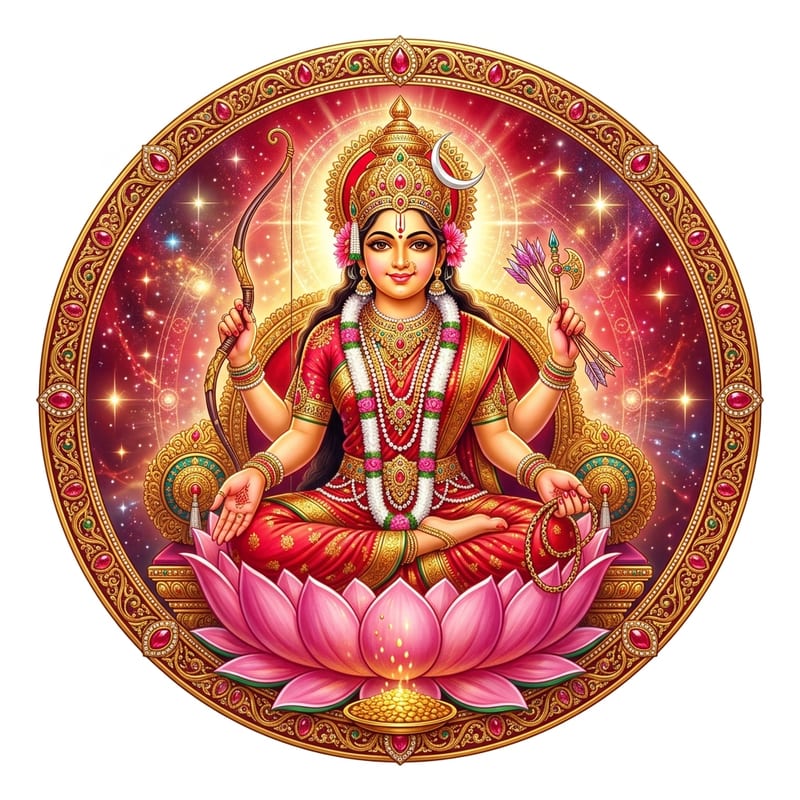
ಪಞ್ಚಸ್ತವಿ – 2 ಚರ್ಚಾಸ್ತವಃ >>
ಸೌನ್ದರ್ಯವಿಭ್ರಮಭುವೋ ಭುವನಾಧಿಪತ್ಯ-
-ಸಙ್ಕಲ್ಪಕಲ್ಪತರವಸ್ತ್ರಿಪುರೇ ಜಯನ್ತಿ ।
ಏತೇ ಕವಿತ್ವಕುಮದಪ್ರಕರಾವಬೋಧ-
-ಪೂರ್ಣೇನ್ದವಸ್ತ್ವಯಿ ಜಗಜ್ಜನನಿ ಪ್ರಣಾಮಾಃ ॥ 1 ॥
ಸೌನ್ದರ್ಯವಿಭ್ರಮಭುವೋ ಭುವನಾಧಿಪತ್ಯ-
-ಸಙ್ಕಲ್ಪಕಲ್ಪತರವಸ್ತ್ರಿಪುರೇ ಜಯನ್ತಿ ।
ಏತೇ ಕವಿತ್ವಕುಮದಪ್ರಕರಾವಬೋಧ-
-ಪೂರ್ಣೇನ್ದವಸ್ತ್ವಯಿ ಜಗಜ್ಜನನಿ ಪ್ರಣಾಮಾಃ ॥ 1 ॥
- saundarya-vibhrama-bhuvaḥ = born (bhuvaḥ = born from) of the dazzlement (vibhrama) of beauty (saundarya)
- bhuvana-ādhipatya-saṅkalpa-kalpataraḥ = wish-trees (kalpataru) that fulfill the desire (saṅkalpa) for sovereignty (ādhipatya) over the worlds (bhuvana)
- tripure = O Tripurā (the three-city Goddess, Tripurasundarī)
- jayanti = may they triumph/prevail
- ete = these
- kavitva-kumuda-... = causing the waterlilies (kumuda) of poetry/poethood (kavitva) to bloom.
ದೇವಿ ಸ್ತುತಿವ್ಯತಿಕರೇ ಕೃತಬುದ್ಧಯಸ್ತೇ
ವಾಚಸ್ಪತಿ ಪ್ರಭೃತಯೋಽಪಿ ಜಡೀ ಭವನ್ತಿ ।
ತಸ್ಮಾನ್ನಿಸರ್ಗಜಡಿಮಾ ಕತಮೋಽಹಮತ್ರ
ಸ್ತೋತ್ರಂ ತವ ತ್ರಿಪುರತಾಪನಪತ್ನಿ ಕರ್ತುಮ್ ॥ 2 ॥
ವಾಚಸ್ಪತಿ ಪ್ರಭೃತಯೋಽಪಿ ಜಡೀ ಭವನ್ತಿ ।
ತಸ್ಮಾನ್ನಿಸರ್ಗಜಡಿಮಾ ಕತಮೋಽಹಮತ್ರ
ಸ್ತೋತ್ರಂ ತವ ತ್ರಿಪುರತಾಪನಪತ್ನಿ ಕರ್ತುಮ್ ॥ 2 ॥
- devi = O Goddess
- stuti-vyatikare = in the undertaking (vyatikara = engagement, attempt) of praises (stuti)
- kṛta-buddhayaḥ = those who have applied (kṛta) their intellect (buddhi)
- te = those
- vācaspati-prabhṛtayaḥ api = even Vācaspati (Bṛhaspati, lord of speech, guru of the gods) and those of his stature (prabhṛti = beginning with)
- jaḍī bhavanti = become dull/inert (jaḍa)
- tasmān = therefore
- nisarga-jaḍimaḥ = one naturally dull (nisarga = by nature
- jaḍima = dullness/inertness).
ಮಾತಸ್ತಥಾಪಿ ಭವತೀಂ ಭವತೀವ್ರತಾಪ-
-ವಿಚ್ಛಿತ್ತಯೇ ಸ್ತುತಿಮಹಾರ್ಣವ ಕರ್ಣಧಾರಃ ।
ಸ್ತೋತುಂ ಭವಾನಿ ಸ ಭವಚ್ಚರಣಾರವಿನ್ದ-
-ಭಕ್ತಿಗ್ರಹಃ ಕಿಮಪಿ ಮಾಂ ಮುಖರೀ ಕರೋತಿ ॥ 3 ॥
-ವಿಚ್ಛಿತ್ತಯೇ ಸ್ತುತಿಮಹಾರ್ಣವ ಕರ್ಣಧಾರಃ ।
ಸ್ತೋತುಂ ಭವಾನಿ ಸ ಭವಚ್ಚರಣಾರವಿನ್ದ-
-ಭಕ್ತಿಗ್ರಹಃ ಕಿಮಪಿ ಮಾಂ ಮುಖರೀ ಕರೋತಿ ॥ 3 ॥
- mātar = O Mother
- tathāpi = yet even so
- bhavatīm = you (honorific 2nd person)
- bhava-tīvra-tāpa-vicchhittaye = for the purpose of cutting (vicchhitti) the fierce (tīvra) heat (tāpa) of saṃsāra (bhava)
- stuti-mahā-arṇava-karṇadhāraḥ = the helmsman (karṇadhāra) of the great ocean (mahārṇava) of praises (stuti)
- stotum bhavāni sa bhavati = he who becomes (bhavati) the one to praise (stotum) you, O Bhavāni
- sa = that one.
ಸೂತೇ ಜಗನ್ತಿ ಭವತೀ ಭವತೀ ಬಿಭರ್ತಿ
ಜಾಗರ್ತಿ ತತ್ಕ್ಷಯಕೃತೇ ಭವತೀ ಭವಾನಿ ।
ಮೋಹಂ ಭಿನತ್ತಿ ಭವತೀ ಭವತೀ ರುಣದ್ಧಿ
ಲೀಲಾಯಿತಂ ಜಯತಿ ಚಿತ್ರಮಿದಂ ಭವತ್ಯಾಃ ॥ 4 ॥
ಜಾಗರ್ತಿ ತತ್ಕ್ಷಯಕೃತೇ ಭವತೀ ಭವಾನಿ ।
ಮೋಹಂ ಭಿನತ್ತಿ ಭವತೀ ಭವತೀ ರುಣದ್ಧಿ
ಲೀಲಾಯಿತಂ ಜಯತಿ ಚಿತ್ರಮಿದಂ ಭವತ್ಯಾಃ ॥ 4 ॥
- sūte = she creates/gives birth to
- jaganti = the worlds
- bhavatī = you (also 'she who is')this word is used throughout with a wordplay: 'bhavatī' = you (honorific) + 'bhava' = existence
- bibharti = she sustains/bears
- jāgarti = she is awake/vigilant
- tat-kṣaya-kṛte = for the purpose of their dissolution (kṣaya = dissolution/decay)
- moham = delusion
- bhinatti = she pierces/shatters (√bhid)
- bhavatī = you
- bhavāni = O Bhavāni (the spouse of Bhava/Śiva).
ಯಸ್ಮಿನ್ಮನಾಗಪಿ ನವಾಮ್ಬುಜಪತ್ರಗೌರೀಂ
ಗೌರೀಂ ಪ್ರಸಾದಮಧುರಾಂ ದೃಶಮಾದಧಾಸಿ ।
ತಸ್ಮಿನ್ನಿರನ್ತರಮನಙ್ಗಶರಾವಕೀರ್ಣ-
-ಸೀಮನ್ತಿನೀನಯನಸನ್ತತಯಃ ಪತನ್ತಿ ॥ 5 ॥
ಗೌರೀಂ ಪ್ರಸಾದಮಧುರಾಂ ದೃಶಮಾದಧಾಸಿ ।
ತಸ್ಮಿನ್ನಿರನ್ತರಮನಙ್ಗಶರಾವಕೀರ್ಣ-
-ಸೀಮನ್ತಿನೀನಯನಸನ್ತತಯಃ ಪತನ್ತಿ ॥ 5 ॥
- yasmin = on whomever
- manāg api = even the slightest (manāk = slightly)
- nava-ambuja-patra-gaurīm = white (gauri = white/fair) as a fresh (nava) lotus petal (ambuja-patra)
- gaurīm = O Gaurī
- prasāda-madhurām = sweet (madhura) with grace/favor (prasāda)
- dṛśam ādadhāsi = you bestow (ādadhāsi = you place) your glance (dṛś)
- tasmin = in that one
- nirantaram = perpetually
- anaṅga-śara... = Kāmadeva's arrows (śara) of Anaṅga (the bodiless Kāma) [find their mark].
ಪೃಥ್ವೀಭುಜೋಽಪ್ಯುದಯನಪ್ರಭವಸ್ಯ ತಸ್ಯ
ವಿದ್ಯಾಧರ ಪ್ರಣತಿ ಚುಮ್ಬಿತ ಪಾದಪೀಠಃ ।
ತಚ್ಚಕ್ರವರ್ತಿಪದವೀಪ್ರಣಯಃ ಸ ಏಷಃ
ತ್ವತ್ಪಾದಪಙ್ಕಜರಜಃ ಕಣಜಃ ಪ್ರಸಾದಃ ॥ 6 ॥
ವಿದ್ಯಾಧರ ಪ್ರಣತಿ ಚುಮ್ಬಿತ ಪಾದಪೀಠಃ ।
ತಚ್ಚಕ್ರವರ್ತಿಪದವೀಪ್ರಣಯಃ ಸ ಏಷಃ
ತ್ವತ್ಪಾದಪಙ್ಕಜರಜಃ ಕಣಜಃ ಪ್ರಸಾದಃ ॥ 6 ॥
- pṛthvī-bhujaḥ api = even among earth-rulers
- udayana-prabhavaya tasy = of that one born of the Udayana lineage (Udayana was the king of Vatsa, a renowned figure of ancient India)
- vidyādhara-praṇati-cumbita-pāda-pīṭhaḥ = whose footstool (pīṭha) is kissed (cumbita) by the bowing (praṇati) Vidyādharas (the semi-divine beings of the sky)
- tac-cakravarti-padavī = that imperial status (padavī) of a cakravarti (wheel-turning emperor)
- implied: is easily obtained by one who takes refuge in your feet-dust.
ತ್ವತ್ಪಾದಪಙ್ಕಜರಜ ಪ್ರಣಿಪಾತಪೂರ್ವೈಃ
ಪುಣ್ಯೈರನಲ್ಪಮತಿಭಿಃ ಕೃತಿಭಿಃ ಕವೀನ್ದ್ರೈಃ ।
ಕ್ಷೀರಕ್ಷಪಾಕರದುಕೂಲಹಿಮಾವದಾತಾ
ಕೈರಪ್ಯವಾಪಿ ಭುವನತ್ರಿತಯೇಽಪಿ ಕೀರ್ತಿಃ ॥ 7 ॥
ಪುಣ್ಯೈರನಲ್ಪಮತಿಭಿಃ ಕೃತಿಭಿಃ ಕವೀನ್ದ್ರೈಃ ।
ಕ್ಷೀರಕ್ಷಪಾಕರದುಕೂಲಹಿಮಾವದಾತಾ
ಕೈರಪ್ಯವಾಪಿ ಭುವನತ್ರಿತಯೇಽಪಿ ಕೀರ್ತಿಃ ॥ 7 ॥
- tvat-pāda-paṅkaja-rajaḥ-praṇipāta-pūrvaiḥ = by [merits] preceded by prostration (praṇipāta) at the pollen (rajas) of your lotus-feet (pāda-paṅkaja)
- puṇyaiḥ = by accumulated merit
- analpam-atibhiḥ = of surpassing (atibhiḥ) keen intellect
- kṛtibhiḥ kavīndraiḥ = by accomplished (kṛtin) great poets (kavīndra)
- kṣīra-kṣapākara-dala... = like the full moon (kṣapākara = the moon
- kṣīra-sāgara = Milk Ocean) whose petals/rays are the nectar of the Milk Ocean.
ಕಲ್ಪದ್ರುಮಪ್ರಸವಕಲ್ಪಿತಚಿತ್ರಪೂಜಾಂ
ಉದ್ದೀಪಿತ ಪ್ರಿಯತಮಾಮದರಕ್ತಗೀತಿಮ್ ।
ನಿತ್ಯಂ ಭವಾನಿ ಭವತೀಮುಪವೀಣಯನ್ತಿ
ವಿದ್ಯಾಧರಾಃ ಕನಕಶೈಲಗುಹಾಗೃಹೇಷು ॥ 8 ॥
ಉದ್ದೀಪಿತ ಪ್ರಿಯತಮಾಮದರಕ್ತಗೀತಿಮ್ ।
ನಿತ್ಯಂ ಭವಾನಿ ಭವತೀಮುಪವೀಣಯನ್ತಿ
ವಿದ್ಯಾಧರಾಃ ಕನಕಶೈಲಗುಹಾಗೃಹೇಷು ॥ 8 ॥
- kalpadrum-a-prasava-kalpita-citra-pūjām = one who is worshipped (pūjā) with diverse (citra) offerings fashioned (kalpita) from the blooms (prasava) of the wish-tree (kalpadruma)
- uddīpita-priyatamā-mada-rakta-gītim = [you who are invoked through] songs (gīti) that are red (rakta) with intoxication (mada) aroused (uddīpita) by the beloved (priyatamā)
- nityam = daily
- bhavāni = O Bhavāni
- bhavatīm upavandaye = I seek/salute (upavandaye) you (bhavatīm).
ಲಕ್ಷ್ಮೀವಶೀಕರಣಕರ್ಮಣಿ ಕಾಮಿನೀನಾಂ
ಆಕರ್ಷಣವ್ಯತಿಕರೇಷು ಚ ಸಿದ್ಧಮನ್ತ್ರಃ ।
ನೀರನ್ಧ್ರಮೋಹತಿಮಿರಚ್ಛಿದುರಪ್ರದೀಪೋ
ದೇವಿ ತ್ವದಙ್ಘ್ರಿಜನಿತೋ ಜಯತಿ ಪ್ರಸಾದಃ ॥ 9 ॥
ಆಕರ್ಷಣವ್ಯತಿಕರೇಷು ಚ ಸಿದ್ಧಮನ್ತ್ರಃ ।
ನೀರನ್ಧ್ರಮೋಹತಿಮಿರಚ್ಛಿದುರಪ್ರದೀಪೋ
ದೇವಿ ತ್ವದಙ್ಘ್ರಿಜನಿತೋ ಜಯತಿ ಪ್ರಸಾದಃ ॥ 9 ॥
- lakṣmī-vaśīkaraṇa-karmaṇi = in the work (karma) of bringing Lakṣmī under control (vaśīkaraṇa)
- kāminīnām = of desired women/of passionate ones
- ākarṣaṇa-vyatikareṣu ca = and in the procedures/occasions (vyatikara) of attraction (ākarṣaṇa)
- siddha-mantraḥ = the perfected/accomplished mantra
- nīrandhra-moha-timira-cchid... = the cutter (cchid) of the dense (nīrandhra = without gap) darkness (timira) of delusion (moha).
ದೇವಿ ತ್ವದಙ್ಘ್ರಿನಖರತ್ನಭುವೋ ಮಯೂಖಾಃ
ಪ್ರತ್ಯಗ್ರಮೌಕ್ತಿಕರುಚೋ ಮುದಮುದ್ವಹನ್ತಿ ।
ಸೇವಾನತಿವ್ಯತಿಕರೇ ಸುರಸುನ್ದರೀಣಾಂ
ಸೀಮನ್ತಸೀಮ್ನಿ ಕುಸುಮಸ್ತಬಕಾಯಿತಂ ಯೈಃ ॥ 10 ॥
ಪ್ರತ್ಯಗ್ರಮೌಕ್ತಿಕರುಚೋ ಮುದಮುದ್ವಹನ್ತಿ ।
ಸೇವಾನತಿವ್ಯತಿಕರೇ ಸುರಸುನ್ದರೀಣಾಂ
ಸೀಮನ್ತಸೀಮ್ನಿ ಕುಸುಮಸ್ತಬಕಾಯಿತಂ ಯೈಃ ॥ 10 ॥
- devi = O Goddess
- tvad-aṅghri-nakha-ratna-bhuvaḥ = rays born from (bhuvaḥ) the gems (ratna) in the nails (nakha) of your feet (aṅghri)
- mayūkhāḥ = rays of light
- pratya-gra-mauktika-rucaḥ = with the luster (ruci) of fresh (pratyagra) pearls (mauktika)
- mudam udvahanti = they carry/bring (udvahanti) joy (mud)
- sevā-nati-vyatikara... = through the constant engagement (vyatikara) of bowing (nati) in service (sevā).
ಮೂರ್ಧ್ನಿ ಸ್ಫುರತ್ತುಹಿನದೀಧಿತಿದೀಪ್ತಿದೀಪ್ತಂ
ಮಧ್ಯೇ ಲಲಾಟಮಮರಾಯುಧರಶ್ಮಿಚಿತ್ರಮ್ ।
ಹೃಚ್ಚಕ್ರಚುಮ್ಬಿ ಹುತಭುಕ್ಕಣಿಕಾನುಕಾರಿ
ಜ್ಯೋತಿರ್ಯದೇತದಿದಮಮ್ಬ ತವ ಸ್ವರೂಪಮ್ ॥ 11 ॥
ಮಧ್ಯೇ ಲಲಾಟಮಮರಾಯುಧರಶ್ಮಿಚಿತ್ರಮ್ ।
ಹೃಚ್ಚಕ್ರಚುಮ್ಬಿ ಹುತಭುಕ್ಕಣಿಕಾನುಕಾರಿ
ಜ್ಯೋತಿರ್ಯದೇತದಿದಮಮ್ಬ ತವ ಸ್ವರೂಪಮ್ ॥ 11 ॥
- mūrdhni = at the crown
- sphurat-tuhina-dīdhiti-dīpti-dīptam = blazing (dīptam) with the blazing brilliance (dīpti) of the cold-rayed (tuhina-dīdhiti = moon, tuhina = cold/snow) shining brilliance
- madhye = in the middle
- lalāṭam = the forehead
- amarāyudha-raśmi-citram = multicolored (citra) with the rays (raśmi) of divine weapons (amara-āyudha), i.e., adorned with the crescent moon (Śiva's weapon) and other marks
- hṛc-cakra-cumb... = the heart-lotus (hṛt-cakra = the heart-chakra) kissed (cumbita).
ರೂಪಂ ತವ ಸ್ಫುರಿತಚನ್ದ್ರಮರೀಚಿಗೌರಂ
ಆಲೋಕತೇ ಶಿರಸಿ ವಾಗಧಿದೈವತಂ ಯಃ ।
ನಿಃಸೀಮಸೂಕ್ತಿರಚನಾಮೃತನಿರ್ಝರಸ್ಯ
ತಸ್ಯ ಪ್ರಸಾದಮಧುರಾಃ ಪ್ರಸರನ್ತಿ ವಾಚಃ ॥ 12 ॥
ಆಲೋಕತೇ ಶಿರಸಿ ವಾಗಧಿದೈವತಂ ಯಃ ।
ನಿಃಸೀಮಸೂಕ್ತಿರಚನಾಮೃತನಿರ್ಝರಸ್ಯ
ತಸ್ಯ ಪ್ರಸಾದಮಧುರಾಃ ಪ್ರಸರನ್ತಿ ವಾಚಃ ॥ 12 ॥
- rūpam tava sphurta-candra-marīci-gauram = your (tava) form (rūpa) white (gaura) as the shimmering (sphurta) rays (marīci) of the moon (candra)
- ālokata = who perceives/meditates on
- śirasi = at the crown/head
- vāg-adhidaivataṃ = the presiding deity (adhidaivata) of speech (vāc)
- yaḥ = whoever
- niḥsīma-sūkti-racanā-amṛta-nirjhar... = endless (niḥsīma) streams/cascades (nirjhara) of the nectar (amṛta) of beautiful verse-compositions (sūkti = beautiful speech
- racanā = composition).
ಸಿನ್ದೂರಪಾಂಸುಪಟಲಚ್ಛುರಿತಾಮಿವ ದ್ಯಾಂ
ತ್ವತ್ತೇಜಸಾ ಜತುರಸಸ್ನಪಿತಾಮಿವೋರ್ವೀಮ್ ।
ಯಃ ಪಶ್ಯತಿ ಕ್ಷಣಮಪಿ ತ್ರಿಪುರೇ ವಿಹಾಯ
ವ್ರೀಡಾಂ ಮೃಡಾನಿ ಸುದೃಶಸ್ತಮನುದ್ರವನ್ತಿ ॥ 13 ॥
ತ್ವತ್ತೇಜಸಾ ಜತುರಸಸ್ನಪಿತಾಮಿವೋರ್ವೀಮ್ ।
ಯಃ ಪಶ್ಯತಿ ಕ್ಷಣಮಪಿ ತ್ರಿಪುರೇ ವಿಹಾಯ
ವ್ರೀಡಾಂ ಮೃಡಾನಿ ಸುದೃಶಸ್ತಮನುದ್ರವನ್ತಿ ॥ 13 ॥
- sindūra-pāṃsu-paṭala-cchuritām iva dyām = the sky (dyā) as if (iva) sprinkled/dusted (cchurita) with a layer (paṭala) of vermilion dust (sindūra-pāṃsu)
- tvat-tejasā = by your brilliance/energy (tejas)
- jaturasa-snapitām iva urvīm = the earth (urvī) as if bathed (snapita) in lac-resin (jaturasa = red resin/lac)
- yaḥ paśyati kṣaṇam api = whoever sees even for a moment.
ಮಾತರ್ಮುಹೂರ್ತಮಪಿ ಯಃ ಸ್ಮರತಿ ಸ್ವರೂಪಂ
ಲಾಕ್ಷಾರಸಪ್ರಸರತನ್ತುನಿಭಂ ಭವತ್ಯಾಃ ।
ಧ್ಯಾಯನ್ತ್ಯನನ್ಯಮನಸಸ್ತಮನಙ್ಗತಪ್ತಾಃ
ಪ್ರದ್ಯುಮ್ನಸೀಮ್ನಿ ಸುಭಗತ್ವಗುಣಂ ತರುಣ್ಯಃ ॥ 14 ॥
ಲಾಕ್ಷಾರಸಪ್ರಸರತನ್ತುನಿಭಂ ಭವತ್ಯಾಃ ।
ಧ್ಯಾಯನ್ತ್ಯನನ್ಯಮನಸಸ್ತಮನಙ್ಗತಪ್ತಾಃ
ಪ್ರದ್ಯುಮ್ನಸೀಮ್ನಿ ಸುಭಗತ್ವಗುಣಂ ತರುಣ್ಯಃ ॥ 14 ॥
- mātar = O Mother
- muhūrtam api = even for a moment (muhūrta = 48 minutes, but colloquially 'a moment')
- yaḥ smarati = whoever remembers
- svarūpam = the form
- lākṣā-rasa-prasara-tantu-nibham = resembling (nibha) the spreading (prasara) threads (tantu) of lac-dye (lākṣā-rasa = lac juice, deep red)
- bhavatayāḥ = of you (honorific genitive)
- dhyāyanti = they meditate
- ananya-manasaḥ = with single-pointed (ananya = non-other) mind.
ಯೋಽಯಂ ಚಕಾಸ್ತಿ ಗಗನಾರ್ಣವರತ್ನಮಿನ್ದುಃ
ಯೋಽಯಂ ಸುರಾಸುರಗುರುಃ ಪುರುಷಃ ಪುರಾಣಃ ।
ಯದ್ವಾಮಮರ್ಧಮಿದಮನ್ಧಕಸೂದನಸ್ಯ
ದೇವಿ ತ್ವಮೇವ ತದಿತಿ ಪ್ರತಿಪಾದಯನ್ತಿ ॥ 15 ॥
ಯೋಽಯಂ ಸುರಾಸುರಗುರುಃ ಪುರುಷಃ ಪುರಾಣಃ ।
ಯದ್ವಾಮಮರ್ಧಮಿದಮನ್ಧಕಸೂದನಸ್ಯ
ದೇವಿ ತ್ವಮೇವ ತದಿತಿ ಪ್ರತಿಪಾದಯನ್ತಿ ॥ 15 ॥
- yo'yam cakāsti gagana-arṇava-ratnam induḥ = this moon (indu) that shines (cakāsti) as the jewel (ratna) of the ocean (arṇava) of space (gagana)
- yo'yam sura-asura-guruḥ = this one who is the guru of gods (sura) and demons (asura)i.e., Bṛhaspati, or more likely Śiva as the universal preceptor
- puruṣaḥ purāṇaḥ = the ancient (purāṇa) Puruṣa
- yad vāmam ardham = this left (vāma) half (ardha)referring to the Ardhanārīśvara form, in which Śiva occupies the left half
- idam ananyam = this is uniquely yours.
ಇಚ್ಛಾನುರೂಪಮನುರೂಪಗುಣಪ್ರಕರ್ಷ
ಸಙ್ಕರ್ಷಿಣಿ ತ್ವಮಭಿಮೃಶ್ಯ ಯದಾ ಬಿಭರ್ಷಿ ।
ಜಾಯೇತ ಸ ತ್ರಿಭುವನೈಕ ಗುರುಸ್ತದಾನೀಂ
ದೇವಃ ಶಿವೋಽಪಿ ಭುವನತ್ರಯಸೂತ್ರಧಾರಃ ॥ 16 ॥
ಸಙ್ಕರ್ಷಿಣಿ ತ್ವಮಭಿಮೃಶ್ಯ ಯದಾ ಬಿಭರ್ಷಿ ।
ಜಾಯೇತ ಸ ತ್ರಿಭುವನೈಕ ಗುರುಸ್ತದಾನೀಂ
ದೇವಃ ಶಿವೋಽಪಿ ಭುವನತ್ರಯಸೂತ್ರಧಾರಃ ॥ 16 ॥
- icchā-anurūpam = according to the measure (anurūpa) of your will (icchā)
- anurūpa-guṇa-prakarṣa = with excellence (prakarṣa) of qualities (guṇa) that match (anurūpa)
- saṅkarṣiṇī = O Saṅkarṣiṇī (the drawing-in aspect of the Goddess, one of the four vyūha-śaktis in the Pāñcarātra tradition: Vāsudevī, Saṃkarṣaṇī, Pradyumna, Aniruddha
- here used for Tripurā's drawing power)
- tvam abhimṛśya = you, having touched/infused him
- yadā bibharṣi = when you bear him
- jāyeta sa = he becomes
- tri-bhuvanaikaguruḥ = the sole (eka) guru of the three worlds.
ಧ್ಯಾತಾಸಿ ಹೈಮವತಿ ಯೇನ ಹಿಮಾಂಶುರಶ್ಮಿ-
-ಮಾಲಾಮಲದ್ಯುತಿರಕಲ್ಮಷಮಾನಸೇನ ।
ತಸ್ಯಾವಿಲಮ್ಬಮನವದ್ಯಮನನ್ತಕಲ್ಪಂ
ಅಲ್ಪೈರ್ದಿನೈಃ ಸೃಜಸಿ ಸುನ್ದರಿ ವಾಗ್ವಿಲಾಸಮ್ ॥ 17 ॥
-ಮಾಲಾಮಲದ್ಯುತಿರಕಲ್ಮಷಮಾನಸೇನ ।
ತಸ್ಯಾವಿಲಮ್ಬಮನವದ್ಯಮನನ್ತಕಲ್ಪಂ
ಅಲ್ಪೈರ್ದಿನೈಃ ಸೃಜಸಿ ಸುನ್ದರಿ ವಾಗ್ವಿಲಾಸಮ್ ॥ 17 ॥
- dhyātāsi = you are meditated upon
- haimavati = O Haimavati (daughter of Himavān, i.e., Pārvatī)
- yena = by whom
- himāṃśu-raśmi-mālā-mala-dyutiḥ = one of pure (mala-free) brilliance (dyuti) like a garland (mālā) of moonbeams (himāṃśu-raśmi = rays of the cold-rayed moon)
- akalmaṣa-mānasena = with a stainless/spotless (akalmaṣa) mind (mānasa)
- tasya = for them
- avilamabam = without delay
- anavadyam = faultless
- anantam = infinite.
ಆಧಾರಮಾರುತನಿರೋಧವಶೇನ ಯೇಷಾಂ
ಸಿನ್ದೂರರಞ್ಜಿತಸರೋಜಗುಣಾನುಕಾರಿ ।
ದೀಪ್ತಂ ಹೃದಿ ಸ್ಫುರತಿ ದೇವಿ ವಪುಸ್ತ್ವದೀಯಂ
ಧ್ಯಾಯನ್ತಿ ತಾನಿಹ ಸಮೀಹಿತಸಿದ್ಧಿಸಾರ್ಥಾಃ ॥ 18 ॥
ಸಿನ್ದೂರರಞ್ಜಿತಸರೋಜಗುಣಾನುಕಾರಿ ।
ದೀಪ್ತಂ ಹೃದಿ ಸ್ಫುರತಿ ದೇವಿ ವಪುಸ್ತ್ವದೀಯಂ
ಧ್ಯಾಯನ್ತಿ ತಾನಿಹ ಸಮೀಹಿತಸಿದ್ಧಿಸಾರ್ಥಾಃ ॥ 18 ॥
- ādhāra-māruta-nirodha-vaśena = by means of (vaśena) the restraint (nirodha) of the ādhāra-māruta (the root/base breaththe prāṇa associated with the mūlādhāra chakra
- māruta = wind/breath)
- yeṣām = for those who
- sindūra-rañjita-saroja-guṇa-anukāri = resembling (anukāri) the quality (guṇa) of a lotus (saroja) tinged (rañjita) with vermilion (sindūra)
- dīptam hṛdi sphuratidevī = your blazing (dīptam) form flashes (sphurasi) in the heart, O Goddess.
ಯೇ ಚಿನ್ತಯನ್ತ್ಯರುಣಮಣ್ಡಲಮಧ್ಯವರ್ತಿ
ರೂಪಂ ತವಾಮ್ಬ ನವಯಾವಕಪಙ್ಕಪಿಙ್ಗಮ್ ।
ತೇಷಾಂ ಸದೈವ ಕುಸುಮಾಯುಧಬಾಣಭಿನ್ನ-
-ವಕ್ಷಃಸ್ಥಲಾ ಮೃಗದೃಶೋ ವಶಗಾ ಭವನ್ತಿ ॥ 19 ॥
ರೂಪಂ ತವಾಮ್ಬ ನವಯಾವಕಪಙ್ಕಪಿಙ್ಗಮ್ ।
ತೇಷಾಂ ಸದೈವ ಕುಸುಮಾಯುಧಬಾಣಭಿನ್ನ-
-ವಕ್ಷಃಸ್ಥಲಾ ಮೃಗದೃಶೋ ವಶಗಾ ಭವನ್ತಿ ॥ 19 ॥
- ye cintayanti = those who contemplate
- aruṇa-maṇḍala-madhya-varti = dwelling in the center (madhyavarti) of the red orb (aruṇa-maṇḍala)the red solar disc, or the maṇḍala of the rising sun
- rūpam tava amba = your form, O Amba
- nava-yāvaka-paṅka-piṅgam = of golden-red/tawny (piṅga) hue like fresh (nava) barley-paste (yāvaka-paṅka)
- teṣām sadaiva = for them always
- kusumāyudha... = Kāmadeva (kusumāyudha = flower-weaponed) [favors them].
ತ್ವಾಮೈನ್ದವೀಮಿವ ಕಲಾಮನುಫಾಲದೇಶಂ
ಉದ್ಭಾಸಿತಾಮ್ಬರತಲಾಮವಲೋಕಯನ್ತಃ ।
ಸದ್ಯೋ ಭವಾನಿ ಸುಧಿಯಃ ಕವಯೋ ಭವನ್ತಿ
ತ್ವಂ ಭಾವನಾಹಿತಧಿಯಾಂ ಕುಲಕಾಮಧೇನುಃ ॥ 20 ॥
ಉದ್ಭಾಸಿತಾಮ್ಬರತಲಾಮವಲೋಕಯನ್ತಃ ।
ಸದ್ಯೋ ಭವಾನಿ ಸುಧಿಯಃ ಕವಯೋ ಭವನ್ತಿ
ತ್ವಂ ಭಾವನಾಹಿತಧಿಯಾಂ ಕುಲಕಾಮಧೇನುಃ ॥ 20 ॥
- tvām = you
- aindavīm iva kalām = like (iva) the lunar digit (kalā) of the moon (aindavī = pertaining to Indu/moon)
- anu-phāla-deśam = at the region (deśa) of (anu = along) the forehead (phāla)
- udbhāsita-ambara-talām = illuminating (udbhāsita) the expanse of sky (ambara-tala)
- avalokyantaḥ = those who behold
- sadyaḥ = instantly
- bhavāni = O Bhavāni
- sudhiyaḥ = the wise ones
- kavayaḥ = poets
- bhavanti = become.
ಶರ್ವಾಣಿ ಸರ್ವಜನವನ್ದಿತಪಾದಪದ್ಮೇ
ಪದ್ಮಚ್ಛದದ್ಯುತಿವಿಡಮ್ಬಿತನೇತ್ರಲಕ್ಷ್ಮಿ ।
ನಿಷ್ಪಾಪಮೂರ್ತಿಜನಮಾನಸರಾಜಹಂಸಿ
ಹಂಸಿ ತ್ವಮಾಪದಮನೇಕವಿಧಾಂ ಜನಸ್ಯ ॥ 21 ॥
ಪದ್ಮಚ್ಛದದ್ಯುತಿವಿಡಮ್ಬಿತನೇತ್ರಲಕ್ಷ್ಮಿ ।
ನಿಷ್ಪಾಪಮೂರ್ತಿಜನಮಾನಸರಾಜಹಂಸಿ
ಹಂಸಿ ತ್ವಮಾಪದಮನೇಕವಿಧಾಂ ಜನಸ್ಯ ॥ 21 ॥
- śarvāṇī = O Śarvāṇī (wife of Śarva/Śiva)
- sarva-jana-vandita-pāda-padme = whose lotus-feet (pāda-padma) are worshipped (vandita) by all people (sarva-jana)
- padma-cchada-dyuti-viḍambita-netra-lakṣmi = whose eye-beauty (netra-lakṣmi) rivals (viḍambita) the luster (dyuti) of lotus petals (padma-cchada)
- niṣpāpa-mūrti-jana-māna... = O delight (māna) of those (jana) of sinless/pure form (niṣpāpa-mūrti).
ಉತ್ತಪ್ತಹೇಮರುಚಿರೇ ತ್ರಿಪುರೇ ಪುನೀಹಿ
ಚೇತಶ್ಚಿರನ್ತನಮಘೌಘವನಂ ಲುನೀಹಿ ।
ಕಾರಾಗೃಹೇ ನಿಗಲಬನ್ಧನಯನ್ತ್ರಿತಸ್ಯ
ತ್ವತ್ಸಂಸ್ಮೃತೌ ಝಟಿತಿ ಮೇ ನಿಗಲಾಸ್ತ್ರುಟನ್ತಿ ॥ 22 ॥
ಚೇತಶ್ಚಿರನ್ತನಮಘೌಘವನಂ ಲುನೀಹಿ ।
ಕಾರಾಗೃಹೇ ನಿಗಲಬನ್ಧನಯನ್ತ್ರಿತಸ್ಯ
ತ್ವತ್ಸಂಸ್ಮೃತೌ ಝಟಿತಿ ಮೇ ನಿಗಲಾಸ್ತ್ರುಟನ್ತಿ ॥ 22 ॥
- uttapta-hema-rucire = O one beautiful (rucira) as heated/refined (uttapta) gold (hema)
- tripure = O Tripurā
- punīhi = purify (punī = imperative of √pū = to purify)
- cetaḥ = mind (cetas)
- cirantana = long-accumulated (over ages)
- agha-ogha-vanaṃ lunīhi = mow down (lunīhi = imperative of √lū = to cut/reap) the forest (vana) of floods (ogha) of sin (agha)
- kārāgṛhe nigala-bandhana-yantra... = in the prison (kārāgṛha) with its chains (nigala), bonds (bandhana), and mechanisms (yantra) [release me].
ತ್ವಾಂ ವ್ಯಾಪಿನೀತಿ ಸುಮನಾ ಇತಿ ಕುಣ್ಡಲೀತಿ
ತ್ವಾಂ ಕಾಮಿನೀತಿ ಕಮಲೇತಿ ಕಲಾವತೀತಿ ।
ತ್ವಾಂ ಮಾಲಿನೀತಿ ಲಲಿತೇತ್ಯಪರಾಜಿತೇತಿ
ದೇವಿ ಸ್ತುವನ್ತಿ ವಿಜಯೇತಿ ಜಯೇತ್ಯುಮೇತಿ ॥ 23 ॥
ತ್ವಾಂ ಕಾಮಿನೀತಿ ಕಮಲೇತಿ ಕಲಾವತೀತಿ ।
ತ್ವಾಂ ಮಾಲಿನೀತಿ ಲಲಿತೇತ್ಯಪರಾಜಿತೇತಿ
ದೇವಿ ಸ್ತುವನ್ತಿ ವಿಜಯೇತಿ ಜಯೇತ್ಯುಮೇತಿ ॥ 23 ॥
- tvāṃ vyāpinīti = you [called] Vyāpinī (the all-pervading one)
- sumanā iti = Sumanā (good-minded, or having beautiful flowerssu = good + mana)
- kuṇḍalī iti = Kuṇḍalī (the coiled onethe Kuṇḍalinī Śakti)
- tvāṃ kāminīti = you Kāminī (the desirous/passionate onelove-personified)
- kamaleti = Kamalā (the lotus-one, Lakṣmī)
- kalāvatīti = Kalāvatī (full of kalāsthe 64 art-forms or the 16 lunar phases)
- tvāṃ mālinīti = you Mālinī (the garlanded one, or the one associated with the Mālinī scriptan important Trika Śaiva alphabet system).
ಉದ್ದಾಮಕಾಮಪರಮಾರ್ಥಸರೋಜಖಣ್ಡ-
ಚಣ್ಡದ್ಯುತಿದ್ಯುತಿಮಪಾಸಿತಷಡ್ವಿಕಾರಾಮ್ ।
ಮೋಹದ್ವಿಪೇನ್ದ್ರಕದನೋದ್ಯತಬೋಧಸಿಂಹ-
-ಲೀಲಾಗುಹಾಂ ಭಗವತೀಂ ತ್ರಿಪುರಾಂ ನಮಾಮಿ ॥ 24 ॥
ಚಣ್ಡದ್ಯುತಿದ್ಯುತಿಮಪಾಸಿತಷಡ್ವಿಕಾರಾಮ್ ।
ಮೋಹದ್ವಿಪೇನ್ದ್ರಕದನೋದ್ಯತಬೋಧಸಿಂಹ-
-ಲೀಲಾಗುಹಾಂ ಭಗವತೀಂ ತ್ರಿಪುರಾಂ ನಮಾಮಿ ॥ 24 ॥
- uddāma-kāma-paramārtha-saroja-khaṇḍa = the abundant lotus-grove (khaṇḍa) of the supreme purpose (paramārtha) of Kāmahere kāma = the highest kāma = mokṣa (liberation), the fourth puruṣārtha
- caṇḍa-dyuti = blazing brilliance (caṇḍa = fierce/intense
- dyuti = brilliance)
- apāsita-ṣaḍ-vikārām = having dispelled (apāsita) the six modifications (ṣaḍ-vikāra = birth, existence, growth, transformation, decay, deaththe six transformations of all material beings)
- moha-dvipa-indra-kadana-udyata-siṃha-rūpā... = of the form (rūpa) of a lion (siṃha) poised (udyata) to destroy (kadana) the great elephant (dvipa-indra = elephant king) of delusion (moha).
ಗಣೇಶವಟುಕಸ್ತುತಾ ರತಿಸಹಾಯಕಾಮಾನ್ವಿತಾ
ಸ್ಮರಾರಿವರವಿಷ್ಟರಾ ಕುಸುಮಬಾಣಬಾಣೈರ್ಯುತಾ ।
ಅನಙ್ಗಕುಸುಮಾದಿಭಿಃ ಪರಿವೃತಾ ಚ ಸಿದ್ಧೈಸ್ತ್ರಿಭಿಃ
ಕದಮ್ಬವನಮಧ್ಯಗಾ ತ್ರಿಪುರಸುನ್ದರೀ ಪಾತು ನಃ ॥ 25 ॥
ಸ್ಮರಾರಿವರವಿಷ್ಟರಾ ಕುಸುಮಬಾಣಬಾಣೈರ್ಯುತಾ ।
ಅನಙ್ಗಕುಸುಮಾದಿಭಿಃ ಪರಿವೃತಾ ಚ ಸಿದ್ಧೈಸ್ತ್ರಿಭಿಃ
ಕದಮ್ಬವನಮಧ್ಯಗಾ ತ್ರಿಪುರಸುನ್ದರೀ ಪಾತು ನಃ ॥ 25 ॥
- gaṇeśa-vaṭuka-stutā = praised (stutā) by Gaṇeśa (elephant-headed god) and Vaṭuka (Vaṭuka Bhairavathe young/boyish form of Bhairava)
- rati-sahāyaka-kāma-anvitā = accompanied by (anvitā) Rati (the goddess of desire) and her helper/companion Kāma (Manmatha, the god of love)
- smara-āri-vara-viṣṭarā = enthroned (viṣṭara = seat/throne) on the best (vara) seat of the enemy of Smara (Kāma's enemy = Śiva = Tripurāri)
- kusuma-bāṇa-bāṇaiḥ yutā = armed (yutā) with flower-arrows (kusuma-bāṇa)
- anaṅga-kusumā-ādi... = the attendant deities of the Goddess's retinue.
ರುದ್ರಾಣಿ ವಿದ್ರುಮಮಯೀಂ ಪ್ರತಿಮಾಮಿವ ತ್ವಾಂ
ಯೇ ಚಿನ್ತಯನ್ತ್ಯರುಣಕಾನ್ತಿಮನನ್ಯರೂಪಾಮ್ ।
ತಾನೇತ್ಯ ಪಕ್ಷ್ಮಲದೃಶಃ ಪ್ರಸಭಂ ಭಜನ್ತೇ
ಕಣ್ಠಾವಸಕ್ತಮೃದುಬಾಹುಲತಾಸ್ತರುಣ್ಯಃ ॥ 26 ॥
ಯೇ ಚಿನ್ತಯನ್ತ್ಯರುಣಕಾನ್ತಿಮನನ್ಯರೂಪಾಮ್ ।
ತಾನೇತ್ಯ ಪಕ್ಷ್ಮಲದೃಶಃ ಪ್ರಸಭಂ ಭಜನ್ತೇ
ಕಣ್ಠಾವಸಕ್ತಮೃದುಬಾಹುಲತಾಸ್ತರುಣ್ಯಃ ॥ 26 ॥
- rudrāṇī = O Rudrāṇī (consort of Rudra, i.e., Pārvatī)
- vidruma-mayīm pratimām iva tvām = you, like (iva) a statue (pratimā) made of coral (vidruma-mayī)
- ye cintayanti = those who contemplate
- aruṇa-kāntim = of reddish (aruṇa) splendor (kānti)
- ananya-rūpām = of unique (ananya = non-other) form
- tān etya = coming to them (etya = having come)
- implied: at the time of death or the final hour, she appears and grants liberation.
ತ್ವದ್ರೂಪೈಕನಿರೂಪಣಪ್ರಣಯಿತಾಬನ್ಧೋ ದೃಶೋಸ್ತ್ವದ್ಗುಣ-
-ಗ್ರಾಮಾಕರ್ಣನರಾಗಿತಾ ಶ್ರವಣಯೋಸ್ತ್ವತ್ಸಂಸ್ಮೃತಿಶ್ಚೇತಸಿ ।
ತ್ವತ್ಪಾದಾರ್ಚನಚಾತುರೀ ಕರಯುಗೇ ತ್ವತ್ಕೀರ್ತಿತಂ ವಾಚಿ ಮೇ
ಕುತ್ರಾಪಿ ತ್ವದುಪಾಸನವ್ಯಸನಿತಾ ಮೇ ದೇವಿ ಮಾ ಶಾಮ್ಯತು ॥ 27 ॥
-ಗ್ರಾಮಾಕರ್ಣನರಾಗಿತಾ ಶ್ರವಣಯೋಸ್ತ್ವತ್ಸಂಸ್ಮೃತಿಶ್ಚೇತಸಿ ।
ತ್ವತ್ಪಾದಾರ್ಚನಚಾತುರೀ ಕರಯುಗೇ ತ್ವತ್ಕೀರ್ತಿತಂ ವಾಚಿ ಮೇ
ಕುತ್ರಾಪಿ ತ್ವದುಪಾಸನವ್ಯಸನಿತಾ ಮೇ ದೇವಿ ಮಾ ಶಾಮ್ಯತು ॥ 27 ॥
- tvad-rūpa-eka-nirūpaṇa-praṇayitā-bandho = bound (bandha) by the attachment (praṇayitā = love/attachment) of contemplating (nirūpaṇa) only (eka = alone) your form (rūpa)
- dṛśoḥ = of the eyes (dual)
- tvad-guṇa-grāma-ākarṇana-rāgitā = tinged with passion (rāgitā) for hearing (ākarṇana) the collection (grāma) of your qualities (guṇa)
- śravaṇayoḥ = of the ears (dual)
- tvat-saṃsmṛti... = the mind [in] constant remembrance (saṃsmṛti) of you.
ತ್ವದ್ರೂಪಮುಲ್ಲಸಿತದಾಡಿಮಪುಷ್ಪರಕ್ತಂ
ಉದ್ಭಾವಯೇನ್ಮದನದೈವತಮಕ್ಷರಂ ಯಃ ।
ತಂ ರೂಪಹೀನಮಪಿ ಮನ್ಮಥನಿರ್ವಿಶೇಷಂ
ಆಲೋಕಯನ್ತ್ಯುರುನಿತಮ್ಬತಟಾಸ್ತರುಣ್ಯಃ ॥ 28 ॥
ಉದ್ಭಾವಯೇನ್ಮದನದೈವತಮಕ್ಷರಂ ಯಃ ।
ತಂ ರೂಪಹೀನಮಪಿ ಮನ್ಮಥನಿರ್ವಿಶೇಷಂ
ಆಲೋಕಯನ್ತ್ಯುರುನಿತಮ್ಬತಟಾಸ್ತರುಣ್ಯಃ ॥ 28 ॥
- tvad-rūpam = your form
- ullasita-dāḍima-puṣpa-raktam = red (rakta) as the blossoming (ullasita) pomegranate (dāḍima) flower
- udbhāvayet = whoever meditates/conceives
- madana-daivata-akṣaram = the imperishable seed (akṣara) of the deity (daivata) of Kāma (madana = Kāmadeva
- the 'akṣara' is the Kāma-bīja mantra, or the imperishable nature of Kāma as an aspect of the divine)
- yaḥ = whoever
- tam rūpa-hīnam api = that person even if lacking beauty (rūpa-hīna)
- manmatha-nirvibhāvaḥ = by Kāmadeva (manmatha) [is made irresistibly attractive].
ಬ್ರಹ್ಮೇನ್ದ್ರರುದ್ರಹರಿಚನ್ದ್ರಸಹಸ್ರರಶ್ಮಿ-
-ಸ್ಕನ್ದದ್ವಿಪಾನನಹುತಾಶನವನ್ದಿತಾಯೈ ।
ವಾಗೀಶ್ವರಿ ತ್ರಿಭುವನೇಶ್ವರಿ ವಿಶ್ವಮಾತಃ
ಅನ್ತರ್ಬಹಿಶ್ಚ ಕೃತಸಂಸ್ಥಿತಯೇ ನಮಸ್ತೇ ॥ 29 ॥
-ಸ್ಕನ್ದದ್ವಿಪಾನನಹುತಾಶನವನ್ದಿತಾಯೈ ।
ವಾಗೀಶ್ವರಿ ತ್ರಿಭುವನೇಶ್ವರಿ ವಿಶ್ವಮಾತಃ
ಅನ್ತರ್ಬಹಿಶ್ಚ ಕೃತಸಂಸ್ಥಿತಯೇ ನಮಸ್ತೇ ॥ 29 ॥
- brahma-indra-rudra-hari-candra-sahasra-raśmi-skanda-dvipānana-hutāśana-vanditāyai = to her saluted by: Brahmā (creator), Indra (king of gods), Rudra (destroyer), Hari (Viṣṇu), Candra (moon), sahasraraśmi (thousand-rayed Sun), Skanda (Kārttikeya, son of Śiva), dvipānana (Gaṇapati, elephant-faced), hutāśana (Agni, fire-god)
- vāgīśvari = O Vāgīśvarī (the Mistress/Queen of speech)
- tri-bhuvanā... = of the three worlds
- implied salutation and prayer for grace.
ಕಸ್ತೋತ್ರಮೇತದನುವಾಸರಮೀಶ್ವರಾಯಾಃ
ಶ್ರೇಯಸ್ಕರಂ ಪಠತಿ ವಾ ಯದಿ ವಾ ಶೃಣೋತಿ ।
ತಸ್ಯೇಪ್ಸಿತಂ ಫಲತಿ ರಾಜಭಿರೀಡ್ಯತೇಽಸೌ
ಜಾಯೇತ ಸ ಪ್ರಿಯತಮೋ ಮದಿರೇಕ್ಷಣಾನಾಮ್ ॥ 30 ॥
ಶ್ರೇಯಸ್ಕರಂ ಪಠತಿ ವಾ ಯದಿ ವಾ ಶೃಣೋತಿ ।
ತಸ್ಯೇಪ್ಸಿತಂ ಫಲತಿ ರಾಜಭಿರೀಡ್ಯತೇಽಸೌ
ಜಾಯೇತ ಸ ಪ್ರಿಯತಮೋ ಮದಿರೇಕ್ಷಣಾನಾಮ್ ॥ 30 ॥
- kas = whoever
- stotram etat = this hymn
- anuvāsaram = daily
- īśvarāyāḥ = to the Goddess (Īśvarā = Mistress/Queen)
- śreyaskaram = auspicious/welfare-giving
- paṭhati vā = either recites
- yadi vā śṛṇoti = or hears
- tasya = for them
- īpsitam = the desired (thing)
- phalati = bears fruit
- rāja... = kings (become favorable, implied)
- implied: Sarasvatī (vāgdevī) dwells permanently in their speech.
ಇತಿ ಶ್ರೀಕಾಲಿದಾಸ ವಿರಚಿತ ಪಞ್ಚಸ್ತವ್ಯಾಂ ದ್ವಿತೀಯಃ ಚರ್ಚಾಸ್ತವಃ ।