
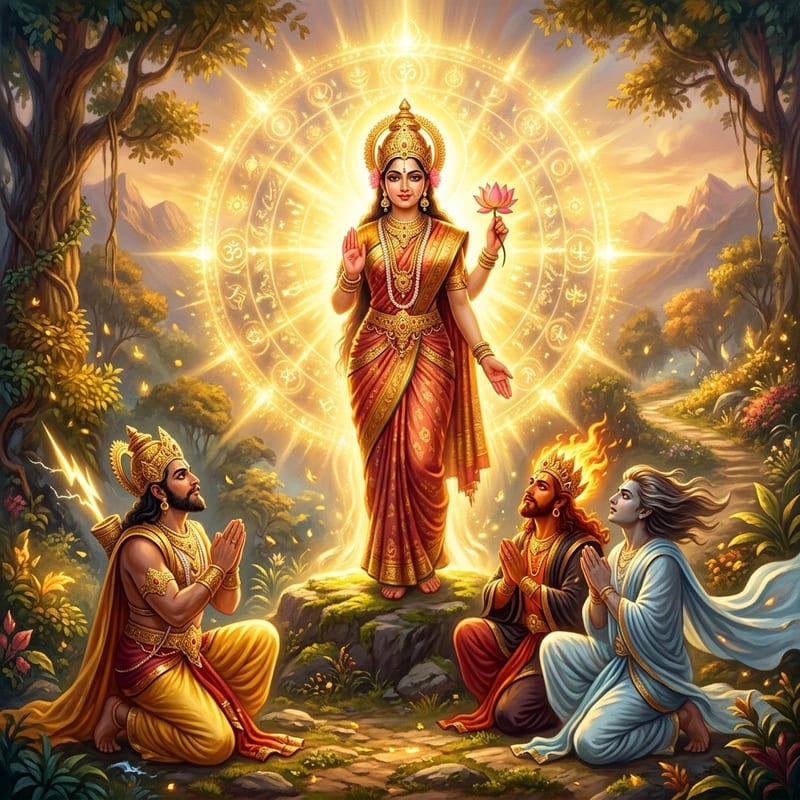
॥ अथ केनोपनिषत् ॥
ॐ स॒ह ना॑ववतु । स॒ह नौ॑ भुनक्तु । स॒ह वी॒र्य॑-ङ्करवावहै । ते॒ज॒स्विना॒वधी॑तमस्तु॒ मा वि॑द्विषा॒वहै᳚ ।
ॐ शान्ति॒-श्शान्ति॒-श्शान्तिः॑ ॥
ॐ स॒ह ना॑ववतु । स॒ह नौ॑ भुनक्तु । स॒ह वी॒र्य॑-ङ्करवावहै । ते॒ज॒स्विना॒वधी॑तमस्तु॒ मा वि॑द्विषा॒वहै᳚ ।
ॐ शान्ति॒-श्शान्ति॒-श्शान्तिः॑ ॥
ॐ आप्यायन्तु ममाङ्गानि वाक्प्राणश्चक्षु-श्श्रोत्रमथो बलमिन्द्रियाणि च सर्वाणि । सर्व-म्ब्रह्मौपनिषद-म्मा-ऽह-म्ब्रह्म निराकुर्या-म्मा मा ब्रह्म निराकरोदनिराकरणमस्त्वनिराकरण-म्मे-ऽस्तु । तदात्मनि निरते य उपनिषत्सु धर्मास्ते मयि सन्तु ते मयि सन्तु ।
ॐ शान्ति॒-श्शान्ति॒-श्शान्तिः॑ ॥
ॐ शान्ति॒-श्शान्ति॒-श्शान्तिः॑ ॥
केनेषित-म्पतति प्रेषित-म्मनः
केन प्राणः प्रथमः प्रैति युक्तः ।
केनेषितां-वाँचमिमां-वँदन्ति
चक्षु-श्श्रोत्र-ङ्क उ देवो युनक्ति ॥ 1 ॥
केन प्राणः प्रथमः प्रैति युक्तः ।
केनेषितां-वाँचमिमां-वँदन्ति
चक्षु-श्श्रोत्र-ङ्क उ देवो युनक्ति ॥ 1 ॥
श्रोत्रस्य श्रोत्र-म्मनसो मनो यद्
वाचो ह वाचं स उ प्राणस्य प्राणः ।
चक्षुषश्चक्षुरतिमुच्य धीराः
प्रेत्यास्माल्लोकादमृता भवन्ति ॥ 2 ॥
वाचो ह वाचं स उ प्राणस्य प्राणः ।
चक्षुषश्चक्षुरतिमुच्य धीराः
प्रेत्यास्माल्लोकादमृता भवन्ति ॥ 2 ॥
न तत्र चक्षुर्गच्छति न वागच्छति नो मनः ।
न विद्मो न विजानीमो यथैतदनुशिष्यात् ॥ 3 ॥
न विद्मो न विजानीमो यथैतदनुशिष्यात् ॥ 3 ॥
अन्यदेव तद्विदितादथो अविदितादधि ।
इति शुश्रुम पूर्वेषां-येँ नस्तद्व्याचचक्षिरे ॥ 4 ॥
इति शुश्रुम पूर्वेषां-येँ नस्तद्व्याचचक्षिरे ॥ 4 ॥
यद्वाचा-ऽनभ्युदितं-येँन वागभ्युद्यते ।
तदेव ब्रह्म त्वं-विँद्धि नेदं-यँदिदमुपासते ॥ 5 ॥
तदेव ब्रह्म त्वं-विँद्धि नेदं-यँदिदमुपासते ॥ 5 ॥
यन्मनसा न मनुते येनाहुर्मनो मतम् ।
तदेव ब्रह्म त्वं-विँद्धि नेदं-यँदिदमुपासते ॥ 6 ॥
तदेव ब्रह्म त्वं-विँद्धि नेदं-यँदिदमुपासते ॥ 6 ॥
यच्चक्षुषा न पश्यति येन चक्षूंषि पश्यति ।
तदेव ब्रह्म त्वं-विँद्धि नेदं-यँदिदमुपासते ॥ 7 ॥
तदेव ब्रह्म त्वं-विँद्धि नेदं-यँदिदमुपासते ॥ 7 ॥
यच्छ्रोत्रेण न शृणोति येन श्रोत्रमिदं श्रुतम् ।
तदेव ब्रह्म त्वं-विँद्धि नेदं-यँदिदमुपासते ॥ 8 ॥
तदेव ब्रह्म त्वं-विँद्धि नेदं-यँदिदमुपासते ॥ 8 ॥
यत्प्राणेन न प्राणिति येन प्राणः प्रणीयते ।
तदेव ब्रह्म त्वं-विँद्धि नेदं-यँदिदमुपासते ॥ 9 ॥
तदेव ब्रह्म त्वं-विँद्धि नेदं-यँदिदमुपासते ॥ 9 ॥
॥ इति केनोपनिषदि प्रथमः खण्डः ॥