
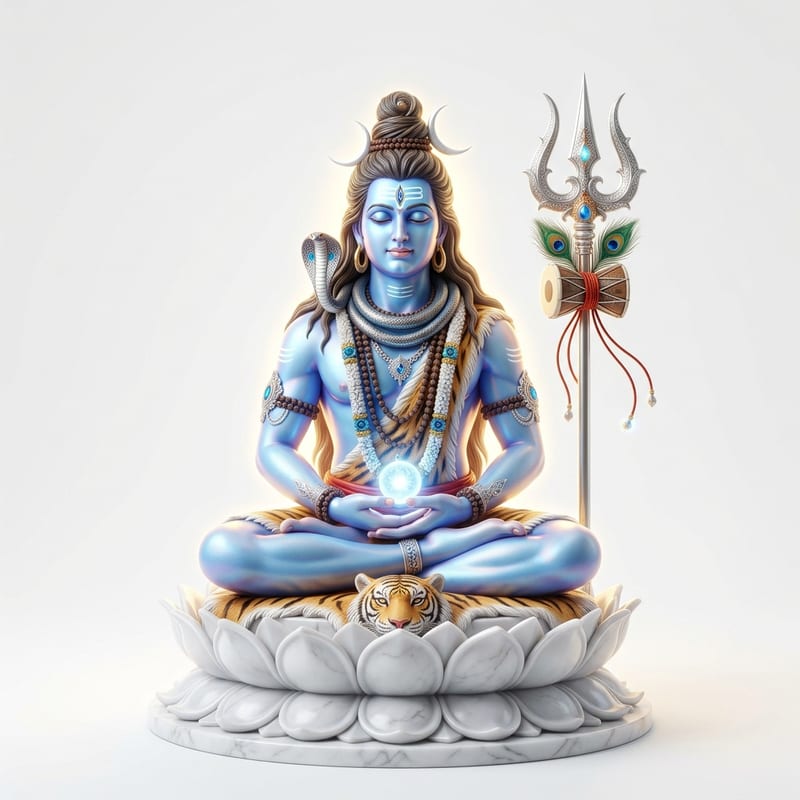
ఏకం బ్రహ్మైవఽఽద్వితీయం సమస్తం
సత్యం సత్యం నేహ నానాస్తి కిఞ్చిత్ ।
ఏకో రుద్రో న ద్వితీయోవ తస్థే
తస్మాదేకం త్వాం ప్రపద్యే మహేశం ॥ ౧ ॥
సత్యం సత్యం నేహ నానాస్తి కిఞ్చిత్ ।
ఏకో రుద్రో న ద్వితీయోవ తస్థే
తస్మాదేకం త్వాం ప్రపద్యే మహేశం ॥ ౧ ॥
కర్తా హర్తా త్వం హి సర్వస్య శమ్భో
నానా రూపేషు ఏకరూపోపి అరూపః ।
యద్వత్ ప్రత్యక్ ధర్మ ఏకోఽపి అనేకః
తస్మాత్ నాన్యం త్వాం వినేశం ప్రపద్యే ॥ ౨ ॥
నానా రూపేషు ఏకరూపోపి అరూపః ।
యద్వత్ ప్రత్యక్ ధర్మ ఏకోఽపి అనేకః
తస్మాత్ నాన్యం త్వాం వినేశం ప్రపద్యే ॥ ౨ ॥
రజ్జౌ సర్పః శుక్తికాయాం చ రౌప్యం
నీరైః పూరః తన్మృగాఖ్యే మరీచౌ ।
యద్వత్ తద్వత్ విష్వక్ ఏషః ప్రపఞ్చః
యస్మిన్ జ్ఞాతే తం ప్రపద్యే మహేశమ్ ॥ ౩ ॥
నీరైః పూరః తన్మృగాఖ్యే మరీచౌ ।
యద్వత్ తద్వత్ విష్వక్ ఏషః ప్రపఞ్చః
యస్మిన్ జ్ఞాతే తం ప్రపద్యే మహేశమ్ ॥ ౩ ॥
తోయే శైత్యం దాహకత్వం చ వహ్నౌ
తాపో భానౌ శీత భానౌ ప్రసాదః ।
పుష్పే గన్ధః దుగ్ధ మధ్యేఽపి సర్పిః
యత్తత్ శమ్భో త్వం తతః త్వాం ప్రపద్యే ॥ ౪ ॥
తాపో భానౌ శీత భానౌ ప్రసాదః ।
పుష్పే గన్ధః దుగ్ధ మధ్యేఽపి సర్పిః
యత్తత్ శమ్భో త్వం తతః త్వాం ప్రపద్యే ॥ ౪ ॥
శబ్దం గృహ్ణాసి అశ్రవాః త్వం హి జిఘ్రేః
అగ్రాణః త్వం వ్యఙ్ఘ్రిః ఆయాసి దూరాత్ ।
వ్యక్షః పశ్యేః త్వం రసజ్ఞోఽపి అజిహ్వః
కః త్వాం సమ్యక్ వేత్తి అతః త్వాం ప్రపద్యే ॥ ౫ ॥
అగ్రాణః త్వం వ్యఙ్ఘ్రిః ఆయాసి దూరాత్ ।
వ్యక్షః పశ్యేః త్వం రసజ్ఞోఽపి అజిహ్వః
కః త్వాం సమ్యక్ వేత్తి అతః త్వాం ప్రపద్యే ॥ ౫ ॥
నో వేద త్వాం ఈశ సాక్షాత్ వివేద
నో వా విష్ణుః నో విధాతాఽఖిలస్య ।
నో యోగీన్ద్రాః నేన్ద్ర ముఖ్యాశ్చ దేవాః
భక్తో వేదత్వాం అతస్త్వాం ప్రపద్యే ॥ ౬ ॥
నో వా విష్ణుః నో విధాతాఽఖిలస్య ।
నో యోగీన్ద్రాః నేన్ద్ర ముఖ్యాశ్చ దేవాః
భక్తో వేదత్వాం అతస్త్వాం ప్రపద్యే ॥ ౬ ॥
నో తే గోత్రం నేశ జన్మాపి నాఖ్యా
నో వా రూపం నైవ శీలం న తేజః ।
ఇత్థం భూతోపి ఈశ్వరః త్వం త్రిలోక్యాః
సర్వాన్ కామాన్ పూరయేః తత్ భజే త్వామ్ ॥ ౭ ॥
నో వా రూపం నైవ శీలం న తేజః ।
ఇత్థం భూతోపి ఈశ్వరః త్వం త్రిలోక్యాః
సర్వాన్ కామాన్ పూరయేః తత్ భజే త్వామ్ ॥ ౭ ॥
త్వత్తః సర్వం త్వం హి సర్వం స్మరారే
త్వం గౌరీశః త్వం చ నగ్నః అతిశాన్తః ।
త్వం వై వృద్ధః త్వం యువా త్వం చ బాలః
తత్వం యత్కిం నాసి అతః త్వాం నతోఽహమ్ ॥ ౮ ॥
త్వం గౌరీశః త్వం చ నగ్నః అతిశాన్తః ।
త్వం వై వృద్ధః త్వం యువా త్వం చ బాలః
తత్వం యత్కిం నాసి అతః త్వాం నతోఽహమ్ ॥ ౮ ॥