
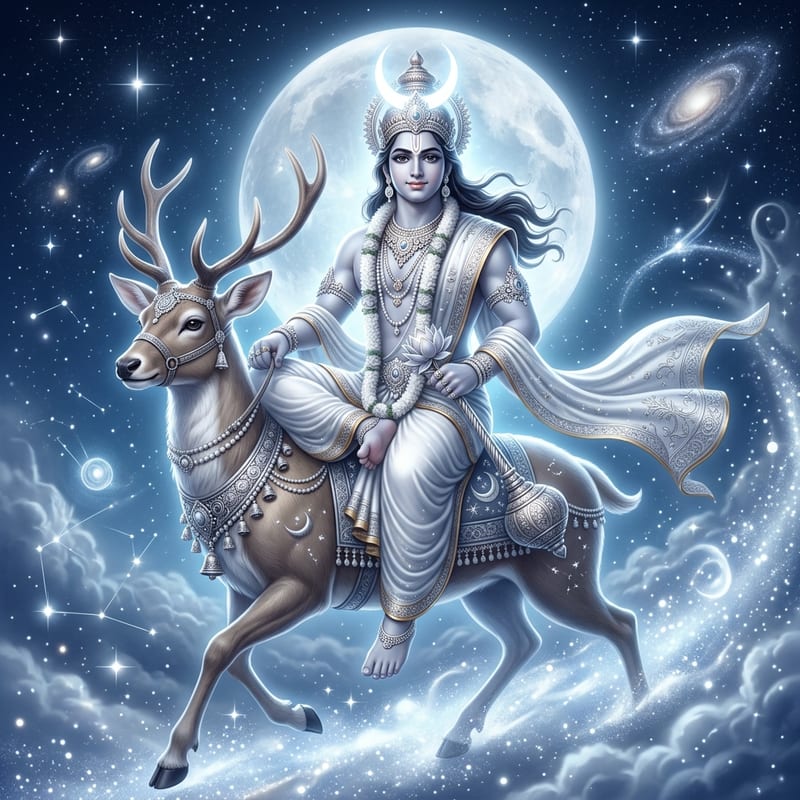
॥ ચન્દ્રમસ્સ્તોત્રમ્ ॥
ૐ શ્વેતામ્બરઃ શ્વેતવપુઃ કિરીટી શ્વેતદ્યુતિર્દણ્ડધરો દ્વિબાહુઃ ।
ચન્દ્રોઽમૃતાત્મા વરદઃ શુશાઙ્કઃ શ્રેયાંસિ મહ્યં પ્રદદાતુ દેવઃ ॥ ૧॥
ચન્દ્રોઽમૃતાત્મા વરદઃ શુશાઙ્કઃ શ્રેયાંસિ મહ્યં પ્રદદાતુ દેવઃ ॥ ૧॥
દધિશઙ્ખતુષારાભં ક્ષીરોદાર્ણવસમ્ભવમ્ ।
નમામિ શશિનં સોમં શમ્ભોર્મુકુટભૂષણમ્ ॥ ૨॥
નમામિ શશિનં સોમં શમ્ભોર્મુકુટભૂષણમ્ ॥ ૨॥
ક્ષીરસિન્ધુસમુત્પન્નો રોહિણીસહિતઃ પ્રભુઃ ।
હરસ્ય મુકુટાવાસઃ બાલચન્દ્ર નમોઽસ્તુ તે ॥ ૩॥
હરસ્ય મુકુટાવાસઃ બાલચન્દ્ર નમોઽસ્તુ તે ॥ ૩॥
સુધામયા યત્કિરણાઃ પોષયન્ત્યોષધીવનમ્ ।
સર્વાન્નરસહેતું તં નમામિ સિન્ધુનન્દનમ્ ॥ ૪॥
સર્વાન્નરસહેતું તં નમામિ સિન્ધુનન્દનમ્ ॥ ૪॥
રાકેશં તારકેશં ચ રોહિણીપ્રિયસુન્દરમ્ ।
ધ્યાયતાં સર્વદોષઘ્નં નમામીન્દું મુહુર્મુહુઃ ॥ ૫॥
ધ્યાયતાં સર્વદોષઘ્નં નમામીન્દું મુહુર્મુહુઃ ॥ ૫॥
ઇતિ ચન્દ્રમસ્સ્તોત્રં સમ્પૂર્ણમ્ ।
(મન્ત્રમહાર્ણવે પૂર્વખણ્ડે મિશ્રતન્ત્રે એકાદશસ્તરઙ્ગઃ)