
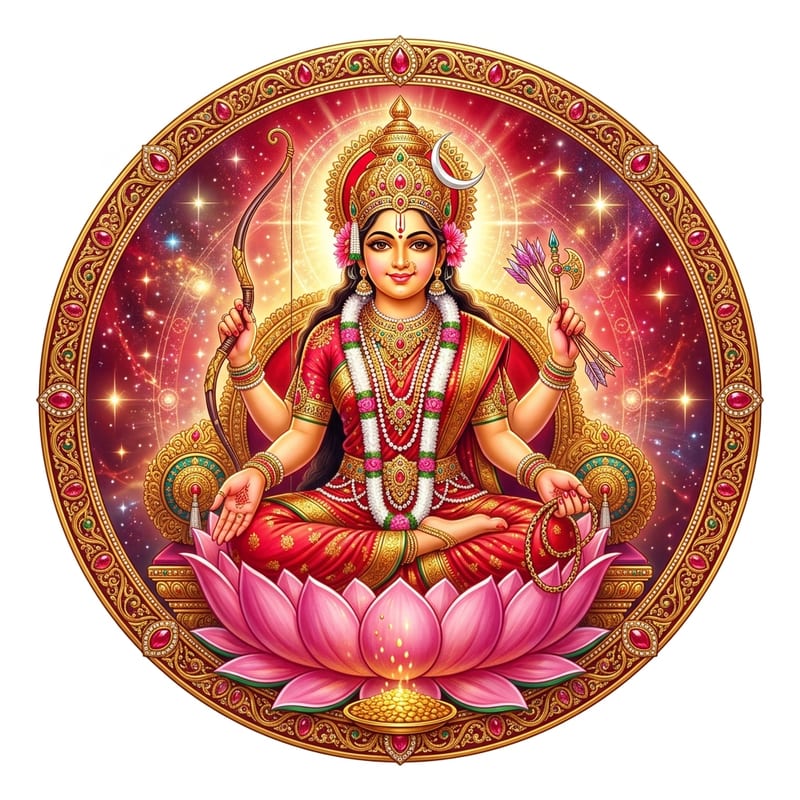
ऐन्द्रस्येव शरासनस्य दधती मध्येललाटं प्रभां
शौक्लीं कान्तिमनुष्णगोरिव शिरस्यातन्वती सर्वतः ।
एषासौ त्रिपुरा हृदि द्युतिरिवोष्णांशोः सदाहः स्थितात्
छिन्द्यान्नः सहसा पदैस्त्रिभिरघं ज्योतिर्मयी वाङ्मयी ॥ 1 ॥
शौक्लीं कान्तिमनुष्णगोरिव शिरस्यातन्वती सर्वतः ।
एषासौ त्रिपुरा हृदि द्युतिरिवोष्णांशोः सदाहः स्थितात्
छिन्द्यान्नः सहसा पदैस्त्रिभिरघं ज्योतिर्मयी वाङ्मयी ॥ 1 ॥
- aiṃdrasya iva śarāsanasyalike Indra's rainbow
- dhadhatī madhye lalāṭaṃ prabhāṃholding radiance at the centre of the forehead
- śauklīṃ kāntim anuṣṇagoḥ iva śirasi ātanvatī sarvataḥspreading white moonlight over the crown in all directions
- eṣā asau Tripurāthis is that Tripurā
- hṛdi dyutiḥ iva uṣṇāṃśoḥ sadā ahaḥ sthitātdwelling in the heart as the sun's inner radiance
- chindhyāt naḥ sahasā padaiḥ tribhiḥ aghaṃmay she suddenly cut our sins with three syllables
- jyotirmayī vāṅmayīmade of light, made of speech.
या मात्रा त्रपुसीलतातनुलसत्तन्तूत्थितिस्पर्धिनी
वाग्बीजे प्रथमे स्थिता तव सदा तां मन्महे ते वयम् ।
शक्तिः कुण्डलिनीति विश्वजननव्यापारबद्धोद्यमाः
ज्ञात्वेत्थं न पुनः स्पृशन्ति जननीगर्भेऽर्भकत्वं नराः ॥ 2 ॥
वाग्बीजे प्रथमे स्थिता तव सदा तां मन्महे ते वयम् ।
शक्तिः कुण्डलिनीति विश्वजननव्यापारबद्धोद्यमाः
ज्ञात्वेत्थं न पुनः स्पृशन्ति जननीगर्भेऽर्भकत्वं नराः ॥ 2 ॥
- yā mātrāthat vowel-unit / subtle measure
- trapusī-latā-tanu-lasat-tantū-utthiti-spardhinivying with the rising thread of the slender tin-creeper
- vāg-bīje prathame sthitā tava sadāalways abiding in your first vāg-bīja (Aiṃ)
- tāṃ manmahe te vayamwe meditate on that for you
- śaktiḥ kuṇḍalinī iti(knowing it as) the Kuṇḍalinī Śakti
- viśva-janana-vyāpāra-baddha-udyamāḥexerting themselves in the work of bringing forth the universe
- jñātvā itthaṃ na punaḥ spṛśanti janani-garbhe arbhakatvaṃ narāḥknowing thus, those men no longer touch the state of being a child in the womb.
दृष्ट्वा सम्भ्रमकारि वस्तु सहसा ऐ ऐ इति व्याहृतं
येनाकूतवशादपीह वरदे बिन्दुं विनाप्यक्षरम् ।
तस्यापि ध्रुवमेव देवि तरसा जाते तवानुग्रहे
वाचःसूक्तिसुधारसद्रवमुचो निर्यान्ति वक्त्राम्बुजात् ॥ 3 ॥
येनाकूतवशादपीह वरदे बिन्दुं विनाप्यक्षरम् ।
तस्यापि ध्रुवमेव देवि तरसा जाते तवानुग्रहे
वाचःसूक्तिसुधारसद्रवमुचो निर्यान्ति वक्त्राम्बुजात् ॥ 3 ॥
- dṛṣṭvā sambhrama-kāri vastu sahasāupon suddenly seeing an astonishing thing
- ai ai iti vyāhṛtaṃuttered as 'ai, ai!'
- yena ākūta-vaśāt api iha varadeeven by one driven by impulse, here, O Varadā
- binduṃ vinā api akṣaramthe syllable even without the bindu
- tasya api dhruvam eva devi tarasā jāte tava anugrahēfor that person too, when your grace swiftly comes, O Goddess
- vācaḥ sūkti-sudhā-rasa-drava-mucaḥ niryānti vaktrāmbujātstreams releasing the nectar-juice of eloquent speech pour forth from his lotus-mouth.
यन्नित्ये तव कामराजमपरं मन्त्राक्षरं निष्कलं
तत्सारस्वतमित्यवैति विरलः कश्चिद्बुधश्चेद्भुवि ।
आख्यानं प्रतिपर्व सत्यतपसो यत्कीर्तयन्तो द्विजाः
प्रारम्भे प्रणवास्पदप्रणयितां नीत्वोच्चरन्ति स्फुटम् ॥ 4 ॥
तत्सारस्वतमित्यवैति विरलः कश्चिद्बुधश्चेद्भुवि ।
आख्यानं प्रतिपर्व सत्यतपसो यत्कीर्तयन्तो द्विजाः
प्रारम्भे प्रणवास्पदप्रणयितां नीत्वोच्चरन्ति स्फुटम् ॥ 4 ॥
- yat nityē tava kāmarājam aparaṃ mantrākṣaraṃ niṣkalaṃthat second syllable of your eternal Kāma-rāja (mantra), without division
- tat sārasvataṃ iti avaitithat he knows to be 'sārasvata'
- viralaḥ kaścit budhaḥ cet bhuviif there is any rare wise man on earth
- ākhyānaṃ pratiparvana satyatapasaḥthe account at every occasion of true austerity
- yat kīrtayantaḥ dvijāḥwhich the twice-born, celebrating
- prārambhe praṇava-āspada-praṇayitāṃ nītvā uccāranti sphuṭamplacing (it) in the position of the Praṇava at the beginning, they clearly intone.
यत्सद्यो वचसां प्रवृत्तिकरणे दृष्टप्रभावं बुधैः
तार्तीयं तदहं नमामि मनसा त्वद्बीजमिन्दुप्रभम् ।
अस्त्यौर्वोऽपि सरस्वतीमनुगतो जाड्याम्बुविच्छित्तये
गोशब्दो गिरि वर्तते सनियतं योगं विना सिद्धिदः ॥ 5 ॥
तार्तीयं तदहं नमामि मनसा त्वद्बीजमिन्दुप्रभम् ।
अस्त्यौर्वोऽपि सरस्वतीमनुगतो जाड्याम्बुविच्छित्तये
गोशब्दो गिरि वर्तते सनियतं योगं विना सिद्धिदः ॥ 5 ॥
- yat sadyo vacasāṃ pravṛtti-karaṇe dṛṣṭa-prabhāvaṃ budhaiḥwhose power in immediately activating speech has been witnessed by the wise
- tārtīyaṃ tat ahaṃ namāmi manasā tvad-bījam indu-prabhamthat third bīja of yours, bright as the moon, I bow to in my mind
- asti aurvaḥ api sarasvatīm anugataḥ jāḍya-ambu-vicchhittayeeven Aurva (the submarine fire), associated with Sarasvatī, exists to cut through the waters of dullness
- go-śabdaḥ giri vartate sa-niyataṃ yogaṃ vinā siddhi-daḥthe word 'go' abides on the mountain, certainly granting siddhi without yoga.
एकैकं तव देवि बीजमनघं सव्यञ्जनाव्यञ्जनं
कूटस्थं यदि वा पृथक् क्रमगतं यद्वा स्थितं व्युत्क्रमात् ।
यं यं काममपेक्ष्य येन विधिना केनापि वा चिन्तितं
जप्तं वा सफलीकरोति सततं तं तं समस्तं नृणाम् ॥ 6 ॥
कूटस्थं यदि वा पृथक् क्रमगतं यद्वा स्थितं व्युत्क्रमात् ।
यं यं काममपेक्ष्य येन विधिना केनापि वा चिन्तितं
जप्तं वा सफलीकरोति सततं तं तं समस्तं नृणाम् ॥ 6 ॥
- ekaikaṃ tava devi bījaṃ anaghaṃeach of your bījas, O Goddess, sinless
- sa-vyañjana-avyañjanaṃwith or without a consonant
- kūṭasthaṃ yadi vā pṛthak krama-gataṃ yadvā sthitaṃ vyutkramātwhether standing as a whole, or arranged separately in sequence, or placed in reverse
- yaṃ yaṃ kāmam apekṣya yena vidhinā kenāpi vā cintitaṃwhatever desire is intended by whatever method, even any
- japtaṃ vāor recited
- saphali-karoti satataṃ taṃ taṃ samastaṃ nṛṇāṃit constantly fulfils all of that entirely for humans.
वामे पुस्तकधारिणीमभयदां साक्षस्रजं दक्षिणे
भक्तेभ्यो वरदानपेशलकरां कर्पूरकुन्दोज्ज्वलाम् ।
उज्जृम्भाम्बुजपत्रकान्तिनयनस्निग्धप्रभालोकिनीं
ये त्वामम्ब न शीलयन्ति मनसा तेषां कवित्वं कुतः ॥ 7 ॥
भक्तेभ्यो वरदानपेशलकरां कर्पूरकुन्दोज्ज्वलाम् ।
उज्जृम्भाम्बुजपत्रकान्तिनयनस्निग्धप्रभालोकिनीं
ये त्वामम्ब न शीलयन्ति मनसा तेषां कवित्वं कुतः ॥ 7 ॥
- vāme pustaka-dhāriṇīm abhaya-dāṃholding a book on the left, granting fearlessness
- sākṣa-srajaṃ dakṣiṇewith an akṣamāla on the right
- bhaktebhyo varadāna-peśala-karāṃwith hands graceful in granting boons to devotees
- karpūra-kunda-ujjvalāṃradiant as camphor and jasmine
- ujjṛmbha-ambuja-patra-kānti-nayana-snigdha-prabhā-lokinīṃwhose eyes are of the tender beauty of blooming lotus petals and cast a lustrous glance
- ye tvām amba na śīlayanti manasāthose who do not cultivate you in mind
- teṣāṃ kavitvaṃ kutaḥwhere is their poetic power?
ये त्वां पाण्डुरपुण्डरीकपटलस्पष्टाभिरामप्रभां
सिञ्चन्तीममृतद्रवैरिव शिरो ध्यायन्ति मूर्ध्नि स्थिताम् ।
अश्रान्ता विकटस्फुटाक्षरपदा निर्याति वक्त्राम्बुजात्
तेषां भारति भारती सुरसरित्कल्लोललोलोर्मिवत् ॥ 8 ॥
सिञ्चन्तीममृतद्रवैरिव शिरो ध्यायन्ति मूर्ध्नि स्थिताम् ।
अश्रान्ता विकटस्फुटाक्षरपदा निर्याति वक्त्राम्बुजात्
तेषां भारति भारती सुरसरित्कल्लोललोलोर्मिवत् ॥ 8 ॥
- ye tvāṃ pāṃḍura-puṇḍarīka-paṭala-spaṣṭa-abhirāma-prabhāṃwhose radiance is delightfully clear like a cluster of white lotuses
- siñcantīm amṛta-dravaiḥ iva śiraḥas if sprinkling the head with nectar streams
- dhyāyanti mūrdhni sthitāṃwho meditate (on you) stationed at the crown
- aśrāntā vikaṭa-sphuṭa-akṣara-padā niryāti vaktrāmbujāttireless, with bold clear syllables and words, she pours forth from the lotus-mouth
- teṣāṃ bhārati bhāratīfor them Bhāratī (speech) is truly Bhāratī
- sura-sarit-kallola-lola-ūrmivatlike the playful surging waves of the divine river (Gaṅgā).
ये सिन्दूरपरागपिञ्जपिहितां त्वत्तेजसाद्यामिमां
उर्वीं चापि विलीनयावकरसप्रस्तारमग्नामिव ।
पश्यन्ति क्षणमप्यनन्यमनसस्तेषामनङ्गज्वर-
-क्लान्तस्रस्तकुरङ्गशाबकदृशो वश्या भवन्ति स्फुटम् ॥ 9 ॥
उर्वीं चापि विलीनयावकरसप्रस्तारमग्नामिव ।
पश्यन्ति क्षणमप्यनन्यमनसस्तेषामनङ्गज्वर-
-क्लान्तस्रस्तकुरङ्गशाबकदृशो वश्या भवन्ति स्फुटम् ॥ 9 ॥
- ye sindūra-parāga-piñja-pihitāṃ tvat-tejasā adyāṃ imāṃthis (earth) covered and concealed in the red-gold of your sindūra-ochre radiance
- urvīṃ ca apiand the earth also
- vilīna-yāvaka-rasa-prastāra-magnām ivaas if submerged in the spread of dissolved lac (red dye)
- paśyanti kṣaṇam api ananya-manasaḥwho behold it even for a moment with undivided mind
- teṣāṃ anaṅga-jvara-klānta-srasta-kuraṅga-śābaka-dṛśaḥfor them, deer-eyed (women) weary and drooping with the fever of Love
- vaśyā bhavanti sphuṭambecome clearly enchanted.
चञ्चत्काञ्चनकुण्डलाङ्गदधरामाबद्धकाञ्चीस्रजं
ये त्वां चेतसि तद्गते क्षणमपि ध्यायन्ति कृत्वा स्थिराम् ।
तेषां वेश्मसु विभ्रमादहरहः स्फारीभवन्त्यश्चिरं
माद्यत्कुञ्जरकर्णतालतरलाः स्थैर्यं भजन्ते श्रियः ॥ 10 ॥
ये त्वां चेतसि तद्गते क्षणमपि ध्यायन्ति कृत्वा स्थिराम् ।
तेषां वेश्मसु विभ्रमादहरहः स्फारीभवन्त्यश्चिरं
माद्यत्कुञ्जरकर्णतालतरलाः स्थैर्यं भजन्ते श्रियः ॥ 10 ॥
- cañcat-kāñcana-kuṇḍala-aṅgada-dharāṃwearing gleaming golden earrings and armlets
- ābaddha-kāñcī-srajaṃwearing a girdle of bells
- ye tvāṃ cetasi tad-gate kṣaṇam api dhyāyanti kṛtvā sthirāṃwho, with mind fixed on that, meditate on you steadily even for a moment
- teṣāṃ veśmasu vibhramāt aharahaḥ sphārī-bhavanti aściraṃin their homes, day by day, quickly spreading out playfully
- mādhyat-kuñjara-karṇa-tāla-taralāḥ sthairyaṃ bhajante śriyaḥLakṣmī, swaying like the ear-fan of an intoxicated elephant, settles with permanence.
आर्भट्या शशिखण्डमण्डितजटाजूटां नृमुण्डस्रजं
बन्धूकप्रसवारुणाम्बरधरां प्रेतासनाध्यासिनीम् ।
त्वां ध्यायन्ति चतुर्भुजां त्रिनयनामापीनतुङ्गस्तनीं
मध्ये निम्नवलित्रयाङ्किततनुं त्वद्रूपसंवित्तये ॥ 11 ॥
बन्धूकप्रसवारुणाम्बरधरां प्रेतासनाध्यासिनीम् ।
त्वां ध्यायन्ति चतुर्भुजां त्रिनयनामापीनतुङ्गस्तनीं
मध्ये निम्नवलित्रयाङ्किततनुं त्वद्रूपसंवित्तये ॥ 11 ॥
- ārbhaṭyāterrible in bearing
- śaśi-khaṇḍa-maṇḍita-jaṭā-jūṭāṃwith matted locks adorned by a crescent moon
- nṛ-muṇḍa-srajaṃwearing a garland of human skulls
- bandhūka-prasava-aruṇa-ambara-dharāṃclad in garments red as the bandūka flower
- preta-āsana-adhyāsinīmseated on a corpse-throne
- tvāṃ dhyāyantithey meditate on you
- catur-bhujāṃ tri-nayanāṃfour-armed, three-eyed
- āpīna-tuṅga-stanīṃwith full and lofty breasts
- madhye nimna-vali-traya-aṅkita-tanuṃwith a waist marked by three folds
- tvat-rūpa-saṃvittayein order to perceive your true form.
जातोऽप्यल्पपरिच्छदे क्षितिभुजां सामान्यमात्रे कुले
निःशेषावनिचक्रवर्तिपदवीं लब्ध्वा प्रतापोन्नतः ।
यद्विद्याधर बृन्दवन्दितपदः श्रीवत्सराजोऽभवत्
देवि त्वच्चरणाम्बुज प्रणतिजः सोऽयं प्रसादोदयः ॥ 12 ॥
निःशेषावनिचक्रवर्तिपदवीं लब्ध्वा प्रतापोन्नतः ।
यद्विद्याधर बृन्दवन्दितपदः श्रीवत्सराजोऽभवत्
देवि त्वच्चरणाम्बुज प्रणतिजः सोऽयं प्रसादोदयः ॥ 12 ॥
- jātaḥ api alpa-paricchade kṣiti-bhujāṃ sāmānya-mātre kuleeven though born in a family of modest means, among the ordinary class of kings
- niḥśeṣa-avani-cakravartī-padavīṃ labdhvāhaving attained the rank of sovereign over the entire earth
- pratāpa-unnataḥexalted by his splendour
- yat vidyādhara-bṛnda-vandita-padaḥ śrī-vatsa-rājaḥ abhavatthat the illustrious Vatsa-rāja became praised at his feet by hosts of Vidyādharas
- devi tvac-caraṇāmbuja-praṇati-jaḥ saḥ ayaṃ prasāda-udayaḥO Goddess, this grace arose from prostration at your lotus feet.
चण्डि त्वच्चरणाम्बुजार्चनकृते बिल्वादिलोल्लुण्ठन-
-त्रुट्यत्कण्टककोटिभिः परिचयं येषां न जग्मुः कराः ।
ते दण्डाङ्कुशचक्रचापकुलिशश्रीवत्समत्स्याङ्कितैः
जायन्ते पृथिवीभुजः कथमिवाम्भोजप्रभैः पाणिभिः ॥ 13 ॥
-त्रुट्यत्कण्टककोटिभिः परिचयं येषां न जग्मुः कराः ।
ते दण्डाङ्कुशचक्रचापकुलिशश्रीवत्समत्स्याङ्कितैः
जायन्ते पृथिवीभुजः कथमिवाम्भोजप्रभैः पाणिभिः ॥ 13 ॥
- caṇḍi tvac-caraṇāmbuja-arcana-kṛteO Caṇḍī, for the worship of your lotus feet
- bilva-ādi-lollunṭhana-truṭyat-kaṇṭaka-koṭibhiḥwith the scores of thorns snapping as bilva and other offerings are gathered
- paricayaṃ yeṣāṃ na jagmuḥ karāḥwhose hands have not become acquainted
- te daṇḍa-aṅkuśa-cakra-cāpa-kuliśa-śrīvatsa-matsya-aṅkitaiḥmarked with staff, goad, disc, bow, thunderbolt, śrīvatsa, and fish
- jāyante pṛthibī-bhujaḥ kataham iva ambhoja-prabhaiḥ pāṇibhiḥhow can they be born as kings of the earth with lotus-bright hands?
विप्राः क्षोणिभुजो विशस्तदितरे क्षीराज्यमध्वासवैः ।
त्वां देवि त्रिपुरे परापरमयीं सन्तर्प्य पूजाविधौ ।
यां यां प्रार्थयते मनः स्थिरधियां तेषां त एव ध्रुवं
तां तां सिद्धिमवाप्नुवन्ति तरसा विघ्नैरविघ्नीकृताः ॥ 14 ॥
त्वां देवि त्रिपुरे परापरमयीं सन्तर्प्य पूजाविधौ ।
यां यां प्रार्थयते मनः स्थिरधियां तेषां त एव ध्रुवं
तां तां सिद्धिमवाप्नुवन्ति तरसा विघ्नैरविघ्नीकृताः ॥ 14 ॥
- viprāḥ kṣoṇi-bhujaḥ viśaḥ tat-itarebrāhmaṇas, kings, merchants, and others
- kṣīra-ājya-madhu-āsavaiḥwith milk, ghee, honey, and wine
- tvāṃ devi tripure para-apara-mayīṃ santarpya pūjā-vidhauhonouring you, O Goddess Tripurā, who are both transcendent (parā) and immanent (aparā), in the rite of worship
- yāṃ yāṃ prārthayate manaḥ sthira-dhiyāṃwhatever the mind of those with steady intellect desires
- te eva dhruvam tāṃ tāṃ siddhiṃ avāpnuvanticertainly they attain those very siddhis
- tarasā vighnaiḥ avighnī-kṛtāḥswiftly, with all obstacles made harmless.
शब्दानां जननी त्वमत्र भुवने वाग्वादिनीत्युच्यसे
त्वत्तः केशववासव प्रभृतयोऽप्याविर्भवन्ति स्फुटम् ।
लीयन्ते खलु यत्र कल्पविरमे ब्रह्मादयस्तेऽप्यमी
सा त्वं काचिदचिन्त्यरूपमहिमा शक्तिः परा गीयसे ॥ 15 ॥
त्वत्तः केशववासव प्रभृतयोऽप्याविर्भवन्ति स्फुटम् ।
लीयन्ते खलु यत्र कल्पविरमे ब्रह्मादयस्तेऽप्यमी
सा त्वं काचिदचिन्त्यरूपमहिमा शक्तिः परा गीयसे ॥ 15 ॥
- śabdānāṃ jananī tvam atra bhuvaneyou are the mother of words in this world
- vāg-vādinī iti ucyaseyou are called Vāg-vādinī (she who makes speech speak)
- tvattaḥ keśava-vāsava-prabhṛtayaḥ api āvirbhavanti sphuṭamfrom you Keśava (Viṣṇu), Vāsava (Indra) and others clearly emerge
- liyante khalu yatra kalpa-virame brahmādayaḥ te apiat the end of the cosmic age, even Brahmā and those others merge into you
- sā tvaṃ kācit acintyarūpa-mahimā śaktiḥ parā gīyasesuch are you: some supreme Śakti of inconceivable form and greatness, praised as the ultimate.
देवानां त्रितयं त्रयी हुतभुजां शक्तित्रयं त्रिः स्वराः
त्रैलोक्यं त्रिपदी त्रिपुष्करमथो त्रिब्रह्म वर्णास्त्रयः ।
यत्किञ्चिज्जगति त्रिधा नियमितं वस्तु त्रिवर्गादिकं
तत्सर्वं त्रिपुरेति नाम भगवत्यन्वेति ते तत्त्वतः ॥ 16 ॥
त्रैलोक्यं त्रिपदी त्रिपुष्करमथो त्रिब्रह्म वर्णास्त्रयः ।
यत्किञ्चिज्जगति त्रिधा नियमितं वस्तु त्रिवर्गादिकं
तत्सर्वं त्रिपुरेति नाम भगवत्यन्वेति ते तत्त्वतः ॥ 16 ॥
- devānāṃ tritayaṃthe triad of gods (Brahmā, Viṣṇu, Śiva)
- trayīthe triple Veda
- huta-bhujāṃ śakti-trayaṃthe triple fire (gārhapatya, dakṣiṇāgni, āhavanīya)
- triḥ svarāḥthe three svaras (udātta, anudātta, svarita)
- trailokkaṃthe three worlds
- tripadīthe Gāyatrī
- tripuṣkaramthe three sacred pools / tīrthas
- atha tri-brahmathe triple Brahman of OM
- varṇāḥ trayaḥthe three varṇas
- yat kiñcit jagati tridhā niyamitaṃ vastu trivargādikaṃwhatever thing in this world is regulated in threes, including the trivarga (dharma, artha, kāma)
- tat sarvaṃ tripure iti nāma bhagavatī anveti te tattvataḥall of that, in truth, is attended by your name 'Tripurā', O Goddess.
लक्ष्मीं राजकुले जयां रणभुवि क्षेमङ्करीमध्वनि
क्रव्यादद्विपसर्पभाजि शबरीं कान्तारदुर्गे गिरौ ।
भूतप्रेतपिशाचजम्बुकभये स्मृत्वा महाभैरवीं
व्यामोहे त्रिपुरां तरन्ति विपदस्तारां च तोयप्लवे ॥ 17 ॥
क्रव्यादद्विपसर्पभाजि शबरीं कान्तारदुर्गे गिरौ ।
भूतप्रेतपिशाचजम्बुकभये स्मृत्वा महाभैरवीं
व्यामोहे त्रिपुरां तरन्ति विपदस्तारां च तोयप्लवे ॥ 17 ॥
- lakṣmīṃ rāja-kuleas Lakṣmī in the royal court
- jayāṃ raṇa-bhuvias Jayā on the battlefield
- kṣemaṃkarīm adhvanias Kṣemaṃkarī on the road
- kravyāda-dvipa-sarpa-bhāji śabarīṃ kāntāra-durge girauas Śabarī in the forest with predators and serpents, on the mountain pass
- bhūta-preta-piśāca-jambuka-bhaye smṛtvā mahā-bhairavīṃremembering the great Bhairavī when fearful of ghosts, demons, and jackals
- vyāmohe tripurāṃas Tripurā in confusion
- tarantī vipadaḥ tārāṃ ca toya-plaveand as Tārā in a flood – they cross all dangers.
माया कुण्डलिनी क्रिया मधुमती काली कलामालिनी
मातङ्गी विजया जया भगवती देवी शिवा शाम्भवी ।
शक्तिः शङ्करवल्लभा त्रिनयना वाग्वादिनी भैरवी
ह्रीङ्कारी त्रिपुरा परापरमयी माता कुमारीत्यसि ॥ 18 ॥
मातङ्गी विजया जया भगवती देवी शिवा शाम्भवी ।
शक्तिः शङ्करवल्लभा त्रिनयना वाग्वादिनी भैरवी
ह्रीङ्कारी त्रिपुरा परापरमयी माता कुमारीत्यसि ॥ 18 ॥
- māyāthe cosmic illusion / the Māyā-śakti
- kuṇḍalinīthe coiled serpent power
- kriyāaction-śakti
- madhumatīthe honey-sweet one
- kālīthe dark goddess of time
- kalāmālinīgarlanded with the sixteen kalās
- mātaṅgīthe elephant-goddess of speech
- vijayāthe victorious
- jayāthe conquering
- bhagavatīthe blessed
- devīthe goddess
- śivāthe auspicious
- śāmbhavīŚambhu's beloved
- śaktiḥthe power
- śaṅkara-vallabhāŚaṅkara's beloved
- tri-nayanāthree-eyed
- vāg-vādinīshe who makes speech speak
- bhairavīthe fierce
- hrīṅkārīshe who is Hrīṃ
- tripurāshe of the three cities
- para-apara-mayīconsisting of both transcendent and immanent
- mātāmother
- kumārīthe maiden.
आईपल्लवितैः परस्परयुतैर्द्वित्रिक्रमाद्यक्षरै
काद्यैः क्षान्तगतैः स्वरादिभिरथ क्षान्तैश्च तैः सस्वरैः ।
नामानि त्रिपुरे भवन्ति खलु यान्यत्यन्तगुह्यानि ते
तेभ्यो भैरवपत्नि विंशतिसहस्रेभ्यः परेभ्यो नमः ॥ 19 ॥
काद्यैः क्षान्तगतैः स्वरादिभिरथ क्षान्तैश्च तैः सस्वरैः ।
नामानि त्रिपुरे भवन्ति खलु यान्यत्यन्तगुह्यानि ते
तेभ्यो भैरवपत्नि विंशतिसहस्रेभ्यः परेभ्यो नमः ॥ 19 ॥
- āī-pallavitaiḥfrom the Aī-syllable expanded (the two vowels of the bīja Aiṃ)
- parasparayutaiḥcombined with one another
- dvi-tri-kramāt akṣaraiḥby letters arranged two or three at a time
- kādyaiḥ kṣānta-gataiḥfrom letters beginning with ka through kṣa
- svara-ādibhiḥ atha kṣāntaiḥ ca taiḥ sa-svaraiḥfrom letters beginning with vowels, and those ending in kṣa combined with their vowels
- nāmāni tripure bhavanti khalu yāni atyanta-guhyāni teyour names that are entirely secret, O Tripurā
- tebhyo bhairava-patni viṃśati-sahasrebhyaḥ parebhyaḥ namaḥto those more than twenty thousand and to you, O consort of Bhairava, homage!
बोद्धव्या निपुणं बुधैः स्तुतिरियं कृत्वा मनस्तद्गतं
भारत्यास्त्रिपुरेत्यनन्यमनसा यत्राद्यवृत्ते स्फुटम् ।
एकद्वित्रिपदक्रमेण कथितस्तत्पादसङ्ख्याक्षरैः
मन्त्रोद्धार विधिर्विशेषसहितः सत्सम्प्रदायान्वितः ॥ 20 ॥
भारत्यास्त्रिपुरेत्यनन्यमनसा यत्राद्यवृत्ते स्फुटम् ।
एकद्वित्रिपदक्रमेण कथितस्तत्पादसङ्ख्याक्षरैः
मन्त्रोद्धार विधिर्विशेषसहितः सत्सम्प्रदायान्वितः ॥ 20 ॥
- boddhavyā nipuṇaṃ budhaiḥ stutir iyaṃthis hymn is to be carefully understood by the wise
- kṛtvā manas tad-gataṃfixing the mind on that
- bhāratyāḥ tripure iti ananya-manasāon Bhāratī-Tripurā, with undivided mind
- yatra ādya-vṛtte sphuṭamwhere, in the opening verse clearly
- eka-dvi-tri-pada-krameṇa kathitaḥdescribed by the one-two-three-foot sequence
- tat-pāda-saṃkhyā-akṣaraiḥby the letter-count of those feet
- mantra-uddhāra-vidhiḥ viśeṣa-sahitaḥ sat-sampradāya-anvitaḥthe method of mantra-extraction, along with specifics, according to authentic tradition.
सावद्यं निरवद्यमस्तु यदि वा किं वानया चिन्तया
नूनं स्तोत्रमिदं पठिष्यति जनो यस्यास्ति भक्तिस्त्वयि ।
सञ्चिन्त्यापि लघुत्वमात्मनि दृढं सञ्जायमानं हठात्
त्वद्भक्त्या मुखरीकृतेन रचितं यस्मान्मयापि धृवम् ॥ 21 ॥
नूनं स्तोत्रमिदं पठिष्यति जनो यस्यास्ति भक्तिस्त्वयि ।
सञ्चिन्त्यापि लघुत्वमात्मनि दृढं सञ्जायमानं हठात्
त्वद्भक्त्या मुखरीकृतेन रचितं यस्मान्मयापि धृवम् ॥ 21 ॥
- sāvadyaṃ niravadyam astu yadi vāwhether faulty or faultless
- kiṃ vā anayā cintayāwhat is the point of this worry?
- nūnaṃ stotram idaṃ paṭhiṣyati janaḥ yasya asti bhaktiḥ tvayisurely those who have devotion to you will recite this hymn
- sañcintyāpi laghutvam ātmani dṛḍhaṃ sañjāyamānaṃ haṭhāteven after deeply considering my own smallness, which has arisen firmly despite all effort
- tvat-bhaktyā mukharī-kṛtena racitaṃ yasmāt mayā api dhruvamsince this has certainly been composed by me, made eloquent (mukharī-kṛtena) by devotion to you.
इति श्रीकालिदास विरचित पञ्चस्तव्यां प्रथमः लघुस्तवः ।