
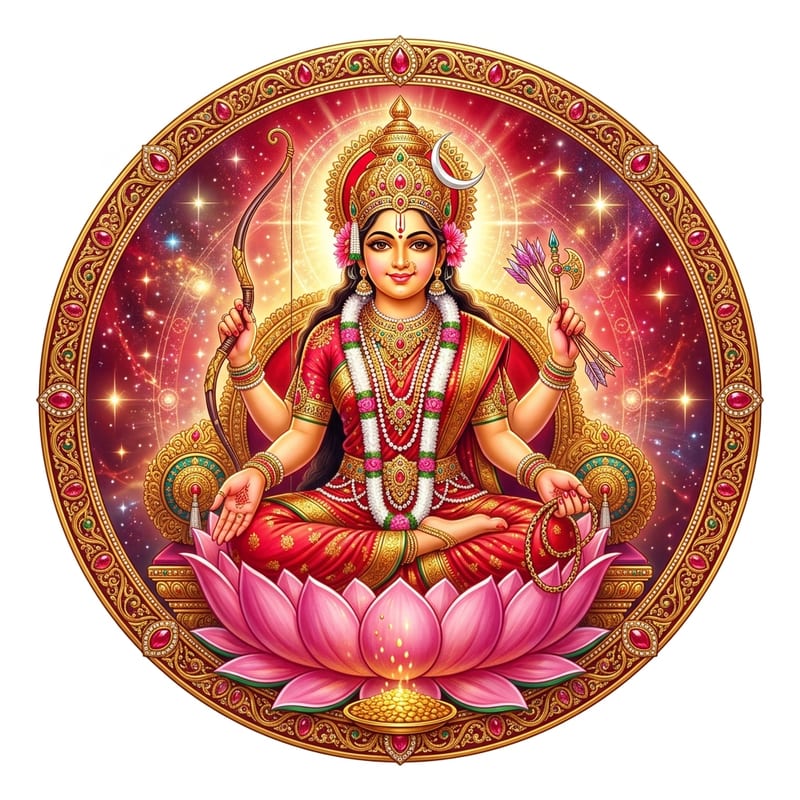
aindrasyeva śarāsanasya dadhatī madhyelalāṭaṃ prabhāṃ
śauklīṃ kāntimanuṣṇagoriva śirasyātanvatī sarvataḥ |
eṣāsau tripurā hṛdi dyutirivoṣṇāṃśoḥ sadāhaḥ sthitāt
chindyānnaḥ sahasā padaistribhiraghaṃ jyotirmayī vāṅmayī || 1 ||
śauklīṃ kāntimanuṣṇagoriva śirasyātanvatī sarvataḥ |
eṣāsau tripurā hṛdi dyutirivoṣṇāṃśoḥ sadāhaḥ sthitāt
chindyānnaḥ sahasā padaistribhiraghaṃ jyotirmayī vāṅmayī || 1 ||
- aiṃdrasya iva śarāsanasyalike Indra's rainbow
- dhadhatī madhye lalāṭaṃ prabhāṃholding radiance at the centre of the forehead
- śauklīṃ kāntim anuṣṇagoḥ iva śirasi ātanvatī sarvataḥspreading white moonlight over the crown in all directions
- eṣā asau Tripurāthis is that Tripurā
- hṛdi dyutiḥ iva uṣṇāṃśoḥ sadā ahaḥ sthitātdwelling in the heart as the sun's inner radiance
- chindhyāt naḥ sahasā padaiḥ tribhiḥ aghaṃmay she suddenly cut our sins with three syllables
- jyotirmayī vāṅmayīmade of light, made of speech.
yā mātrā trapusīlatātanulasattantūtthitispardhinī
vāgbīje prathame sthitā tava sadā tāṃ manmahe te vayam |
śaktiḥ kuṇḍalinīti viśvajananavyāpārabaddhodyamāḥ
jñātvetthaṃ na punaḥ spṛśanti jananīgarbhe'rbhakatvaṃ narāḥ || 2 ||
vāgbīje prathame sthitā tava sadā tāṃ manmahe te vayam |
śaktiḥ kuṇḍalinīti viśvajananavyāpārabaddhodyamāḥ
jñātvetthaṃ na punaḥ spṛśanti jananīgarbhe'rbhakatvaṃ narāḥ || 2 ||
- yā mātrāthat vowel-unit / subtle measure
- trapusī-latā-tanu-lasat-tantū-utthiti-spardhinivying with the rising thread of the slender tin-creeper
- vāg-bīje prathame sthitā tava sadāalways abiding in your first vāg-bīja (Aiṃ)
- tāṃ manmahe te vayamwe meditate on that for you
- śaktiḥ kuṇḍalinī iti(knowing it as) the Kuṇḍalinī Śakti
- viśva-janana-vyāpāra-baddha-udyamāḥexerting themselves in the work of bringing forth the universe
- jñātvā itthaṃ na punaḥ spṛśanti janani-garbhe arbhakatvaṃ narāḥknowing thus, those men no longer touch the state of being a child in the womb.
dṛṣṭvā sambhramakāri vastu sahasā ai ai iti vyāhṛtaṃ
yenākūtavaśādapīha varade binduṃ vināpyakṣaram |
tasyāpi dhruvameva devi tarasā jāte tavānugrahe
vācaḥsūktisudhārasadravamuco niryānti vaktrāmbujāt || 3 ||
yenākūtavaśādapīha varade binduṃ vināpyakṣaram |
tasyāpi dhruvameva devi tarasā jāte tavānugrahe
vācaḥsūktisudhārasadravamuco niryānti vaktrāmbujāt || 3 ||
- dṛṣṭvā sambhrama-kāri vastu sahasāupon suddenly seeing an astonishing thing
- ai ai iti vyāhṛtaṃuttered as 'ai, ai!'
- yena ākūta-vaśāt api iha varadeeven by one driven by impulse, here, O Varadā
- binduṃ vinā api akṣaramthe syllable even without the bindu
- tasya api dhruvam eva devi tarasā jāte tava anugrahēfor that person too, when your grace swiftly comes, O Goddess
- vācaḥ sūkti-sudhā-rasa-drava-mucaḥ niryānti vaktrāmbujātstreams releasing the nectar-juice of eloquent speech pour forth from his lotus-mouth.
yannitye tava kāmarājamaparaṃ mantrākṣaraṃ niṣkalaṃ
tatsārasvatamityavaiti viralaḥ kaścidbudhaścedbhuvi |
ākhyānaṃ pratiparva satyatapaso yatkīrtayanto dvijāḥ
prārambhe praṇavāspadapraṇayitāṃ nītvoccaranti sphuṭam || 4 ||
tatsārasvatamityavaiti viralaḥ kaścidbudhaścedbhuvi |
ākhyānaṃ pratiparva satyatapaso yatkīrtayanto dvijāḥ
prārambhe praṇavāspadapraṇayitāṃ nītvoccaranti sphuṭam || 4 ||
- yat nityē tava kāmarājam aparaṃ mantrākṣaraṃ niṣkalaṃthat second syllable of your eternal Kāma-rāja (mantra), without division
- tat sārasvataṃ iti avaitithat he knows to be 'sārasvata'
- viralaḥ kaścit budhaḥ cet bhuviif there is any rare wise man on earth
- ākhyānaṃ pratiparvana satyatapasaḥthe account at every occasion of true austerity
- yat kīrtayantaḥ dvijāḥwhich the twice-born, celebrating
- prārambhe praṇava-āspada-praṇayitāṃ nītvā uccāranti sphuṭamplacing (it) in the position of the Praṇava at the beginning, they clearly intone.
yatsadyo vacasāṃ pravṛttikaraṇe dṛṣṭaprabhāvaṃ budhaiḥ
tārtīyaṃ tadahaṃ namāmi manasā tvadbījaminduprabham |
astyaurvo'pi sarasvatīmanugato jāḍyāmbuvicchittaye
gośabdo giri vartate saniyataṃ yogaṃ vinā siddhidaḥ || 5 ||
tārtīyaṃ tadahaṃ namāmi manasā tvadbījaminduprabham |
astyaurvo'pi sarasvatīmanugato jāḍyāmbuvicchittaye
gośabdo giri vartate saniyataṃ yogaṃ vinā siddhidaḥ || 5 ||
- yat sadyo vacasāṃ pravṛtti-karaṇe dṛṣṭa-prabhāvaṃ budhaiḥwhose power in immediately activating speech has been witnessed by the wise
- tārtīyaṃ tat ahaṃ namāmi manasā tvad-bījam indu-prabhamthat third bīja of yours, bright as the moon, I bow to in my mind
- asti aurvaḥ api sarasvatīm anugataḥ jāḍya-ambu-vicchhittayeeven Aurva (the submarine fire), associated with Sarasvatī, exists to cut through the waters of dullness
- go-śabdaḥ giri vartate sa-niyataṃ yogaṃ vinā siddhi-daḥthe word 'go' abides on the mountain, certainly granting siddhi without yoga.
ekaikaṃ tava devi bījamanaghaṃ savyañjanāvyañjanaṃ
kūṭasthaṃ yadi vā pṛthak kramagataṃ yadvā sthitaṃ vyutkramāt |
yaṃ yaṃ kāmamapekṣya yena vidhinā kenāpi vā cintitaṃ
japtaṃ vā saphalīkaroti satataṃ taṃ taṃ samastaṃ nṛṇām || 6 ||
kūṭasthaṃ yadi vā pṛthak kramagataṃ yadvā sthitaṃ vyutkramāt |
yaṃ yaṃ kāmamapekṣya yena vidhinā kenāpi vā cintitaṃ
japtaṃ vā saphalīkaroti satataṃ taṃ taṃ samastaṃ nṛṇām || 6 ||
- ekaikaṃ tava devi bījaṃ anaghaṃeach of your bījas, O Goddess, sinless
- sa-vyañjana-avyañjanaṃwith or without a consonant
- kūṭasthaṃ yadi vā pṛthak krama-gataṃ yadvā sthitaṃ vyutkramātwhether standing as a whole, or arranged separately in sequence, or placed in reverse
- yaṃ yaṃ kāmam apekṣya yena vidhinā kenāpi vā cintitaṃwhatever desire is intended by whatever method, even any
- japtaṃ vāor recited
- saphali-karoti satataṃ taṃ taṃ samastaṃ nṛṇāṃit constantly fulfils all of that entirely for humans.
vāme pustakadhāriṇīmabhayadāṃ sākṣasrajaṃ dakṣiṇe
bhaktebhyo varadānapeśalakarāṃ karpūrakundojjvalām |
ujjṛmbhāmbujapatrakāntinayanasnigdhaprabhālokinīṃ
ye tvāmamba na śīlayanti manasā teṣāṃ kavitvaṃ kutaḥ || 7 ||
bhaktebhyo varadānapeśalakarāṃ karpūrakundojjvalām |
ujjṛmbhāmbujapatrakāntinayanasnigdhaprabhālokinīṃ
ye tvāmamba na śīlayanti manasā teṣāṃ kavitvaṃ kutaḥ || 7 ||
- vāme pustaka-dhāriṇīm abhaya-dāṃholding a book on the left, granting fearlessness
- sākṣa-srajaṃ dakṣiṇewith an akṣamāla on the right
- bhaktebhyo varadāna-peśala-karāṃwith hands graceful in granting boons to devotees
- karpūra-kunda-ujjvalāṃradiant as camphor and jasmine
- ujjṛmbha-ambuja-patra-kānti-nayana-snigdha-prabhā-lokinīṃwhose eyes are of the tender beauty of blooming lotus petals and cast a lustrous glance
- ye tvām amba na śīlayanti manasāthose who do not cultivate you in mind
- teṣāṃ kavitvaṃ kutaḥwhere is their poetic power?
ye tvāṃ pāṇḍurapuṇḍarīkapaṭalaspaṣṭābhirāmaprabhāṃ
siñcantīmamṛtadravairiva śiro dhyāyanti mūrdhni sthitām |
aśrāntā vikaṭasphuṭākṣarapadā niryāti vaktrāmbujāt
teṣāṃ bhārati bhāratī surasaritkallolalolormivat || 8 ||
siñcantīmamṛtadravairiva śiro dhyāyanti mūrdhni sthitām |
aśrāntā vikaṭasphuṭākṣarapadā niryāti vaktrāmbujāt
teṣāṃ bhārati bhāratī surasaritkallolalolormivat || 8 ||
- ye tvāṃ pāṃḍura-puṇḍarīka-paṭala-spaṣṭa-abhirāma-prabhāṃwhose radiance is delightfully clear like a cluster of white lotuses
- siñcantīm amṛta-dravaiḥ iva śiraḥas if sprinkling the head with nectar streams
- dhyāyanti mūrdhni sthitāṃwho meditate (on you) stationed at the crown
- aśrāntā vikaṭa-sphuṭa-akṣara-padā niryāti vaktrāmbujāttireless, with bold clear syllables and words, she pours forth from the lotus-mouth
- teṣāṃ bhārati bhāratīfor them Bhāratī (speech) is truly Bhāratī
- sura-sarit-kallola-lola-ūrmivatlike the playful surging waves of the divine river (Gaṅgā).
ye sindūraparāgapiñjapihitāṃ tvattejasādyāmimāṃ
urvīṃ cāpi vilīnayāvakarasaprastāramagnāmiva |
paśyanti kṣaṇamapyananyamanasasteṣāmanaṅgajvara-
-klāntasrastakuraṅgaśābakadṛśo vaśyā bhavanti sphuṭam || 9 ||
urvīṃ cāpi vilīnayāvakarasaprastāramagnāmiva |
paśyanti kṣaṇamapyananyamanasasteṣāmanaṅgajvara-
-klāntasrastakuraṅgaśābakadṛśo vaśyā bhavanti sphuṭam || 9 ||
- ye sindūra-parāga-piñja-pihitāṃ tvat-tejasā adyāṃ imāṃthis (earth) covered and concealed in the red-gold of your sindūra-ochre radiance
- urvīṃ ca apiand the earth also
- vilīna-yāvaka-rasa-prastāra-magnām ivaas if submerged in the spread of dissolved lac (red dye)
- paśyanti kṣaṇam api ananya-manasaḥwho behold it even for a moment with undivided mind
- teṣāṃ anaṅga-jvara-klānta-srasta-kuraṅga-śābaka-dṛśaḥfor them, deer-eyed (women) weary and drooping with the fever of Love
- vaśyā bhavanti sphuṭambecome clearly enchanted.
cañcatkāñcanakuṇḍalāṅgadadharāmābaddhakāñcīsrajaṃ
ye tvāṃ cetasi tadgate kṣaṇamapi dhyāyanti kṛtvā sthirām |
teṣāṃ veśmasu vibhramādaharahaḥ sphārībhavantyaściraṃ
mādyatkuñjarakarṇatālataralāḥ sthairyaṃ bhajante śriyaḥ || 10 ||
ye tvāṃ cetasi tadgate kṣaṇamapi dhyāyanti kṛtvā sthirām |
teṣāṃ veśmasu vibhramādaharahaḥ sphārībhavantyaściraṃ
mādyatkuñjarakarṇatālataralāḥ sthairyaṃ bhajante śriyaḥ || 10 ||
- cañcat-kāñcana-kuṇḍala-aṅgada-dharāṃwearing gleaming golden earrings and armlets
- ābaddha-kāñcī-srajaṃwearing a girdle of bells
- ye tvāṃ cetasi tad-gate kṣaṇam api dhyāyanti kṛtvā sthirāṃwho, with mind fixed on that, meditate on you steadily even for a moment
- teṣāṃ veśmasu vibhramāt aharahaḥ sphārī-bhavanti aściraṃin their homes, day by day, quickly spreading out playfully
- mādhyat-kuñjara-karṇa-tāla-taralāḥ sthairyaṃ bhajante śriyaḥLakṣmī, swaying like the ear-fan of an intoxicated elephant, settles with permanence.
ārbhaṭyā śaśikhaṇḍamaṇḍitajaṭājūṭāṃ nṛmuṇḍasrajaṃ
bandhūkaprasavāruṇāmbaradharāṃ pretāsanādhyāsinīm |
tvāṃ dhyāyanti caturbhujāṃ trinayanāmāpīnatuṅgastanīṃ
madhye nimnavalitrayāṅkitatanuṃ tvadrūpasaṃvittaye || 11 ||
bandhūkaprasavāruṇāmbaradharāṃ pretāsanādhyāsinīm |
tvāṃ dhyāyanti caturbhujāṃ trinayanāmāpīnatuṅgastanīṃ
madhye nimnavalitrayāṅkitatanuṃ tvadrūpasaṃvittaye || 11 ||
- ārbhaṭyāterrible in bearing
- śaśi-khaṇḍa-maṇḍita-jaṭā-jūṭāṃwith matted locks adorned by a crescent moon
- nṛ-muṇḍa-srajaṃwearing a garland of human skulls
- bandhūka-prasava-aruṇa-ambara-dharāṃclad in garments red as the bandūka flower
- preta-āsana-adhyāsinīmseated on a corpse-throne
- tvāṃ dhyāyantithey meditate on you
- catur-bhujāṃ tri-nayanāṃfour-armed, three-eyed
- āpīna-tuṅga-stanīṃwith full and lofty breasts
- madhye nimna-vali-traya-aṅkita-tanuṃwith a waist marked by three folds
- tvat-rūpa-saṃvittayein order to perceive your true form.
jāto'pyalpaparicchade kṣitibhujāṃ sāmānyamātre kule
niḥśeṣāvanicakravartipadavīṃ labdhvā pratāponnataḥ |
yadvidyādhara bṛndavanditapadaḥ śrīvatsarājo'bhavat
devi tvaccaraṇāmbuja praṇatijaḥ so'yaṃ prasādodayaḥ || 12 ||
niḥśeṣāvanicakravartipadavīṃ labdhvā pratāponnataḥ |
yadvidyādhara bṛndavanditapadaḥ śrīvatsarājo'bhavat
devi tvaccaraṇāmbuja praṇatijaḥ so'yaṃ prasādodayaḥ || 12 ||
- jātaḥ api alpa-paricchade kṣiti-bhujāṃ sāmānya-mātre kuleeven though born in a family of modest means, among the ordinary class of kings
- niḥśeṣa-avani-cakravartī-padavīṃ labdhvāhaving attained the rank of sovereign over the entire earth
- pratāpa-unnataḥexalted by his splendour
- yat vidyādhara-bṛnda-vandita-padaḥ śrī-vatsa-rājaḥ abhavatthat the illustrious Vatsa-rāja became praised at his feet by hosts of Vidyādharas
- devi tvac-caraṇāmbuja-praṇati-jaḥ saḥ ayaṃ prasāda-udayaḥO Goddess, this grace arose from prostration at your lotus feet.
caṇḍi tvaccaraṇāmbujārcanakṛte bilvādilolluṇṭhana-
-truṭyatkaṇṭakakoṭibhiḥ paricayaṃ yeṣāṃ na jagmuḥ karāḥ |
te daṇḍāṅkuśacakracāpakuliśaśrīvatsamatsyāṅkitaiḥ
jāyante pṛthivībhujaḥ kathamivāmbhojaprabhaiḥ pāṇibhiḥ || 13 ||
-truṭyatkaṇṭakakoṭibhiḥ paricayaṃ yeṣāṃ na jagmuḥ karāḥ |
te daṇḍāṅkuśacakracāpakuliśaśrīvatsamatsyāṅkitaiḥ
jāyante pṛthivībhujaḥ kathamivāmbhojaprabhaiḥ pāṇibhiḥ || 13 ||
- caṇḍi tvac-caraṇāmbuja-arcana-kṛteO Caṇḍī, for the worship of your lotus feet
- bilva-ādi-lollunṭhana-truṭyat-kaṇṭaka-koṭibhiḥwith the scores of thorns snapping as bilva and other offerings are gathered
- paricayaṃ yeṣāṃ na jagmuḥ karāḥwhose hands have not become acquainted
- te daṇḍa-aṅkuśa-cakra-cāpa-kuliśa-śrīvatsa-matsya-aṅkitaiḥmarked with staff, goad, disc, bow, thunderbolt, śrīvatsa, and fish
- jāyante pṛthibī-bhujaḥ kataham iva ambhoja-prabhaiḥ pāṇibhiḥhow can they be born as kings of the earth with lotus-bright hands?
viprāḥ kṣoṇibhujo viśastaditare kṣīrājyamadhvāsavaiḥ |
tvāṃ devi tripure parāparamayīṃ santarpya pūjāvidhau |
yāṃ yāṃ prārthayate manaḥ sthiradhiyāṃ teṣāṃ ta eva dhruvaṃ
tāṃ tāṃ siddhimavāpnuvanti tarasā vighnairavighnīkṛtāḥ || 14 ||
tvāṃ devi tripure parāparamayīṃ santarpya pūjāvidhau |
yāṃ yāṃ prārthayate manaḥ sthiradhiyāṃ teṣāṃ ta eva dhruvaṃ
tāṃ tāṃ siddhimavāpnuvanti tarasā vighnairavighnīkṛtāḥ || 14 ||
- viprāḥ kṣoṇi-bhujaḥ viśaḥ tat-itarebrāhmaṇas, kings, merchants, and others
- kṣīra-ājya-madhu-āsavaiḥwith milk, ghee, honey, and wine
- tvāṃ devi tripure para-apara-mayīṃ santarpya pūjā-vidhauhonouring you, O Goddess Tripurā, who are both transcendent (parā) and immanent (aparā), in the rite of worship
- yāṃ yāṃ prārthayate manaḥ sthira-dhiyāṃwhatever the mind of those with steady intellect desires
- te eva dhruvam tāṃ tāṃ siddhiṃ avāpnuvanticertainly they attain those very siddhis
- tarasā vighnaiḥ avighnī-kṛtāḥswiftly, with all obstacles made harmless.
śabdānāṃ jananī tvamatra bhuvane vāgvādinītyucyase
tvattaḥ keśavavāsava prabhṛtayo'pyāvirbhavanti sphuṭam |
līyante khalu yatra kalpavirame brahmādayaste'pyamī
sā tvaṃ kācidacintyarūpamahimā śaktiḥ parā gīyase || 15 ||
tvattaḥ keśavavāsava prabhṛtayo'pyāvirbhavanti sphuṭam |
līyante khalu yatra kalpavirame brahmādayaste'pyamī
sā tvaṃ kācidacintyarūpamahimā śaktiḥ parā gīyase || 15 ||
- śabdānāṃ jananī tvam atra bhuvaneyou are the mother of words in this world
- vāg-vādinī iti ucyaseyou are called Vāg-vādinī (she who makes speech speak)
- tvattaḥ keśava-vāsava-prabhṛtayaḥ api āvirbhavanti sphuṭamfrom you Keśava (Viṣṇu), Vāsava (Indra) and others clearly emerge
- liyante khalu yatra kalpa-virame brahmādayaḥ te apiat the end of the cosmic age, even Brahmā and those others merge into you
- sā tvaṃ kācit acintyarūpa-mahimā śaktiḥ parā gīyasesuch are you: some supreme Śakti of inconceivable form and greatness, praised as the ultimate.
devānāṃ tritayaṃ trayī hutabhujāṃ śaktitrayaṃ triḥ svarāḥ
trailokyaṃ tripadī tripuṣkaramatho tribrahma varṇāstrayaḥ |
yatkiñcijjagati tridhā niyamitaṃ vastu trivargādikaṃ
tatsarvaṃ tripureti nāma bhagavatyanveti te tattvataḥ || 16 ||
trailokyaṃ tripadī tripuṣkaramatho tribrahma varṇāstrayaḥ |
yatkiñcijjagati tridhā niyamitaṃ vastu trivargādikaṃ
tatsarvaṃ tripureti nāma bhagavatyanveti te tattvataḥ || 16 ||
- devānāṃ tritayaṃthe triad of gods (Brahmā, Viṣṇu, Śiva)
- trayīthe triple Veda
- huta-bhujāṃ śakti-trayaṃthe triple fire (gārhapatya, dakṣiṇāgni, āhavanīya)
- triḥ svarāḥthe three svaras (udātta, anudātta, svarita)
- trailokkaṃthe three worlds
- tripadīthe Gāyatrī
- tripuṣkaramthe three sacred pools / tīrthas
- atha tri-brahmathe triple Brahman of OM
- varṇāḥ trayaḥthe three varṇas
- yat kiñcit jagati tridhā niyamitaṃ vastu trivargādikaṃwhatever thing in this world is regulated in threes, including the trivarga (dharma, artha, kāma)
- tat sarvaṃ tripure iti nāma bhagavatī anveti te tattvataḥall of that, in truth, is attended by your name 'Tripurā', O Goddess.
lakṣmīṃ rājakule jayāṃ raṇabhuvi kṣemaṅkarīmadhvani
kravyādadvipasarpabhāji śabarīṃ kāntāradurge girau |
bhūtapretapiśācajambukabhaye smṛtvā mahābhairavīṃ
vyāmohe tripurāṃ taranti vipadastārāṃ ca toyaplave || 17 ||
kravyādadvipasarpabhāji śabarīṃ kāntāradurge girau |
bhūtapretapiśācajambukabhaye smṛtvā mahābhairavīṃ
vyāmohe tripurāṃ taranti vipadastārāṃ ca toyaplave || 17 ||
- lakṣmīṃ rāja-kuleas Lakṣmī in the royal court
- jayāṃ raṇa-bhuvias Jayā on the battlefield
- kṣemaṃkarīm adhvanias Kṣemaṃkarī on the road
- kravyāda-dvipa-sarpa-bhāji śabarīṃ kāntāra-durge girauas Śabarī in the forest with predators and serpents, on the mountain pass
- bhūta-preta-piśāca-jambuka-bhaye smṛtvā mahā-bhairavīṃremembering the great Bhairavī when fearful of ghosts, demons, and jackals
- vyāmohe tripurāṃas Tripurā in confusion
- tarantī vipadaḥ tārāṃ ca toya-plaveand as Tārā in a flood – they cross all dangers.
māyā kuṇḍalinī kriyā madhumatī kālī kalāmālinī
mātaṅgī vijayā jayā bhagavatī devī śivā śāmbhavī |
śaktiḥ śaṅkaravallabhā trinayanā vāgvādinī bhairavī
hrīṅkārī tripurā parāparamayī mātā kumārītyasi || 18 ||
mātaṅgī vijayā jayā bhagavatī devī śivā śāmbhavī |
śaktiḥ śaṅkaravallabhā trinayanā vāgvādinī bhairavī
hrīṅkārī tripurā parāparamayī mātā kumārītyasi || 18 ||
- māyāthe cosmic illusion / the Māyā-śakti
- kuṇḍalinīthe coiled serpent power
- kriyāaction-śakti
- madhumatīthe honey-sweet one
- kālīthe dark goddess of time
- kalāmālinīgarlanded with the sixteen kalās
- mātaṅgīthe elephant-goddess of speech
- vijayāthe victorious
- jayāthe conquering
- bhagavatīthe blessed
- devīthe goddess
- śivāthe auspicious
- śāmbhavīŚambhu's beloved
- śaktiḥthe power
- śaṅkara-vallabhāŚaṅkara's beloved
- tri-nayanāthree-eyed
- vāg-vādinīshe who makes speech speak
- bhairavīthe fierce
- hrīṅkārīshe who is Hrīṃ
- tripurāshe of the three cities
- para-apara-mayīconsisting of both transcendent and immanent
- mātāmother
- kumārīthe maiden.
āīpallavitaiḥ parasparayutairdvitrikramādyakṣarai
kādyaiḥ kṣāntagataiḥ svarādibhiratha kṣāntaiśca taiḥ sasvaraiḥ |
nāmāni tripure bhavanti khalu yānyatyantaguhyāni te
tebhyo bhairavapatni viṃśatisahasrebhyaḥ parebhyo namaḥ || 19 ||
kādyaiḥ kṣāntagataiḥ svarādibhiratha kṣāntaiśca taiḥ sasvaraiḥ |
nāmāni tripure bhavanti khalu yānyatyantaguhyāni te
tebhyo bhairavapatni viṃśatisahasrebhyaḥ parebhyo namaḥ || 19 ||
- āī-pallavitaiḥfrom the Aī-syllable expanded (the two vowels of the bīja Aiṃ)
- parasparayutaiḥcombined with one another
- dvi-tri-kramāt akṣaraiḥby letters arranged two or three at a time
- kādyaiḥ kṣānta-gataiḥfrom letters beginning with ka through kṣa
- svara-ādibhiḥ atha kṣāntaiḥ ca taiḥ sa-svaraiḥfrom letters beginning with vowels, and those ending in kṣa combined with their vowels
- nāmāni tripure bhavanti khalu yāni atyanta-guhyāni teyour names that are entirely secret, O Tripurā
- tebhyo bhairava-patni viṃśati-sahasrebhyaḥ parebhyaḥ namaḥto those more than twenty thousand and to you, O consort of Bhairava, homage!
boddhavyā nipuṇaṃ budhaiḥ stutiriyaṃ kṛtvā manastadgataṃ
bhāratyāstripuretyananyamanasā yatrādyavṛtte sphuṭam |
ekadvitripadakrameṇa kathitastatpādasaṅkhyākṣaraiḥ
mantroddhāra vidhirviśeṣasahitaḥ satsampradāyānvitaḥ || 20 ||
bhāratyāstripuretyananyamanasā yatrādyavṛtte sphuṭam |
ekadvitripadakrameṇa kathitastatpādasaṅkhyākṣaraiḥ
mantroddhāra vidhirviśeṣasahitaḥ satsampradāyānvitaḥ || 20 ||
- boddhavyā nipuṇaṃ budhaiḥ stutir iyaṃthis hymn is to be carefully understood by the wise
- kṛtvā manas tad-gataṃfixing the mind on that
- bhāratyāḥ tripure iti ananya-manasāon Bhāratī-Tripurā, with undivided mind
- yatra ādya-vṛtte sphuṭamwhere, in the opening verse clearly
- eka-dvi-tri-pada-krameṇa kathitaḥdescribed by the one-two-three-foot sequence
- tat-pāda-saṃkhyā-akṣaraiḥby the letter-count of those feet
- mantra-uddhāra-vidhiḥ viśeṣa-sahitaḥ sat-sampradāya-anvitaḥthe method of mantra-extraction, along with specifics, according to authentic tradition.
sāvadyaṃ niravadyamastu yadi vā kiṃ vānayā cintayā
nūnaṃ stotramidaṃ paṭhiṣyati jano yasyāsti bhaktistvayi |
sañcintyāpi laghutvamātmani dṛḍhaṃ sañjāyamānaṃ haṭhāt
tvadbhaktyā mukharīkṛtena racitaṃ yasmānmayāpi dhṛvam || 21 ||
nūnaṃ stotramidaṃ paṭhiṣyati jano yasyāsti bhaktistvayi |
sañcintyāpi laghutvamātmani dṛḍhaṃ sañjāyamānaṃ haṭhāt
tvadbhaktyā mukharīkṛtena racitaṃ yasmānmayāpi dhṛvam || 21 ||
- sāvadyaṃ niravadyam astu yadi vāwhether faulty or faultless
- kiṃ vā anayā cintayāwhat is the point of this worry?
- nūnaṃ stotram idaṃ paṭhiṣyati janaḥ yasya asti bhaktiḥ tvayisurely those who have devotion to you will recite this hymn
- sañcintyāpi laghutvam ātmani dṛḍhaṃ sañjāyamānaṃ haṭhāteven after deeply considering my own smallness, which has arisen firmly despite all effort
- tvat-bhaktyā mukharī-kṛtena racitaṃ yasmāt mayā api dhruvamsince this has certainly been composed by me, made eloquent (mukharī-kṛtena) by devotion to you.
iti śrīkālidāsa viracita pañcastavyāṃ prathamaḥ laghustavaḥ |