
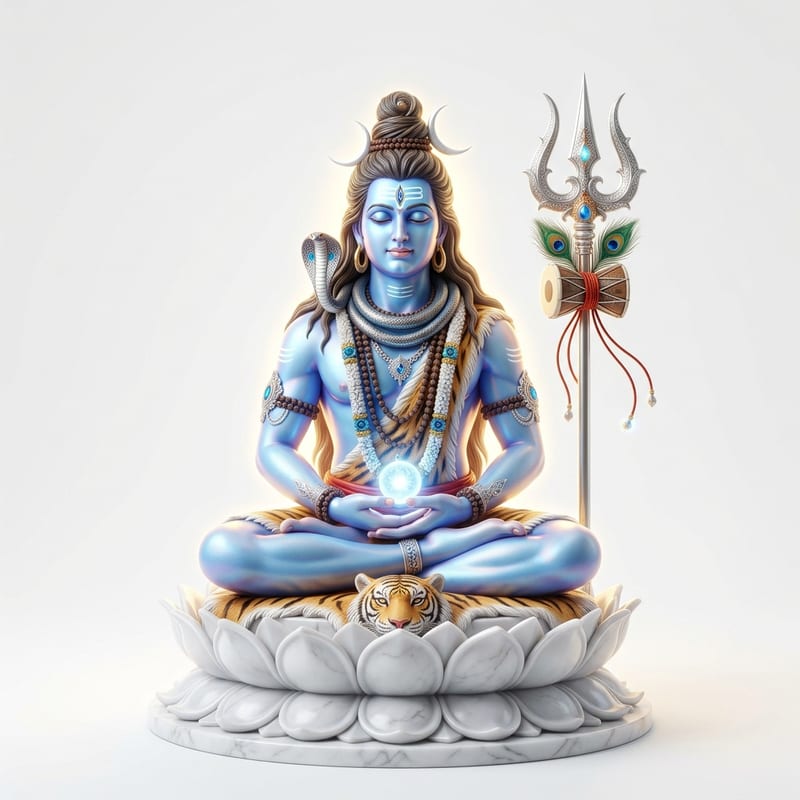
|| śrī sūrya stotram (śiva proktam) ||
|| dhyānam ||
dhyāyetsūryamanantakoṭikiraṇaṃ tejomayaṃ bhāskaraṃ
bhaktānāmabhayapradaṃ dinakaraṃ jyotirmayaṃ śaṅkaram |
ādityaṃ jagadīśamacyutamajaṃ trailokyacūḍāmaṇiṃ
bhaktābhīṣṭavarapradaṃ dinamaṇiṃ mārtāṇḍamādyaṃ śubham || 1 ||
bhaktānāmabhayapradaṃ dinakaraṃ jyotirmayaṃ śaṅkaram |
ādityaṃ jagadīśamacyutamajaṃ trailokyacūḍāmaṇiṃ
bhaktābhīṣṭavarapradaṃ dinamaṇiṃ mārtāṇḍamādyaṃ śubham || 1 ||
kālātmā sarvabhūtātmā vedātmā viśvatomukhaḥ |
janmamṛtyujarāvyādhisaṃsārabhayanāśanaḥ || 2 ||
janmamṛtyujarāvyādhisaṃsārabhayanāśanaḥ || 2 ||
brahmasvarūpa udaye madhyāhne tu maheśvaraḥ |
astakāle svayaṃ viṣṇustrayīmūrtirdivākaraḥ || 3 ||
astakāle svayaṃ viṣṇustrayīmūrtirdivākaraḥ || 3 ||
ekacakraratho yasya divyaḥ kanakabhūṣitaḥ |
so'yaṃ bhavatu naḥ prītaḥ padmahasto divākaraḥ || 4 ||
so'yaṃ bhavatu naḥ prītaḥ padmahasto divākaraḥ || 4 ||
padmahastaḥ parañjyotiḥ pareśāya namo namaḥ |
aṇḍayonirmahāsākṣī ādityāya namo namaḥ || 5 ||
aṇḍayonirmahāsākṣī ādityāya namo namaḥ || 5 ||
kamalāsana deveśa bhānumūrte namo namaḥ |
dharmamūrtirdayāmūrtistattvamūrtirnamo namaḥ || 6 ||
dharmamūrtirdayāmūrtistattvamūrtirnamo namaḥ || 6 ||
sakaleśāya sūryāya kṣānteśāya namo namaḥ |
kṣayāpasmāragulmādidurdoṣavyādhināśanam || 7 ||
kṣayāpasmāragulmādidurdoṣavyādhināśanam || 7 ||
sarvajvaraharaṃ caiva kukṣiroganivāraṇam |
etat stotraṃ śiva proktaṃ sarvasiddhikaraṃ param |
sarvasampatkaraṃ caiva sarvābhīṣṭapradāyakam || 8 ||
etat stotraṃ śiva proktaṃ sarvasiddhikaraṃ param |
sarvasampatkaraṃ caiva sarvābhīṣṭapradāyakam || 8 ||
|| iti śrī sūrya stotram (śiva proktam) sampūrṇam ||