
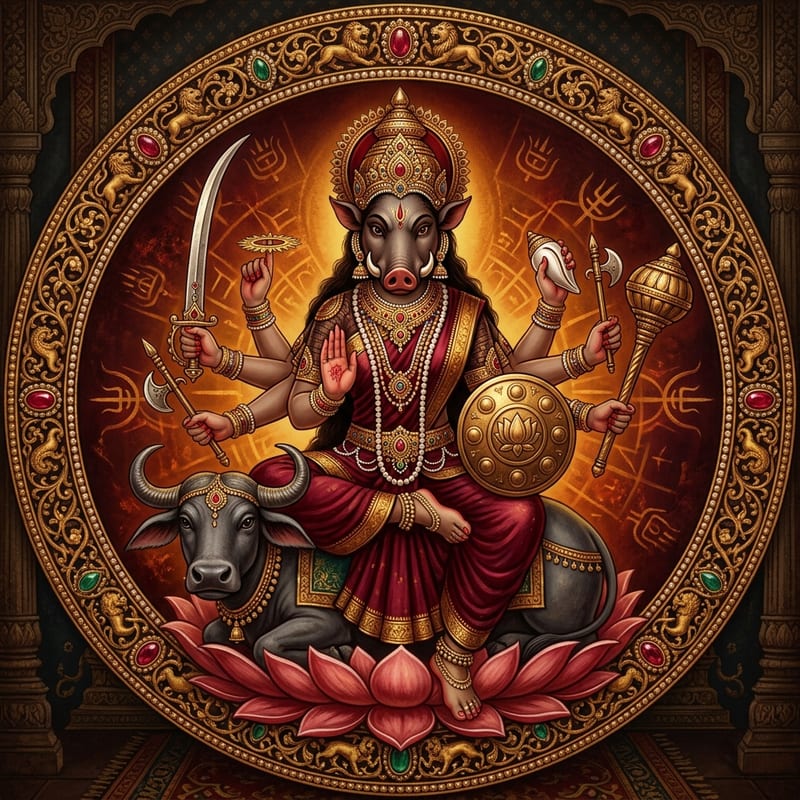
શ્રી વારાહી દ્વાદશનામાવલી
(Sri Varahi Dvadasanamavali in Gujarati)
Also known as sri varahi dwadasa namavali · shri varahi dvadasanamavali · shree varahi dvadasanamavali
The same twelve names that the Brahmāṇḍa Purāṇa gives as verse, set out singly for telling: Pañcamī, Daṇḍanāthā, Saṅketā, Samayeśvarī, Samayasaṅketā, Vārāhī, Potriṇī, Śivā, Vārtālī, Mahāsenā, Ājñācakreśvarī and Arighnī, each in the dative between Oṁ and namaḥ. It is the shortest Vārāhī text here and the one most used, because twelve names can be told at each of the day's junctures where a hundred and eight cannot, and because the source itself promises that hearing them alone is enough to please her. The verse form, with its frame of Hayagrīva instructing Agastya and its account of the gods praising her from the clouds, is kept as a separate text and gives these twelve their setting.