
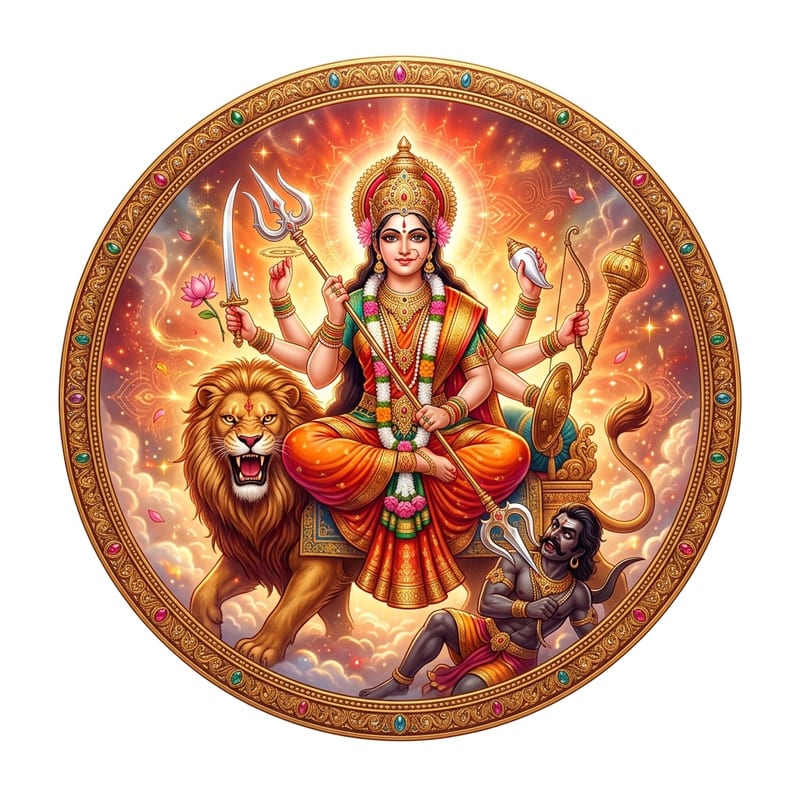
આનન્દમન્થરપુરન્દરમુક્તમાલ્યં
મૌલૌ હઠેન નિહિતં મહિષાસુરસ્ય ।
પાદામ્બુજં ભવતુ મે વિજયાય મઞ્જુ-
-મઞ્જીરશિઞ્જિતમનોહરમમ્બિકાયાઃ ॥ 1 ॥
મૌલૌ હઠેન નિહિતં મહિષાસુરસ્ય ।
પાદામ્બુજં ભવતુ મે વિજયાય મઞ્જુ-
-મઞ્જીરશિઞ્જિતમનોહરમમ્બિકાયાઃ ॥ 1 ॥
- ānandam anthara-purandara-mukta-mālyaṃIndra's released garland being in the midst of joy
- maulau haṭhena nihitaṃ mahiṣāsurasyaforcibly placed on the head of Mahiṣāsura
- pādāmbujam bhavatu me vijayāyamay the lotus feet grant me victory
- mañju-mañjīra-śiñjita-manoharam ambikāyāḥthe charming and lovely anklet-jingling (feet) of Ambikā.
દેવિ ત્ર્યમ્બકપત્નિ પાર્વતિ સતિ ત્રૈલોક્યમાતઃ શિવે
શર્વાણિ ત્રિપુરે મૃડાનિ વરદે રુદ્રાણિ કાત્યાયનિ ।
ભીમે ભૈરવિ ચણ્ડિ શર્વરિકલે કાલક્ષયે શૂલિનિ
ત્વત્પાદપ્રણતાનનન્યમનસઃ પર્યાકુલાન્પાહિ નઃ ॥ 2 ॥
શર્વાણિ ત્રિપુરે મૃડાનિ વરદે રુદ્રાણિ કાત્યાયનિ ।
ભીમે ભૈરવિ ચણ્ડિ શર્વરિકલે કાલક્ષયે શૂલિનિ
ત્વત્પાદપ્રણતાનનન્યમનસઃ પર્યાકુલાન્પાહિ નઃ ॥ 2 ॥
- deviO Goddess
- tryambaka-patniwife of Tryambaka (Śiva)
- pārvatiPārvatī
- satiSatī
- trailokya-mātaMother of the three worlds
- śiveO auspicious one
- śarvaṇiŚarvaṇī
- tripureTripurā
- mṛḍāniMṛḍānī
- varadeVaradā (boon-giver)
- rudrāṇiRudrāṇī
- kātyāyaniKātyāyanī
- bhīmeO fearsome one
- bhairaviBhairavī
- caṇḍiCaṇḍī
- śarvari-kaleŚarvarī (night) / Kalā
- kāla-kṣaye śūliniŚūlinī at time's end
- tvat-pāda-praṇatān ananya-manasaḥus who, bowing to your feet with undivided minds
- paryākulān pāhi naḥprotect us who are greatly troubled.
દેવિ ત્વાં સકૃદેવ યઃ પ્રણમતિ ક્ષોણીભૃતસ્તં નમ-
-ન્ત્યાજન્મસ્ફુરદઙ્ઘ્રિપીઠવિલુઠત્કોટીરકોટિચ્છટાઃ ।
યસ્ત્વામર્ચતિ સોઽર્ચ્યતે સુરગણૈર્યઃ સ્તૌતિ સ સ્તૂયતે
યસ્ત્વાં ધ્યાયતિ તં સ્મરાર્તિવિધુરા ધ્યાયન્તિ વામભ્રુવઃ ॥ 3 ॥
-ન્ત્યાજન્મસ્ફુરદઙ્ઘ્રિપીઠવિલુઠત્કોટીરકોટિચ્છટાઃ ।
યસ્ત્વામર્ચતિ સોઽર્ચ્યતે સુરગણૈર્યઃ સ્તૌતિ સ સ્તૂયતે
યસ્ત્વાં ધ્યાયતિ તં સ્મરાર્તિવિધુરા ધ્યાયન્તિ વામભ્રુવઃ ॥ 3 ॥
- devi tvāṃ sakṛt eva yaḥ praṇamatiO Goddess, the one who prostrates to you even once
- kṣoṇī-bhṛtaḥ taṃ namantikings bow to him
- ā-janma-sphurad-aṅghri-pīṭha-viluṭhat-koṭīra-koṭi-cchaTāḥtheir crowns glittering at the footstool from birth onward
- yas tvāṃ arcati so'rcyate sura-gaṇaiḥthe one who worships you is worshipped by hosts of gods
- yaḥ stauti sa stūyatethe one who praises you is praised
- yas tvāṃ dhyāyati taṃ smarārti-vidhurā dhyāyanti vāma-bhruvaḥthe one who meditates on you – lovely-browed women, tormented by the pain of Love, meditate on him.
ઉન્મત્તા ઇવ સગ્રહા ઇવ વિષવ્યાસક્તમૂર્છા ઇવ
પ્રાપ્તપ્રૌઢમદા ઇવાર્તિવિરહગ્રસ્તા ઇવાર્તા ઇવ ।
યે ધ્યાયન્તિ હિ શૈલરાજતનયાં ધન્યાસ્ત એવાગ્રતઃ
ત્યક્તોપાધિવિવૃદ્ધરાગમનસો ધ્યાયન્તિ તાન્સુભ્રુવઃ ॥ 4 ॥
પ્રાપ્તપ્રૌઢમદા ઇવાર્તિવિરહગ્રસ્તા ઇવાર્તા ઇવ ।
યે ધ્યાયન્તિ હિ શૈલરાજતનયાં ધન્યાસ્ત એવાગ્રતઃ
ત્યક્તોપાધિવિવૃદ્ધરાગમનસો ધ્યાયન્તિ તાન્સુભ્રુવઃ ॥ 4 ॥
- unmattā ivalike those in frenzy
- sa-grahā ivalike those seized by planetary spirits
- viṣa-vyāsakta-mūrchhā ivalike those stupefied by poison
- prāpta-prauḍha-madā ivalike those who have attained full intoxication
- ārti-viraha-grastā iva ārtā ivalike those tormented by the anguish of separation
- ye dhyāyanti hi śaila-rāja-tanayāṃthose who meditate on the daughter of the mountain king
- dhanyāḥ te eva agrataḥthey alone are the blessed ones foremost
- tyakta-upādhi-vivṛddha-rāga-manasaḥwhose minds have abandoned limiting conditions and are filled with pure Love
- dhyāyanti tān subhruvaḥlovely-browed (women) meditate on them.
ધ્યાયન્તિ યે ક્ષણમપિ ત્રિપુરે હૃદિ ત્વાં
લાવણ્યયૌવનધનૈરપિ વિપ્રયુક્તાઃ ।
તે વિસ્ફુરન્તિ લલિતાયતલોચનાનાં
ચિત્તૈકભિત્તિલિખિતપ્રતિમાઃ પુમાંસઃ ॥ 5 ॥
લાવણ્યયૌવનધનૈરપિ વિપ્રયુક્તાઃ ।
તે વિસ્ફુરન્તિ લલિતાયતલોચનાનાં
ચિત્તૈકભિત્તિલિખિતપ્રતિમાઃ પુમાંસઃ ॥ 5 ॥
- dhyāyanti ye kṣaṇam api tripure hṛdi tvāṃthose who meditate on you, O Tripurā, in the heart even for a moment
- lāvaṇya-yauvana-dhanaiḥ api viprayuktāḥthough separated from the wealth of beauty and youth
- te visphuranatithey shine forth
- lalita-āyata-locanānāṃin (the minds of) women with large and lovely eyes
- citta-eka-bhitti-likhita-pratimāḥ pumāṃsaḥmen (painted) as images on the sole wall of their hearts.
એતં કિં નુ દૃશા પિબામ્યુત વિશામ્યસ્યાઙ્ગમઙ્ગૈર્નિજૈઃ
કિં વાઽમું નિગરામ્યનેન સહસા કિં વૈકતામાશ્રયે ।
યસ્યેત્થં વિવશો વિકલ્પલલિતાકૂતેન યોષિજ્જનઃ
કિં તદ્યન્ન કરોતિ દેવિ હૃદયે યસ્ય ત્વમાવર્તસે ॥ 6 ॥
કિં વાઽમું નિગરામ્યનેન સહસા કિં વૈકતામાશ્રયે ।
યસ્યેત્થં વિવશો વિકલ્પલલિતાકૂતેન યોષિજ્જનઃ
કિં તદ્યન્ન કરોતિ દેવિ હૃદયે યસ્ય ત્વમાવર્તસે ॥ 6 ॥
- etaṃ kiṃ nu dṛśā pibāmishall I drink this one with my eyes?
- uta viśāmi asya aṅgam aṅgaiḥ nijaiḥor shall I enter her body with my own limbs?
- kiṃ vā amum nigarāmi anena sahasāor shall I swallow her suddenly?
- kiṃ vā ekatām āśrayeor shall I become one with her?
- yasya itthaṃ vivaśaḥ vikalpa-lalitā-kūtena yoṣij-janaḥof one made helpless by the caprice of the beautiful Lalitā's fancies, a woman
- kiṃ tat yan na karotiwhat is there that she does not make him do?
- devi hṛdaye yasya tvam āvartaseO Goddess, in the heart of one in whom you dwell.
વિશ્વવ્યાપિનિ યદ્વદીશ્વર ઇતિ સ્થાણાવનન્યાશ્રયઃ
શબ્દઃ શક્તિરિતિ ત્રિલોકજનનિ ત્વય્યેવ તથ્યસ્થિતિઃ ।
ઇત્થં સત્યપિ શક્નુવન્તિ યદિમાઃ ક્ષુદ્રા રુજો બાધિતું
ત્વદ્ભક્તાનપિ ન ક્ષિણોષિ ચ રુષા તદ્દેવિ ચિત્રં મહત્ ॥ 7 ॥
શબ્દઃ શક્તિરિતિ ત્રિલોકજનનિ ત્વય્યેવ તથ્યસ્થિતિઃ ।
ઇત્થં સત્યપિ શક્નુવન્તિ યદિમાઃ ક્ષુદ્રા રુજો બાધિતું
ત્વદ્ભક્તાનપિ ન ક્ષિણોષિ ચ રુષા તદ્દેવિ ચિત્રં મહત્ ॥ 7 ॥
- viśva-vyāpiniO all-pervading one
- yadvat īśvara iti sthāṇau ananya-āśrayaḥ śabdaḥjust as the word 'Īśvara' has exclusive application to the Immovable (Śiva)
- śaktiḥ iti tri-loka-janani tvayyeva tathya-sthitiḥso the word 'Śakti' truly applies to you alone, O Mother of the three worlds
- itthaṃ sati api śaknuvanti yad imāḥ kṣudrā rujaḥ bādhituṃ tvad-bhaktān apiyet, given this, these petty afflictions are able to trouble even your devotees
- na kṣiṇoṣi ca ruṣāand you too do not wipe them out in anger
- tat devi citram mahatO Goddess, this is a great wonder.
ઇન્દોર્મધ્યગતાં મૃગાઙ્કસદૃશચ્છાયાં મનોહારિણીં
પાણ્ડૂત્ફુલ્લસરોરુહાસનગતા સ્નિગ્ધપ્રદીપચ્છવિમ્ ।
વર્ષન્તીમમૃતં ભવાનિ ભવતીં ધ્યાયન્તિ યે દેહિનઃ
તે નિર્મુક્તરુજો ભવન્તિ રિપવઃ પ્રોજ્ઝન્તિ તાન્દૂરતઃ ॥ 8 ॥
પાણ્ડૂત્ફુલ્લસરોરુહાસનગતા સ્નિગ્ધપ્રદીપચ્છવિમ્ ।
વર્ષન્તીમમૃતં ભવાનિ ભવતીં ધ્યાયન્તિ યે દેહિનઃ
તે નિર્મુક્તરુજો ભવન્તિ રિપવઃ પ્રોજ્ઝન્તિ તાન્દૂરતઃ ॥ 8 ॥
- indoḥ madhya-gatāṃstationed within the moon's disc
- mṛgāṅka-sadṛśa-cchāyāṃ manoháriṇīṃof moonlike lovely shadow
- pāṇḍu-utphulla-saroruha-āsana-gatāseated on the white fully-bloomed lotus throne
- snigdha-pradīpa-cchavimwith the beauty of a tender lamp-flame
- varṣantīm amṛtaṃ bhavāni bhavatīṃ dhyāyanti ye dehinaḥthose embodied beings who meditate on you, O Bhavānī, showering nectar
- te nirmukta-rujaḥ bhavantithey become free of disease
- ripavaḥ projjhanti tān dūrataḥand their enemies abandon them from afar.
પૂર્ણેન્દોઃ શકલૈરિવાતિબહલૈઃ પીયૂષપૂરૈરિવ
ક્ષીરાબ્ધેર્લહરીભરૈરિવ સુધાપઙ્કસ્ય પિણ્ડૈરિવ ।
પ્રાલેયૈરિવ નિર્મિતં તવ વપુર્ધ્યાયન્તિ યે શ્રદ્ધયા
ચિત્તાન્તર્નિહિતાર્તિતાપવિપદસ્તે સમ્પદં બિભ્રતિ ॥ 9 ॥
ક્ષીરાબ્ધેર્લહરીભરૈરિવ સુધાપઙ્કસ્ય પિણ્ડૈરિવ ।
પ્રાલેયૈરિવ નિર્મિતં તવ વપુર્ધ્યાયન્તિ યે શ્રદ્ધયા
ચિત્તાન્તર્નિહિતાર્તિતાપવિપદસ્તે સમ્પદં બિભ્રતિ ॥ 9 ॥
- pūrṇendoḥ śakalaiḥ iva atibahulaiḥas if of very thick slices of the full moon
- pīyūṣa-pūraiḥ ivaas if of flood-streams of nectar
- kṣīra-abdheḥ laharī-bharaiḥ ivaas if of masses of waves from the milk-ocean
- sudhā-paṅkasya piṇḍaiḥ ivaas if of lumps of nectar-mud
- prāleyaiḥ iva nirmitaṃ tava vapuḥ dhyāyanti ye śraddhayāthose who meditate with faith on your body as if fashioned of snowflakes
- citta-antaḥ-nihita-ārti-tāpa-vipadaḥ te sampadaṃ bibhratithose (ones), having dispelled afflictions, suffering, and calamities hidden in the heart, bear prosperity.
યે સંસ્મરન્તિ તરલાં સહસોલ્લસન્તીં
ત્વાં ગ્રન્થિપઞ્ચકભિદં તરુણાર્કશોણામ્ ।
રાગાર્ણવે બહલરાગિણિ મજ્જયન્તીં
કૃત્સ્નં જગદ્દધતિ ચેતસિ તાન્મૃગાક્ષ્યઃ ॥ 10 ॥
ત્વાં ગ્રન્થિપઞ્ચકભિદં તરુણાર્કશોણામ્ ।
રાગાર્ણવે બહલરાગિણિ મજ્જયન્તીં
કૃત્સ્નં જગદ્દધતિ ચેતસિ તાન્મૃગાક્ષ્યઃ ॥ 10 ॥
- ye saṃsmaranti taralāṃ sahasā ullasantīṃthose who hold in mind the restless (you) suddenly flashing forth
- tvāṃ granthi-pañcaka-bhidaṃ(you) who pierce the five knots (of the five chakras)
- taruṇa-arka-śoṇāṃrosy as the young sun
- rāga-arṇave bahala-rāgiṇi majjayantīṃdrowning in the ocean of passion that which is deeply passionate
- kṛtsnaṃ jagatthe whole world
- dadhati cetasi tān mṛgākṣyaḥdeer-eyed women bear those men in their hearts.
લાક્ષારસસ્નપિતપઙ્કજતન્તુતન્વીં
અન્તઃ સ્મરત્યનુદિનં ભવતીં ભવાનિ ।
યસ્તં સ્મરપ્રતિમમપ્રતિમસ્વરૂપાઃ
નેત્રોત્પલૈર્મૃગદૃશો ભૃશમર્ચયન્તિ ॥ 11 ॥
અન્તઃ સ્મરત્યનુદિનં ભવતીં ભવાનિ ।
યસ્તં સ્મરપ્રતિમમપ્રતિમસ્વરૂપાઃ
નેત્રોત્પલૈર્મૃગદૃશો ભૃશમર્ચયન્તિ ॥ 11 ॥
- lākṣā-rasa-snapita-paṅkaja-tantu-tanvīṃslender as a lotus filament soaked in lac-juice
- antaḥ smarati anudinaṃ bhavatīṃ bhavāniwho meditates within on you daily, O Bhavānī
- yas taṃthat one
- smara-pratimam apratima-svarūpāḥwomen whose forms rival Kāma himself, of incomparable beauty
- netra-utpalaiḥ mṛga-dṛśaḥ bhṛśam arcayantideer-eyed women ardently worship with the lotuses of their eyes.
સ્તુમસ્ત્વાં વાચમવ્યક્તાં હિમકુન્દેન્દુરોચિષમ્ ।
કદમ્બમાલાં બિભ્રાણામાપાદતલલમ્બિનીમ્ ॥ 12 ॥
કદમ્બમાલાં બિભ્રાણામાપાદતલલમ્બિનીમ્ ॥ 12 ॥
- stummas tvāṃ vācam avyaktāṃwe praise you, the unmanifest Speech
- hima-kunda-indu-rociṣamwhite as frost, jasmine, and moon
- kadamba-mālāṃ bibhrāṇāmbearing a garland of kadamba flowers
- āpāda-tala-lambinīmhanging down to the feet.
મૂર્ધ્નીન્દોઃ સિતપઙ્કજાસનગતાં પ્રાલેયપાણ્ડુત્વિષં
વર્ષન્તીમમૃતં સરોરુહભુવો વક્ત્રેઽપિ રન્ધ્રેઽપિ ચ ।
અચ્છિન્ના ચ મનોહરા ચ લલિતા ચાતિપ્રસન્નાપિ ચ
ત્વામેવં સ્મરતઃ સ્મરારિદયિતે વાક્સર્વતો વલ્ગતિ ॥ 13 ॥
વર્ષન્તીમમૃતં સરોરુહભુવો વક્ત્રેઽપિ રન્ધ્રેઽપિ ચ ।
અચ્છિન્ના ચ મનોહરા ચ લલિતા ચાતિપ્રસન્નાપિ ચ
ત્વામેવં સ્મરતઃ સ્મરારિદયિતે વાક્સર્વતો વલ્ગતિ ॥ 13 ॥
- mūrdhni indoḥ sita-paṅkaja-āsana-gatāṃstationed at the crown within the moon, seated on a white lotus
- prāleya-pāṇḍu-tviṣaṃof snow-white radiance
- varṣantīm amṛtaṃshowering nectar
- saroruha-bhuvaḥ vaktre api randhre api caupon the face too and upon the brahmarandhra (crown opening)
- acchinnā ca manohārā ca lalitā ca atiprasannā api cauninterrupted and beautiful and graceful and exceedingly serene
- tvām evaṃ smarataḥ smara-āri-dayiteof one who meditates on you thus, O beloved of the enemy of Love (Śiva)
- vāk sarvataḥ valgatispeech flows everywhere.
દદાતીષ્ટાન્ભોગાન્ ક્ષપયતિ રિપૂન્હન્તિ વિપદો
દહત્યાધીન્વ્યાધીન્ શમયતિ સુખાનિ પ્રતનુતે ।
હઠાદન્તર્દુઃખં દલયતિ પિનષ્ટીષ્ટવિરહં
સકૃદ્ધ્યાતા દેવી કિમિવ નિરવદ્યં ન કુરુતે ॥ 14 ॥
દહત્યાધીન્વ્યાધીન્ શમયતિ સુખાનિ પ્રતનુતે ।
હઠાદન્તર્દુઃખં દલયતિ પિનષ્ટીષ્ટવિરહં
સકૃદ્ધ્યાતા દેવી કિમિવ નિરવદ્યં ન કુરુતે ॥ 14 ॥
- dadāti iṣṭān bhogānshe grants desired enjoyments
- kṣapayati ripūndestroys enemies
- hanti vipadaḥkills calamities
- dahati ādhīn vyādhīnburns mental anguish and physical disease
- śamayati sukhāni pratanutebestows pleasures
- haṭhāt antaḥ-duḥkhaṃ dalayatiwith force splits inner suffering
- pinaṣṭi iṣṭa-virahaṃgrinds the pain of separation from the beloved
- sakṛt dhyātā devī kiṃ iva niravadyaṃ na kurutewhat does the Goddess, meditated upon even once, not accomplish blamelessly?
યસ્ત્વાં ધ્યાયતિ વેત્તિ વિન્દતિ જપત્યાલોકતે ચિન્તય-
-ત્યન્વેતિ પ્રતિપદ્યતે કલયતિ સ્તૌત્યાશ્રયત્યર્ચતિ ।
યશ્ચ ત્ર્યમ્બકવલ્લભે તવ ગુણાનાકર્ણયત્યાદરાત્
તસ્ય શ્રીર્ન ગૃહાદપૈતિ વિજયસ્તસ્યાગ્રતો ધાવતિ ॥ 15 ॥
-ત્યન્વેતિ પ્રતિપદ્યતે કલયતિ સ્તૌત્યાશ્રયત્યર્ચતિ ।
યશ્ચ ત્ર્યમ્બકવલ્લભે તવ ગુણાનાકર્ણયત્યાદરાત્
તસ્ય શ્રીર્ન ગૃહાદપૈતિ વિજયસ્તસ્યાગ્રતો ધાવતિ ॥ 15 ॥
- yaḥ tvāṃ dhyāyatiwho meditates on you
- vettiknows
- vindatiattains
- japatirecites
- ālokatevisualizes
- cintayaticontemplates
- anvetifollows
- pratipadyateapprehends
- kalayatihonours
- stautipraises
- āśrayatitakes refuge in
- arcatiworships
- yaḥ ca tryambaka-vallabhe tava guṇān ākarṇayati ādarātand the one who respectfully listens to your qualities, O beloved of Tryambaka
- tasya śrīḥ na gṛhāt apaitiLakṣmī never departs from his home
- vijayaḥ tasya agrataḥ dhāvativictory runs before him.
કિં કિં દુઃખં દનુજદલિનિ ક્ષીયતે ન સ્મૃતાયાં
કા કા કીર્તિઃ કુલકમલિનિ ખ્યાપ્યતે ન સ્તુતાયામ્ ।
કા કા સિદ્ધિઃ સુરવરનુતે પ્રાપ્યતે નાર્ચિતાયાં
કં કં યોગં ત્વયિ ન ચિનુતે ચિત્તમાલમ્બિતાયામ્ ॥ 16 ॥
કા કા કીર્તિઃ કુલકમલિનિ ખ્યાપ્યતે ન સ્તુતાયામ્ ।
કા કા સિદ્ધિઃ સુરવરનુતે પ્રાપ્યતે નાર્ચિતાયાં
કં કં યોગં ત્વયિ ન ચિનુતે ચિત્તમાલમ્બિતાયામ્ ॥ 16 ॥
- kiṃ kiṃ duḥkhaṃ danuja-dalani kṣīyate na smṛtāyāṃO destroyer of demons, what suffering is not dissolved when you are remembered?
- kā kā kīrtiḥ kula-kamalini khyāpyate na stutāyāṃO garland of the lotus clan, what glory is not proclaimed when you are praised?
- kā kā siddhiḥ sura-vara-nute prāpyate na arcitāyāṃO honoured by the best of gods, what siddhi is not attained when you are worshipped?
- kaṃ kaṃ yogaṃ tvayi na cinute cittam ālambhitāyāṃwhat yoga does the mind not accumulate by depending on you?
યે દેવિ દુર્ધરકૃતાન્તમુખાન્તરસ્થાઃ
યે કાલિ કાલઘનપાશનિતાન્તબદ્ધાઃ ।
યે ચણ્ડિ ચણ્ડગુરુકલ્મષસિન્ધુમગ્નાઃ
તાન્પાસિ મોચયસિ તારયસિ સ્મૃતૈવ ॥ 17 ॥
યે કાલિ કાલઘનપાશનિતાન્તબદ્ધાઃ ।
યે ચણ્ડિ ચણ્ડગુરુકલ્મષસિન્ધુમગ્નાઃ
તાન્પાસિ મોચયસિ તારયસિ સ્મૃતૈવ ॥ 17 ॥
- ye devi durdhara-kṛtānta-mukha-antasthaḥO Goddess, those who stand within the jaws of the hard-to-resist God of Death
- ye kāli kāla-ghana-pāśa-nitānta-baddhāḥO Kālī, those firmly bound in the noose of dense clouds of time
- ye caṇḍi caṇḍa-guru-kalmaṣa-sindhu-magnāḥO Caṇḍī, those submerged in the ocean of fierce and heavy sin
- tān pāsi mocayasi tārayasi smṛtā evayou protect, release, and ferry them across, merely by being remembered.
લક્ષ્મીવશીકરણચૂર્ણસહોદરાણિ
ત્વત્પાદપઙ્કજરજાંસિ ચિરં જયન્તિ ।
યાનિ પ્રણામમિલિતાનિ નૃણાં લલાટે
લુમ્પન્તિ દૈવલિખિતાનિ દુરક્ષરાણિ ॥ 18 ॥
ત્વત્પાદપઙ્કજરજાંસિ ચિરં જયન્તિ ।
યાનિ પ્રણામમિલિતાનિ નૃણાં લલાટે
લુમ્પન્તિ દૈવલિખિતાનિ દુરક્ષરાણિ ॥ 18 ॥
- lakṣmī-vaśīkaraṇa-cūrṇa-sahodarāṇisisters of the powder that captivates Lakṣmī
- tvat-pāda-paṅkaja-rajāṃsi ciraṃ jayantithe dust of your lotus feet long prevails
- yāni praṇāma-militāni nṛṇāṃ lalāṭewhich, gathering at the forehead in the act of prostration
- lumpanti daiva-likhitāni dur-akṣarāṇierase the ill-written letters inscribed by fate.
રે મૂઢાઃ કિમયં વૃથૈવ તપસા કાયઃ પરિક્લિશ્યતે
યજ્ઞૈર્વા બહુદક્ષિણૈઃ કિમિતરે રિક્તીક્રિયન્તે ગૃહાઃ ।
ભક્તિશ્ચેદવિનાશિની ભગવતીપાદદ્વયી સેવ્યતાં
ઉન્નિદ્રામ્બુરુહાતપત્રસુભગા લક્ષ્મીઃ પુરો ધાવતિ ॥ 19 ॥
યજ્ઞૈર્વા બહુદક્ષિણૈઃ કિમિતરે રિક્તીક્રિયન્તે ગૃહાઃ ।
ભક્તિશ્ચેદવિનાશિની ભગવતીપાદદ્વયી સેવ્યતાં
ઉન્નિદ્રામ્બુરુહાતપત્રસુભગા લક્ષ્મીઃ પુરો ધાવતિ ॥ 19 ॥
- re mūḍhāḥyou fools!
- kim ayaṃ vṛthā eva tapasā kāyaḥ parikliśyatewhy is the body unnecessarily tormented by austerities?
- yajñaiḥ vā bahu-dakṣiṇaiḥ kim itare riktī-kriyante gṛhāḥor why are others' homes emptied through sacrifices with great dakṣiṇā fees?
- bhaktiḥ cet avināśinī bhagavatī-pāda-dvayī sevyatāṃif undying devotion exists, let the twin feet of the Goddess be served
- un-nidra-ambu-ruha-ātapatra-subhagā lakṣmīḥ puraḥ dhāvatithen Lakṣmī, beautiful as a parasol of open lotuses, runs forward.
યાચે ન કઞ્ચન ન કઞ્ચન વઞ્ચયામિ
સેવે ન કઞ્ચન નિરસ્તસમસ્તદૈન્યઃ ।
શ્લક્ષ્ણં વસે મધુરમદ્મિ ભજે વરસ્ત્રીઃ
દેવી હૃદિ સ્ફુરતિ મે કુલકામધેનુઃ ॥ 20 ॥
સેવે ન કઞ્ચન નિરસ્તસમસ્તદૈન્યઃ ।
શ્લક્ષ્ણં વસે મધુરમદ્મિ ભજે વરસ્ત્રીઃ
દેવી હૃદિ સ્ફુરતિ મે કુલકામધેનુઃ ॥ 20 ॥
- yāce na kañcanaI beg of no one
- na kañcana vañcayāmiI deceive no one
- seve na kañcanaI serve no one
- nirasta-samasta-dainyaḥhaving abandoned all wretchedness
- ślakṣṇaṃ vaseI dress comfortably
- madhuram admiI eat sweetly
- bhaje vara-strīḥI enjoy beautiful women
- devī hṛdi sphurati me kula-kāma-dhenuḥbecause the Goddess, the wish-fulfilling cow of my clan, shines in my heart.
નમામિ યામિનીનાથલેખાલઙ્કૃતકુન્તલામ્ ।
ભવાનીં ભવસન્તાપનિર્વાપણસુધાનદીમ્ ॥ 21 ॥
ભવાનીં ભવસન્તાપનિર્વાપણસુધાનદીમ્ ॥ 21 ॥
- namāmi yāminī-nātha-lekhā-alaṅkṛta-kuntalāṃI bow to her whose locks are adorned with the crescent of the moon (lord of night)
- bhavānīṃBhavānī
- bhava-santāpa-nirvāpaṇa-sudhā-nadīmthe river of nectar that extinguishes the burning of existence.
ઇતિ શ્રીકાલિદાસ વિરચિત પઞ્ચસ્તવ્યાં તૃતીયઃ ઘટસ્તવઃ ।