
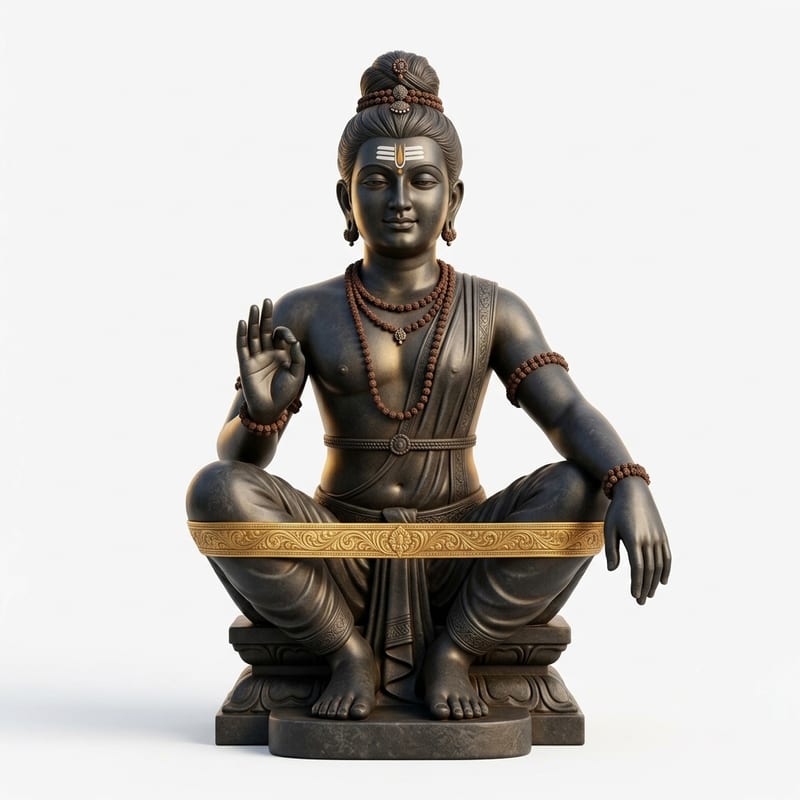
হৰিদধীশ্ৱৰং আৰাধ্যপাদুকম্ ।
অৰিৱিমৰ্দনং নিত্যনৰ্তনম্
হৰিহৰাত্মজং দেৱমাশ্ৰযে ॥ 1 ॥
- হৰিৱৰাসনম্ (harivarāsanam)whose seat is Hari's own
- ৱিশ্ৱমোহনম্ (viśvamohanam)who draws the whole world to him
- হৰিদধীশ্ৱৰম্ (haridadhīśvaram)lord of the quarters of the sky
- আৰাধ্যপাদুকম্ (ārādhyapādukam)whose sandals are worth worshipping
- অৰিৱিমৰ্দনম্ (arivimardanam)who grinds down those who stand against him
- নিত্যনৰ্তনম্ (nityanartanam)whose dance never stops
- হৰিহৰাত্মজম্ (hariharātmajam)born of Hari and Hara
- দেৱম্ (devam)the god
- আশ্ৰযে (āśraye)I take refuge in
anvaya হৰিৱৰাসনম্ ৱিশ্ৱমোহনম্ হৰিদধীশ্ৱৰম্ আৰাধ্যপাদুকম্ অৰিৱিমৰ্দনম্ নিত্যনৰ্তনম্ হৰিহৰাত্মজম্ দেৱম্ আশ্ৰযে
chandas Unnamed metre: 11 syllables in each of 4 pādas, every pāda in the pattern LLLGLGGLGLG
হৰিহৰাত্মজম্ born of Hari and Hara — Hari is Vishnu and Hara is Shiva. Ayyappa is worshipped as the son of both, which is why one name of his is Hariharasuta.
হৰিৱৰাসনম্ whose seat is Hari's own — Read as hari-vara-āsana, the excellent seat of Hari. Hari also means a lion, so the line is read by some as the one whose seat is the lion throne.
হৰিদধীশ্ৱৰম্ lord of the quarters of the sky — Harit is a direction, one of the quarters. The compound makes him lord over all of them.
note Sung at Sabarimala every night as the sanctum is closed, so the hymn works as a lullaby: eight verses, each ending on the same line, হৰিহৰাত্মজং দেৱমাশ্ৰযে. The title is taken from its first word.
ভৰণলোলুপং নৰ্তনালসম্ ।
অৰুণভাসুৰং ভূতনাযকম্
হৰিহৰাত্মজং দেৱমাশ্ৰযে ॥ 2 ॥
- শৰণকীৰ্তনম্ (śaraṇakīrtanam)who is sung to with the cry of refuge
- ভক্তমানসম্ (bhaktamānasam)who lives in the minds of those who love him
- ভৰণলোলুপম্ (bharaṇalolupam)eager to keep and care for them
- নৰ্তনালসম্ (nartanālasam)whose dance is unhurried
- অৰুণভাসুৰম্ (aruṇabhāsuram)shining red as daybreak
- ভূতনাযকম্ (bhūtanāyakam)leader of the hosts
- হৰিহৰাত্মজম্ (hariharātmajam)born of Hari and Hara
- দেৱম্ (devam)the god
- আশ্ৰযে (āśraye)I take refuge in
anvaya শৰণকীৰ্তনম্ ভক্তমানসম্ ভৰণলোলুপম্ নৰ্তনালসম্ অৰুণভাসুৰম্ ভূতনাযকম্ হৰিহৰাত্মজম্ দেৱম্ আশ্ৰযে
chandas Unnamed metre: 11 syllables in each of 4 pādas, every pāda in the pattern LLLGLGGLGLG
শৰণকীৰ্তনম্ sung to with the cry of refuge — The cry is Swamiye Sharanam Ayyappa, which pilgrims call out the whole way up the hill. The verse makes that cry his praise song.
ভৰণলোলুপম্ eager to keep and care for them — Lolupa is greedy or hungry for something. The word is strong on purpose: he wants the keeping of his people.
নৰ্তনালসম্ whose dance is unhurried — Alasa is slow or languid. At this hour of the night the dance is a slow one, which suits a hymn sung at closing.
note Each of the three lines before the refrain begins on the same sound, śa, bha, a, and the verse is built to be easy on the ear at night.
প্ৰণতকল্পকং সুপ্ৰভাঞ্চিতম্ ।
প্ৰণৱমন্দিৰং কীৰ্তনপ্ৰিযম্
হৰিহৰাত্মজং দেৱমাশ্ৰযে ॥ 3 ॥
- প্ৰণযসত্যকম্ (praṇayasatyakam)true to those who love him
- প্ৰাণনাযকম্ (prāṇanāyakam)lord of the breath of life
- প্ৰণতকল্পকম্ (praṇatakalpakam)who shapes what those who bow ask for
- সুপ্ৰভাঞ্চিতম্ (suprabhāñcitam)about whom a fine light plays
- প্ৰণৱমন্দিৰম্ (praṇavamandiram)the house the sound Om lives in
- কীৰ্তনপ্ৰিযম্ (kīrtanapriyam)who loves being sung to
- হৰিহৰাত্মজম্ (hariharātmajam)born of Hari and Hara
- দেৱম্ (devam)the god
- আশ্ৰযে (āśraye)I take refuge in
anvaya প্ৰণযসত্যকম্ প্ৰাণনাযকম্ প্ৰণতকল্পকম্ সুপ্ৰভাঞ্চিতম্ প্ৰণৱমন্দিৰম্ কীৰ্তনপ্ৰিযম্ হৰিহৰাত্মজম্ দেৱম্ আশ্ৰযে
chandas Unnamed metre: 11 syllables in each of 4 pādas, every pāda in the pattern LLLGLGGLGLG
প্ৰণৱমন্দিৰম্ the house the sound Om lives in — Praṇava is Om. Mandira is a house or a temple, so he is spoken of as the place that sound is kept.
প্ৰণতকল্পকম্ who shapes what those who bow ask for — Kalpaka is the one who arranges or makes ready, the same word as in kalpavṛkṣa, the tree that gives whatever is asked.
note Five of the words in this verse open with pra, which is how the verse holds together as a sound before it holds together as a sentence.
ৱৰগদাযুধং ৱেদৱৰ্ণিতম্ ।
গুৰুকৃপাকৰং কীৰ্তনপ্ৰিযম্
হৰিহৰাত্মজং দেৱমাশ্ৰযে ॥ 4 ॥
- তুৰগৱাহনম্ (turagavāhanam)carried by a horse
- সুন্দৰাননম্ (sundarānanam)whose face is a fair one
- ৱৰগদাযুধম্ (varagadāyudham)whose weapon is the good mace
- ৱেদৱৰ্ণিতম্ (vedavarṇitam)spoken of in the Veda
- গুৰুকৃপাকৰম্ (gurukṛpākaram)whose kindness comes as a teacher's does
- কীৰ্তনপ্ৰিযম্ (kīrtanapriyam)who loves being sung to
- হৰিহৰাত্মজম্ (hariharātmajam)born of Hari and Hara
- দেৱম্ (devam)the god
- আশ্ৰযে (āśraye)I take refuge in
anvaya তুৰগৱাহনম্ সুন্দৰাননম্ ৱৰগদাযুধম্ ৱেদৱৰ্ণিতম্ গুৰুকৃপাকৰম্ কীৰ্তনপ্ৰিযম্ হৰিহৰাত্মজম্ দেৱম্ আশ্ৰযে
chandas Unnamed metre: 11 syllables in each of 4 pādas, every pāda in the pattern LLLGLGGLGLG
তুৰগৱাহনম্ carried by a horse — Ayyappa is shown riding a horse in the story of his ride to hunt down Mahishi, and on other days riding a tiger or an elephant.
গুৰুকৃপাকৰম্ whose kindness comes as a teacher's does — Guru here can be read as great, giving great kindness, or as the teacher whose grace it is like. Both readings are current.
note The weapon named is the mace, which belongs to Vishnu. The hymn keeps handing him things from both his fathers.
ত্ৰিনযনপ্ৰভুং দিৱ্যদেশিকম্ ।
ত্ৰিদশপূজিতং চিন্তিতপ্ৰদম্
হৰিহৰাত্মজং দেৱমাশ্ৰযে ॥ 5 ॥
- ত্ৰিভুৱনাৰ্চিতম্ (tribhuvanārcitam)worshipped in all three worlds
- দেৱতাত্মকম্ (devatātmakam)in whom the gods have their being
- ত্ৰিনযনপ্ৰভুম্ (trinayanaprabhum)lord of the three-eyed one
- দিৱ্যদেশিকম্ (divyadeśikam)a guide of the clearest kind
- ত্ৰিদশপূজিতম্ (tridaśapūjitam)worshipped by the thirty gods
- চিন্তিতপ্ৰদম্ (cintitapradam)who gives what has only been thought of
- হৰিহৰাত্মজম্ (hariharātmajam)born of Hari and Hara
- দেৱম্ (devam)the god
- আশ্ৰযে (āśraye)I take refuge in
anvaya ত্ৰিভুৱনাৰ্চিতম্ দেৱতাত্মকম্ ত্ৰিনযনপ্ৰভুম্ দিৱ্যদেশিকম্ ত্ৰিদশপূজিতম্ চিন্তিতপ্ৰদম্ হৰিহৰাত্মজম্ দেৱম্ আশ্ৰযে
chandas Unnamed metre: 11 syllables in each of 4 pādas, every pāda in the pattern LLLGLGGLGLG
ত্ৰিদশ the thirty — An old way of counting the gods: thirty three, shortened to thirty. Three words in this verse begin with tri, and the count is part of the play.
ত্ৰিনযনপ্ৰভুম্ lord of the three-eyed one — The three-eyed one is Shiva, his father. A son called the lord of his own father is the kind of turn these hymns like.
চিন্তিতপ্ৰদম্ who gives what has only been thought of — Cintita is what has been turned over in the mind. The asking need not be said aloud.
note The verse counts upward, three worlds, three eyes, thirty gods, and the sound tri carries it.
ভুৱনমোহনং ভূতিভূষণম্ ।
ধৱলৱাহনং দিৱ্যৱাৰণম্
হৰিহৰাত্মজং দেৱমাশ্ৰযে ॥ 6 ॥
- ভৱভযাপহম্ (bhavabhayāpaham)who takes away the fear of being born again
- ভাৱুকাৱকম্ (bhāvukāvakam)who guards those whose hearts are set on him
- ভুৱনমোহনম্ (bhuvanamohanam)towards whom the world turns
- ভূতিভূষণম্ (bhūtibhūṣaṇam)whose ornament is ash
- ধৱলৱাহনম্ (dhavalavāhanam)carried by the white one
- দিৱ্যৱাৰণম্ (divyavāraṇam)the elephant of the gods
- হৰিহৰাত্মজম্ (hariharātmajam)born of Hari and Hara
- দেৱম্ (devam)the god
- আশ্ৰযে (āśraye)I take refuge in
anvaya ভৱভযাপহম্ ভাৱুকাৱকম্ ভুৱনমোহনম্ ভূতিভূষণম্ ধৱলৱাহনম্ দিৱ্যৱাৰণম্ হৰিহৰাত্মজম্ দেৱম্ আশ্ৰযে
chandas Unnamed metre: 11 syllables in each of 4 pādas, every pāda in the pattern LLLGLGGLGLG
ভূতিভূষণম্ whose ornament is ash — Bhūti is the ash worn by Shiva and by those who follow him. The same word also means well-being, and some read it that way here.
দিৱ্যৱাৰণম্ the elephant of the gods — Vāraṇa is an elephant. From the root vṛ, to ward off, it can also be read as the divine warding away of harm, which fits the first line.
ধৱলৱাহনম্ carried by the white one — Dhavala is white. The white mount is taken as the white elephant, and in some readings as a white horse.
note Four words in a row begin with bha, and the verse is the most songlike in the hymn.
কলভকোমলং গাত্ৰমোহনম্ ।
কলভকেসৰীৱাজিৱাহনম্
হৰিহৰাত্মজং দেৱমাশ্ৰযে ॥ 7 ॥
- কলমৃদুস্মিতম্ (kalamṛdusmitam)whose smile is soft and sweet
- সুন্দৰাননম্ (sundarānanam)whose face is a fair one
- কলভকোমলম্ (kalabhakomalam)as tender as a young elephant
- গাত্ৰমোহনম্ (gātramohanam)the sight of whose body holds the eye
- কলভকেসৰীৱাজিৱাহনম্ (kalabhakesarīvājivāhanam)carried by elephant, lion and horse
- হৰিহৰাত্মজম্ (hariharātmajam)born of Hari and Hara
- দেৱম্ (devam)the god
- আশ্ৰযে (āśraye)I take refuge in
anvaya কলমৃদুস্মিতম্ সুন্দৰাননম্ কলভকোমলম্ গাত্ৰমোহনম্ কলভকেসৰীৱাজিৱাহনম্ হৰিহৰাত্মজম্ দেৱম্ আশ্ৰযে
chandas Unnamed metre: 11 syllables in each of 4 pādas, every pāda in the pattern LLLGLGGLGLG
কলভ a young elephant — The word appears twice in the verse, once for how tender he is and once for what carries him.
কল sweet, soft in sound — Kala is used of a low sweet sound, a birdcall or a murmur. Here it colours the smile.
note The third line names three mounts together, elephant, lion and horse, which is the fullest list in the hymn.
শ্ৰুতিৱিভূষণং সাধুজীৱনম্ ।
শ্ৰুতিমনোহৰং গীতলালসম্
হৰিহৰাত্মজং দেৱমাশ্ৰযে ॥ 8 ॥
- শ্ৰিতজনপ্ৰিযম্ (śritajanapriyam)dear to those who have come to him
- চিন্তিতপ্ৰদম্ (cintitapradam)who gives what has only been thought of
- শ্ৰুতিৱিভূষণম্ (śrutivibhūṣaṇam)the ornament of the Veda
- সাধুজীৱনম্ (sādhujīvanam)the life of the good
- শ্ৰুতিমনোহৰম্ (śrutimanoharam)sweet to the ear
- গীতলালসম্ (gītalālasam)who longs for song
- হৰিহৰাত্মজম্ (hariharātmajam)born of Hari and Hara
- দেৱম্ (devam)the god
- আশ্ৰযে (āśraye)I take refuge in
anvaya শ্ৰিতজনপ্ৰিযম্ চিন্তিতপ্ৰদম্ শ্ৰুতিৱিভূষণম্ সাধুজীৱনম্ শ্ৰুতিমনোহৰম্ গীতলালসম্ হৰিহৰাত্মজম্ দেৱম্ আশ্ৰযে
chandas Unnamed metre: 11 syllables in each of 4 pādas, every pāda in the pattern LLLGLGGLGLG
শ্ৰুতি the Veda, and hearing — Śruti is what is heard, so it means both the Veda and the ear. The verse uses it twice, once in each sense.
গীতলালসম্ who longs for song — Lālasa is longing. The last verse of a hymn sung at closing time says that the god wants the singing, and then it stops.
note The eighth and last of the verses proper. The chant after it is not part of the composition.
শৰণং অয্যপ্পা স্ৱামি শৰণং অয্যপ্পা ॥
- শৰণম্ (śaraṇam)refuge
- অয্যপ্পা (ayyappā)Ayyappa
- স্ৱামি (svāmi)lord
anvaya শৰণম্ অয্যপ্পা স্ৱামি শৰণম্ অয্যপ্পা শৰণম্ অয্যপ্পা স্ৱামি শৰণম্ অয্যপ্পা
অয্যপ্পা Ayyappa — The name used in Kerala and Tamil Nadu for the god of Sabarimala. Ayya and appa are both words of respect for a father.
note The pilgrims' cry, repeated after the hymn rather than composed as part of it. There is no word order to rearrange in a chant, so the anvaya simply repeats it as it is called out. At Sabarimala this is what the crowd says while the doors are closed for the night.