
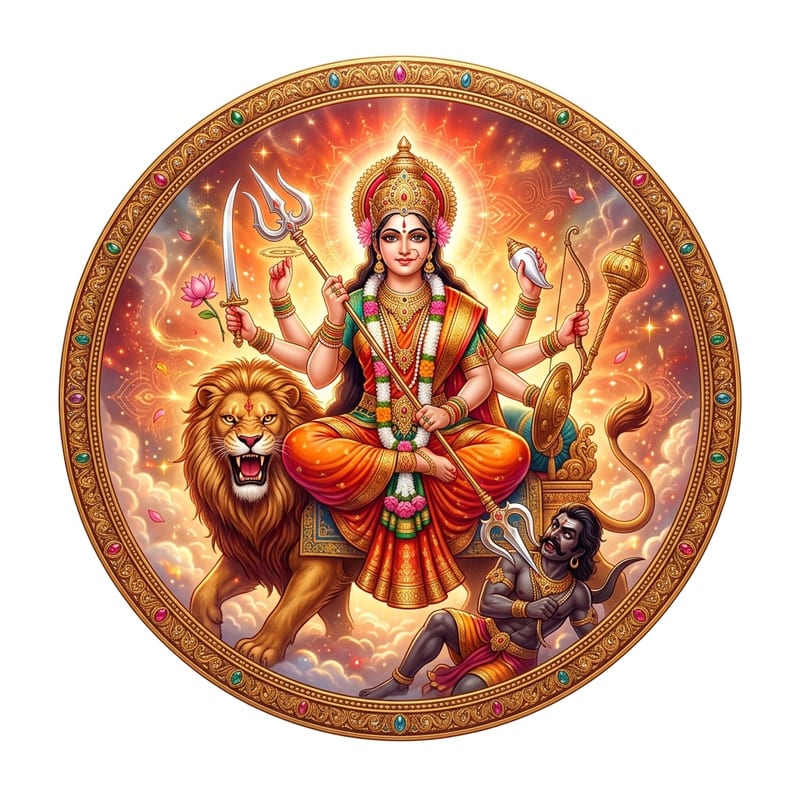
|| śrīcaṇḍī (durgā) prātaḥsmaraṇam ||
prātaḥ smarāmi śaradindukarojjvalābhāṃ
sadratnavanmakarakuṇḍalahārabhūṣām |
divyāyudhorjitasunīlasahasrahastāṃ
raktotpalābhacaraṇāṃ mahatīṃ pareśām || 1||
sadratnavanmakarakuṇḍalahārabhūṣām |
divyāyudhorjitasunīlasahasrahastāṃ
raktotpalābhacaraṇāṃ mahatīṃ pareśām || 1||
prātarnamāmi mahiṣāsuracaṇḍamuṇḍa-
śumbhāsurapramukhadaityavināśadakṣām |
brahmendramunimohanaśīlalīlāṃ
caṇḍīṃ samastasuramūrtimanekarūpām || 2||
śumbhāsurapramukhadaityavināśadakṣām |
brahmendramunimohanaśīlalīlāṃ
caṇḍīṃ samastasuramūrtimanekarūpām || 2||
prātarbhajāmi bhajatāmabhilāṣadātrīṃ
dhātrīṃ samastajagatāṃ duritāpahantrīm |
saṃsārabandhanavimocanahetubhūtāṃ
māyāṃ parāṃ samadhigamya parasya viṣṇoḥ || 3||
dhātrīṃ samastajagatāṃ duritāpahantrīm |
saṃsārabandhanavimocanahetubhūtāṃ
māyāṃ parāṃ samadhigamya parasya viṣṇoḥ || 3||
|| phalaśruti ||
ślokatrayamidaṃ devyāścaṇḍikāyāḥ paṭhennaraḥ |
sarvānkāmānavāpnoti viṣṇuloke mahīyate || 4||
sarvānkāmānavāpnoti viṣṇuloke mahīyate || 4||
|| iti śrīcaṇḍīprātaḥsmaraṇaṃ sampūrṇam ||