
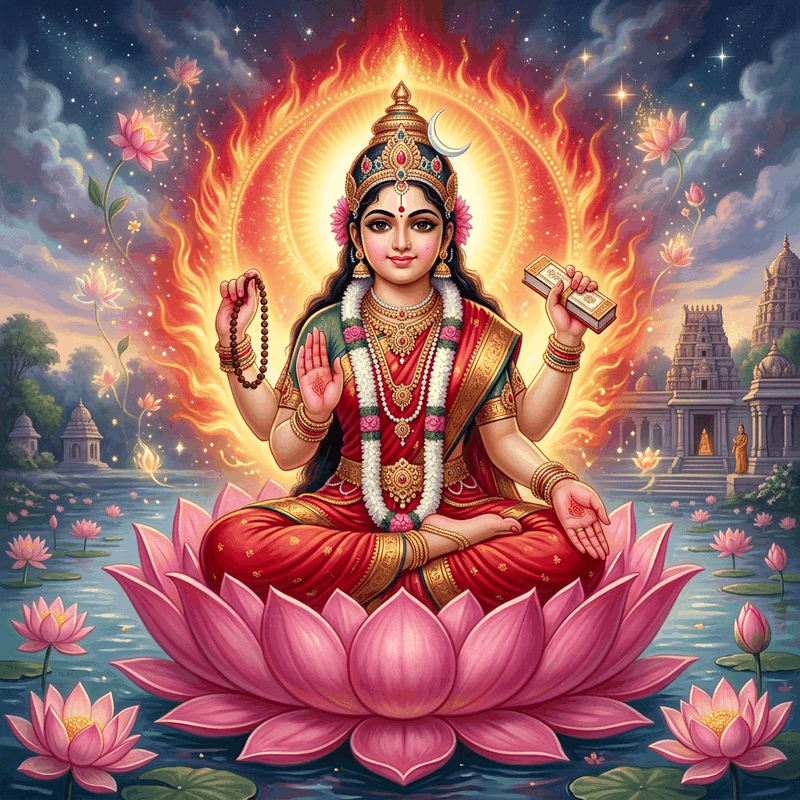
|| śrī bālā pañcacāmara stavaḥ ||
(parama guhyam)
girīndrarājabālikāṃ dineśatulyarūpikām |
pravālajāpyamālikāṃ bhajāmi daityamardikām || 1 ||
pravālajāpyamālikāṃ bhajāmi daityamardikām || 1 ||
niśeśamaulidhārikāṃ nṛmuṇḍapaṅktiśobhikām |
navīnayauvanākhyakāṃ smarāmi pāpanāśikām || 2 ||
navīnayauvanākhyakāṃ smarāmi pāpanāśikām || 2 ||
bhavārṇavāttu tārikāṃ bhavena sārdhakhelikām |
kutarkakarmabhañjikāṃ namāmi prauḍharūpikām || 3 ||
kutarkakarmabhañjikāṃ namāmi prauḍharūpikām || 3 ||
svarūparūpakālikāṃ svayaṃ svayambhusvātmikām |
khageśarājadaṇḍikāṃ aīkarāṃ subījakām || 4 ||
khageśarājadaṇḍikāṃ aīkarāṃ subījakām || 4 ||
śmaśānabhūmiśāyikāṃ viśālabhītivāriṇīm |
tuṣāratulyavācikāṃ sanimnatuṅganābhikām || 5 ||
tuṣāratulyavācikāṃ sanimnatuṅganābhikām || 5 ||
supaṭṭavastrasājikāṃ sukiṅkiṇīvirājitām |
subuddhibuddhidāyikāṃ surā sadā supīyakām || 6 ||
subuddhibuddhidāyikāṃ surā sadā supīyakām || 6 ||
saklīṃ sasauḥ sasargakāṃ sanātaneśa cāmbikām |
sasṛṣṭipālanāśikāṃ praṇaumi dīrghakeśakām || 7 ||
sasṛṣṭipālanāśikāṃ praṇaumi dīrghakeśakām || 7 ||
sahasramārgapālikā parāparātmabhavyakām |
sucārucāruvaktrakā śivaṃ dadātu bhadrikā || 8 ||
sucārucāruvaktrakā śivaṃ dadātu bhadrikā || 8 ||
|| phalaśrutiḥ ||
ityetatparamaṃ guhyaṃ pañcacāmarasañjñakam |
bālāgre yaḥ paṭhati ca tasya siddhirbhaveddhruvam || 9 ||
bālāgre yaḥ paṭhati ca tasya siddhirbhaveddhruvam || 9 ||
yaṃ yaṃ cintayate kāmaṃ taṃ taṃ prāpnoti sādhakaḥ |
siddhiḥ karatale tasya mṛte mokṣamavāpnuyāt || 10 ||
siddhiḥ karatale tasya mṛte mokṣamavāpnuyāt || 10 ||
|| iti śrī bālā pañcacāmara stavaḥ sampūrṇaḥ ||