
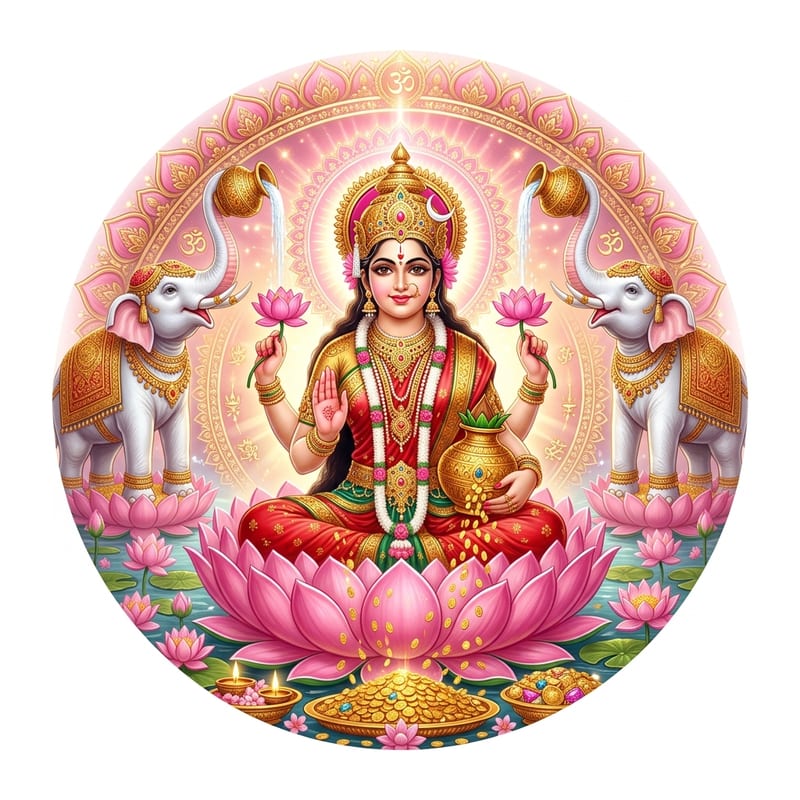
जय पद्मपलाशाक्षि जय त्वं श्रीपतिप्रिये ।
जय मातर्महालक्ष्मि संसारार्णवतारिणि ॥ 1 ॥
जय मातर्महालक्ष्मि संसारार्णवतारिणि ॥ 1 ॥
- jaya = victory | padma-palāśa-akṣi = O lotus-petal-eyed | śrī-pati-priyē = O beloved of the Lord of Śrī (Viṣṇu) | mātar = O Mother | mahālakṣmi = O Mahālakṣmī | saṃsāra-arṇava-tāriṇi = O ferryman across the ocean of worldly existence
महालक्ष्मि नमस्तुभ्यं नमस्तुभ्यं सुरेश्वरि ।
हरिप्रिये नमस्तुभ्यं नमस्तुभ्यं दयानिधे ॥ 2 ॥
हरिप्रिये नमस्तुभ्यं नमस्तुभ्यं दयानिधे ॥ 2 ॥
- mahālakṣmi = O Mahālakṣmī | namastubhyaṃ = salutation to you | surēśvari = O Queen of the gods | haripriyē = O beloved of Hari | dayānidhē = O treasure-house of compassion
पद्मालये नमस्तुभ्यं नमस्तुभ्यं च सर्वदे ।
सर्वभूतहितार्थाय वसुवृष्टिं सदा कुरु ॥ 3 ॥
सर्वभूतहितार्थाय वसुवृष्टिं सदा कुरु ॥ 3 ॥
- padmālayē = O dweller in the lotus | sarvadē = O bestower of all | sarva-bhūta-hita-arthāya = for the benefit of all beings | vasu-vṛṣṭiṃ = a rain of wealth | sadā kuru = always bring about
जगन्मातर्नमस्तुभ्यं नमस्तुभ्यं दयानिधे ।
दयावति नमस्तुभ्यं विश्वेश्वरि नमोऽस्तु ते ॥ 4 ॥
दयावति नमस्तुभ्यं विश्वेश्वरि नमोऽस्तु ते ॥ 4 ॥
- jagat-mātar = O Mother of the world | dayānidhē = O treasure of compassion | dayāvati = O compassionate one | viśvēśvari = O ruler of the universe | namō'stu tē = salutation to you
नमः क्षीरार्णवसुते नमस्त्रैलोक्यधारिणि ।
वसुवृष्टे नमस्तुभ्यं रक्ष मां शरणागतम् ॥ 5 ॥
वसुवृष्टे नमस्तुभ्यं रक्ष मां शरणागतम् ॥ 5 ॥
- kṣīra-arṇava-sutē = O daughter of the milk-ocean | namaḥ = salutation | trailōkya-dhāriṇi = O sustainer of the three worlds | vasu-vṛṣṭē = O showerer of wealth | rakṣa māṃ śaraṇāgatam = protect me who have taken refuge
रक्ष त्वं देवदेवेशि देवदेवस्य वल्लभे ।
दारिद्र्यात्त्राहि मां लक्ष्मि कृपां कुरु ममोपरि ॥ 6 ॥
दारिद्र्यात्त्राहि मां लक्ष्मि कृपां कुरु ममोपरि ॥ 6 ॥
- dēva-dēvēśi = O Queen of the lord of gods | dēva-dēvasya vallabhē = O beloved of the God of gods | dāridryāt trāhi = save from poverty | lakṣmi = O Lakṣmī | kṛpāṃ kuru mama upari = show grace upon me
नमस्त्रैलोक्यजननि नमस्त्रैलोक्यपावनि ।
ब्रह्मादयो नमन्ति त्वां जगदानन्ददायिनि ॥ 7 ॥
ब्रह्मादयो नमन्ति त्वां जगदानन्ददायिनि ॥ 7 ॥
- namaḥ trailōkya-janani = salutation to the mother of the three worlds | trailōkya-pāvani = purifier of the three worlds | brahma-ādayaḥ = Brahmā and others | namanti tvāṃ = bow to you | jagad-ānanda-dāyini = O bestower of bliss to all the world
विष्णुप्रिये नमस्तुभ्यं नमस्तुभ्यं जगद्धिते ।
आर्तिहन्त्रि नमस्तुभ्यं समृद्धिं कुरु मे सदा ॥ 8 ॥
आर्तिहन्त्रि नमस्तुभ्यं समृद्धिं कुरु मे सदा ॥ 8 ॥
- viṣṇu-priyē = O beloved of Viṣṇu | jagad-hitē = O benefactress of the world | ārti-hantrī = O destroyer of suffering | samṛddhiṃ kuru mē sadā = always bring me prosperity/abundance
अब्जवासे नमस्तुभ्यं चपलायै नमो नमः ।
चञ्चलायै नमस्तुभ्यं ललितायै नमो नमः ॥ 9 ॥
चञ्चलायै नमस्तुभ्यं ललितायै नमो नमः ॥ 9 ॥
- abja-vāsē = O lotus-dweller | chapalāyai = to the nimble/quick-moving one | chañchalāyai = to the restless/playful one | lalitāyai = to the graceful/gracious one | namō namaḥ = salutation, salutation
नमः प्रद्युम्नजननि मातस्तुभ्यं नमो नमः ।
परिपालय मां मातः मां तुभ्यं शरणागतम् ॥ 10 ॥
परिपालय मां मातः मां तुभ्यं शरणागतम् ॥ 10 ॥
- namaḥ pradyumna-janani = salutation to the mother of Pradyumna (Kāmadēva reborn as Kṛṣṇa's son) | mātar = O Mother | namō namaḥ = salutation, salutation | paripālaya māṃ = protect me fully | śaraṇāgatam = who have taken refuge
शरण्ये त्वां प्रपन्नोऽस्मि कमले कमलालये ।
त्राहि त्राहि महालक्ष्मि परित्राणपरायणे ॥ 11 ॥
त्राहि त्राहि महालक्ष्मि परित्राणपरायणे ॥ 11 ॥
- śaraṇyē = O refuge-giver | tvāṃ prapannaḥ asmi = I have surrendered to you | kamalē = O Kamalā | kamalā-layē = O dweller in the lotus | trāhi trāhi = save me, save me | paritrāṇa-parāyaṇē = O one devoted to [giving] protection
पाण्डित्यं शोभते नैव न शोभन्ते गुणा नरे ।
शीलत्वं नैव शोभेत महालक्ष्मि त्वया विना ॥ 12 ॥
शीलत्वं नैव शोभेत महालक्ष्मि त्वया विना ॥ 12 ॥
- pāṇḍityaṃ = learning, scholarship | śōbhatē naiva = does not shine at all | guṇā = virtues | narē = in a person | śīlatvaṃ = good character | naiva śōbhēta = does not shine | mahālakṣmi tvayā vinā = without you, O Mahālakṣmī
तावद्विराजते रूपं तावच्छीलं विराजते ।
तावद्गुणा नराणां च यावल्लक्ष्मीः प्रसीदति ॥ 13 ॥
तावद्गुणा नराणां च यावल्लक्ष्मीः प्रसीदति ॥ 13 ॥
- tāvad = only as long [as] | virājatē = shines, is resplendent | rūpaṃ = beauty | śīlaṃ = character | guṇā narāṇāṃ = virtues of people | yāvat lakṣmīḥ prasīdati = as long as Lakṣmī is gracious/pleased
लक्ष्मि त्वयाऽलङ्कृतमानवा ये
पापैर्विमुक्ता नृपलोकमान्याः ।
गुणैर्विहीना गुणिनो भवन्ति
दुश्शीलिनः शीलवतां वरिष्ठाः ॥ 14 ॥
पापैर्विमुक्ता नृपलोकमान्याः ।
गुणैर्विहीना गुणिनो भवन्ति
दुश्शीलिनः शीलवतां वरिष्ठाः ॥ 14 ॥
- lakṣmi = O Lakṣmī | tvayā alaṅkṛtā = adorned by you | mānavāḥ = humans | yē = those who | pāpaiḥ vimuktāḥ = freed from sins | nṛpa-lōka-mānyāḥ = honoured among kings | guṇaiḥ vihīnāḥ = devoid of virtues | guṇinaḥ bhavanti = become virtuous | duḥśīlinaḥ = those of bad character | śīlavatāṃ variṣṭhāḥ = foremost among the virtuous
लक्ष्मीर्भूषयते रूपं लक्ष्मीर्भूषयते कुलम् ।
लक्ष्मीर्भूषयते विद्यां सर्वा लक्ष्मीर्विशिष्यते ॥ 15 ॥
लक्ष्मीर्भूषयते विद्यां सर्वा लक्ष्मीर्विशिष्यते ॥ 15 ॥
- lakṣmīḥ bhūṣayatē rūpaṃ = Lakṣmī adorns/beautifies beauty | lakṣmīḥ bhūṣayatē kulam = Lakṣmī adorns lineage | lakṣmīḥ bhūṣayatē vidyāṃ = Lakṣmī adorns learning | sarvā lakṣmīḥ viśiṣyatē = in everything, Lakṣmī excels
लक्ष्मी त्वद्गुणकीर्तनेन कमला भूर्यात्यलं जिह्मताम्
रुद्राद्या रविचन्द्रदेवपतयो वक्तुं च नैव क्षमाः ।
अस्माभिस्तव रूपलक्षणगुणान्वक्तुं कथं शक्यते
मातर्मां परिपाहि विश्वजननी कृत्वा ममेष्टं ध्रुवम् ॥ 16 ॥
रुद्राद्या रविचन्द्रदेवपतयो वक्तुं च नैव क्षमाः ।
अस्माभिस्तव रूपलक्षणगुणान्वक्तुं कथं शक्यते
मातर्मां परिपाहि विश्वजननी कृत्वा ममेष्टं ध्रुवम् ॥ 16 ॥
- lakṣmi = O Lakṣmī | tvad-guṇa-kīrtanēna = by the extolling of your virtues | kamalā = Brahmā/Padmā | bhūryāti alaṃ jihmatām = becomes deeply ashamed | rudrādyā = Rudra and others | ravi-chandra-dēva-patayaḥ = the lords of sun, moon, and gods | vaktuṃ = to speak | na ēva kṣamāḥ = are incapable | asmābhiḥ = by us | tava rūpa-lakṣaṇa-guṇān = your form, marks, and virtues | vaktuṃ kathaṃ śakyatē = how is it possible to speak?
दीनार्तिभीतं भवतापपीडितं
धनैर्विहीनं तव पार्श्वमागतम् ।
कृपानिधित्वान्मम लक्ष्मि सत्वरं
धनप्रदानाद्धननायकं कुरु ॥ 17 ॥
धनैर्विहीनं तव पार्श्वमागतम् ।
कृपानिधित्वान्मम लक्ष्मि सत्वरं
धनप्रदानाद्धननायकं कुरु ॥ 17 ॥
- dīna-ārti-bhītaṃ = afflicted by the anguish and fear of the humble | bhava-tāpa-pīḍitaṃ = tormented by the burning of worldly existence | dhanaiḥ vihīnaṃ = devoid of wealth | tava pārśvam āgatam = [I] who have come to your side | kṛpā-nidhitvāt = because of your nature as a treasure of compassion | satvaraṃ = quickly | dhana-pradānāt = by the giving of wealth | dhana-nāyakaṃ kuru = make [me] the master of wealth
मां विलोक्य जननी हरिप्रिये
निर्धनं तव समीपमागतम् ।
देहि मे झटिति लक्ष्मि कराग्रं
वस्त्रकाञ्चनवरान्नमद्भुतम् ॥ 18 ॥
निर्धनं तव समीपमागतम् ।
देहि मे झटिति लक्ष्मि कराग्रं
वस्त्रकाञ्चनवरान्नमद्भुतम् ॥ 18 ॥
- māṃ vilōkya = beholding me | jananī = O Mother | haripriyē = O beloved of Hari | nirdhanaṃ = penniless | tava samīpam āgatam = come to your presence | dēhi mē jhaṭiti = give me quickly | lakṣmi = O Lakṣmī | karāgraṃ = with the tips of your hands | vastra = clothing | kāñchana = gold | vara-anna = excellent food | madbhutam = wondrous things
त्वमेव जननी लक्ष्मीः पिता लक्ष्मीस्त्वमेव च ।
भ्राता त्वं च सखा लक्ष्मीर्विद्या लक्ष्मीस्त्वमेव च ॥ 19 ॥
भ्राता त्वं च सखा लक्ष्मीर्विद्या लक्ष्मीस्त्वमेव च ॥ 19 ॥
- tvam ēva jananī lakṣmīḥ = you alone are the mother, Lakṣmī | pitā lakṣmīḥ tvam ēva = you alone are the father, Lakṣmī | bhrātā = brother | sakhā = friend | lakṣmīḥ = Lakṣmī | vidyā lakṣmīḥ tvam ēva = you alone are the learning, Lakṣmī
त्राहि त्राहि महालक्ष्मि त्राहि त्राहि सुरेश्वरि ।
त्राहि त्राहि जगन्मातः दारिद्र्यात्त्राहि वेगतः ॥ 20 ॥
त्राहि त्राहि जगन्मातः दारिद्र्यात्त्राहि वेगतः ॥ 20 ॥
- trāhi trāhi = save me, save me | mahālakṣmi = O Mahālakṣmī | surēśvari = O Queen of the gods | jaganmātaḥ = O Mother of the world | dāridryāt = from poverty | trāhi vēgataḥ = save quickly
नमस्तुभ्यं जगद्धात्रि नमस्तुभ्यं नमो नमः ।
धर्माधारे नमस्तुभ्यं नमः सम्पत्तिदायिनी ॥ 21 ॥
धर्माधारे नमस्तुभ्यं नमः सम्पत्तिदायिनी ॥ 21 ॥
- jagat-dhātri = O upholder/supporter of the world | namastubhyaṃ namō namaḥ = salutation, salutation | dharma-ādhārē = O foundation of dharma | namaḥ sampatti-dāyinī = salutation, O bestower of prosperity
दारिद्र्यार्णवमग्नोऽहं निमग्नोऽहं रसातले ।
मज्जन्तं मां करे धृत्वा तूद्धर त्वं रमे द्रुतम् ॥ 22 ॥
मज्जन्तं मां करे धृत्वा तूद्धर त्वं रमे द्रुतम् ॥ 22 ॥
- dāridrya-arṇave = in the ocean of poverty | magnaḥ aham = I am sunk | nimagnō'ham = I am submerged | rasātalē = in the netherworld | majjantaṃ māṃ = me who am drowning | karē dhṛtvā = having grasped by the hand | tū uddhara = pull out | tvaṃ ramē = you, O Ramā | drutam = quickly
किं लक्ष्मि बहुनोक्तेन जल्पितेन पुनः पुनः ।
अन्यन्मे शरणं नास्ति सत्यं सत्यं हरिप्रिये ॥ 23 ॥
अन्यन्मे शरणं नास्ति सत्यं सत्यं हरिप्रिये ॥ 23 ॥
- kiṃ = what | lakṣmi = O Lakṣmī | bahuna uktēna = by saying much | jalpitēna punaḥ punaḥ = by chattering on and on | anyan = other | mē śaraṇaṃ nāsti = I have no refuge | satyaṃ satyaṃ = truly, truly | haripriyē = O beloved of Hari
एतच्छ्रुत्वाऽगस्त्यवाक्यं हृष्यमाणा हरिप्रिया ।
उवाचमधुरां वाणीं तुष्टाऽहं तव सर्वदा ॥ 24 ॥
उवाचमधुरां वाणीं तुष्टाऽहं तव सर्वदा ॥ 24 ॥
- ētat śrutvā = having heard this | agastya-vākyaṃ = the words of Agastya | hṛṣyamāṇā = being delighted | hari-priyā = the beloved of Hari | uvācha = spoke | madhurāṃ vāṇīṃ = sweet words | tuṣṭā aham = I am pleased | tava sarvadā = with you always
श्रीलक्ष्मीरुवाच ।
यत्त्वयोक्तमिदं स्तोत्रं यः पठिष्यति मानवः ।
शृणोति च महाभागस्तस्याहं वशवर्तिनी ॥ 25 ॥
यत्त्वयोक्तमिदं स्तोत्रं यः पठिष्यति मानवः ।
शृणोति च महाभागस्तस्याहं वशवर्तिनी ॥ 25 ॥
- yat tvayā uktam idam stōtraṃ = this stotram spoken by you | yaḥ paṭhiṣyati mānavaḥ = whatever human will read | śṛṇōti cha = or hears | mahābhāgaḥ = the greatly blessed one | tasya ahaṃ vaśavartinī = I am their devoted servant (literally: under their control)
नित्यं पठति यो भक्त्या त्वलक्ष्मीस्तस्य नश्यति ।
ऋणं च नश्यते तीव्रं वियोगं नैव पश्यति ॥ 26 ॥
ऋणं च नश्यते तीव्रं वियोगं नैव पश्यति ॥ 26 ॥
- nityaṃ paṭhati = reads daily | yaḥ bhaktyā = whoever with devotion | tvat-alakṣmīḥ = their alakṣmī (misfortune) | tasya naśyati = will be destroyed | ṛṇaṃ = debt | naśyatē tīvraṃ = severe [debt] will be eliminated | viyōgaṃ naiva paśyati = will not experience separation
यः पठेत्प्रातरुत्थाय श्रद्धाभक्तिसमन्वितः ।
गृहे तस्य सदा तिष्टेन्नित्यं श्रीः पतिना सह ॥ 27 ॥
गृहे तस्य सदा तिष्टेन्नित्यं श्रीः पतिना सह ॥ 27 ॥
- yaḥ paṭhēt prātar utthāya = whoever reads having risen early in the morning | śraddhā-bhakti-samanvitaḥ = endowed with faith and devotion | gṛhē tasya sadā tiṣṭhēt = in their home will always dwell | nityaṃ śrīḥ patinā saha = Śrī permanently with her Lord
सुखसौभाग्यसम्पन्नो मनस्वी बुद्धिमान्भवेत् ।
पुत्रवान् गुणवान् श्रेष्ठो भोगभोक्ता च मानवः ॥ 28 ॥
पुत्रवान् गुणवान् श्रेष्ठो भोगभोक्ता च मानवः ॥ 28 ॥
- sukha-saubhāgya-sampannaḥ = endowed with happiness and good fortune | manasvī = noble-minded | buddhimān = of good intellect | bhavēt = will be | putra-vān = having sons | guṇa-vān = virtuous | śrēṣṭhaḥ = excellent | bhōga-bhōktā = enjoyer of pleasures | cha mānavaḥ = and that person
इदं स्तोत्रं महापुण्यं लक्ष्म्यागस्त्यप्रकीर्तितम् ।
विष्णुप्रसादजननं चतुर्वर्गफलप्रदम् ॥ 29 ॥
विष्णुप्रसादजननं चतुर्वर्गफलप्रदम् ॥ 29 ॥
- idam stōtram = this stotram | mahā-puṇyam = highly meritorious | lakṣmyā agastya-prakīrtitam = proclaimed by Lakṣmī and Agastya | viṣṇu-prasāda-jananam = generating the grace of Viṣṇu | chatur-varga-phala-pradam = bestowing the fruits of the four aims of life (dharma, artha, kāma, mōkṣa)
राजद्वारे जयश्चैव शत्रोश्चैव पराजयः ।
भूतप्रेतपिशाचानां व्याघ्राणां न भयं तथा ॥ 30 ॥
भूतप्रेतपिशाचानां व्याघ्राणां न भयं तथा ॥ 30 ॥
- rāja-dvārē = at the king's court/gate | jayaḥ cha ēva = victory indeed | śatrōḥ cha ēva parājayaḥ = defeat of the enemy too | bhūta-prēta-piśāchānāṃ = from ghosts, pretas, and demons | vyāghrāṇāṃ = from tigers | na bhayaṃ = no fear | tathā = likewise
न शस्त्रानलतोयौघाद्भयं तस्य प्रजायते ।
दुर्वृत्तानां च पापानां बहुहानिकरं परम् ॥ 31 ॥
दुर्वृत्तानां च पापानां बहुहानिकरं परम् ॥ 31 ॥
- na śastrāt = not from weapons | anala = fire | tōya-aughāt = from floods | bhayaṃ = fear | tasya prajāyatē = arises for them | durvṛttānāṃ = for the wicked | cha pāpānāṃ = and the sinful | bahu-hānikaraṃ = causing great harm | param = supremely/highly
मन्दुराकरिशालासु गवां गोष्ठे समाहितः ।
पठेत्तद्दोषशान्त्यर्थं महापातकनाशनम् ॥ 32 ॥
पठेत्तद्दोषशान्त्यर्थं महापातकनाशनम् ॥ 32 ॥
- mandurā = horse-stable | kari-śālāsu = in elephant-halls | gavāṃ gōṣṭhē = in cowsheds | samāhitaḥ = with collected/concentrated mind | paṭhēt = reads | tad-dōṣa-śānti-arthaṃ = for the pacification of those faults | mahā-pātaka-nāśanam = destroys great sins
सर्वसौख्यकरं नॄणामायुरारोग्यदं तथा ।
अगस्त्यमुनिना प्रोक्तं प्रजानां हितकाम्यया ॥ 33 ॥
इत्यगस्त्यविरचितं श्री लक्ष्मी स्तोत्रम् ।
अगस्त्यमुनिना प्रोक्तं प्रजानां हितकाम्यया ॥ 33 ॥
इत्यगस्त्यविरचितं श्री लक्ष्मी स्तोत्रम् ।
- सर्वसौख्यकरम् (sarvasaukhyakaram)working every happiness
- नॄणाम् (nṝṇām)for men
- आयुरारोग्यदम् (āyurārogyadam)giving long life and health
- अगस्त्यमुनिना (agastyamuninā)by the sage Agastya
- प्रोक्तम् (proktam)declared
- प्रजानाम् हितकाम्यया (prajānām hitakāmyayā)out of desire for the good of the people
- इति (iti)thus ends
- अगस्त्यविरचितम् (agastyaviracitam)composed by Agastya