
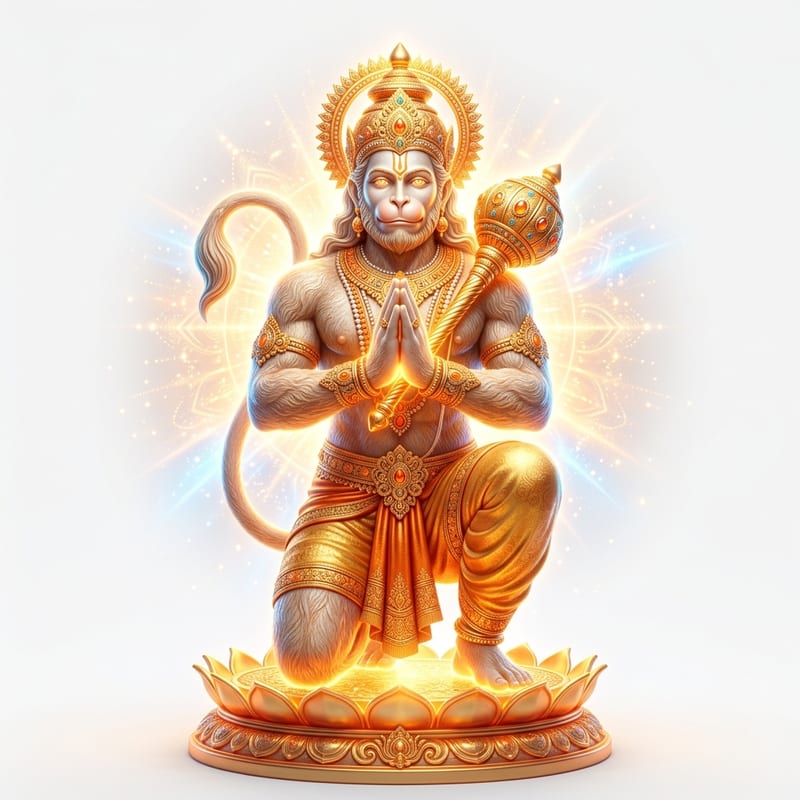
kṛpaḥ paraśurāmaśca saptaiḥ te cirajīvinaḥ ||
- aśvatthāmāAśvatthāmā
- baliḥBali
- vyāsaḥVyāsa
- hanūmānHanumān
- caand
- vibhīṣaṇaḥVibhīṣaṇa
- kṛpaḥKṛpa
- paraśurāmaḥParaśurāma
- caand
- saptaiḥby seven
- tethey
- cirajīvinaḥimmortal ones (cira:long | jīvinaḥ:living ones)

(Asvatthama Balirvyaso Hanuman in English (IAST))
Also known as asvatthama balirvyaso hanumamsca vibhisanah
Prayer to the Immortals. This is also called Sapta Chiranjeevi Stotram. Chiranjeevi is a combination of chiram, or 'permanent', and jīvi, or 'lived'. - Vyasa, the sage who composed the Mahabharata. He represents erudition and wisdom. He was the son of sage Parashara and his intimate partner Satyawati, a fisherwoman.[3] and great-grandson of the sage Vashishtha. He was born towards the end of Treta Yuga, lived to see the complete Dvapara Yuga, and saw the initial phase of Kali Yuga. - Hanuman, one of the greatest brahmachari, served Rama. He stands for selflessness, courage, devotion, intelligence, strength, celibacy and righteous conduct. - Parashurama, the sixth avatar of Vishnu.