
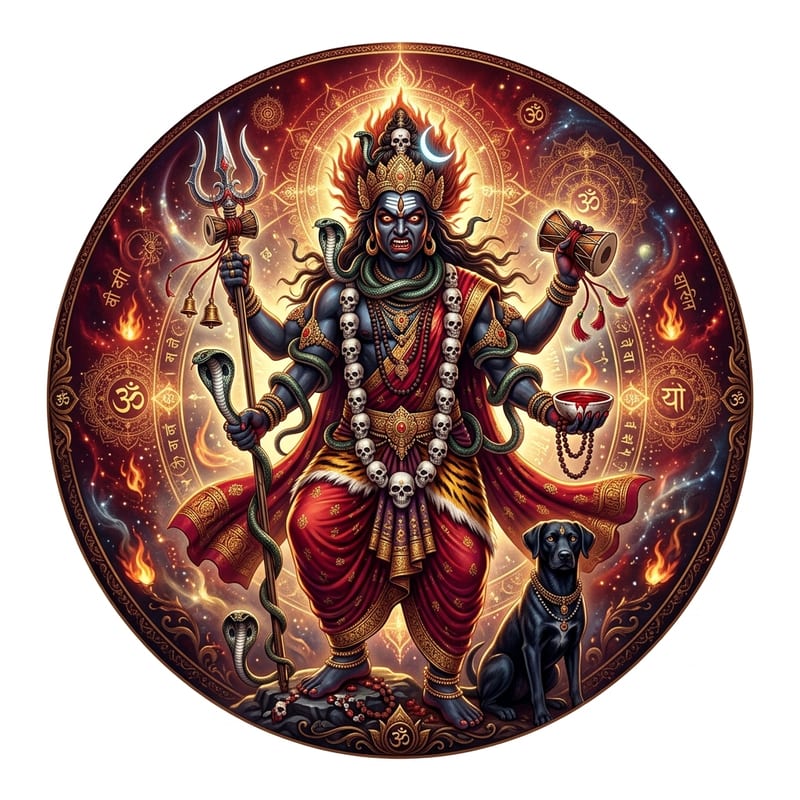
উক্তং চ ভৈরবতন্ত্রে ।
মহাদেব উবাচ-
প্রীযতাং ভৈরবো দেবো নমো বৈ ভৈরবায চ ।
দেবেশি দেহরক্ষার্থং কারণং কথ্যতাং ধ্রুবম্ ॥ ১॥
- উক্তং চ (uktaṃ ca)and it is said (uktam:said | ca:and)
- ভৈরবতন্ত্রে (bhairavatantre)in the Bhairavatantra (bhairava:Bhairava | tantre:in the tantra)
- মহাদেব উবাচ (mahādeva uvāca)Mahadeva said (mahādeva:Mahadeva, Shiva | uvāca:said)
- প্রীযতাং (prīyatāṃ)may he be pleased
- ভৈরবো দেবঃ (bhairavo devaḥ)the divine Bhairava (bhairavaḥ:Bhairava | devaḥ:god)
- নমো বৈ ভৈরবায চ (namo vai bhairavāya ca)salutations indeed to Bhairava (namaḥ:salutations | vai:indeed | bhairavāya:to Bhairava | ca:and)
- দেবেশি (deveśi)O Goddess of the gods
- দেহরক্ষার্থং (deharakṣārthaṃ)for the purpose of protecting the body (deha:body | rakṣā:protection | artham:for the purpose of)
- কারণং (kāraṇaṃ)the means
- কথ্যতাং (kathyatāṃ)please tell
- ধ্রুবম্ (dhruvam)certainly, without doubt
রণেষু চাতি ঘোরেষু মহামৃত্যুভযেষু চ ॥ ২॥
- ম্রিযন্তে (mriyante)they die
- সাধকাঃ (sādhakāḥ)spiritual practitioners
- যেন বিনা (yena vinā)without which (yena:which | vinā:without)
- শ্মশানভূমিষু (śmaśānabhūmiṣu)in cremation grounds (śmaśāna:cremation ground | bhūmiṣu:in the places)
- রণেষু (raṇeṣu)in battles
- চাতি ঘোরেষু (cāti ghoreṣu)and in extremely terrible (ca:and | ati:extremely | ghoreṣu:terrible)
- মহামৃত্যুভযেষু চ (mahāmṛtyubhayeṣu ca)and amid great fears of death (mahā:great | mṛtyu:death | bhayeṣu:in fears | ca:and)
দেব্যুবাচ-
কথযামি শৃণু প্রাজ্ঞ বটুককবচং শুভম্ ॥ ৩॥
- শৃঙ্গীসলীলবজ্রেষু (śṛṅgīsalīlavajreṣu)from tridents, water, and thunderbolts (śṛṅgī:trident | salīla:water | vajreṣu:thunderbolts)
- জ্বরাদিব্যাধিবহ্নিষু (jvarādivyādhivahniṣu)from fevers, diseases, and fire (jvara:fever | ādi:etc. | vyādhi:disease | vahniṣu:in fire)
- দেব্যুবাচ (devyuvāca)the Goddess spoke (devī:Goddess | uvāca:spoke)
- কথযামি (kathayāmi)I shall tell
- শৃণু (śṛṇu)listen
- প্রাজ্ঞ (prājña)O wise one
- বটুককবচং (baṭukakavacaṃ)the Batuka Kavacham (baṭuka:Batuka | kavacam:armor, protective hymn)
- শুভম্ (śubham)auspicious
- গোপনীযং (gopanīyaṃ)to be kept secret (gup:to protect, conceal | anīya:gerundive, must be done)
- প্রযত্নেন (prayatnena)with great care
- মাতৃকাজারজঃ (mātṛkājārajaḥ)illicit son of a mother (mātṛkā:mother | jāra:illicit lover | ja:born of)
- যথা (yathā)just as
note This line forms the pivot between the kavacham text proper and the viniyoga (ritual assignment). The Goddess instructs that the kavacham is to be guarded with the same discretion one would exercise in concealing a mother's secret — a vivid simile underscoring the kavacham's esoteric status. Initiates were traditionally not to share such kavachams with the uninitiated.
ওঁ অস্য শ্রী বটুকভৈরবকবচস্য
আনন্দভৈরব ঋষিস্ত্রিষ্টুপ্ছন্দঃ
শ্রীবটুকভৈরবো দেবতা বং বীজং হ্রীং শক্তিঃ
ওঁ বটুকাযেতি কীলকং মমাভীষ্টসিদ্ধ্যর্থে জপে বিনিযোগঃ ।
- ওঁ অস্য (oṃ asya)Om, of this (oṃ:sacred syllable | asya:of this)
- শ্রী বটুকভৈরবকবচস্য (śrī baṭukabhairavakavacasya)of the Shri Batuka Bhairava Kavacham (śrī:revered | baṭuka:Batuka | bhairava:Bhairava | kavacasya:of the kavacham/armour)
- আনন্দভৈরব ঋষিঃ (ānandabhairava ṛṣiḥ)Ananda Bhairava is the seer (ānandabhairava:Ananda Bhairava | ṛṣiḥ:seer, sage)
- ত্রিষ্টুপ্ছন্দঃ (triṣṭupchandaḥ)Triṣṭup is the meter (triṣṭup:an 11-syllable Vedic meter | chandaḥ:meter)
- শ্রীবটুকভৈরবঃ দেবতা (śrībaṭukabhairavaḥ devatā)Shri Batuka Bhairava is the presiding deity
- বং বীজং (baṃ bījaṃ)'baṃ' is the seed syllable (baṃ:seed mantra | bījaṃ:seed)
- হ্রীং শক্তিঃ (hrīṃ śaktiḥ)'hrīṃ' is the power (hrīṃ:power mantra | śaktiḥ:power, energy)
- ওঁ বটুকাযেতি কীলকং (oṃ baṭukāyeti kīlakaṃ)'oṃ baṭukāya' is the pin
- মমাভীষ্টসিদ্ধ্যর্থে (mamābhīṣṭasiddhyarthe)for the fulfillment of my desired wishes (mama:my | abhīṣṭa:desired, longed-for | siddhi:accomplishment | arthe:for the purpose of)
- জপে বিনিযোগঃ (jape viniyogaḥ)the ritual assignment for recitation (jape:in japa, recitation | viniyogaḥ:ritual assignment, dedication of the practice)
note The viniyoga (বিনিযোগঃ, ritual assignment) is a standard liturgical formula recited before every mantra or kavacham. It identifies five key elements: the ṛṣi (seer who received the text), the chandas (meter), the devatā (presiding deity), the bīja (seed syllable — the most compressed form of the deity's energy), and the śakti (power). The kīlaka (pin) is a phrase that 'locks' the mantra's power into the recitation. Together, these elements orient the recitation toward a specific deity and purpose (here: mamābhīṣṭasiddhi, fulfillment of one's cherished wish). Reciting the viniyoga is considered essential to activate the kavacham's protective power.
ওঁ সহস্রারে মহাচক্রে কর্পূরধবলে গুরুঃ ॥ ৪॥
- ওঁ (oṃ)the sacred syllable Om
- সহস্রারে (sahasrāre)in the sahasrara, the crown chakra (sahasra:thousand | āre:in the spoked wheel)
- মহাচক্রে (mahācakre)in the great wheel (mahā:great | cakre:in the wheel)
- কর্পূরধবলে (karpūradhavale)radiant white as camphor (karpūra:camphor | dhavale:white, bright)
- গুরুঃ (guruḥ)the Guru
পূর্বস্যামসিতাঙ্গো মাং দিশি রক্ষতু সর্বদা ॥ ৫॥
- পাতু মাং (pātu māṃ)may he protect me (pātu:may protect | māṃ:me)
- বটুকো দেবঃ (baṭuko devaḥ)the divine Batuka (baṭuka:Batuka | devaḥ:god)
- ভৈরবঃ (bhairavaḥ)Bhairava
- সর্বকর্মসু (sarvakarmasu)in all actions (sarva:all | karmasu:in actions)
- পূর্বস্যাম্ (pūrvasyām)in the eastern direction
- অসিতাঙ্গঃ (asitāṅgaḥ)Asitanga, the dark-limbed one (asita:dark | aṅga:limb)
- দিশি রক্ষতু (diśi rakṣatu)may protect in the direction (diśi:direction | rakṣatu:may protect)
- সর্বদা (sarvadā)always
নৈরৃত্যাং ক্রোধনঃ পাতু উন্মত্তঃ পাতু পশ্চিমে ॥ ৬॥
- আগ্নেযাং চ (āgneyāṃ ca)and in the southeast (āgneya:southeast | ca:and)
- রুরুঃ (ruruḥ)Ruru, a fierce form of Bhairava
- পাতু (pātu)may protect
- দক্ষিণে (dakṣiṇe)in the south
- চণ্ডভৈরবঃ (caṇḍabhairavaḥ)Chanda Bhairava, the fierce form (caṇḍa:fierce | bhairavaḥ:Bhairava)
- নৈরৃত্যাং (nairṛtyāṃ)in the southwest
- ক্রোধনঃ (krodhanaḥ)Krodhana, the wrathful one
- উন্মত্তঃ (unmattaḥ)Unmatta, the frenzied one
- পশ্চিমে (paścime)in the west
ভীষণো ভৈরবঃ পাতু উত্তরাস্যাং তু সর্বদা ॥ ৭॥
- বাযব্যাং (vāyavyāṃ)in the northwest
- কপালী চ (kapālī ca)and Kapali, the skull-bearer (kapāla:skull | ī:one who bears | ca:and)
- নিত্যং (nityaṃ)always
- পাযাত্ (pāyāt)may protect
- সুরেশ্বরঃ (sureśvaraḥ)Suresvara, lord of the gods (sura:god | īśvara:lord)
- ভীষণঃ (bhīṣaṇaḥ)Bhishana, the terrifying one
- ভৈরবঃ (bhairavaḥ)Bhairava
- উত্তরাস্যাং (uttarāsyāṃ)in the northern direction
- সর্বদা (sarvadā)always
ঊর্ধ্বং পাতু বিধাতা চ পাতালে নন্দকো বিভুঃ ॥ ৮॥
- সংহারভৈরবঃ (saṃhārabhairavaḥ)Samhara Bhairava, the destroyer form (saṃhāra:destruction | bhairavaḥ:Bhairava)
- পাযাত্ (pāyāt)may protect
- ঈশান্যাং (īśānyāṃ)in the northeast
- মহেশ্বরঃ (maheśvaraḥ)Maheshvara, the great lord (mahā:great | īśvaraḥ:lord)
- ঊর্ধ্বং (ūrdhvaṃ)above
- বিধাতা (vidhātā)Vidhata, the ordainer
- পাতালে (pātāle)in the netherworld
- নন্দকঃ (nandakaḥ)Nandaka, the joyful one
- বিভুঃ (vibhuḥ)the all-pervading one
বামদেবো বনান্তে চ বনে ঘোরস্তথাঽবতু ॥ ৯॥
- সদ্যোজাতঃ (sadyojātaḥ)Sadyojata, the immediately-born (sadyas:immediately | jāta:born)
- মাং পাযাত্ (māṃ pāyāt)may protect me
- সর্বতঃ (sarvataḥ)on all sides
- দেবসেবিতঃ (devasevitaḥ)worshipped by the gods (deva:gods | sevita:worshipped)
- বামদেবঃ (vāmadevaḥ)Vamadeva, the pleasant god (vāma:pleasant | deva:god)
- বনান্তে চ (vanānte ca)and at the forest's edge (vana:forest | ante:at the edge | ca:and)
- বনে (vane)in the forest
- ঘোরঃ (ghoraḥ)the fearsome one
- তথা অবতু (tathā avatu)likewise may protect
ডাকিনীপুত্রকঃ পাতু পুত্রান্ মেং সর্বতঃ প্রভুঃ ॥ ১০॥
- জলে (jale)in water
- তত্পুরুষঃ (tatpuruṣaḥ)Tatpurusha, that supreme person (tat:that | puruṣa:person)
- পাতু (pātu)may protect
- স্থলে (sthale)on firm ground
- ঈশানঃ (īśānaḥ)Ishana, the ruling one
- ডাকিনীপুত্রকঃ (ḍākinīputrakaḥ)son of Dakini (ḍākinī:Dakini | putraka:son)
- পুত্রান্ মে (putrān me)my sons (putrān:sons | me:my)
- সর্বতঃ প্রভুঃ (sarvataḥ prabhuḥ)the lord on all sides (sarvataḥ:all sides | prabhuḥ:lord)
পাতু শাকিনিকাপুত্রঃ সৈন্যং বৈ কালভৈরবঃ ॥ ১১॥
- হাকিনী পুত্রকঃ (hākinī putrakaḥ)son of Hakini (hākinī:Hakini, a yogini | putraka:son)
- পাতু (pātu)may protect
- দারাং (dārāṃ)wife
- তুলাকিনীসুতঃ (tulākinīsutaḥ)son of Tulakini (tulākinī:Tulakini, a yogini | suta:son)
- শাকিনিকাপুত্রঃ (śākinikāputraḥ)son of Shakinika (a yogini)
- সৈন্যং (sainyaṃ)army
- বৈ (vai)indeed
- কালভৈরবঃ (kālabhairavaḥ)Kala Bhairava, the lord of time (kāla:time | bhairavaḥ:Bhairava)
মহাকালোঽবতু ক্ষেত্রং শ্রিযং মে সর্বতো গিরা ॥ ১২॥
- মালিনীপুত্রকঃ (mālinīputrakaḥ)son of Malini (mālinī:Malini, a yogini | putraka:son)
- পাতু (pātu)may protect
- পশূন্ (paśūn)cattle
- অশ্বান্ (aśvān)horses
- গজাংস্তথা (gajāṃstathā)and elephants likewise (gajāṃs:elephants | tathā:likewise)
- মহাকালঃ (mahākālaḥ)Mahakala, the great lord of time (mahā:great | kāla:time)
- অবতু (avatu)may protect
- ক্ষেত্রং (kṣetraṃ)the field, land
- শ্রিযং মে (śriyaṃ me)my prosperity (śriyam:prosperity | me:my)
- সর্বতো গিরা (sarvato girā)everywhere through speech (sarvataḥ:everywhere | girā:through speech)
এতত্কবচমীশান তব স্নেহাত্প্রকাশিতম্ ॥ ১৩॥
- বাদ্যং (vādyaṃ)music, musical instruments
- বাদ্যপ্রিযঃ (vādyapriyaḥ)the lover of music (vādya:music | priya:lover)
- ভৈরবঃ (bhairavaḥ)Bhairava
- নিত্যসম্পদা (nityasampadā)with eternal prosperity (nitya:eternal | sampadā:prosperity)
- এতত্কবচম্ (etatkavacam)this kavacham (etat:this | kavacam:armor, protective hymn)
- ঈশান (īśāna)O Ishana (Shiva)
- তব স্নেহাত্ (tava snehāt)out of love for you (tava:your | snehāt:from love)
- প্রকাশিতম্ (prakāśitam)has been revealed
যস্মৈ কস্মৈ ন দাতব্যং কবচং সুরদুর্লভম্ ॥ ১৪॥
- নাখ্যেযং (nākhyeyaṃ)should not be disclosed (na:not | ākhyeyam:to be told)
- নরলোকেষু (naralokeṣu)among ordinary people (nara:people | lokeṣu:in the worlds)
- সারভূতং (sārabhūtaṃ)the very essence (sāra:essence | bhūtam:being)
- সুরপ্রিযম্ (surapriyam)dear to the gods (sura:gods | priyam:dear)
- যস্মৈ কস্মৈ (yasmai kasmai)to just anyone
- ন দাতব্যং (na dātavyaṃ)should not be given
- সুরদুর্লভম্ (suradurlabham)rare even for gods (sura:gods | durlabham:rare)
যো দদাতি নিষিদ্ধেভ্যঃ সর্বভ্রষ্টো ভবেত্কিল ॥ ১৫॥
- ন দেযং (na deyaṃ)should not be given
- পরিশিষ্যেভ্যঃ (pariśiṣyebhyaḥ)to unworthy disciples (pari:around | śiṣya:disciple)
- কৃপণেভ্যঃ চ (kṛpaṇebhyaḥ ca)and to misers (kṛpaṇa:miser | ca:and)
- শঙ্কর (śaṅkara)O Shankara
- যো দদাতি (yo dadāti)whoever gives
- নিষিদ্ধেভ্যঃ (niṣiddhebhyaḥ)to those who are forbidden
- সর্বভ্রষ্টঃ (sarvabhraṣṭaḥ)fallen from all (sarva:all | bhraṣṭa:fallen)
- ভবেত্কিল (bhavetkila)shall certainly become (bhavet:shall become | kila:certainly)
অনেন কবচেনৈব রক্ষাং কৃত্বা বিচক্ষণঃ ।
বিচরন্যত্র কুত্রাপি ন বিঘ্নৈঃ পরিভূযতে ॥ ১৬॥
- অনেন কবচেন (anena kavacena)with this kavacham (anena:with this | kavacena:with the armor)
- এব (eva)indeed
- রক্ষাং কৃত্বা (rakṣāṃ kṛtvā)having protected oneself (rakṣām:protection | kṛtvā:having done)
- বিচক্ষণঃ (vicakṣaṇaḥ)the wise and discerning one
- বিচরন্ (vicaran)wandering
- যত্র কুত্রাপি (yatra kutrāpi)wherever (yatra:where | kutrāpi:wherever)
- ন বিঘ্নৈঃ (na vighnaiḥ)not by obstacles
- পরিভূযতে (paribhūyate)is overwhelmed
তস্মাত্সর্বপ্রযত্নেন দুর্লভং পাপচেতসাম্ ॥ ১৭॥
- মন্ত্রেণ (mantreṇa)by the mantra
- রক্ষতে (rakṣate)protects
- যোগী (yogī)the yogi
- কবচং রক্ষকং (kavacaṃ rakṣakaṃ)the kavacham is the protector (kavacam:armor | rakṣakam:protector)
- যতঃ (yataḥ)because
- তস্মাত্ (tasmāt)therefore
- সর্বপ্রযত্নেন (sarvaprayatnena)with every effort (sarva:all | prayatnena:with effort)
- দুর্লভং (durlabhaṃ)rare, hard to attain
- পাপচেতসাম্ (pāpacetasām)for those of sinful minds (pāpa:sin | cetasām:of minds)
কুঙ্কুমেনাষ্টগন্ধেন গোরোচনৈশ্চ কেসরৈঃ ॥ ১৮॥
- ভূর্জে (bhūrje)on birch bark
- রম্ভাত্বচি (rambhātvaci)on plantain leaf (rambhā:plantain | tvaci:skin, bark)
- বাপি (vāpi)or also
- লিখিত্বা (likhitvā)having written
- বিধিবত্ (vidhivat)according to proper rites
- প্রভো (prabho)O Lord
- কুঙ্কুমেন (kuṅkumena)with saffron
- অষ্টগন্ধেন (aṣṭagandhena)with the eight perfumes (aṣṭa:eight | gandha:perfume)
- গোরোচনৈঃ চ (gorocanaiḥ ca)and with gorochana (a sacred yellow pigment from a cow)
- কেসরৈঃ (kesaraiḥ)with kesara, saffron stamens
সম্প্রাপ্নোতি ফলং সর্বং নাত্র কার্যা বিচারণা ॥ ১৯॥
- ধারযেত্ (dhārayet)may wear as an amulet
- পাঠাযেত্ (pāṭhāyet)may have it recited
- বাপি (vāpi)or
- সম্পঠেত্ (sampaṭhet)may read together
- নিত্যশঃ (nityaśaḥ)regularly, always
- সম্প্রাপ্নোতি (samprāpnoti)one fully obtains (sam:fully | prāpnoti:obtains)
- ফলং সর্বং (phalaṃ sarvaṃ)all fruits (phalam:fruit, result | sarvam:all)
- নাত্র কার্যা বিচারণা (nātra kāryā vicāraṇā)there is no need for doubt about this (na:no | atra:here | kāryā:to be done | vicāraṇā:deliberation)
ন শক্নোমি প্রভাবং বৈ কবচস্যাস্য বর্ণিতুম্ ॥ ২০॥
- সততং (satataṃ)constantly
- পঠ্যতে (paṭhyate)is recited
- যত্র (yatra)wherever
- তত্র (tatra)there
- ভৈরবসংস্থিতিঃ (bhairavasaṃsthitiḥ)the presence of Bhairava (bhairava:Bhairava | saṃsthiti:presence, dwelling)
- ন শক্নোমি (na śaknomi)I am not able
- প্রভাবং (prabhāvaṃ)the power, the glory
- বৈ (vai)indeed
- কবচস্যাস্য (kavacasyāsya)of this kavacham (kavacasya:of the kavacham | asya:of this)
- বর্ণিতুম্ (varṇitum)to describe
নমস্ত্রৈলোক্যনাথায নাথনাথায বৈ নমঃ ॥ ২১॥
- নমো (namo)salutations
- ভৈরবদেবায (bhairavadevāya)to the divine Bhairava (bhairava:Bhairava | devāya:to the divine)
- সর্বভূতায (sarvabhūtāya)to the one in all beings (sarva:all | bhūtāya:to the being)
- বৈ নমঃ (vai namaḥ)indeed salutations
- নমঃ (namaḥ)salutations
- ত্রৈলোক্যনাথায (trailokyanāthāya)to the lord of the three worlds (trailokya:three worlds | nāthāya:to the lord)
- নাথনাথায (nāthanāthāya)to the lord of lords (nātha:lord | nāthāya:to the lord)
উপাসনাস্তবকে শ্রীবটুকভৈরবোপাসনাধ্যাযে ভৈরব তন্ত্রে দেবীরহস্যোক্তং
শ্রীবটুকভৈরবকবচনিরূপণং সম্পূর্ণম্ ॥
- ইতি (iti)thus concludes
- শ্রীহরিকৃষ্ণবিনির্মিতে (śrīharikṛṣṇavinirmite)composed by Shri Harikrishna (śrī:revered | harikṛṣṇa:Harikrishna | vinirmite:composed in)
- বৃহজ্জ্যোতিষার্ণবে (bṛhajjyotiṣārṇave)in the Brihaijyotisharnava (bṛhat:great | jyotiṣa:light, astrology | arṇava:ocean)
- ধর্মস্কন্ধে (dharmaskandhe)in the Dharma section (dharma:righteousness | skandha:section)
- উপাসনাস্তবকে (upāsanāstavake)in the Upasana Stavaka (upāsanā:worship | stavaka:collection of hymns)
- শ্রীবটুকভৈরবোপাসনাধ্যাযে (śrībaṭukabhairavopāsanādhyāye)in the chapter on worship of Shri Batuka Bhairava
- ভৈরব তন্ত্রে (bhairava tantre)in the Bhairavatantra
- দেবীরহস্যোক্তং (devīrahasyoktaṃ)spoken as a divine secret (devī:goddess | rahasya:secret | uktam:spoken)
- শ্রীবটুকভৈরবকবচনিরূপণং (śrībaṭukabhairavakavacanirūpaṇaṃ)the description of the Shri Batuka Bhairava Kavacham
- সম্পূর্ণম্ (sampūrṇam)complete, concluded