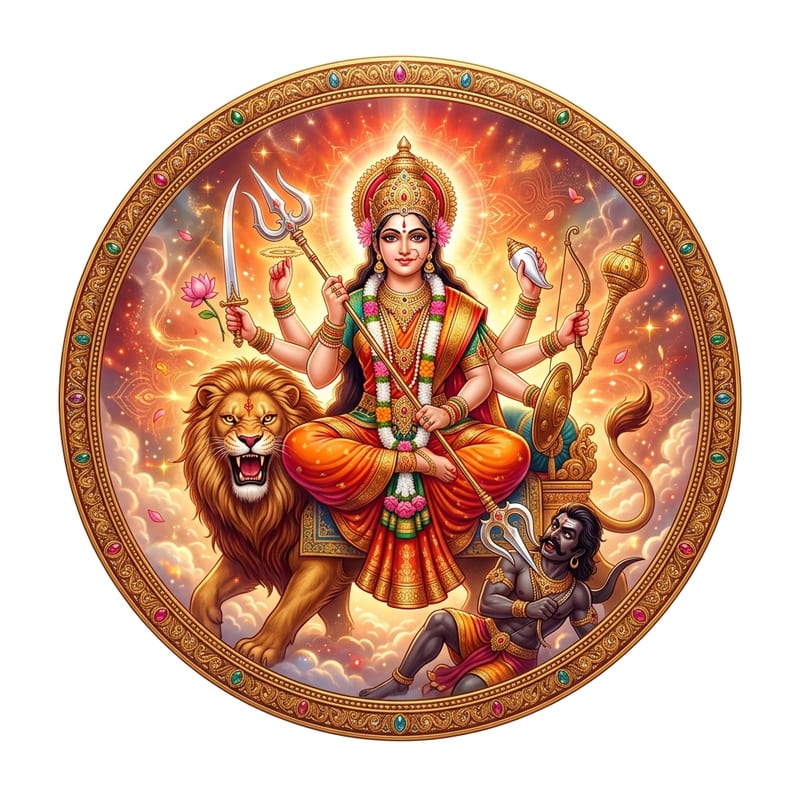
శ్రీదుర్గాష్టోత్తరశతనామస్తోత్రమ్
Shri Durga Ashtottara Shatanama Stotram
॥ శ్రీ దుర్గాయై నమః ॥
Salutations to Goddess Durga.
అథ శ్రీదుర్గాష్టోత్తరశతనామస్తోత్రమ్ ।
ఈశ్వర ఉవాచ।
శతనామ ప్రవక్ష్యామి శృణుష్వ కమలాననే ।
యస్య ప్రసాదమాత్రేణ దుర్గా ప్రీతా భవేత్ సతీ ॥ ౧॥
Now begins the hymn of 108 names of Durga. Lord Shiva said: O lotus-faced one, I will narrate the hundred (and eight) names, by the mere recitation of which Sati (Durga) becomes pleased. (1)
ఓం సతీ సాధ్వీ భవప్రీతా భవానీ భవమోచనీ ।
ఆర్యా దుర్గా జయా చాద్యా త్రినేత్రా శూలధారిణీ ॥ ౨॥
Om. Sati (One who burned herself in fire), Sadhvi (The Sanguine), Bhavaprita (One who is loved by the universe), Bhavani (The abode of the universe), Bhavamochani (The absolver of the universe), Arya (Goddess), Durga (The invincible), Jaya (The victorious), Aadya (The beginning reality), Trinetra (One who has three eyes), Shuladharini (Holder of a trident). (2)
పినాకధారిణీ చిత్రా చణ్డఘణ్టా మహాతపాః ।
మనో బుద్ధిరహఙ్కారా చిత్తరూపా చితా చితిః ॥ ౩॥
Pinakadharini (One who holds the trident of Shiva), Chitra (The picturesque), Chandaghanta (One who has mighty bells), Mahatapa (With severe penance), Manah (Mind), Buddhi (Intellect), Ahankara (Pride/Ego), Chittarupa (One who is in the state of thought), Chita (Death-bed), Chiti (The thinking mind). (3)
సర్వమన్త్రమయీ సత్తా సత్యానన్దస్వరూపిణీ ।
అనన్తా భావినీ భావ్యా భవ్యాభవ్యా సదాగతిః ॥ ౪॥
Sarvamantramayi (One who possess all the instruments of thought), Satta (One who is above all), Satyanandasvarupini (Form of eternal bliss), Ananta (One who is infinite or beyond measure), Bhavini (The beautiful woman), Bhavya (With magnificence), Bhavyabhavya (Partisan of good and bad), Sadagati (Always in motion, bestowing Moksha). (4)
శామ్భవీ దేవమాతా చ చిన్తా రత్నప్రియా సదా ।
సర్వవిద్యా దక్షకన్యా దక్షయజ్ఞవినాశినీ ॥ ౫॥
Shambhavi (Consort of Shambhu), Devamata (Mother Goddess), Chinta (Thought), Ratnapriya (Adorned or loved by jewels), Sarvavidya (Knowledgeable), Dakshakanya (Daughter of Daksha), Dakshayajnavinashini (Destroyer of the sacrifice of Daksha). (5)
అపర్ణానేకవర్ణా చ పాటలా పాటలావతీ ।
పట్టామ్బర పరీధానా కలమఞ్జీరరఞ్జినీ ॥ ౬॥
Aparna (One who took no food during penance), Anekavarna (One who has many complexions), Patala (Red in color), Patalavati (Wearing red), Pattambaraparidhana (Wearing a dress made of leather or silk), Kalamanjiiraranjini (Wearing a musical anklet). (6)
అమేయవిక్రమా క్రురా సున్దరీ సురసున్దరీ ।
వనదుర్గా చ మాతఙ్గీ మతఙ్గమునిపూజితా ॥ ౭॥
Ameyavikrama (Of immeasurable valor), Krura (Cruel on demons), Sundari (The gorgeous), Surasundari (Extremely beautiful), Vanadurga (Goddess of forests), Matangi (Goddess of Matanga), Matangamunipujita (Worshipped by Sage Matanga). (7)
బ్రాహ్మీ మాహేశ్వరీ చైన్ద్రీ కౌమారీ వైష్ణవీ తథా ।
చాముణ్డా చైవ వారాహీ లక్ష్మీశ్చ పురుషాకృతిః ॥ ౮॥
Brahmi (Power of Brahma), Maheshwari (Power of Lord Shiva), Aindri (Power of Indra), Kaumari (The adolescent), Vaishnavi (The invincible), Chamunda (Slayer of Chanda and Munda), Varahi (One who rides on Varaah), Lakshmi (Goddess of Wealth), Purushakriti (One who takes the form of a man). (8)
విమలోత్కర్షిణీ జ్ఞానా క్రియా నిత్యా చ బుద్ధిదా ।
బహులా బహులప్రేమా సర్వవాహన వాహనా ॥ ౯॥
Vimalotkarshini (One who provides joy), Jnana (Full of Knowledge), Kriya (One who is in action), Nitya (The eternal one), Buddhida (The bestower of wisdom), Bahula (One who is in various forms), Bahulaprema (One who is loved by all), Sarvavahanavahana (One who rides all vehicles). (9)
నిశుమ్భశుమ్భహననీ మహిషాసురమర్దినీ ।
మధుకైటభహన్త్రీ చ చణ్డముణ్డవినాశినీ ॥ ౧౦॥
NishumbhaShumbhaHanani (Slayer of the demon-brothers Shumbha and Nishumbha), MahishasuraMardini (Slayer of the bull-demon Mahishasura), MadhuKaitabhaHantri (Slayer of the demon-duo Madhu and Kaitabha), ChandaMundaVinashini (Destroyer of the ferocious asuras Chanda and Munda). (10)
సర్వాసురవినాశా చ సర్వదానవఘాతినీ ।
సర్వశాస్త్రమయీ సత్యా సర్వాస్త్రధారిణీ తథా ॥ ౧౧॥
Sarvasuravinasha (Destroyer of all demons), Sarvadanavaghatini (Causing ruin to all the demons), Sarvashastramayi (One who is deft in all theories), Satya (The truth), Sarvastradharini (Possessor of all the missile weapons). (11)
అనేకశస్త్రహస్తా చ అనేకాస్త్రస్య ధారిణీ ।
కుమారీ చైకకన్యా చ కైశోరీ యువతీ యతిః ॥ ౧౨॥
Anekashastrahasta (Possessor of many hand weapons), Anekastrasyadharini (Possessor of many missile weapons), Kumari (The adolescent Goddess), Ekakanya (The girl child), Kaishori (The adolescent), Yuvati (The Woman), Yati (Ascetic, one who renounces the world). (12)
అప్రౌఢా చైవ ప్రౌఢా చ వృద్ధమాతా బలప్రదా ।
మహోదరీ ముక్తకేశీ ఘోరరూపా మహాబలా ॥ ౧౩॥
Apraudha (One who never gets old), Praudha (One who is old), Vriddhamata (The old mother), Balaprada (The bestower of strength), Mahodari (One who has a huge belly which stores the universe), Muktakeshi (One who has open tresses), Ghorarupa (Having a fierce outlook), Mahabala (Having immense strength). (13)
అగ్నిజ్వాలా రౌద్రముఖీ కాలరాత్రిస్తపస్వినీ ।
నారాయణీ భద్రకాలీ విష్ణుమాయా జలోదరీ ॥ ౧౪॥
Agnijvala (One who is poignant like fire), Raudramukhi (One who has a fierce face like destroyer Rudra), Kalaratri (Goddess who is black like night), Tapasvini (one who is engaged in penance), Narayani (The destructive aspect of Lord Narayana), Bhadrakali (Fierce form of Kali), Vishnumaya (Spell of Lord Vishnu), Jalodari (Abode of the ethereal universe). (14)
శివదూతీ కరాలీ చ అనన్తా పరమేశ్వరీ ।
కాత్యాయనీ చ సావిత్రీ ప్రత్యక్షా బ్రహ్మవాదినీ ॥ ౧౫॥
Shivaduti (Ambassador of Lord Shiva), Karali (The fierce), Ananta (The immeasurable), Parameshwari (The Ultimate Goddess), Katyayani (One who is worshipped by sage Katyanan), Savitri (Daughter of the Sun God Savitr), Pratyaksha (One who is real), Brahmavadini (One who is present everywhere). (15)
య ఇదం ప్రపఠేన్నిత్యం దుర్గానామశతాష్టకమ్ ।
నాసాధ్యం విద్యతే దేవి త్రిషు లోకేషు పార్వతి ॥ ౧౬॥
Whoever reads these 108 names of Durga daily, for them there is nothing impossible to achieve in the three worlds, O Goddess Parvati. (16)
ధనం ధాన్యం సుతం జాయాం హయం హస్తినమేవ చ ।
చతుర్వర్గం తథా చాన్తే లభేన్ముక్తిం చ శాశ్వతీమ్ ॥ ౧౭॥
They obtain wealth, grains, sons, wife, horses, elephants, and the four goals of life (Dharma, Artha, Kama, Moksha), and ultimately attain eternal liberation. (17)
కుమారీం పూజయిత్వా తు ధ్యాత్వా దేవీం సురేశ్వరీమ్ ।
పూజయేత్ పరయా భక్త్యా పఠేన్నామశతాష్టకమ్ ॥ ౧౮॥
Having worshipped the Kumari (virgin girl) and having meditated upon the Goddess, the Lord of gods, one should worship with supreme devotion and read these 108 names. (18)
తస్య సిద్ధిర్భవేద్ దేవి సర్వైః సురవరైరపి ।
రాజానో దాసతాం యాన్తి రాజ్యశ్రియమవాప్నుయాత్ ॥ ౧౯॥
For such a person, success is achieved even among all the excellent gods, O Goddess. Kings become their servants, and they acquire royal wealth. (19)
గోరోచనాలక్తకకుఙ్కుమేవ
సిన్ధూరకర్పూరమధుత్రయేణ ।
విలిఖ్య యన్త్రం విధినా విధిజ్ఞో
భవేత్ సదా ధారయతే పురారిః ॥ ౨౦॥
By writing the yantra according to rules with Gorochana, lac, vermilion (sindoor), camphor, and the three sweets (honey, sugar, ghee), the knower of rules becomes like Lord Shiva (Purari) by constantly wearing it. (20)
భౌమావాస్యానిశామగ్రే చన్ద్రే శతభిషాం గతే ।
విలిఖ్య ప్రపఠేత్ స్తోత్రం స భవేత్ సమ్పదాం పదమ్ ॥ ౨1॥
Writing and reading this Stotra on a Tuesday Amavasya (new moon) night when the moon is in Shatabhisha Nakshatra, one becomes the abode of all wealth. (21)
॥ ఇతి శ్రీవిశ్వసారతన్త్రే దుర్గాష్టోత్తరశతనామస్తోత్రం సమాప్తమ్ ॥
Thus ends the Durga Ashtottara Shatanama Stotram from the Sri Vishvasara Tantra.