
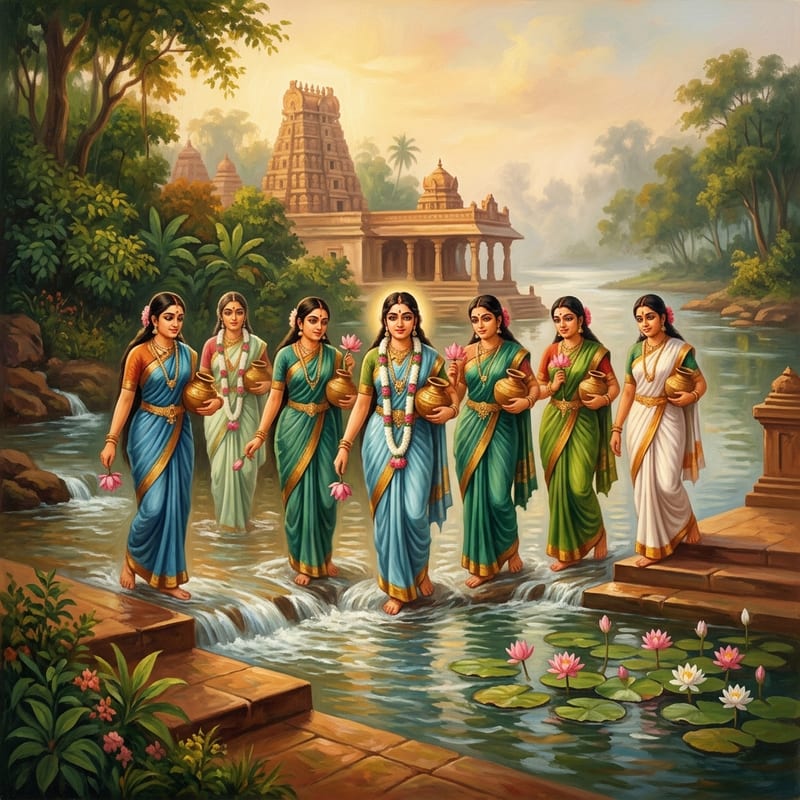
revāmāhātmyavarṇanam śrīmārkaṇḍeya uvācagaṅgā tu saritāṃ śreṣṭhā tathā caiva sarasvatī |
kāverī devikā caiva sindhuḥ sālakuṭī tathā ||5||
kāverī devikā caiva sindhuḥ sālakuṭī tathā ||5||
sarayūḥ śatarudrā ca mahī carmilayā saha |
godāvarī tathā puṇyā tathaiva yamunā nadī payoṣṇīca śatadruśca tathādharmanadīśubhā |
etāścānyāścasaritaḥsarvapāpaharāḥsmṛtāḥ kiṃ_tu te kāraṇaṃ tāta vakṣyāmi nṛpasattama |
samudrāḥ saritaḥ sarvāḥ kalpe kalpe kṣayaṃ gatāḥ ||54||
godāvarī tathā puṇyā tathaiva yamunā nadī payoṣṇīca śatadruśca tathādharmanadīśubhā |
etāścānyāścasaritaḥsarvapāpaharāḥsmṛtāḥ kiṃ_tu te kāraṇaṃ tāta vakṣyāmi nṛpasattama |
samudrāḥ saritaḥ sarvāḥ kalpe kalpe kṣayaṃ gatāḥ ||54||
saptakalpakṣaye kṣīṇe na mṛtā tena narmadā |
narmadaikaiva rājendra paraṃtiṣṭhetsaridvarā ||55||
narmadaikaiva rājendra paraṃtiṣṭhetsaridvarā ||55||
toyapūrṇā mahābhāga munisaṅghairabhiṣṭutā | gaṅgādyā saritaścānyāḥ kalpe kalpe kṣayaṃ gatāḥ ||56||
eṣā devī purā dṛṣṭā tena vakṣyāmi te'nagha ||57||
āścaryabhūtā rājendra triṣu lokeṣu viśrutā ||58||