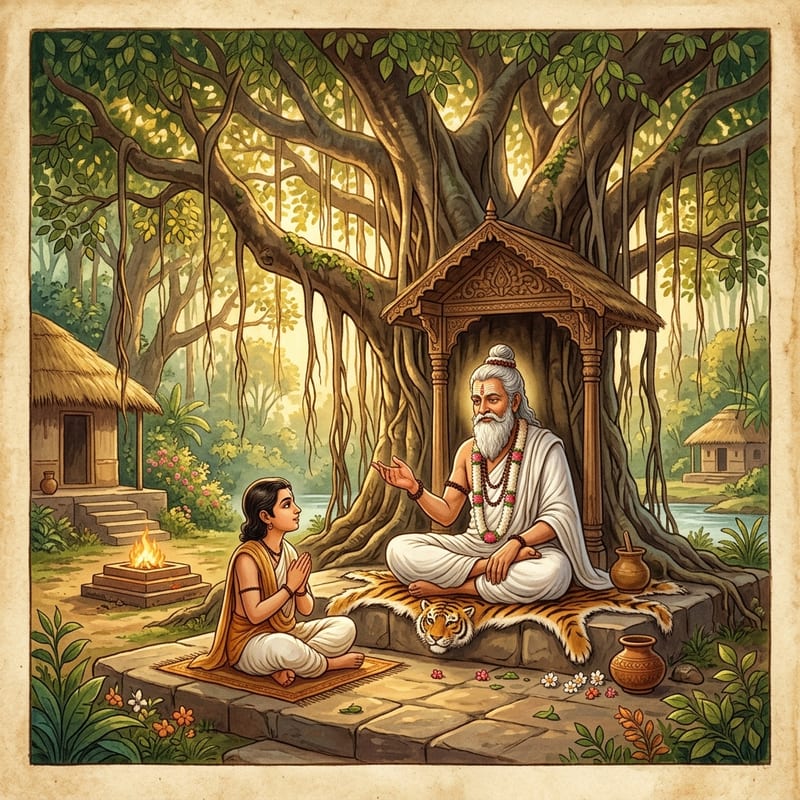
vāsudevendrayogīndraṃ natvā jñānapradaṃ gurum |
Having bowed down to the guru, the king of ascetics and lord of all, who bestows the knowledge of the Supreme,
mumukṣūṇāṃ hitārthāya tattvabodhobhidhīyate ||
sādhanacatuṣṭayasampannādhikāriṇāṃ mokṣasādhanabhūtaṃ
this "Tattvabodha" (Knowledge of Reality) is expounded for the benefit of those who desire liberation. For those aspirants endowed with the four-fold qualifications, this is the means to liberation.
tattvavivekaprakāraṃ vakṣyāmaḥ |
sādhanacatuṣṭayam
We shall explain the method of inquiry into the nature of Reality. What are the four-fold qualifications (Sadhana-Chatushtaya)?
sādhanacatuṣṭayaṃ kim ?
What are the four-fold qualifications?
nityānityavastuvivekaḥ |
The discrimination between the Eternal and the non-eternal.
ihāmutrārthaphalabhogavirāgaḥ |
Dispassion (renunciation) toward the enjoyment of fruits of actions in this world and the next.
śamādiṣaṭkasampattiḥ |
The possession of the six virtues beginning with tranquility (Shama).
mumukṣutvaṃ ceti |
nityānityavastuvivekaḥ
And the intense longing for liberation (Mumukshutva). What is the discrimination between the Eternal and the non-eternal?
nityānityavastuvivekaḥ kaḥ ?
What is the discrimination between the Eternal and the non-eternal?
nityavastvekaṃ brahma tadvyatiriktaṃ sarvamanityam |
Brahman alone is the eternal Reality, and everything apart from It is non-eternal.
ayameva nityānityavastuvivekaḥ |
virāgaḥ
This is the discrimination between the eternal and the non-eternal. Now, what is dispassion?
ihasvargabhogeṣu icchārāhityam |
śamādisādhanasampattiḥ
It is the absence of desire for the enjoyments of this world and the heavenly realms. Now, what is the attainment of the qualifications starting with mental restraint?
śamādisādhanasampattiḥ kā ?
What is the attainment of the qualifications beginning with mental restraint?
śamo dama uparamastitikṣā śraddhā samādhānaṃ ca iti |śamaḥ kaḥ ?
These are mental restraint, sense control, withdrawal of the senses, forbearance, faith, and concentration. What is mental restraint?
manonigrahaḥ |
It is the mastery over the mind.
cakṣurādibāhyendriyanigrahaḥ |
It is the mastery over the external organs such as the eyes.
uparamaḥ kaḥ ?
What is the withdrawal of the senses?
svadharmānuṣṭhānameva |
It is the performance of one’s own prescribed duties.
titikṣā kā ?
What is forbearance (titikṣā)?
śītoṣṇasukhaduḥkhādisahiṣṇutvam |
It is the endurance of opposites such as heat and cold, pleasure and pain, and the like.
śraddhā kīdṛśī ?
What is the nature of faith (śraddhā)?
guruvedāntavākyādiṣu viśvāsaḥ śraddhā |
Faith is the firm conviction in the words of the guru and the teachings of the Vedanta.
samādhānaṃ kim ?
What is mental equilibrium (samādhāna)?
cittaikāgratā |
mumukṣutvaṃ
It is the one-pointedness of the mind.
mumukṣutvaṃ kim ?
What is the longing for liberation (mumukṣutvam)?
mokṣo me bhūyād iti icchā |
It is the intense desire for the attainment of liberation.
etat sādhanacatuṣṭayam |
These are the fourfold requirements (sādhanacatuṣṭayam).
tatastattvavivekasyādhikāriṇo bhavanti |
tattvavivekaḥ
Such are the qualifications required for one who seeks the knowledge of the Truth (Tattvabodha). Now, what is the knowledge of the Truth?
tattvavivekaḥ kaḥ ?
What is the knowledge of the Truth?
ātmā satyaṃ tadanyat sarvaṃ mithyeti |ātmā kaḥ ?
It is the realization that the Atman (the Self) alone is real, and all that is other than the Self is unreal. What, then, is the Atman?
sthūlasūkṣmakāraṇaśarīrādvyatiriktaḥ pañcakośātītaḥ san
The Atman is that which is distinct from the gross, subtle, and causal bodies, and transcends the five sheaths.
avasthātrayasākṣī saccidānandasvarūpaḥ san
It is the witness of the three states of consciousness—waking, dreaming, and deep sleep—and is of the nature of Existence, Consciousness, and Bliss.
yastiṣṭhati sa ātmā |
śarīratrayaṃ (sthūlaśarīram)
That which exists as this witness is the Atman. Now, regarding the three bodies, what is the gross body?
pañcīkṛtapañcamahābhūtaiḥ kṛtaṃ satkarmajanyaṃ
It is the body formed by the five subtle elements that have undergone the process of quintuplication, and it is the result of one's past actions.
sukhaduḥkhādibhogāyatanaṃ śarīram
It is the physical vessel or abode through which one experiences joy, sorrow, and other worldly conditions.
asti jāyate vardhate vipariṇamate apakṣīyate vinaśyatīti
It is subject to the six transformations: it exists, it is born, it grows, it matures, it decays, and it ultimately perishes.
ṣaḍvikāravadetatsthūlaśarīram |
śarīratrayaṃ (sūkṣmaśarīram)
This gross body is subject to the six modifications (birth, existence, growth, maturity, decay, and death). The three bodies include the subtle body.
apañcīkṛtapañcamahābhūtaiḥ kṛtaṃ satkarmajanyaṃ
It is formed from the five great elements that have not undergone the process of quintuplication, and it is the result of past actions.
sukhaduḥkhādibhogasādhanaṃ
It is the instrument for experiencing pleasures, pains, and the like.
pañcajñānendriyāṇi pañcakarmendriyāṇi pañcaprāṇādayaḥ
It consists of the five organs of perception, the five organs of action, and the five vital airs (pranas), and so on.
manaścaikaṃ buddhiścaikā
Also, the mind is one and the intellect is one.
evaṃ saptadaśākalābhiḥ saha yattiṣṭhati tatsūkṣmaśarīram |
jñānendriyāṇi
Thus, that which exists composed of these seventeen aspects is the subtle body. The organs of perception are:
śrotraṃ tvak cakṣuḥ rasanā ghrāṇaṃ iti pañca jñānendriyāṇi |
The ear, the skin, the eye, the tongue, and the nose; these are the five organs of perception.
śrotrasya digdevatā |
The presiding deity of the ear is the direction.
tvaco vāyuḥ |
The presiding deity of the skin is the wind.
cakṣuṣaḥ sūryaḥ |
The presiding deity of the sense of sight is the Sun.
rasanāyā varuṇaḥ |
The presiding deity of the sense of taste is Varuna.
ghrāṇasya aśvinau |
The presiding deities of the sense of smell are the Ashvini Kumaras.
iti jñānendriyadevatāḥ |
śrotrasya viṣayaḥ śabdagrahaṇam |
The object of the sense of hearing is the perception of sound.
tvaco viṣayaḥ sparśagrahaṇam |
The object of the sense of touch is the perception of contact.
cakṣuṣo viṣayaḥ rūpagrahaṇam |
The object of the sense of sight is the perception of form.
rasanāyā viṣayaḥ rasagrahaṇam |
The object of the sense of taste is the perception of flavor.
ghrāṇasya viṣayaḥ gandhagrahaṇaṃ iti |
pañcakarmendriyāṇi
The object of the sense of smell is the perception of odor. These are the five organs of action.
vākpāṇipādapāyūpasthānīti pañcakarmendriyāṇi |
The organs of speech, hands, feet, the organ of excretion, and the organ of generation are the five organs of action.
vāco devatā vahniḥ |
The presiding deity of the organ of speech is Agni (the Fire god).
hastayorindraḥ |
Indra is the presiding deity of the hands.
pādayorviṣṇuḥ |
Vishnu is the presiding deity of the feet.
pāyormṛtyuḥ |
Mrityu (Death) is the presiding deity of the organ of excretion.
upasthasya prajāpatiḥ |
Prajapati is the presiding deity of the organ of generation.
iti karmendriyadevatāḥ |
vāco viṣayaḥ bhāṣaṇam |
The function of the organ of speech is speaking.
pāṇyorviṣayaḥ vastugrahaṇam |
The function of the hands is grasping objects.
pādayorviṣayaḥ gamanam |
The function of the feet is movement.
pāyorviṣayaḥ malatyāgaḥ |
The function of the organ of excretion is the evacuation of waste.
upasthasya viṣayaḥ ānanda iti |
kāraṇaśarīram
The function of the organ of generation is the experience of bliss.
The Causal Body
anirvācyānādyavidyārūpaṃ śarīradvayasya kāraṇamātraṃ
The causal body is characterized by an indescribable, beginningless ignorance, serving solely as the cause of the two other bodies.
satsvarūpā'jñānaṃ nirvikalpakarūpaṃ yadasti tatkāraṇaśarīram |
avasthātrayam
That which exists as the ignorance of one's true nature, which is non-dual and changeless, is the causal body. Now, the three states of consciousness.
avasthātrayaṃ kim ?
What are the three states of consciousness?
jāgratsvapnasuṣuptyavasthāḥ |
jāgradavasthā
They are the waking, dream, and deep sleep states. Regarding the waking state:
jāgradavasthā kā ?
What is the waking state?
śrotrādijñānendriyaiḥ śabdādiviṣayaiśca jñāyate iti yat
That state in which one perceives objects such as sound and form through the sense organs, such as the ear,
sthūla śarīrābhimānī ātmā viśva ityucyate |
svapnāvasthā
The soul identifying with the gross body in this state is called Vishwa. Regarding the dream state:
jāgradavasthāyāṃ yaddṛṣṭaṃ yad śrutam
Whatever has been seen or heard during the waking state,
tajjanitavāsanayā nidrāsamaye yaḥ prapañcaḥ pratīyate sā
That which appears as the world during the time of sleep, born of the impressions (vasanas) of the waking state, is...
sūkṣmaśarīrābhimānī ātmā taijasa ityucyate |
suṣuptyavasthā
The Atman that identifies with the subtle body is called Taijasa. Now, regarding the state of deep sleep:
ataḥ suṣuptyavasthā kā ?
What, then, is the state of deep sleep?
ahaṃ kimapi na jānāmi sukhena mayā nidrā'nubhūyata iti
It is the experience defined by the thought, "I know nothing; I slept happily."
suṣuptyavasthā |
This is the state of deep sleep.
kāraṇaśarīrābhimānī ātmā prājña ityucyate |
pañca kośāḥ
The Atman that identifies with the causal body is called Prajna. Now, regarding the five sheaths:
pañca kośāḥ ke ?
What are the five sheaths?
annamayaḥ prāṇamayaḥ manomayaḥ vijñānamayaḥ ānandamayaśceti |
annamayakośaḥ
They are the food-sheath (Annamaya), the vital-sheath (Pranamaya), the mental-sheath (Manomaya), the intellectual-sheath (Vijnanamaya), and the bliss-sheath (Anandamaya). Now, regarding the food-sheath:
annarasenaiva bhūtvā annarasenaiva vṛddhiṃ prāpya annarūpapṛthivyāṃ
Born of the essence of food, growing by the essence of food, and ultimately merging into the earth which is of the nature of food.
yadvilīyate tadannamayaḥ kośaḥ sthūlaśarīram |
prāṇamayakośaḥ
That which dissolves into the earth is the Annamaya Kosha, the gross body. Now, the Pranamaya Kosha.
prāṇamayaḥ kaḥ ?
What is the Pranamaya Kosha?
prāṇādyāḥ pañcavāyavaḥ vāgādīndriyapañcakaṃ prāṇamayaḥ kośaḥ |
manomayakośaḥ
The five vital airs (Prana, Apana, Vyana, Udana, and Samana) combined with the five organs of action constitute the Pranamaya Kosha. Now, the Manomaya Kosha.
manomayaḥ kośaḥ kaḥ ?
What is the Manomaya Kosha?
manaśca jñānendriyapañcakaṃ militvā yo bhavati sa manomayaḥ kośaḥ |
vijñānamayakośaḥ
The mind combined with the five organs of perception constitutes the Manomaya Kosha. Now, the Vijnanamaya Kosha.
vijñānamayaḥ kaḥ ?
What is the Vijnanamaya Kosha?
buddhijñānendriyapañcakaṃ militvā yo bhavati sa vijñānamayaḥ kośaḥ
ānandamayakośaḥ
The intellect combined with the five organs of perception constitutes the Vijnanamaya Kosha. Now, the Anandamaya Kosha.
ānandamayaḥ kaḥ ?
What is the Anandamaya Kosha?
evameva kāraṇaśarīrabhūtāvidyāsthamalinasattvaṃ
It is the impure Sattva guna, which is the ignorance (Avidya) that serves as the causal body.
priyādivṛttisahitaṃ sat ānandamayaḥ kośaḥ |
The Bliss-Sheath (Anandamaya Kosha) is constituted by the modifications of the mind such as joy and the like.
etatkośapañcakam |
pañcakośātīta
These are the five sheaths. That which transcends the five sheaths is the Self.
madīyaṃ śarīraṃ madīyāḥ prāṇāḥ madīyaṃ manaśca
"My body," "my vital breaths," and "my mind"—
madīyā buddhirmadīyaṃ ajñānamiti svenaiva jñāyate
"My intellect," "my ignorance"—all these are known by oneself.
tadyathā madīyatvena jñātaṃ kaṭakakuṇḍala gṛhādikaṃ
Just as things known as "mine," such as a bracelet, an earring, or a house,
svasmādbhinnaṃ tathā pañcakośādikaṃ svasmādbhinnam
are separate from oneself, so too are the five sheaths and the rest separate from oneself.
madīyatvena jñātamātmā na bhavati ||
ātman
That which is known as "mine" cannot be the Self.
saccidānandasvarūpaḥ |
It is of the nature of Existence-Consciousness-Bliss.
kālatraye'pi tiṣṭhatīti sat |
That which exists in all three periods of time is called Truth (Sat).
citkim ?
What is Consciousness (Chit)?
jñānasvarūpaḥ |
It is of the nature of Knowledge.
sukhasvarūpaḥ |
It is of the nature of Happiness.
evaṃ saccidānandasvarūpaṃ svātmānaṃ vijānīyāt |
jagat
Thus, one should realize one's own Self as being of the nature of Truth, Consciousness, and Bliss.
atha caturviṃśatitattvotpattiprakāraṃ vakṣyāmaḥ |
māyā
Now, we shall describe the manner in which the twenty-four cosmic principles emerge.
brahmāśrayā sattvarajastamoguṇātmikā māyā asti |
pañcabhūtāḥ
Maya, which resides in Brahman and is composed of the three qualities—Sattva, Rajas, and Tamas—exists.
tataḥ ākāśaḥ sambhūtaḥ |
From that (Maya), Space (Akasha) was born.
ākāśād vāyuḥ |
From Space, Air (Vayu) was born.
vāyostejaḥ |
From air, fire was produced.
tejasa āpaḥ |
From fire, water was produced.
abhdhayaḥ pṛthivī |
sattvaguṇaḥ
From water, earth was produced. This concludes the elements born of the sattva guna.
eteṣāṃ pañcatattvānāṃ madhye
From among these five elements:
ākāśasya sātvikāṃśāt śrotrendriyaṃ sambhūtam |
From the sattva portion of ether, the organ of hearing was produced.
vāyoḥ sātvikāṃśāt tvagindriyaṃ sambhūtam |
From the sattva portion of air, the organ of touch was produced.
agneḥ sātvikāṃśāt cakṣurindriyaṃ sambhūtam |
From the sattva portion of fire, the organ of sight was produced.
jalasya sātvikāṃśāt rasanendriyaṃ sambhūtam |
From the sattva portion of water, the organ of taste was produced.
pṛthivyāḥ sātvikāṃśāt ghrāṇendriyaṃ sambhūtam |
antaḥkaraṇa
From the sattva portion of earth, the organ of smell was produced. Regarding the internal instrument:
eteṣāṃ pañcatattvānāṃ samaṣṭisātvikāṃśāt
From the collective sattva portions of these five elements:
manobuddhyahaṅkāra cittāntaḥkaraṇāni sambhūtāni |
The internal instruments consist of the mind (manas), the intellect (buddhi), the ego (ahamkara), and the memory/consciousness (chitta), which have all emerged from the elements.
saṅkalpavikalpātmakaṃ manaḥ |
The mind is characterized by the processes of thought, doubt, and deliberation.
niścayātmikā buddhiḥ |
The intellect is characterized by the faculty of determination and decision-making.
ahaṅkartā ahaṅkāraḥ |
The ego is the principle that identifies itself as the 'doer' or the agent of action.
cintanakartṛ cittam |
The consciousness (chitta) is the faculty responsible for contemplation and remembrance.
manaso devatā candramāḥ |
The presiding deity of the mind is the Moon.
buddhe brahmā |
The presiding deity of the intellect is Brahma.
ahaṅkārasya rudraḥ |
The presiding deity of the ego is Rudra.
cittasya vāsudevaḥ |
rajoguṇaḥ
The presiding deity of the consciousness (chitta) is Vasudeva, and its governing quality is the mode of passion (rajoguna).
eteṣāṃ pañcatattvānāṃ madhye
Among these five elements...
ākāśasya rājasāṃśāt vāgindriyaṃ sambhūtam |
From the rajasic portion of Akasha (space), the organ of speech originated.
vāyoḥ rājasāṃśāt pāṇīndriyaṃ sambhūtam |
From the rajasic portion of Vayu (air), the organ of grasping (hands) originated.
vanheḥ rājasāṃśāt pādendriyaṃ sambhūtam |
From the rajasic portion of Agni (fire), the organ of locomotion (feet) originated.
jalasya rājasāṃśāt upasthendriyaṃ sambhūtam |
From the rajasic portion of Jala (water), the organ of generation originated.
pṛthivyā rājasāṃśāt gudendriyaṃ sambhūtam |
From the rajasic portion of Prithvi (earth), the organ of excretion originated.
eteṣāṃ samaṣṭirājasāṃśāt pañcaprāṇāḥ sambhūtāḥ |
tamoguṇaḥ
From the collective rajasic portions of these elements, the five pranas (vital airs) originated.
eteṣāṃ pañcatattvānāṃ tāmasāṃśāt
From the tamasic portions of these five elements,
pañcīkṛtapañcatattvāni bhavanti |
the five subtle elements become the five gross elements (panchikrita).
pañcīkaraṇaṃ kathaṃ iti cet |
If one asks how the process of panchikarna (the mixing of elements) occurs:
eteṣāṃ pañcamahābhūtānāṃ tāmasāṃśasvarūpam
It is the nature of the tamasic portions of these five great elements.
ekamekaṃ bhūtaṃ dvidhā vibhajya ekamekamardhaṃ pṛthak
Divide each of the five elements into two equal parts.
tūṣṇīṃ vyavasthāpya aparamaparamardhaṃ caturdhāṃ vibhajya
Keep one half of each element aside, then divide the other half of each element into four equal parts.
svārdhamanyeṣu ardheṣu svabhāgacatuṣṭayasaṃyojanaṃ kāryam |
One should then combine the four parts of each element with the other halves of the remaining elements.
tadā pañcīkaraṇaṃ bhavati |
This process is called 'panchikarana' (the quintuplication of elements).
etebhyaḥ pañcīkṛtapañcamahābhūtebhyaḥ sthūlaśarīraṃ bhavati |
From these quintuplicated five great elements, the gross body is formed.
evaṃ piṇḍabrahmāṇḍayoraikyaṃ sambhūtam |
jīvaḥ, īśvaraḥ ca
Thus, the unity between the individual (pinda) and the cosmos (brahmanda) is established. Regarding the jiva (individual soul) and Ishvara (the Lord):
sthūlaśarīrābhimāni jīvanāmakaṃ brahmapratibimbaṃ bhavati |
The reflection of Brahman, which identifies with the gross body, is called the jiva.
sa eva jīvaḥ prakṛtyā svasmāt īśvaraṃ bhinnatvena jānāti |
That very jiva, due to its inherent nature, perceives Ishvara as being separate from itself.
avidyopādhiḥ san ātmā jīva ityucyate |
The Self, when conditioned by avidya (ignorance), is known as the jiva.
māyopādhiḥ san īśvara ityucyate |
The Self, when conditioned by maya (the power of illusion), is known as Ishvara.
evaṃ upādhibhedāt jīveśvarabhedadṛṣṭiḥ yāvatparyantaṃ tiṣṭhati
As long as the perception of a distinction between the individual soul (Jiva) and the Lord (Ishvara) persists due to the differences in their limiting adjuncts (upadhis),
tāvatparyantaṃ janmamaraṇādirūpasaṃsāro na nivartate |
for that long, the cycle of birth, death, and worldly existence does not cease.
tasmātkāraṇānna jīveśvarayorbhedabuddhiḥ svīkāryā |
tat tvaṃ asi
For this reason, the idea of a distinction between the Jiva and Ishvara should not be accepted. "That Thou Art."
nanu sāhaṅkārasya kiñcijjñasya jīvasya nirahaṅkārasya sarvajñasya
If one asks: How can there be an understanding of non-difference through the great statement "That Thou Art" between the Jiva, who is identified with the ego and possesses limited knowledge, and
īśvarasya tattvamasīti mahāvākyāt kathamabhedabuddhiḥ syādubhayoḥ
Ishvara, who is devoid of ego and possesses all-knowingness, since they appear to be two?
viruddhadharmākrāntatvāt |
Because they are characterized by mutually contradictory attributes.
iti cenna | sthūlasūkṣmaśarīrābhimānī tvampadavācyārthaḥ |
If this is the objection, it is not so. The literal meaning of the word "Thou" (tvam) is the consciousness identifying with the gross and subtle bodies.
upādhivinirmuktaṃ samādhidaśāsampannaṃ śuddhaṃ caitanyaṃ
The implied meaning of the word "Thou" is the pure consciousness, free from all limiting adjuncts and attained in the state of deep meditative absorption (samadhi).
tvampadalakṣyārthaḥ |
This is the implied meaning of the word "Thou."
evaṃ sarvajñatvādiviśiṣṭa īśvaraḥ tatpadavācyārthaḥ |
Similarly, the literal meaning of the word "That" (tat) is Ishvara, who is characterized by attributes such as omniscience.
upādhiśūnyaṃ śuddhacaitanyaṃ tatpadalakṣyārthaḥ |
The true nature of the term "That" (Tat) refers to pure consciousness, which is devoid of all limiting adjuncts (upadhis).
evaṃ ca jīveśvarayo caitanyarūpeṇā'bhede bādhakābhāvaḥ |
jīvanmuktaḥ
Thus, there is no contradiction in the non-duality between the individual soul (Jiva) and the Lord (Ishvara) in terms of their essence as consciousness. The liberated-while-living (Jivanmukta)...
evaṃ ca vedāntavākyaiḥ sadgurūpadeśena ca sarveṣvapi
In this way, through the statements of the Vedanta and the instructions of the true teacher (Sadguru), in all...
bhūteṣu yeṣāṃ
beings, those for whom...
brahmabuddhirutpannā te jīvanmuktāḥ ityarthaḥ |nanu jīvanmuktaḥ kaḥ ?
the realization of Brahman has arisen, they are known as the liberated-while-living. Now, who is a Jivanmukta?
yathā deho'haṃ puruṣo'haṃ brāhmaṇo'haṃ śūdro'hamasmīti
Just as one has the firm conviction, "I am the body, I am a man, I am a Brahmana, I am a Shudra,"...
dṛḍhaniścayastathā nāhaṃ brāhmaṇaḥ na śūdraḥ na puruṣaḥ
similarly, one who has the firm conviction, "I am not a Brahmana, nor a Shudra, nor a man,"...
kintu asaṅgaḥ saccidānanda svarūpaḥ prakāśarūpaḥ sarvāntaryāmī
but rather, "I am unattached, of the nature of Existence-Consciousness-Bliss, the form of light, and the indweller of all,"...
cidākāśarūpo'smīti dṛḍhaniścaya
and who has the firm conviction, "I am the form of the space of consciousness,"...
rūpo'parokṣajñānavān jīvanmuktaḥ ||brahmaivāhamasmītyaparokṣajñānena nikhilakarmabandhavinirmuktaḥ
is the one who possesses direct, immediate knowledge and is liberated while living. Through the direct realization that "I am indeed Brahman," one is released from all bonds of action.
karmāṇi katividhāni santīti cet
If one asks, how many types of actions are there?
āgāmisañcitaprārabdhabhedena trividhāni santi |
āgāmi karma
They are of three types, classified as Agami (future), Sanchita (accumulated), and Prarabdha (fructifying). Agami karma is:
jñānotpattyanantaraṃ jñānidehakṛtaṃ puṇyapāparūpaṃ karma
The virtuous and sinful actions performed by the body of a realized soul after the dawn of Self-knowledge.
yadasti tadāgāmītyabhidhīyate |
sañcita karma
Whatever exists as such is called Agami. Sanchita karma is:
anantakoṭijanmanāṃ bījabhūtaṃ sat yatkarmajātaṃ pūrvārjitaṃ
That totality of past-acquired actions which serves as the seed for infinite millions of births,
tiṣṭhati tat sañcitaṃ jñeyam |
prārabdha karma
And which remains stored—that is to be known as Sanchita. Prarabdha karma is:
prārabdhaṃ karma kimiti cet |
If one asks, what is Prarabdha karma?
idaṃ śarīramutpādya iha loke evaṃ sukhaduḥkhādipradaṃ yatkarma
That karma which, having produced this present body, yields happiness, sorrow, and other experiences in this world.
tatprārabdhaṃ
That is Prarabdha (the karma that has already begun to bear fruit).
bhogena naṣṭaṃ bhavati prārabdhakarmaṇāṃ bhogādeva kṣaya iti |
karma muktaḥ
Prarabdha karma is destroyed only through experiencing its fruits; thus, the exhaustion of Prarabdha occurs solely through enjoyment or suffering. Once liberated from this karma:
sañcitaṃ karma brahmaivāhamiti niścayātmakajñānena naśyati |āgāmi karma api jñānena naśyati kiñca āgāmi karmaṇāṃ
Sanchita karma (accumulated past karma) is destroyed by the firm knowledge that "I am Brahman." Agami karma (future karma) is also destroyed by this knowledge; furthermore, regarding Agami karma:
nalinīdalagatajalavat jñānināṃ sambandho nāsti |
jñāniḥ
Just as a water droplet on a lotus leaf does not cling to it, there is no attachment for the enlightened one. The enlightened person:
kiñca ye jñāninaṃ stuvanti bhajanti arcayanti tānprati
Moreover, toward those who praise, serve, and worship the enlightened one:
jñānikṛtaṃ āgāmi puṇyaṃ gacchati |
The merit (punya) of future actions performed by the enlightened one goes to them.
ye jñāninaṃ nindanti dviṣanti duḥkhapradānaṃ kurvanti tānprati
Toward those who revile, hate, or cause suffering to the enlightened one:
jñānikṛtaṃ sarvamāgāmi kriyamāṇaṃ yadavācyaṃ karma
All the future karma performed by the enlightened one, which is considered undesirable or:
pāpātmakaṃ tadgacchati |
Sinful in nature, that karma goes to them.
suhṛdaḥ puṇyakṛtaṃ durhṛdaḥ pāpakṛtyaṃ gṛhṇanti |
brahmānandam
Friends receive the merit of his actions, and enemies receive the demerit of his actions, while he remains established in the bliss of Brahman.
tathā cātmavitsaṃsāraṃ tīrtvā brahmānandamihaiva prāpnoti |
Thus, the knower of the Self, having transcended the cycle of worldly existence, attains the bliss of Brahman even while residing in this very world.
tarati śokamātmavit iti śruteḥ |
This is in accordance with the scriptural declaration: "The knower of the Self crosses beyond all sorrow."
tanuṃ tyajatu vā kāśyāṃ śvapacasya gṛhe'tha vā |
Whether one discards the body in the holy city of Kashi or in the dwelling of an outcaste, it matters not.
jñānasamprāptisamaye muktā'sau vigatāśayaḥ |
At the very moment of attaining true knowledge, one becomes liberated, having shed all latent impressions and desires.
iti smṛteśca |iti śrīśaṅkarabhagavatpādācāryapraṇītaḥ tattvabodhaprakaraṇaṃ samāptam |