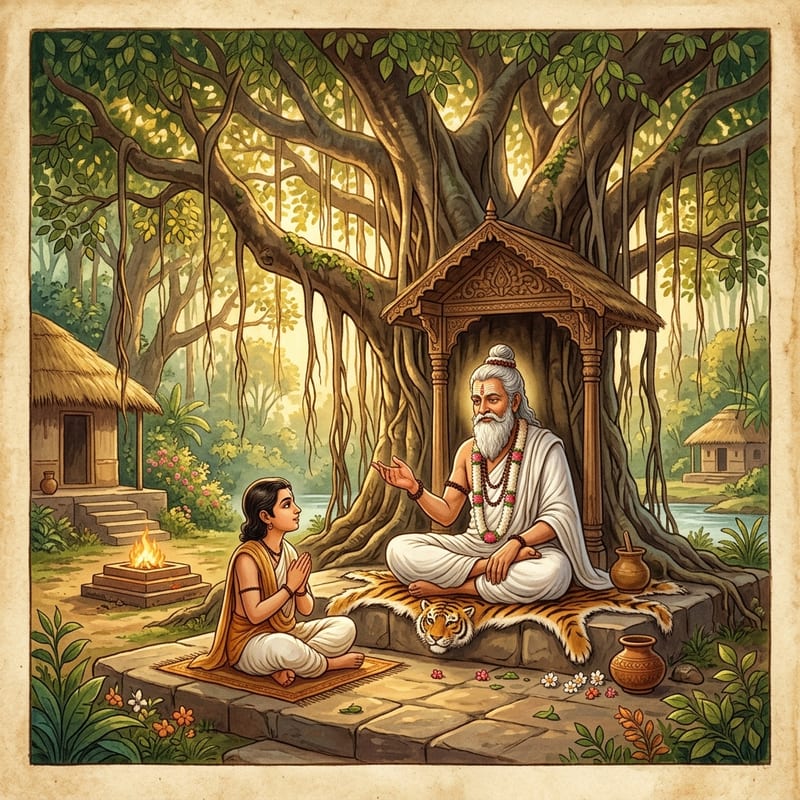
ವಾಸುದೇವೇನ್ದ್ರಯೋಗೀನ್ದ್ರಂ ನತ್ವಾ ಜ್ಞಾನಪ್ರದಂ ಗುರುಮ್ ।
Having bowed down to the guru, the king of ascetics and lord of all, who bestows the knowledge of the Supreme,
ಮುಮುಕ್ಷೂಣಾಂ ಹಿತಾರ್ಥಾಯ ತತ್ತ್ವಬೋಧೋಭಿಧೀಯತೇ ॥
ಸಾಧನಚತುಷ್ಟಯಸಮ್ಪನ್ನಾಧಿಕಾರಿಣಾಂ ಮೋಕ್ಷಸಾಧನಭೂತಂ
this "Tattvabodha" (Knowledge of Reality) is expounded for the benefit of those who desire liberation. For those aspirants endowed with the four-fold qualifications, this is the means to liberation.
ತತ್ತ್ವವಿವೇಕಪ್ರಕಾರಂ ವಕ್ಷ್ಯಾಮಃ ।
ಸಾಧನಚತುಷ್ಟಯಮ್
We shall explain the method of inquiry into the nature of Reality. What are the four-fold qualifications (Sadhana-Chatushtaya)?
ಸಾಧನಚತುಷ್ಟಯಂ ಕಿಮ್ ?
What are the four-fold qualifications?
ನಿತ್ಯಾನಿತ್ಯವಸ್ತುವಿವೇಕಃ ।
The discrimination between the Eternal and the non-eternal.
ಇಹಾಮುತ್ರಾರ್ಥಫಲಭೋಗವಿರಾಗಃ ।
Dispassion (renunciation) toward the enjoyment of fruits of actions in this world and the next.
ಶಮಾದಿಷಟ್ಕಸಮ್ಪತ್ತಿಃ ।
The possession of the six virtues beginning with tranquility (Shama).
ಮುಮುಕ್ಷುತ್ವಂ ಚೇತಿ ।
ನಿತ್ಯಾನಿತ್ಯವಸ್ತುವಿವೇಕಃ
And the intense longing for liberation (Mumukshutva). What is the discrimination between the Eternal and the non-eternal?
ನಿತ್ಯಾನಿತ್ಯವಸ್ತುವಿವೇಕಃ ಕಃ ?
What is the discrimination between the Eternal and the non-eternal?
ನಿತ್ಯವಸ್ತ್ವೇಕಂ ಬ್ರಹ್ಮ ತದ್ವ್ಯತಿರಿಕ್ತಂ ಸರ್ವಮನಿತ್ಯಮ್ ।
Brahman alone is the eternal Reality, and everything apart from It is non-eternal.
ಅಯಮೇವ ನಿತ್ಯಾನಿತ್ಯವಸ್ತುವಿವೇಕಃ ।
ವಿರಾಗಃ
This is the discrimination between the eternal and the non-eternal. Now, what is dispassion?
ಇಹಸ್ವರ್ಗಭೋಗೇಷು ಇಚ್ಛಾರಾಹಿತ್ಯಮ್ ।
ಶಮಾದಿಸಾಧನಸಮ್ಪತ್ತಿಃ
It is the absence of desire for the enjoyments of this world and the heavenly realms. Now, what is the attainment of the qualifications starting with mental restraint?
ಶಮಾದಿಸಾಧನಸಮ್ಪತ್ತಿಃ ಕಾ ?
What is the attainment of the qualifications beginning with mental restraint?
ಶಮೋ ದಮ ಉಪರಮಸ್ತಿತಿಕ್ಷಾ ಶ್ರದ್ಧಾ ಸಮಾಧಾನಂ ಚ ಇತಿ ।ಶಮಃ ಕಃ ?
These are mental restraint, sense control, withdrawal of the senses, forbearance, faith, and concentration. What is mental restraint?
ಮನೋನಿಗ್ರಹಃ ।
It is the mastery over the mind.
ಚಕ್ಷುರಾದಿಬಾಹ್ಯೇನ್ದ್ರಿಯನಿಗ್ರಹಃ ।
It is the mastery over the external organs such as the eyes.
ಉಪರಮಃ ಕಃ ?
What is the withdrawal of the senses?
ಸ್ವಧರ್ಮಾನುಷ್ಠಾನಮೇವ ।
It is the performance of one’s own prescribed duties.
ತಿತಿಕ್ಷಾ ಕಾ ?
What is forbearance (titikṣā)?
ಶೀತೋಷ್ಣಸುಖದುಃಖಾದಿಸಹಿಷ್ಣುತ್ವಮ್ ।
It is the endurance of opposites such as heat and cold, pleasure and pain, and the like.
ಶ್ರದ್ಧಾ ಕೀದೃಶೀ ?
What is the nature of faith (śraddhā)?
ಗುರುವೇದಾನ್ತವಾಕ್ಯಾದಿಷು ವಿಶ್ವಾಸಃ ಶ್ರದ್ಧಾ ।
Faith is the firm conviction in the words of the guru and the teachings of the Vedanta.
ಸಮಾಧಾನಂ ಕಿಮ್ ?
What is mental equilibrium (samādhāna)?
ಚಿತ್ತೈಕಾಗ್ರತಾ ।
ಮುಮುಕ್ಷುತ್ವಂ
It is the one-pointedness of the mind.
ಮುಮುಕ್ಷುತ್ವಂ ಕಿಮ್ ?
What is the longing for liberation (mumukṣutvam)?
ಮೋಕ್ಷೋ ಮೇ ಭೂಯಾದ್ ಇತಿ ಇಚ್ಛಾ ।
It is the intense desire for the attainment of liberation.
ಏತತ್ ಸಾಧನಚತುಷ್ಟಯಮ್ ।
These are the fourfold requirements (sādhanacatuṣṭayam).
ತತಸ್ತತ್ತ್ವವಿವೇಕಸ್ಯಾಧಿಕಾರಿಣೋ ಭವನ್ತಿ ।
ತತ್ತ್ವವಿವೇಕಃ
Such are the qualifications required for one who seeks the knowledge of the Truth (Tattvabodha). Now, what is the knowledge of the Truth?
ತತ್ತ್ವವಿವೇಕಃ ಕಃ ?
What is the knowledge of the Truth?
ಆತ್ಮಾ ಸತ್ಯಂ ತದನ್ಯತ್ ಸರ್ವಂ ಮಿಥ್ಯೇತಿ ।ಆತ್ಮಾ ಕಃ ?
It is the realization that the Atman (the Self) alone is real, and all that is other than the Self is unreal. What, then, is the Atman?
ಸ್ಥೂಲಸೂಕ್ಷ್ಮಕಾರಣಶರೀರಾದ್ವ್ಯತಿರಿಕ್ತಃ ಪಞ್ಚಕೋಶಾತೀತಃ ಸನ್
The Atman is that which is distinct from the gross, subtle, and causal bodies, and transcends the five sheaths.
ಅವಸ್ಥಾತ್ರಯಸಾಕ್ಷೀ ಸಚ್ಚಿದಾನನ್ದಸ್ವರೂಪಃ ಸನ್
It is the witness of the three states of consciousness—waking, dreaming, and deep sleep—and is of the nature of Existence, Consciousness, and Bliss.
ಯಸ್ತಿಷ್ಠತಿ ಸ ಆತ್ಮಾ ।
ಶರೀರತ್ರಯಂ (ಸ್ಥೂಲಶರೀರಮ್)
That which exists as this witness is the Atman. Now, regarding the three bodies, what is the gross body?
ಪಞ್ಚೀಕೃತಪಞ್ಚಮಹಾಭೂತೈಃ ಕೃತಂ ಸತ್ಕರ್ಮಜನ್ಯಂ
It is the body formed by the five subtle elements that have undergone the process of quintuplication, and it is the result of one's past actions.
ಸುಖದುಃಖಾದಿಭೋಗಾಯತನಂ ಶರೀರಮ್
It is the physical vessel or abode through which one experiences joy, sorrow, and other worldly conditions.
ಅಸ್ತಿ ಜಾಯತೇ ವರ್ಧತೇ ವಿಪರಿಣಮತೇ ಅಪಕ್ಷೀಯತೇ ವಿನಶ್ಯತೀತಿ
It is subject to the six transformations: it exists, it is born, it grows, it matures, it decays, and it ultimately perishes.
ಷಡ್ವಿಕಾರವದೇತತ್ಸ್ಥೂಲಶರೀರಮ್ ।
ಶರೀರತ್ರಯಂ (ಸೂಕ್ಷ್ಮಶರೀರಮ್)
This gross body is subject to the six modifications (birth, existence, growth, maturity, decay, and death). The three bodies include the subtle body.
ಅಪಞ್ಚೀಕೃತಪಞ್ಚಮಹಾಭೂತೈಃ ಕೃತಂ ಸತ್ಕರ್ಮಜನ್ಯಂ
It is formed from the five great elements that have not undergone the process of quintuplication, and it is the result of past actions.
ಸುಖದುಃಖಾದಿಭೋಗಸಾಧನಂ
It is the instrument for experiencing pleasures, pains, and the like.
ಪಞ್ಚಜ್ಞಾನೇನ್ದ್ರಿಯಾಣಿ ಪಞ್ಚಕರ್ಮೇನ್ದ್ರಿಯಾಣಿ ಪಞ್ಚಪ್ರಾಣಾದಯಃ
It consists of the five organs of perception, the five organs of action, and the five vital airs (pranas), and so on.
ಮನಶ್ಚೈಕಂ ಬುದ್ಧಿಶ್ಚೈಕಾ
Also, the mind is one and the intellect is one.
ಏವಂ ಸಪ್ತದಶಾಕಲಾಭಿಃ ಸಹ ಯತ್ತಿಷ್ಠತಿ ತತ್ಸೂಕ್ಷ್ಮಶರೀರಮ್ ।
ಜ್ಞಾನೇನ್ದ್ರಿಯಾಣಿ
Thus, that which exists composed of these seventeen aspects is the subtle body. The organs of perception are:
ಶ್ರೋತ್ರಂ ತ್ವಕ್ ಚಕ್ಷುಃ ರಸನಾ ಘ್ರಾಣಂ ಇತಿ ಪಞ್ಚ ಜ್ಞಾನೇನ್ದ್ರಿಯಾಣಿ ।
The ear, the skin, the eye, the tongue, and the nose; these are the five organs of perception.
ಶ್ರೋತ್ರಸ್ಯ ದಿಗ್ದೇವತಾ ।
The presiding deity of the ear is the direction.
ತ್ವಚೋ ವಾಯುಃ ।
The presiding deity of the skin is the wind.
ಚಕ್ಷುಷಃ ಸೂರ್ಯಃ ।
The presiding deity of the sense of sight is the Sun.
ರಸನಾಯಾ ವರುಣಃ ।
The presiding deity of the sense of taste is Varuna.
ಘ್ರಾಣಸ್ಯ ಅಶ್ವಿನೌ ।
The presiding deities of the sense of smell are the Ashvini Kumaras.
ಇತಿ ಜ್ಞಾನೇನ್ದ್ರಿಯದೇವತಾಃ ।
ಶ್ರೋತ್ರಸ್ಯ ವಿಷಯಃ ಶಬ್ದಗ್ರಹಣಮ್ ।
The object of the sense of hearing is the perception of sound.
ತ್ವಚೋ ವಿಷಯಃ ಸ್ಪರ್ಶಗ್ರಹಣಮ್ ।
The object of the sense of touch is the perception of contact.
ಚಕ್ಷುಷೋ ವಿಷಯಃ ರೂಪಗ್ರಹಣಮ್ ।
The object of the sense of sight is the perception of form.
ರಸನಾಯಾ ವಿಷಯಃ ರಸಗ್ರಹಣಮ್ ।
The object of the sense of taste is the perception of flavor.
ಘ್ರಾಣಸ್ಯ ವಿಷಯಃ ಗನ್ಧಗ್ರಹಣಂ ಇತಿ ।
ಪಞ್ಚಕರ್ಮೇನ್ದ್ರಿಯಾಣಿ
The object of the sense of smell is the perception of odor. These are the five organs of action.
ವಾಕ್ಪಾಣಿಪಾದಪಾಯೂಪಸ್ಥಾನೀತಿ ಪಞ್ಚಕರ್ಮೇನ್ದ್ರಿಯಾಣಿ ।
The organs of speech, hands, feet, the organ of excretion, and the organ of generation are the five organs of action.
ವಾಚೋ ದೇವತಾ ವಹ್ನಿಃ ।
The presiding deity of the organ of speech is Agni (the Fire god).
ಹಸ್ತಯೋರಿನ್ದ್ರಃ ।
Indra is the presiding deity of the hands.
ಪಾದಯೋರ್ವಿಷ್ಣುಃ ।
Vishnu is the presiding deity of the feet.
ಪಾಯೋರ್ಮೃತ್ಯುಃ ।
Mrityu (Death) is the presiding deity of the organ of excretion.
ಉಪಸ್ಥಸ್ಯ ಪ್ರಜಾಪತಿಃ ।
Prajapati is the presiding deity of the organ of generation.
ಇತಿ ಕರ್ಮೇನ್ದ್ರಿಯದೇವತಾಃ ।
ವಾಚೋ ವಿಷಯಃ ಭಾಷಣಮ್ ।
The function of the organ of speech is speaking.
ಪಾಣ್ಯೋರ್ವಿಷಯಃ ವಸ್ತುಗ್ರಹಣಮ್ ।
The function of the hands is grasping objects.
ಪಾದಯೋರ್ವಿಷಯಃ ಗಮನಮ್ ।
The function of the feet is movement.
ಪಾಯೋರ್ವಿಷಯಃ ಮಲತ್ಯಾಗಃ ।
The function of the organ of excretion is the evacuation of waste.
ಉಪಸ್ಥಸ್ಯ ವಿಷಯಃ ಆನನ್ದ ಇತಿ ।
ಕಾರಣಶರೀರಮ್
The function of the organ of generation is the experience of bliss.
The Causal Body
ಅನಿರ್ವಾಚ್ಯಾನಾದ್ಯವಿದ್ಯಾರೂಪಂ ಶರೀರದ್ವಯಸ್ಯ ಕಾರಣಮಾತ್ರಂ
The causal body is characterized by an indescribable, beginningless ignorance, serving solely as the cause of the two other bodies.
ಸತ್ಸ್ವರೂಪಾಽಜ್ಞಾನಂ ನಿರ್ವಿಕಲ್ಪಕರೂಪಂ ಯದಸ್ತಿ ತತ್ಕಾರಣಶರೀರಮ್ ।
ಅವಸ್ಥಾತ್ರಯಮ್
That which exists as the ignorance of one's true nature, which is non-dual and changeless, is the causal body. Now, the three states of consciousness.
ಅವಸ್ಥಾತ್ರಯಂ ಕಿಮ್ ?
What are the three states of consciousness?
ಜಾಗ್ರತ್ಸ್ವಪ್ನಸುಷುಪ್ತ್ಯವಸ್ಥಾಃ ।
ಜಾಗ್ರದವಸ್ಥಾ
They are the waking, dream, and deep sleep states. Regarding the waking state:
ಜಾಗ್ರದವಸ್ಥಾ ಕಾ ?
What is the waking state?
ಶ್ರೋತ್ರಾದಿಜ್ಞಾನೇನ್ದ್ರಿಯೈಃ ಶಬ್ದಾದಿವಿಷಯೈಶ್ಚ ಜ್ಞಾಯತೇ ಇತಿ ಯತ್
That state in which one perceives objects such as sound and form through the sense organs, such as the ear,
ಸ್ಥೂಲ ಶರೀರಾಭಿಮಾನೀ ಆತ್ಮಾ ವಿಶ್ವ ಇತ್ಯುಚ್ಯತೇ ।
ಸ್ವಪ್ನಾವಸ್ಥಾ
The soul identifying with the gross body in this state is called Vishwa. Regarding the dream state:
ಜಾಗ್ರದವಸ್ಥಾಯಾಂ ಯದ್ದೃಷ್ಟಂ ಯದ್ ಶ್ರುತಮ್
Whatever has been seen or heard during the waking state,
ತಜ್ಜನಿತವಾಸನಯಾ ನಿದ್ರಾಸಮಯೇ ಯಃ ಪ್ರಪಞ್ಚಃ ಪ್ರತೀಯತೇ ಸಾ
That which appears as the world during the time of sleep, born of the impressions (vasanas) of the waking state, is...
ಸೂಕ್ಷ್ಮಶರೀರಾಭಿಮಾನೀ ಆತ್ಮಾ ತೈಜಸ ಇತ್ಯುಚ್ಯತೇ ।
ಸುಷುಪ್ತ್ಯವಸ್ಥಾ
The Atman that identifies with the subtle body is called Taijasa. Now, regarding the state of deep sleep:
ಅತಃ ಸುಷುಪ್ತ್ಯವಸ್ಥಾ ಕಾ ?
What, then, is the state of deep sleep?
ಅಹಂ ಕಿಮಪಿ ನ ಜಾನಾಮಿ ಸುಖೇನ ಮಯಾ ನಿದ್ರಾಽನುಭೂಯತ ಇತಿ
It is the experience defined by the thought, "I know nothing; I slept happily."
ಸುಷುಪ್ತ್ಯವಸ್ಥಾ ।
This is the state of deep sleep.
ಕಾರಣಶರೀರಾಭಿಮಾನೀ ಆತ್ಮಾ ಪ್ರಾಜ್ಞ ಇತ್ಯುಚ್ಯತೇ ।
ಪಞ್ಚ ಕೋಶಾಃ
The Atman that identifies with the causal body is called Prajna. Now, regarding the five sheaths:
ಪಞ್ಚ ಕೋಶಾಃ ಕೇ ?
What are the five sheaths?
ಅನ್ನಮಯಃ ಪ್ರಾಣಮಯಃ ಮನೋಮಯಃ ವಿಜ್ಞಾನಮಯಃ ಆನನ್ದಮಯಶ್ಚೇತಿ ।
ಅನ್ನಮಯಕೋಶಃ
They are the food-sheath (Annamaya), the vital-sheath (Pranamaya), the mental-sheath (Manomaya), the intellectual-sheath (Vijnanamaya), and the bliss-sheath (Anandamaya). Now, regarding the food-sheath:
ಅನ್ನರಸೇನೈವ ಭೂತ್ವಾ ಅನ್ನರಸೇನೈವ ವೃದ್ಧಿಂ ಪ್ರಾಪ್ಯ ಅನ್ನರೂಪಪೃಥಿವ್ಯಾಂ
Born of the essence of food, growing by the essence of food, and ultimately merging into the earth which is of the nature of food.
ಯದ್ವಿಲೀಯತೇ ತದನ್ನಮಯಃ ಕೋಶಃ ಸ್ಥೂಲಶರೀರಮ್ ।
ಪ್ರಾಣಮಯಕೋಶಃ
That which dissolves into the earth is the Annamaya Kosha, the gross body. Now, the Pranamaya Kosha.
ಪ್ರಾಣಮಯಃ ಕಃ ?
What is the Pranamaya Kosha?
ಪ್ರಾಣಾದ್ಯಾಃ ಪಞ್ಚವಾಯವಃ ವಾಗಾದೀನ್ದ್ರಿಯಪಞ್ಚಕಂ ಪ್ರಾಣಮಯಃ ಕೋಶಃ ।
ಮನೋಮಯಕೋಶಃ
The five vital airs (Prana, Apana, Vyana, Udana, and Samana) combined with the five organs of action constitute the Pranamaya Kosha. Now, the Manomaya Kosha.
ಮನೋಮಯಃ ಕೋಶಃ ಕಃ ?
What is the Manomaya Kosha?
ಮನಶ್ಚ ಜ್ಞಾನೇನ್ದ್ರಿಯಪಞ್ಚಕಂ ಮಿಲಿತ್ವಾ ಯೋ ಭವತಿ ಸ ಮನೋಮಯಃ ಕೋಶಃ ।
ವಿಜ್ಞಾನಮಯಕೋಶಃ
The mind combined with the five organs of perception constitutes the Manomaya Kosha. Now, the Vijnanamaya Kosha.
ವಿಜ್ಞಾನಮಯಃ ಕಃ ?
What is the Vijnanamaya Kosha?
ಬುದ್ಧಿಜ್ಞಾನೇನ್ದ್ರಿಯಪಞ್ಚಕಂ ಮಿಲಿತ್ವಾ ಯೋ ಭವತಿ ಸ ವಿಜ್ಞಾನಮಯಃ ಕೋಶಃ
ಆನನ್ದಮಯಕೋಶಃ
The intellect combined with the five organs of perception constitutes the Vijnanamaya Kosha. Now, the Anandamaya Kosha.
ಆನನ್ದಮಯಃ ಕಃ ?
What is the Anandamaya Kosha?
ಏವಮೇವ ಕಾರಣಶರೀರಭೂತಾವಿದ್ಯಾಸ್ಥಮಲಿನಸತ್ತ್ವಂ
It is the impure Sattva guna, which is the ignorance (Avidya) that serves as the causal body.
ಪ್ರಿಯಾದಿವೃತ್ತಿಸಹಿತಂ ಸತ್ ಆನನ್ದಮಯಃ ಕೋಶಃ ।
The Bliss-Sheath (Anandamaya Kosha) is constituted by the modifications of the mind such as joy and the like.
ಏತತ್ಕೋಶಪಞ್ಚಕಮ್ ।
ಪಞ್ಚಕೋಶಾತೀತ
These are the five sheaths. That which transcends the five sheaths is the Self.
ಮದೀಯಂ ಶರೀರಂ ಮದೀಯಾಃ ಪ್ರಾಣಾಃ ಮದೀಯಂ ಮನಶ್ಚ
"My body," "my vital breaths," and "my mind"—
ಮದೀಯಾ ಬುದ್ಧಿರ್ಮದೀಯಂ ಅಜ್ಞಾನಮಿತಿ ಸ್ವೇನೈವ ಜ್ಞಾಯತೇ
"My intellect," "my ignorance"—all these are known by oneself.
ತದ್ಯಥಾ ಮದೀಯತ್ವೇನ ಜ್ಞಾತಂ ಕಟಕಕುಣ್ಡಲ ಗೃಹಾದಿಕಂ
Just as things known as "mine," such as a bracelet, an earring, or a house,
ಸ್ವಸ್ಮಾದ್ಭಿನ್ನಂ ತಥಾ ಪಞ್ಚಕೋಶಾದಿಕಂ ಸ್ವಸ್ಮಾದ್ಭಿನ್ನಮ್
are separate from oneself, so too are the five sheaths and the rest separate from oneself.
ಮದೀಯತ್ವೇನ ಜ್ಞಾತಮಾತ್ಮಾ ನ ಭವತಿ ॥
ಆತ್ಮನ್
That which is known as "mine" cannot be the Self.
ಸಚ್ಚಿದಾನನ್ದಸ್ವರೂಪಃ ।
It is of the nature of Existence-Consciousness-Bliss.
ಕಾಲತ್ರಯೇಽಪಿ ತಿಷ್ಠತೀತಿ ಸತ್ ।
That which exists in all three periods of time is called Truth (Sat).
ಚಿತ್ಕಿಮ್ ?
What is Consciousness (Chit)?
ಜ್ಞಾನಸ್ವರೂಪಃ ।
It is of the nature of Knowledge.
ಸುಖಸ್ವರೂಪಃ ।
It is of the nature of Happiness.
ಏವಂ ಸಚ್ಚಿದಾನನ್ದಸ್ವರೂಪಂ ಸ್ವಾತ್ಮಾನಂ ವಿಜಾನೀಯಾತ್ ।
ಜಗತ್
Thus, one should realize one's own Self as being of the nature of Truth, Consciousness, and Bliss.
ಅಥ ಚತುರ್ವಿಂಶತಿತತ್ತ್ವೋತ್ಪತ್ತಿಪ್ರಕಾರಂ ವಕ್ಷ್ಯಾಮಃ ।
ಮಾಯಾ
Now, we shall describe the manner in which the twenty-four cosmic principles emerge.
ಬ್ರಹ್ಮಾಶ್ರಯಾ ಸತ್ತ್ವರಜಸ್ತಮೋಗುಣಾತ್ಮಿಕಾ ಮಾಯಾ ಅಸ್ತಿ ।
ಪಞ್ಚಭೂತಾಃ
Maya, which resides in Brahman and is composed of the three qualities—Sattva, Rajas, and Tamas—exists.
ತತಃ ಆಕಾಶಃ ಸಮ್ಭೂತಃ ।
From that (Maya), Space (Akasha) was born.
ಆಕಾಶಾದ್ ವಾಯುಃ ।
From Space, Air (Vayu) was born.
ವಾಯೋಸ್ತೇಜಃ ।
From air, fire was produced.
ತೇಜಸ ಆಪಃ ।
From fire, water was produced.
ಅಭ್ಧಯಃ ಪೃಥಿವೀ ।
ಸತ್ತ್ವಗುಣಃ
From water, earth was produced. This concludes the elements born of the sattva guna.
ಏತೇಷಾಂ ಪಞ್ಚತತ್ತ್ವಾನಾಂ ಮಧ್ಯೇ
From among these five elements:
ಆಕಾಶಸ್ಯ ಸಾತ್ವಿಕಾಂಶಾತ್ ಶ್ರೋತ್ರೇನ್ದ್ರಿಯಂ ಸಮ್ಭೂತಮ್ ।
From the sattva portion of ether, the organ of hearing was produced.
ವಾಯೋಃ ಸಾತ್ವಿಕಾಂಶಾತ್ ತ್ವಗಿನ್ದ್ರಿಯಂ ಸಮ್ಭೂತಮ್ ।
From the sattva portion of air, the organ of touch was produced.
ಅಗ್ನೇಃ ಸಾತ್ವಿಕಾಂಶಾತ್ ಚಕ್ಷುರಿನ್ದ್ರಿಯಂ ಸಮ್ಭೂತಮ್ ।
From the sattva portion of fire, the organ of sight was produced.
ಜಲಸ್ಯ ಸಾತ್ವಿಕಾಂಶಾತ್ ರಸನೇನ್ದ್ರಿಯಂ ಸಮ್ಭೂತಮ್ ।
From the sattva portion of water, the organ of taste was produced.
ಪೃಥಿವ್ಯಾಃ ಸಾತ್ವಿಕಾಂಶಾತ್ ಘ್ರಾಣೇನ್ದ್ರಿಯಂ ಸಮ್ಭೂತಮ್ ।
ಅನ್ತಃಕರಣ
From the sattva portion of earth, the organ of smell was produced. Regarding the internal instrument:
ಏತೇಷಾಂ ಪಞ್ಚತತ್ತ್ವಾನಾಂ ಸಮಷ್ಟಿಸಾತ್ವಿಕಾಂಶಾತ್
From the collective sattva portions of these five elements:
ಮನೋಬುದ್ಧ್ಯಹಙ್ಕಾರ ಚಿತ್ತಾನ್ತಃಕರಣಾನಿ ಸಮ್ಭೂತಾನಿ ।
The internal instruments consist of the mind (manas), the intellect (buddhi), the ego (ahamkara), and the memory/consciousness (chitta), which have all emerged from the elements.
ಸಙ್ಕಲ್ಪವಿಕಲ್ಪಾತ್ಮಕಂ ಮನಃ ।
The mind is characterized by the processes of thought, doubt, and deliberation.
ನಿಶ್ಚಯಾತ್ಮಿಕಾ ಬುದ್ಧಿಃ ।
The intellect is characterized by the faculty of determination and decision-making.
ಅಹಙ್ಕರ್ತಾ ಅಹಙ್ಕಾರಃ ।
The ego is the principle that identifies itself as the 'doer' or the agent of action.
ಚಿನ್ತನಕರ್ತೃ ಚಿತ್ತಮ್ ।
The consciousness (chitta) is the faculty responsible for contemplation and remembrance.
ಮನಸೋ ದೇವತಾ ಚನ್ದ್ರಮಾಃ ।
The presiding deity of the mind is the Moon.
ಬುದ್ಧೇ ಬ್ರಹ್ಮಾ ।
The presiding deity of the intellect is Brahma.
ಅಹಙ್ಕಾರಸ್ಯ ರುದ್ರಃ ।
The presiding deity of the ego is Rudra.
ಚಿತ್ತಸ್ಯ ವಾಸುದೇವಃ ।
ರಜೋಗುಣಃ
The presiding deity of the consciousness (chitta) is Vasudeva, and its governing quality is the mode of passion (rajoguna).
ಏತೇಷಾಂ ಪಞ್ಚತತ್ತ್ವಾನಾಂ ಮಧ್ಯೇ
Among these five elements...
ಆಕಾಶಸ್ಯ ರಾಜಸಾಂಶಾತ್ ವಾಗಿನ್ದ್ರಿಯಂ ಸಮ್ಭೂತಮ್ ।
From the rajasic portion of Akasha (space), the organ of speech originated.
ವಾಯೋಃ ರಾಜಸಾಂಶಾತ್ ಪಾಣೀನ್ದ್ರಿಯಂ ಸಮ್ಭೂತಮ್ ।
From the rajasic portion of Vayu (air), the organ of grasping (hands) originated.
ವನ್ಹೇಃ ರಾಜಸಾಂಶಾತ್ ಪಾದೇನ್ದ್ರಿಯಂ ಸಮ್ಭೂತಮ್ ।
From the rajasic portion of Agni (fire), the organ of locomotion (feet) originated.
ಜಲಸ್ಯ ರಾಜಸಾಂಶಾತ್ ಉಪಸ್ಥೇನ್ದ್ರಿಯಂ ಸಮ್ಭೂತಮ್ ।
From the rajasic portion of Jala (water), the organ of generation originated.
ಪೃಥಿವ್ಯಾ ರಾಜಸಾಂಶಾತ್ ಗುದೇನ್ದ್ರಿಯಂ ಸಮ್ಭೂತಮ್ ।
From the rajasic portion of Prithvi (earth), the organ of excretion originated.
ಏತೇಷಾಂ ಸಮಷ್ಟಿರಾಜಸಾಂಶಾತ್ ಪಞ್ಚಪ್ರಾಣಾಃ ಸಮ್ಭೂತಾಃ ।
ತಮೋಗುಣಃ
From the collective rajasic portions of these elements, the five pranas (vital airs) originated.
ಏತೇಷಾಂ ಪಞ್ಚತತ್ತ್ವಾನಾಂ ತಾಮಸಾಂಶಾತ್
From the tamasic portions of these five elements,
ಪಞ್ಚೀಕೃತಪಞ್ಚತತ್ತ್ವಾನಿ ಭವನ್ತಿ ।
the five subtle elements become the five gross elements (panchikrita).
ಪಞ್ಚೀಕರಣಂ ಕಥಂ ಇತಿ ಚೇತ್ ।
If one asks how the process of panchikarna (the mixing of elements) occurs:
ಏತೇಷಾಂ ಪಞ್ಚಮಹಾಭೂತಾನಾಂ ತಾಮಸಾಂಶಸ್ವರೂಪಮ್
It is the nature of the tamasic portions of these five great elements.
ಏಕಮೇಕಂ ಭೂತಂ ದ್ವಿಧಾ ವಿಭಜ್ಯ ಏಕಮೇಕಮರ್ಧಂ ಪೃಥಕ್
Divide each of the five elements into two equal parts.
ತೂಷ್ಣೀಂ ವ್ಯವಸ್ಥಾಪ್ಯ ಅಪರಮಪರಮರ್ಧಂ ಚತುರ್ಧಾಂ ವಿಭಜ್ಯ
Keep one half of each element aside, then divide the other half of each element into four equal parts.
ಸ್ವಾರ್ಧಮನ್ಯೇಷು ಅರ್ಧೇಷು ಸ್ವಭಾಗಚತುಷ್ಟಯಸಂಯೋಜನಂ ಕಾರ್ಯಮ್ ।
One should then combine the four parts of each element with the other halves of the remaining elements.
ತದಾ ಪಞ್ಚೀಕರಣಂ ಭವತಿ ।
This process is called 'panchikarana' (the quintuplication of elements).
ಏತೇಭ್ಯಃ ಪಞ್ಚೀಕೃತಪಞ್ಚಮಹಾಭೂತೇಭ್ಯಃ ಸ್ಥೂಲಶರೀರಂ ಭವತಿ ।
From these quintuplicated five great elements, the gross body is formed.
ಏವಂ ಪಿಣ್ಡಬ್ರಹ್ಮಾಣ್ಡಯೋರೈಕ್ಯಂ ಸಮ್ಭೂತಮ್ ।
ಜೀವಃ, ಈಶ್ವರಃ ಚ
Thus, the unity between the individual (pinda) and the cosmos (brahmanda) is established. Regarding the jiva (individual soul) and Ishvara (the Lord):
ಸ್ಥೂಲಶರೀರಾಭಿಮಾನಿ ಜೀವನಾಮಕಂ ಬ್ರಹ್ಮಪ್ರತಿಬಿಮ್ಬಂ ಭವತಿ ।
The reflection of Brahman, which identifies with the gross body, is called the jiva.
ಸ ಏವ ಜೀವಃ ಪ್ರಕೃತ್ಯಾ ಸ್ವಸ್ಮಾತ್ ಈಶ್ವರಂ ಭಿನ್ನತ್ವೇನ ಜಾನಾತಿ ।
That very jiva, due to its inherent nature, perceives Ishvara as being separate from itself.
ಅವಿದ್ಯೋಪಾಧಿಃ ಸನ್ ಆತ್ಮಾ ಜೀವ ಇತ್ಯುಚ್ಯತೇ ।
The Self, when conditioned by avidya (ignorance), is known as the jiva.
ಮಾಯೋಪಾಧಿಃ ಸನ್ ಈಶ್ವರ ಇತ್ಯುಚ್ಯತೇ ।
The Self, when conditioned by maya (the power of illusion), is known as Ishvara.
ಏವಂ ಉಪಾಧಿಭೇದಾತ್ ಜೀವೇಶ್ವರಭೇದದೃಷ್ಟಿಃ ಯಾವತ್ಪರ್ಯನ್ತಂ ತಿಷ್ಠತಿ
As long as the perception of a distinction between the individual soul (Jiva) and the Lord (Ishvara) persists due to the differences in their limiting adjuncts (upadhis),
ತಾವತ್ಪರ್ಯನ್ತಂ ಜನ್ಮಮರಣಾದಿರೂಪಸಂಸಾರೋ ನ ನಿವರ್ತತೇ ।
for that long, the cycle of birth, death, and worldly existence does not cease.
ತಸ್ಮಾತ್ಕಾರಣಾನ್ನ ಜೀವೇಶ್ವರಯೋರ್ಭೇದಬುದ್ಧಿಃ ಸ್ವೀಕಾರ್ಯಾ ।
ತತ್ ತ್ವಂ ಅಸಿ
For this reason, the idea of a distinction between the Jiva and Ishvara should not be accepted. "That Thou Art."
ನನು ಸಾಹಙ್ಕಾರಸ್ಯ ಕಿಞ್ಚಿಜ್ಜ್ಞಸ್ಯ ಜೀವಸ್ಯ ನಿರಹಙ್ಕಾರಸ್ಯ ಸರ್ವಜ್ಞಸ್ಯ
If one asks: How can there be an understanding of non-difference through the great statement "That Thou Art" between the Jiva, who is identified with the ego and possesses limited knowledge, and
ಈಶ್ವರಸ್ಯ ತತ್ತ್ವಮಸೀತಿ ಮಹಾವಾಕ್ಯಾತ್ ಕಥಮಭೇದಬುದ್ಧಿಃ ಸ್ಯಾದುಭಯೋಃ
Ishvara, who is devoid of ego and possesses all-knowingness, since they appear to be two?
ವಿರುದ್ಧಧರ್ಮಾಕ್ರಾನ್ತತ್ವಾತ್ ।
Because they are characterized by mutually contradictory attributes.
ಇತಿ ಚೇನ್ನ । ಸ್ಥೂಲಸೂಕ್ಷ್ಮಶರೀರಾಭಿಮಾನೀ ತ್ವಮ್ಪದವಾಚ್ಯಾರ್ಥಃ ।
If this is the objection, it is not so. The literal meaning of the word "Thou" (tvam) is the consciousness identifying with the gross and subtle bodies.
ಉಪಾಧಿವಿನಿರ್ಮುಕ್ತಂ ಸಮಾಧಿದಶಾಸಮ್ಪನ್ನಂ ಶುದ್ಧಂ ಚೈತನ್ಯಂ
The implied meaning of the word "Thou" is the pure consciousness, free from all limiting adjuncts and attained in the state of deep meditative absorption (samadhi).
ತ್ವಮ್ಪದಲಕ್ಷ್ಯಾರ್ಥಃ ।
This is the implied meaning of the word "Thou."
ಏವಂ ಸರ್ವಜ್ಞತ್ವಾದಿವಿಶಿಷ್ಟ ಈಶ್ವರಃ ತತ್ಪದವಾಚ್ಯಾರ್ಥಃ ।
Similarly, the literal meaning of the word "That" (tat) is Ishvara, who is characterized by attributes such as omniscience.
ಉಪಾಧಿಶೂನ್ಯಂ ಶುದ್ಧಚೈತನ್ಯಂ ತತ್ಪದಲಕ್ಷ್ಯಾರ್ಥಃ ।
The true nature of the term "That" (Tat) refers to pure consciousness, which is devoid of all limiting adjuncts (upadhis).
ಏವಂ ಚ ಜೀವೇಶ್ವರಯೋ ಚೈತನ್ಯರೂಪೇಣಾಽಭೇದೇ ಬಾಧಕಾಭಾವಃ ।
ಜೀವನ್ಮುಕ್ತಃ
Thus, there is no contradiction in the non-duality between the individual soul (Jiva) and the Lord (Ishvara) in terms of their essence as consciousness. The liberated-while-living (Jivanmukta)...
ಏವಂ ಚ ವೇದಾನ್ತವಾಕ್ಯೈಃ ಸದ್ಗುರೂಪದೇಶೇನ ಚ ಸರ್ವೇಷ್ವಪಿ
In this way, through the statements of the Vedanta and the instructions of the true teacher (Sadguru), in all...
ಭೂತೇಷು ಯೇಷಾಂ
beings, those for whom...
ಬ್ರಹ್ಮಬುದ್ಧಿರುತ್ಪನ್ನಾ ತೇ ಜೀವನ್ಮುಕ್ತಾಃ ಇತ್ಯರ್ಥಃ ।ನನು ಜೀವನ್ಮುಕ್ತಃ ಕಃ ?
the realization of Brahman has arisen, they are known as the liberated-while-living. Now, who is a Jivanmukta?
ಯಥಾ ದೇಹೋಽಹಂ ಪುರುಷೋಽಹಂ ಬ್ರಾಹ್ಮಣೋಽಹಂ ಶೂದ್ರೋಽಹಮಸ್ಮೀತಿ
Just as one has the firm conviction, "I am the body, I am a man, I am a Brahmana, I am a Shudra,"...
ದೃಢನಿಶ್ಚಯಸ್ತಥಾ ನಾಹಂ ಬ್ರಾಹ್ಮಣಃ ನ ಶೂದ್ರಃ ನ ಪುರುಷಃ
similarly, one who has the firm conviction, "I am not a Brahmana, nor a Shudra, nor a man,"...
ಕಿನ್ತು ಅಸಙ್ಗಃ ಸಚ್ಚಿದಾನನ್ದ ಸ್ವರೂಪಃ ಪ್ರಕಾಶರೂಪಃ ಸರ್ವಾನ್ತರ್ಯಾಮೀ
but rather, "I am unattached, of the nature of Existence-Consciousness-Bliss, the form of light, and the indweller of all,"...
ಚಿದಾಕಾಶರೂಪೋಽಸ್ಮೀತಿ ದೃಢನಿಶ್ಚಯ
and who has the firm conviction, "I am the form of the space of consciousness,"...
ರೂಪೋಽಪರೋಕ್ಷಜ್ಞಾನವಾನ್ ಜೀವನ್ಮುಕ್ತಃ ॥ಬ್ರಹ್ಮೈವಾಹಮಸ್ಮೀತ್ಯಪರೋಕ್ಷಜ್ಞಾನೇನ ನಿಖಿಲಕರ್ಮಬನ್ಧವಿನಿರ್ಮುಕ್ತಃ
is the one who possesses direct, immediate knowledge and is liberated while living. Through the direct realization that "I am indeed Brahman," one is released from all bonds of action.
ಕರ್ಮಾಣಿ ಕತಿವಿಧಾನಿ ಸನ್ತೀತಿ ಚೇತ್
If one asks, how many types of actions are there?
ಆಗಾಮಿಸಞ್ಚಿತಪ್ರಾರಬ್ಧಭೇದೇನ ತ್ರಿವಿಧಾನಿ ಸನ್ತಿ ।
ಆಗಾಮಿ ಕರ್ಮ
They are of three types, classified as Agami (future), Sanchita (accumulated), and Prarabdha (fructifying). Agami karma is:
ಜ್ಞಾನೋತ್ಪತ್ತ್ಯನನ್ತರಂ ಜ್ಞಾನಿದೇಹಕೃತಂ ಪುಣ್ಯಪಾಪರೂಪಂ ಕರ್ಮ
The virtuous and sinful actions performed by the body of a realized soul after the dawn of Self-knowledge.
ಯದಸ್ತಿ ತದಾಗಾಮೀತ್ಯಭಿಧೀಯತೇ ।
ಸಞ್ಚಿತ ಕರ್ಮ
Whatever exists as such is called Agami. Sanchita karma is:
ಅನನ್ತಕೋಟಿಜನ್ಮನಾಂ ಬೀಜಭೂತಂ ಸತ್ ಯತ್ಕರ್ಮಜಾತಂ ಪೂರ್ವಾರ್ಜಿತಂ
That totality of past-acquired actions which serves as the seed for infinite millions of births,
ತಿಷ್ಠತಿ ತತ್ ಸಞ್ಚಿತಂ ಜ್ಞೇಯಮ್ ।
ಪ್ರಾರಬ್ಧ ಕರ್ಮ
And which remains stored—that is to be known as Sanchita. Prarabdha karma is:
ಪ್ರಾರಬ್ಧಂ ಕರ್ಮ ಕಿಮಿತಿ ಚೇತ್ ।
If one asks, what is Prarabdha karma?
ಇದಂ ಶರೀರಮುತ್ಪಾದ್ಯ ಇಹ ಲೋಕೇ ಏವಂ ಸುಖದುಃಖಾದಿಪ್ರದಂ ಯತ್ಕರ್ಮ
That karma which, having produced this present body, yields happiness, sorrow, and other experiences in this world.
ತತ್ಪ್ರಾರಬ್ಧಂ
That is Prarabdha (the karma that has already begun to bear fruit).
ಭೋಗೇನ ನಷ್ಟಂ ಭವತಿ ಪ್ರಾರಬ್ಧಕರ್ಮಣಾಂ ಭೋಗಾದೇವ ಕ್ಷಯ ಇತಿ ।
ಕರ್ಮ ಮುಕ್ತಃ
Prarabdha karma is destroyed only through experiencing its fruits; thus, the exhaustion of Prarabdha occurs solely through enjoyment or suffering. Once liberated from this karma:
ಸಞ್ಚಿತಂ ಕರ್ಮ ಬ್ರಹ್ಮೈವಾಹಮಿತಿ ನಿಶ್ಚಯಾತ್ಮಕಜ್ಞಾನೇನ ನಶ್ಯತಿ ।ಆಗಾಮಿ ಕರ್ಮ ಅಪಿ ಜ್ಞಾನೇನ ನಶ್ಯತಿ ಕಿಞ್ಚ ಆಗಾಮಿ ಕರ್ಮಣಾಂ
Sanchita karma (accumulated past karma) is destroyed by the firm knowledge that "I am Brahman." Agami karma (future karma) is also destroyed by this knowledge; furthermore, regarding Agami karma:
ನಲಿನೀದಲಗತಜಲವತ್ ಜ್ಞಾನಿನಾಂ ಸಮ್ಬನ್ಧೋ ನಾಸ್ತಿ ।
ಜ್ಞಾನಿಃ
Just as a water droplet on a lotus leaf does not cling to it, there is no attachment for the enlightened one. The enlightened person:
ಕಿಞ್ಚ ಯೇ ಜ್ಞಾನಿನಂ ಸ್ತುವನ್ತಿ ಭಜನ್ತಿ ಅರ್ಚಯನ್ತಿ ತಾನ್ಪ್ರತಿ
Moreover, toward those who praise, serve, and worship the enlightened one:
ಜ್ಞಾನಿಕೃತಂ ಆಗಾಮಿ ಪುಣ್ಯಂ ಗಚ್ಛತಿ ।
The merit (punya) of future actions performed by the enlightened one goes to them.
ಯೇ ಜ್ಞಾನಿನಂ ನಿನ್ದನ್ತಿ ದ್ವಿಷನ್ತಿ ದುಃಖಪ್ರದಾನಂ ಕುರ್ವನ್ತಿ ತಾನ್ಪ್ರತಿ
Toward those who revile, hate, or cause suffering to the enlightened one:
ಜ್ಞಾನಿಕೃತಂ ಸರ್ವಮಾಗಾಮಿ ಕ್ರಿಯಮಾಣಂ ಯದವಾಚ್ಯಂ ಕರ್ಮ
All the future karma performed by the enlightened one, which is considered undesirable or:
ಪಾಪಾತ್ಮಕಂ ತದ್ಗಚ್ಛತಿ ।
Sinful in nature, that karma goes to them.
ಸುಹೃದಃ ಪುಣ್ಯಕೃತಂ ದುರ್ಹೃದಃ ಪಾಪಕೃತ್ಯಂ ಗೃಹ್ಣನ್ತಿ ।
ಬ್ರಹ್ಮಾನನ್ದಮ್
Friends receive the merit of his actions, and enemies receive the demerit of his actions, while he remains established in the bliss of Brahman.
ತಥಾ ಚಾತ್ಮವಿತ್ಸಂಸಾರಂ ತೀರ್ತ್ವಾ ಬ್ರಹ್ಮಾನನ್ದಮಿಹೈವ ಪ್ರಾಪ್ನೋತಿ ।
Thus, the knower of the Self, having transcended the cycle of worldly existence, attains the bliss of Brahman even while residing in this very world.
ತರತಿ ಶೋಕಮಾತ್ಮವಿತ್ ಇತಿ ಶ್ರುತೇಃ ।
This is in accordance with the scriptural declaration: "The knower of the Self crosses beyond all sorrow."
ತನುಂ ತ್ಯಜತು ವಾ ಕಾಶ್ಯಾಂ ಶ್ವಪಚಸ್ಯ ಗೃಹೇಽಥ ವಾ ।
Whether one discards the body in the holy city of Kashi or in the dwelling of an outcaste, it matters not.
ಜ್ಞಾನಸಮ್ಪ್ರಾಪ್ತಿಸಮಯೇ ಮುಕ್ತಾಽಸೌ ವಿಗತಾಶಯಃ ।
At the very moment of attaining true knowledge, one becomes liberated, having shed all latent impressions and desires.
ಇತಿ ಸ್ಮೃತೇಶ್ಚ ।ಇತಿ ಶ್ರೀಶಙ್ಕರಭಗವತ್ಪಾದಾಚಾರ್ಯಪ್ರಣೀತಃ ತತ್ತ್ವಬೋಧಪ್ರಕರಣಂ ಸಮಾಪ್ತಮ್ ।