
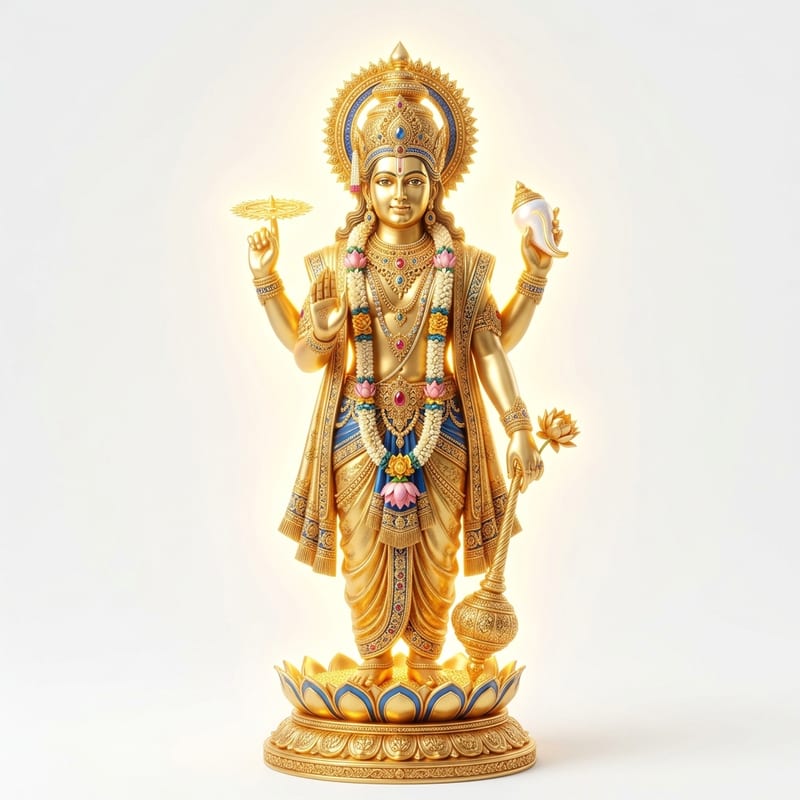
श्रीगणेशाय नमः ।
श्रीविष्ण्वष्टकम्
श्रीविष्ण्वष्टकम्
विष्णुं विशालारुणपद्मनेत्रं
विभान्तमीशांबुजयोनिपूजितम् ।
सनातनं सन्मतिशोधितं परं
पुमांसमाद्यं सततं प्रपद्ये ॥ १॥
विभान्तमीशांबुजयोनिपूजितम् ।
सनातनं सन्मतिशोधितं परं
पुमांसमाद्यं सततं प्रपद्ये ॥ १॥
कल्याणदं कामफलप्रदायकं
कारुण्यरूपं कलिकल्मषघ्नम् ।
कलानिधिं कामतनूजमाद्यं
नमामि लक्ष्मीशमहं महान्तम् ॥ २॥
कारुण्यरूपं कलिकल्मषघ्नम् ।
कलानिधिं कामतनूजमाद्यं
नमामि लक्ष्मीशमहं महान्तम् ॥ २॥
पीतांबरं भृङ्गनिभं पितामह-
प्रमुख्यवन्द्यं जगदादिदेवम् ।
किरीटकेयूरमुखैः प्रशोभितं
श्रीकेशवं सन्ततमानतोऽस्मि ॥ ३॥
प्रमुख्यवन्द्यं जगदादिदेवम् ।
किरीटकेयूरमुखैः प्रशोभितं
श्रीकेशवं सन्ततमानतोऽस्मि ॥ ३॥
भुजङ्गतल्पं भुवनैकनाथं
पुनः पुनः स्वीकृतकायमाद्यम् ।
पुरन्दराद्यैरपि वन्दितं सदा
मुकुन्दमत्यन्तमनोहरं भजे ॥ ४॥
पुनः पुनः स्वीकृतकायमाद्यम् ।
पुरन्दराद्यैरपि वन्दितं सदा
मुकुन्दमत्यन्तमनोहरं भजे ॥ ४॥
क्षीरांबुराशेरभितः स्फुरन्तं
शयानमाद्यन्तविहीनमव्ययम् ।
सत्सेवितं सारसनाभमुच्चैः
विघोषितं केशिनिषूदनं भजे ॥ ५॥
शयानमाद्यन्तविहीनमव्ययम् ।
सत्सेवितं सारसनाभमुच्चैः
विघोषितं केशिनिषूदनं भजे ॥ ५॥
भक्तार्त्तिहन्तारमहर्न्निशन्तं
मुनीन्द्रपुष्पाञ्जलिपादपङ्कजम् ।
भवघ्नमाधारमहाश्रयं परं
परापरं पङ्कजलोचनं भजे ॥ ६॥
मुनीन्द्रपुष्पाञ्जलिपादपङ्कजम् ।
भवघ्नमाधारमहाश्रयं परं
परापरं पङ्कजलोचनं भजे ॥ ६॥
नारायणं दानवकाननानलं
नतप्रियं नामविहीनमव्ययम् ।
हर्त्तुं भुवो भारमनन्तविग्रहं
स्वस्वीकृतक्ष्मावरमीडितोऽस्मि ॥ ७॥
नतप्रियं नामविहीनमव्ययम् ।
हर्त्तुं भुवो भारमनन्तविग्रहं
स्वस्वीकृतक्ष्मावरमीडितोऽस्मि ॥ ७॥
नमोऽस्तु ते नाथ! वरप्रदायिन्
नमोऽस्तु ते केशव! किङ्करोऽस्मि ।
नमोऽस्तु ते नारदपूजिताङ्घ्रे
नमो नमस्त्वच्चरणं प्रपद्ये ॥ ८॥
नमोऽस्तु ते केशव! किङ्करोऽस्मि ।
नमोऽस्तु ते नारदपूजिताङ्घ्रे
नमो नमस्त्वच्चरणं प्रपद्ये ॥ ८॥
फलश्रुतिः
विष्ण्वष्टकमिदं पुण्यं यः पठेद्भक्तितो नरः ।
सर्वपापविनिर्मुक्तो, विष्णुलोकं स गच्छति ॥
इति श्रीनारायणगुरुविरचितं श्रीविष्ण्वष्टकं सम्पूर्णम् ।
विष्ण्वष्टकमिदं पुण्यं यः पठेद्भक्तितो नरः ।
सर्वपापविनिर्मुक्तो, विष्णुलोकं स गच्छति ॥
इति श्रीनारायणगुरुविरचितं श्रीविष्ण्वष्टकं सम्पूर्णम् ।