
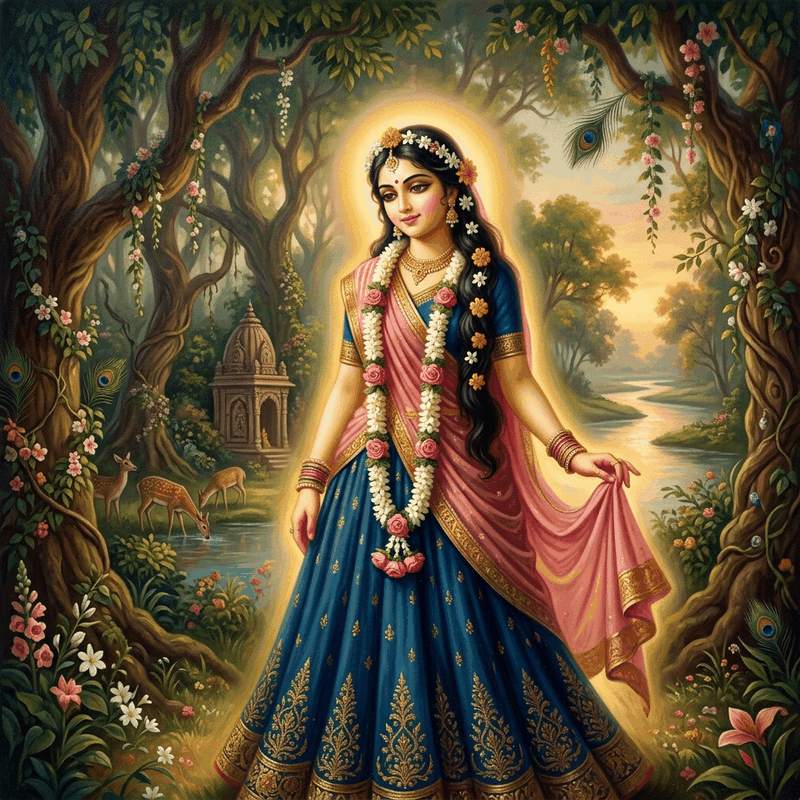
oṃ jaya śrī rādhā, jaya śrī kṛṣṇa, śrīrādhākṛṣṇāya namaḥ ||
caṃdramukhī caṃcala cita corī| (rādhā)
sudhara sā~varā sūrata bhorī| (kṛṣṇa)
śyāmā-śyāma eka-sī jorī| (rādhākṛṣṇa)
śrīrādhākṛṣṇāya namaḥ ||
sudhara sā~varā sūrata bhorī| (kṛṣṇa)
śyāmā-śyāma eka-sī jorī| (rādhākṛṣṇa)
śrīrādhākṛṣṇāya namaḥ ||
pacara~ga cunara kesara kyārī| (rādhā)
paṭa pītāṃbara kāmara kārī| (kṛṣṇa)
ekarūpa anupama chabi pyārī| (rādhākṛṣṇa)
śrīrādhākṛṣṇāya namaḥ ||
paṭa pītāṃbara kāmara kārī| (kṛṣṇa)
ekarūpa anupama chabi pyārī| (rādhākṛṣṇa)
śrīrādhākṛṣṇāya namaḥ ||
caṃdra-caṃdrikā camacama camakai| (rādhā)
mora mukuṭa sira damadama damakai| (kṛṣṇa)
yugala-prema rasa jhamajhama jhamakai| (rādhākṛṣṇa)
śrīrādhākṛṣṇāya namaḥ ||
mora mukuṭa sira damadama damakai| (kṛṣṇa)
yugala-prema rasa jhamajhama jhamakai| (rādhākṛṣṇa)
śrīrādhākṛṣṇāya namaḥ ||
rādhā rādhā kṛṣṇa kanhaiyā| (rādhā)
bhava-bhaya sāgara pāra lagaiyā| (kṛṣṇa)
maṃgala-mūrati, mokṣa-karaiyā| (rādhākṛṣṇa)
śrīrādhākṛṣṇāya namaḥ ||
bhava-bhaya sāgara pāra lagaiyā| (kṛṣṇa)
maṃgala-mūrati, mokṣa-karaiyā| (rādhākṛṣṇa)
śrīrādhākṛṣṇāya namaḥ ||
|| iti saṃpūrṇaṃm ||