
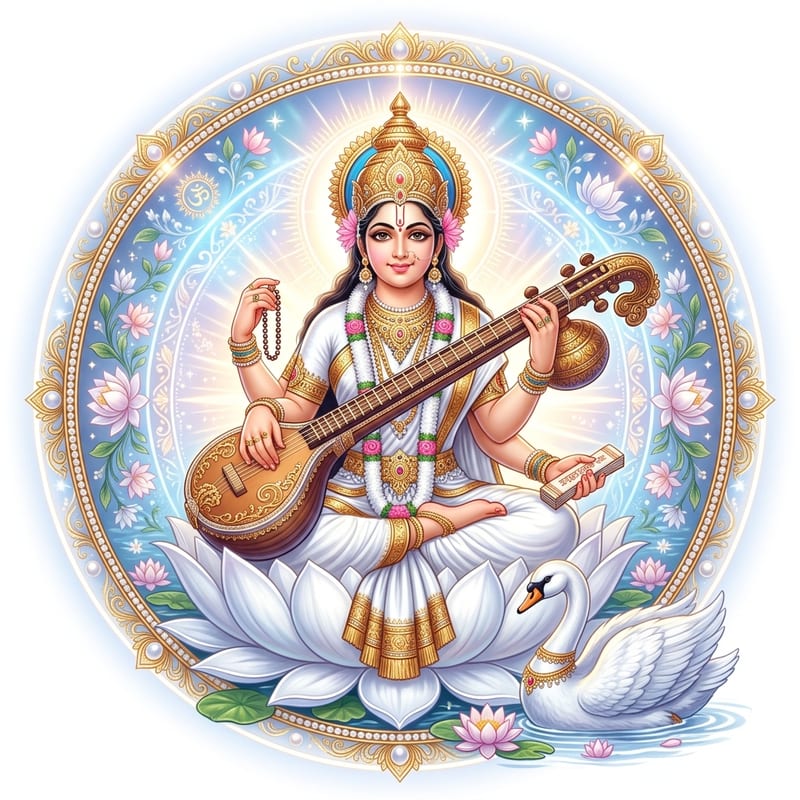
યાજ્ઞવલ્ક્યકૃત સરસ્વતી સ્તવમ્ યાજ્ઞવલ્ક્ય ઉવાચ
કૃપાં કુરુ જગન્માતર્-મામેવં હતતેજસમ્ ।
ગુરુશાપાત્ સ્મૃતિભ્રષ્ટં વિદ્યાહીનં ચ દુઃખિતમ્ ॥ 1 ॥
ગુરુશાપાત્ સ્મૃતિભ્રષ્ટં વિદ્યાહીનં ચ દુઃખિતમ્ ॥ 1 ॥
- yājñavalkya uvācha = Yājñavalkya spoke | kṛpāṃ kuru = show grace | jagat-mātar = O Mother of all worlds | māmēvaṃ = to me in this condition | hata-tējasam = robbed of brilliance/vigour | guru-śāpāt = by the guru's curse | smṛti-bhraṣṭaṃ = fallen from memory | vidyā-hīnaṃ = devoid of learning | cha duḥkhitam = and sorrowful
જ્ઞાનં દેહિ સ્મૃતિં વિદ્યાં શક્તિં શિષ્ય પ્રબોધિનીમ્ ।
ગ્રન્થકર્તૃત્વ શક્તિં ચ સુશિષ્યં સુપ્રતિષ્ઠિતમ્ ॥ 2 ॥
ગ્રન્થકર્તૃત્વ શક્તિં ચ સુશિષ્યં સુપ્રતિષ્ઠિતમ્ ॥ 2 ॥
- jñānaṃ dēhi = grant knowledge | smṛtiṃ = memory | vidyāṃ = learning | śaktiṃ śiṣya-prabōdhinīm = the power to enlighten/awaken disciples | grantha-kartṛtva-śaktiṃ = the power of authorship | suśiṣyaṃ = a good disciple | supratiṣṭhitam = well-established
પ્રતિભાં સત્સભાયાં ચ વિચારક્ષમતાં શુભામ્ ।
લુપ્તં સર્વં દૈવ યોગા-ન્નવીભૂતં પુનઃ કુરુ ॥ 3 ॥
લુપ્તં સર્વં દૈવ યોગા-ન્નવીભૂતં પુનઃ કુરુ ॥ 3 ॥
- pratibhāṃ = poetic genius, creative inspiration | satsabhāyāṃ = in the assembly of the good/learned | vichāra-kṣamatāṃ śubhām = the auspicious capacity for reflection | luptaṃ sarvaṃ = all that was lost | daiva-yōgāt = by divine ordination | navī-bhūtaṃ = become new | punaḥ kuru = make once again
યથાઙ્કુરં ભસ્મનિ ચ કરોતિ દેવતા પુનઃ ।
બ્રહ્મસ્વરૂપા પરમા જ્યોતીરૂપા સનાતની ॥ 4 ॥
બ્રહ્મસ્વરૂપા પરમા જ્યોતીરૂપા સનાતની ॥ 4 ॥
- yathā = just as | aṅkuram = a sprout | bhasmani = in ashes | cha karōti = makes to arise | dēvatā punaḥ = a divine being once again | brahma-svarūpā = O you of the form of Brahman | paramā = the Supreme | jyōtī-rūpā = of the form of light | sanātanī = the eternal one
સર્વવિદ્યાધિદેવી યા તસ્યૈ વાણ્યૈ નમો નમઃ ।
વિસર્ગ બિન્દુમાત્રાસુ યદધિષ્ઠાનમેવચ ॥ 5 ॥
વિસર્ગ બિન્દુમાત્રાસુ યદધિષ્ઠાનમેવચ ॥ 5 ॥
- sarva-vidyā-adhidēvī = presiding Goddess of all knowledge | yā = she who | tasyai vāṇyai = to that Vāṇī (Sarasvatī) | namō namaḥ = salutation, salutation | visarga = the double-dot mark (:) in Sanskrit | bindu = the nasal dot (ṁ) | mātrāsu = in the marks | yat adhiṣṭhānam = what presiding presence | ēva cha = also
તદધિષ્ઠાત્રી યા દેવી તસ્યૈ વાણ્યૈ નમો નમઃ ।
વ્યાખ્યાસ્વરૂપા સા દેવી વ્યાખ્યાધિષ્ઠાતૃરૂપિણી ॥ 6 ॥
વ્યાખ્યાસ્વરૂપા સા દેવી વ્યાખ્યાધિષ્ઠાતૃરૂપિણી ॥ 6 ॥
- tat-adhiṣṭhātrī yā dēvī = the Goddess who presides over that | tasyai vāṇyai namō namaḥ = salutation, salutation to that Vāṇī | vyākhyā-svarūpā = she who has the form of commentary/explanation | sā dēvī = that Goddess | vyākhyā-adhiṣṭhātṛ-rūpiṇī = having the form of the presiding deity of commentary
યયા વિના પ્રસઙ્ખ્યાવાન્ સઙ્ખ્યાં કર્તું ન શક્યતે ।
કાલસઙ્ખ્યા સ્વરૂપા યા તસ્યૈ દેવ્યૈ નમો નમઃ ॥ 7 ॥
કાલસઙ્ખ્યા સ્વરૂપા યા તસ્યૈ દેવ્યૈ નમો નમઃ ॥ 7 ॥
- yayā vinā = without whom | prasaṅkhyāvān = even the most learned in reckoning | saṅkhyāṃ kartuṃ = to make calculations | na śakyatē = is not capable | kāla-saṅkhyā-svarūpā = she who has the form of temporal calculation | yā = she who | tasyai dēvyai namō namaḥ = salutation, salutation to that Goddess
ભ્રમ સિદ્ધાન્તરૂપા યા તસ્યૈ દેવ્યૈ નમો નમઃ ।
સ્મૃતિશક્તિ જ્ઞાનશક્તિ બુદ્ધિશક્તિ સ્વરૂપિણી ॥ 8 ॥
સ્મૃતિશક્તિ જ્ઞાનશક્તિ બુદ્ધિશક્તિ સ્વરૂપિણી ॥ 8 ॥
- bhrama-siddhānta-rūpā = she of the form of the resolution of misconceptions | yā = she who | tasyai dēvyai namō namaḥ = salutation, salutation to that Goddess | smṛti-śakti = power of memory | jñāna-śakti = power of knowledge | buddhi-śakti = power of intellect | svarūpiṇī = she who has that form
પ્રતિભાકલ્પનાશક્તિર્-યા ચ તસ્યૈ નમોનમઃ ।
સનત્કુમારો બ્રહ્માણં જ્ઞાનં પપ્રચ્છ યત્ર વૈ ॥ 9 ॥
સનત્કુમારો બ્રહ્માણં જ્ઞાનં પપ્રચ્છ યત્ર વૈ ॥ 9 ॥
- pratibhā-kalpanā-śaktiḥ = the power of creative imagination/conception | yā cha = and she who | tasyai namō namaḥ = salutation, salutation to her | sanatkumāraḥ = Sanatkumāra (one of the four mind-born sons of Brahmā) | brahmāṇaṃ = Brahmā | jñānaṃ = about knowledge | paprachCha = asked | yatra vai = where indeed
બભૂવ મૂકવત્સોસ્પિ સિદ્ધાન્તં કર્તુ મક્ષમઃ ।
તદાષ્જગામ ભગવા-નાત્મા શ્રીકૃષ્ણ ઈશ્વરઃ ॥ 10 ॥
તદાષ્જગામ ભગવા-નાત્મા શ્રીકૃષ્ણ ઈશ્વરઃ ॥ 10 ॥
- babhūva = became | mūka-vat = like a mute | aspi = even he | siddhāntaṃ = the doctrine/resolution | kartum = to make/compose | akṣamaḥ = incapable | tadā = then | ājagāma = came | bhagavān = the Lord | ātmā = the Supreme Self | śrī-kṛṣṇa-īśvaraḥ = Śrī Kṛṣṇa, the Supreme Lord
ઉવાચસ ચ તાં સ્તૌહિ વાણી મિષ્ટાં પ્રજાપતે ।
સ ચ તુષ્ટાવ તાં બ્રહ્મા ચાજ્ઞયા પરમાત્મનઃ ॥ 11 ॥
સ ચ તુષ્ટાવ તાં બ્રહ્મા ચાજ્ઞયા પરમાત્મનઃ ॥ 11 ॥
- uvācha = said | sa cha = and he | tāṃ stauhi = praise her | vāṇīm = that Vāṇī (Sarasvatī) | iṣṭāṃ = the most beloved | prajāpatē = O Lord of Creatures (Brahmā) | sa cha = and he | tuṣṭāva tāṃ = praised her | brahmā = Brahmā | cha ājñayā = by the command | paramātmanaḥ = of the Supreme Self
ચકાર તત્પ્રસાદેન તદા સિદ્ધાન્ત મુત્તમમ્ ।
યદાપ્યનન્તં પપ્રચ્છ જ્ઞાનમેકં વસુન્ધરા ॥ 12 ॥
યદાપ્યનન્તં પપ્રચ્છ જ્ઞાનમેકં વસુન્ધરા ॥ 12 ॥
- chakāra = composed | tat-prasādēna = by her grace | tadā = then | siddhāntam uttamam = the excellent doctrine | yadā api = and when | anantaṃ = Ananta (the thousand-headed serpent bearing the earth) | paprachCha = asked | jñānam ēkaṃ = a single [piece of] knowledge | vasundharā = the earth
બભૂવ મૂકવત્સોસ્પિ સિદ્ધાન્તં કર્તુ મક્ષમઃ ।
તદા તાં ચ સ તુષ્ટાવ સન્ત્રસ્તઃ કશ્યપાજ્ઞયા ॥ 13 ॥
તદા તાં ચ સ તુષ્ટાવ સન્ત્રસ્તઃ કશ્યપાજ્ઞયા ॥ 13 ॥
- babhūva = became | mūka-vat = like a mute | aspi = even she | siddhāntaṃ = the doctrine | kartum akṣamaḥ = incapable of composing | tadā = then | tāṃ cha = and her | sa tuṣṭāva = he praised | santrastaḥ = frightened | kaśyapa-ājñayā = by Kaśyapa's instruction
તત શ્ચકાર સિદ્ધાન્તં નિર્મલં ભ્રમ ભઞ્જનમ્ ।
વ્યાસઃ પુરાણસૂત્રં ચ પપ્રચ્છ વાલ્મીકિં યદા ॥ 14 ॥
વ્યાસઃ પુરાણસૂત્રં ચ પપ્રચ્છ વાલ્મીકિં યદા ॥ 14 ॥
- tataḥ = then | chakāra = composed | siddhāntaṃ = the doctrine | nirmalaṃ = pure | bhrama-bhañjanam = dispelling errors/misconceptions | vyāsaḥ = Vyāsa | purāṇa-sūtraṃ = the Purāṇa-sūtra | cha paprachCha = also asked | vālmīkiṃ = Vālmīki | yadā = when
મૌનીભૂત શ્ચ સસ્માર તામેવ જગદમ્બિકામ્ ।
તદા ચકાર સિદ્ધાન્તં તદ્વરેણ મુનીશ્વરઃ ॥ 15 ॥
તદા ચકાર સિદ્ધાન્તં તદ્વરેણ મુનીશ્વરઃ ॥ 15 ॥
- maunī-bhūtaḥ = having become silent | cha sasmāra = and recalled | tām ēva = that very [Sarasvatī] | jagad-ambikām = the Mother of the World | tadā = then | chakāra = composed | siddhāntaṃ = the doctrine | tat-varēṇa = by her boon | munīśvaraḥ = the foremost of sages
સમ્પ્રાપ્ય નિર્મલં જ્ઞાનં ભ્રમાન્ધ્ય ધ્વંસદીપકમ્ ।
પુરાણસૂત્રં શ્રુત્વા ચ વ્યાસઃ કૃષ્ણકલોદ્ભવઃ ॥ 16 ॥
પુરાણસૂત્રં શ્રુત્વા ચ વ્યાસઃ કૃષ્ણકલોદ્ભવઃ ॥ 16 ॥
- samprāpya = having received | nirmalaṃ jñānaṃ = pure knowledge | bhramāndhya-dhvaṃsa-dīpakam = the lamp that dispels the blindness of confusion | purāṇa-sūtraṃ śrutvā cha = and having heard the Purāṇa-sūtra | vyāsaḥ = Vyāsa | kṛṣṇa-kala-udbhavaḥ = born of a fraction (kalā) of Kṛṣṇa
તાં શિવાં વેદ દધ્યૌ ચ શતવર્ષં ચ પુષ્કરે ।
તદા ત્વત્તો વરં પ્રાપ્ય સત્કવીન્દ્રો બભૂવ હ ॥ 17 ॥
તદા ત્વત્તો વરં પ્રાપ્ય સત્કવીન્દ્રો બભૂવ હ ॥ 17 ॥
- tāṃ śivāṃ = that auspicious Goddess | vēda = knew | dadhyau = meditated | cha = and | śata-varṣaṃ = for a hundred years | puṣkarē = at Puṣkara (the sacred lake in Rājasthān) | tadā tvattō = then from you | varaṃ prāpya = having received a boon | sat-kavīndraḥ = foremost among good poets | babhūva = became | ha = indeed
તદા વેદવિભાગં ચ પુરાણં ચ ચકાર સઃ ।
યદા મહેન્દ્રઃ પપ્રચ્છ તત્ત્વજ્ઞાનં સદાશિવમ્ ॥ 18 ॥
યદા મહેન્દ્રઃ પપ્રચ્છ તત્ત્વજ્ઞાનં સદાશિવમ્ ॥ 18 ॥
- tadā = then | vēda-vibhāgaṃ = the division of the Vedas | purāṇaṃ = the Purāṇas | cha chakāra = also composed | yadā = when | mahēndraḥ = Mahēndra (Indra) | paprachCha = asked | tattva-jñānaṃ = the knowledge of truth | sadāśivam = Sadāśiva (the eternally auspicious, highest form of Śiva)
ક્ષણં તામેવ સઞ્ચિન્ત્ય તસ્મૈ જ્ઞાનં દદૌ વિભુઃ ।
પપ્રચ્છ શબ્દશાસ્ત્રં ચ મહેન્દ્ર શ્ચ બૃહસ્પતિમ્ ॥ 19 ॥
પપ્રચ્છ શબ્દશાસ્ત્રં ચ મહેન્દ્ર શ્ચ બૃહસ્પતિમ્ ॥ 19 ॥
- kṣaṇaṃ = for a moment | tām ēva = that very [Sarasvatī] | sañchintya = having recalled | tasmai = to him | jñānaṃ dadau = gave knowledge | vibhuḥ = the all-powerful [Sadāśiva] | paprachCha = asked | śabda-śāstraṃ = grammar/the science of language | cha = and | mahēndraḥ = Mahēndra | cha bṛhaspatim = and Bṛhaspati
દિવ્ય વર્ષ સહસ્રં ચ સ ત્વાં દધ્યૌ ચ પુષ્કરે ।
તદા ત્વત્તો વરં પ્રાપ્ય દિવ્યવર્ષસહસ્રકમ્ ॥ 20 ॥
તદા ત્વત્તો વરં પ્રાપ્ય દિવ્યવર્ષસહસ્રકમ્ ॥ 20 ॥
- divya-varṣa-sahasraṃ = for a thousand divine years | cha = and | saḥ = he | tvāṃ dadhyau = meditated on you | cha puṣkarē = at Puṣkara lake | tadā = then | tvattō varaṃ prāpya = having received a boon from you | divya-varṣa-sahasrakam = [corresponding to] a thousand divine years
ઉવાચશબ્દ શાસ્ત્રં ચ તદર્થં ચ સુરેશ્વરમ્ ।
અધ્યાપિતાશ્ચ યે શિષ્યા યૈરધીતં મુનીશ્વરૈઃ ॥ 21 ॥
અધ્યાપિતાશ્ચ યે શિષ્યા યૈરધીતં મુનીશ્વરૈઃ ॥ 21 ॥
- uvācha = taught | śabda-śāstraṃ cha = the science of language and | tat-arthaṃ = its meaning | surēśvaraṃ = to the lord of gods (Indra) | adhyāpitāḥ = those taught | cha yē śiṣyāḥ = and those disciples | yaiḥ adhītaṃ = by whom it was learned | munīśvaraiḥ = by the great sages
તે ચ તાં પરિસઞ્ચિત્ય પ્રવર્તન્તે સુરેશ્વરીમ્ ।
ત્વં સંસ્તુતા પૂજિતા ચ મુનીન્દ્રૈ ર્મનુ માનવૈઃ ॥ 22 ॥
ત્વં સંસ્તુતા પૂજિતા ચ મુનીન્દ્રૈ ર્મનુ માનવૈઃ ॥ 22 ॥
- tē cha = and they | tāṃ parisañchintya = meditating on that Goddess | pravartantē = proceed in their work | surēśvarīm = O Surēśvarī | tvaṃ = you | saṃstutā = are praised | pūjitā cha = and worshipped | munīndraiḥ = by the great sages | manu-mānavaiḥ = by Manu and humanity
દૈત્યેન્દ્રૈ શ્ચ સુરૈશ્ચાપિ બ્રહ્મ વિષ્ણુશિવાદિભિઃ ।
જડીભૂત સ્સહસ્રાસ્યઃ પઞ્ચવક્ત્ર શ્ચતુર્મુખઃ ॥ 23 ॥
જડીભૂત સ્સહસ્રાસ્યઃ પઞ્ચવક્ત્ર શ્ચતુર્મુખઃ ॥ 23 ॥
- daityēndraiḥ = by the lords of demons | suraiḥ = by the gods | brahma-viṣṇu-śivādibhiḥ = by Brahmā, Viṣṇu, Śiva, and others | jaḍī-bhūtaḥ = become speechless/paralysed | sahasra-āsyaḥ = thousand-mouthed [Ananta] | pañca-vaktraḥ = five-faced [Śiva] | chatur-mukhaḥ = four-faced [Brahmā]
યાં સ્તોતું કિ મહં સ્તૌમિ તામેકાસ્યેન માનવઃ ।
ઇત્યુક્ત્વા યાજ્ઞવલ્ક્ય શ્ચ ભક્તિનમ્રાત્મ કન્ધરઃ ॥ 24 ॥
ઇત્યુક્ત્વા યાજ્ઞવલ્ક્ય શ્ચ ભક્તિનમ્રાત્મ કન્ધરઃ ॥ 24 ॥
- yāṃ stōtuṃ = to praise whom | kim = what [can I do] | ahaṃ staumi = I praise | tām ēka-āsyēna = her with a single mouth | mānavaḥ = a human being | ity uktvā = having said this | yājñavalkyaḥ = Yājñavalkya | cha = and | bhakti-namra-ātma-kandhara = with neck bowed in devotion
પ્રણનામ નિરાહારો રુરોદ ચ મુહુર્મુહુઃ ।
જ્યોતીરૂપા મહામાયા તેન દૃષ્ટા7પ્યુવાચતમ્ ॥ 25 ॥
જ્યોતીરૂપા મહામાયા તેન દૃષ્ટા7પ્યુવાચતમ્ ॥ 25 ॥
- praṇanāma = bowed in prostration | nirāhāraḥ = fasting | rurōda = wept | cha muhurmuhuḥ = and again and again | jyōtī-rūpā = of the form of light | mahā-māyā = the Great Māyā (Sarasvatī) | tēna dṛṣṭā = seen by him | api = even so | uvācha = spoke | tam = to him
સુકવીન્દ્રો ભવેત્યુક્ત્વા વૈકુણ્ઠં ચ જગામ હ ।
યાજ્ઞવલ્ક્ય કૃતં વાણી સ્તોત્રમેતત્તુ યઃ પઠેત્ ॥ 26 ॥
યાજ્ઞવલ્ક્ય કૃતં વાણી સ્તોત્રમેતત્તુ યઃ પઠેત્ ॥ 26 ॥
- sukavīndraḥ bhava = become the foremost among good poets | ity uktvā = having said this | vaikuṇṭhaṃ = Vaikuṇṭha (the divine abode) | cha jagāma = went | ha = indeed | yājñavalkya-kṛtaṃ = composed by Yājñavalkya | vāṇī-stōtram = this Vāṇī stotram | ētat tu yaḥ paṭhēt = whoever reads this
સ કવીન્દ્રો મહાવાગ્મી બૃહસ્પતિસમો ભવેત્ ।
મહા મૂર્ખશ્ચ દુર્બુદ્ધિર્-વર્ષમેકં યદા પઠેત્ ।
સ પણ્ડિતશ્ચ મેધાવી સુકવીન્દ્રો ભવેદ્ધ્રુવમ્ ॥ 27 ॥
મહા મૂર્ખશ્ચ દુર્બુદ્ધિર્-વર્ષમેકં યદા પઠેત્ ।
સ પણ્ડિતશ્ચ મેધાવી સુકવીન્દ્રો ભવેદ્ધ્રુવમ્ ॥ 27 ॥
- sa = he | kavīndraḥ = foremost among poets | mahā-vāgmī = great orator | bṛhaspati-samaḥ = equal to Bṛhaspati | bhavēt = will become | mahā-mūrkhaḥ = a great fool | cha durbuddhiḥ = and of poor understanding | varṣam ēkaṃ = for one year | yadā paṭhēt = if reads | sa paṇḍitaḥ = will be a scholar | mēdhāvī = mentally sharp | sukavīndraḥ = foremost among good poets | bhavēt = will become | dhruvam = certainly
ઇતિ શ્રી દેવી ભાગવતે મહાપુરાણે નવમસ્કન્ધે
સરસ્વતીસ્તવં નામ પઞ્ચમોધ્યાયઃ ।
સરસ્વતી કટાક્ષ સિદ્ધિરસ્તુ ।
ઇદં મયાકૃતં પારાયણં
શ્રીસદ્ગુરુ ચરણારવિન્દાર્પણમસ્તુ ।