
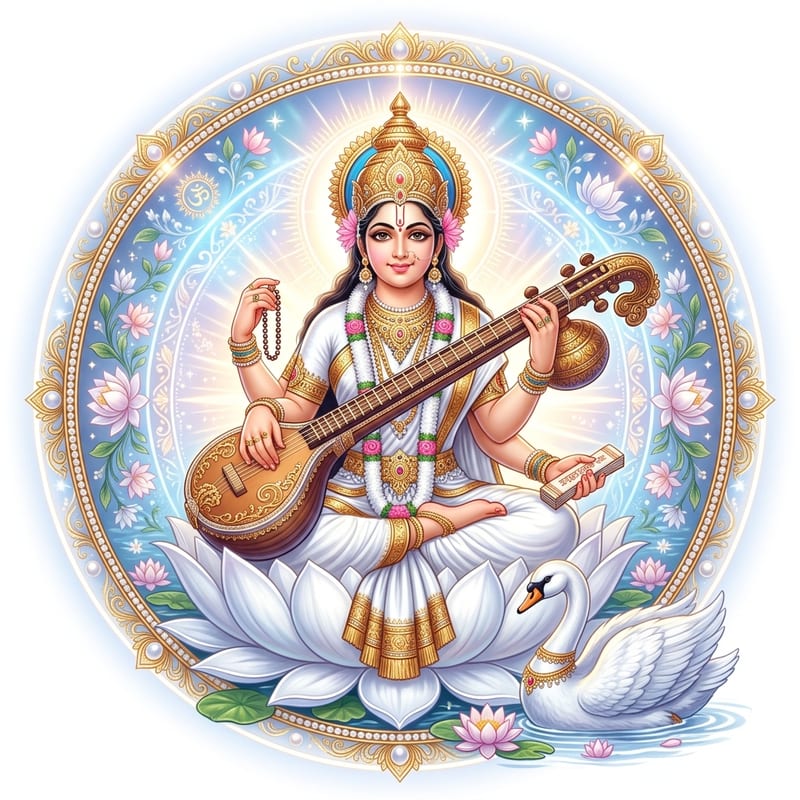
ಯಾಜ್ಞವಲ್ಕ್ಯಕೃತ ಸರಸ್ವತೀ ಸ್ತವಮ್ ಯಾಜ್ಞವಲ್ಕ್ಯ ಉವಾಚ
ಕೃಪಾಂ ಕುರು ಜಗನ್ಮಾತರ್-ಮಾಮೇವಂ ಹತತೇಜಸಮ್ ।
ಗುರುಶಾಪಾತ್ ಸ್ಮೃತಿಭ್ರಷ್ಟಂ ವಿದ್ಯಾಹೀನಂ ಚ ದುಃಖಿತಮ್ ॥ 1 ॥
ಗುರುಶಾಪಾತ್ ಸ್ಮೃತಿಭ್ರಷ್ಟಂ ವಿದ್ಯಾಹೀನಂ ಚ ದುಃಖಿತಮ್ ॥ 1 ॥
- yājñavalkya uvācha = Yājñavalkya spoke | kṛpāṃ kuru = show grace | jagat-mātar = O Mother of all worlds | māmēvaṃ = to me in this condition | hata-tējasam = robbed of brilliance/vigour | guru-śāpāt = by the guru's curse | smṛti-bhraṣṭaṃ = fallen from memory | vidyā-hīnaṃ = devoid of learning | cha duḥkhitam = and sorrowful
ಜ್ಞಾನಂ ದೇಹಿ ಸ್ಮೃತಿಂ ವಿದ್ಯಾಂ ಶಕ್ತಿಂ ಶಿಷ್ಯ ಪ್ರಬೋಧಿನೀಮ್ ।
ಗ್ರನ್ಥಕರ್ತೃತ್ವ ಶಕ್ತಿಂ ಚ ಸುಶಿಷ್ಯಂ ಸುಪ್ರತಿಷ್ಠಿತಮ್ ॥ 2 ॥
ಗ್ರನ್ಥಕರ್ತೃತ್ವ ಶಕ್ತಿಂ ಚ ಸುಶಿಷ್ಯಂ ಸುಪ್ರತಿಷ್ಠಿತಮ್ ॥ 2 ॥
- jñānaṃ dēhi = grant knowledge | smṛtiṃ = memory | vidyāṃ = learning | śaktiṃ śiṣya-prabōdhinīm = the power to enlighten/awaken disciples | grantha-kartṛtva-śaktiṃ = the power of authorship | suśiṣyaṃ = a good disciple | supratiṣṭhitam = well-established
ಪ್ರತಿಭಾಂ ಸತ್ಸಭಾಯಾಂ ಚ ವಿಚಾರಕ್ಷಮತಾಂ ಶುಭಾಮ್ ।
ಲುಪ್ತಂ ಸರ್ವಂ ದೈವ ಯೋಗಾ-ನ್ನವೀಭೂತಂ ಪುನಃ ಕುರು ॥ 3 ॥
ಲುಪ್ತಂ ಸರ್ವಂ ದೈವ ಯೋಗಾ-ನ್ನವೀಭೂತಂ ಪುನಃ ಕುರು ॥ 3 ॥
- pratibhāṃ = poetic genius, creative inspiration | satsabhāyāṃ = in the assembly of the good/learned | vichāra-kṣamatāṃ śubhām = the auspicious capacity for reflection | luptaṃ sarvaṃ = all that was lost | daiva-yōgāt = by divine ordination | navī-bhūtaṃ = become new | punaḥ kuru = make once again
ಯಥಾಙ್ಕುರಂ ಭಸ್ಮನಿ ಚ ಕರೋತಿ ದೇವತಾ ಪುನಃ ।
ಬ್ರಹ್ಮಸ್ವರೂಪಾ ಪರಮಾ ಜ್ಯೋತೀರೂಪಾ ಸನಾತನೀ ॥ 4 ॥
ಬ್ರಹ್ಮಸ್ವರೂಪಾ ಪರಮಾ ಜ್ಯೋತೀರೂಪಾ ಸನಾತನೀ ॥ 4 ॥
- yathā = just as | aṅkuram = a sprout | bhasmani = in ashes | cha karōti = makes to arise | dēvatā punaḥ = a divine being once again | brahma-svarūpā = O you of the form of Brahman | paramā = the Supreme | jyōtī-rūpā = of the form of light | sanātanī = the eternal one
ಸರ್ವವಿದ್ಯಾಧಿದೇವೀ ಯಾ ತಸ್ಯೈ ವಾಣ್ಯೈ ನಮೋ ನಮಃ ।
ವಿಸರ್ಗ ಬಿನ್ದುಮಾತ್ರಾಸು ಯದಧಿಷ್ಠಾನಮೇವಚ ॥ 5 ॥
ವಿಸರ್ಗ ಬಿನ್ದುಮಾತ್ರಾಸು ಯದಧಿಷ್ಠಾನಮೇವಚ ॥ 5 ॥
- sarva-vidyā-adhidēvī = presiding Goddess of all knowledge | yā = she who | tasyai vāṇyai = to that Vāṇī (Sarasvatī) | namō namaḥ = salutation, salutation | visarga = the double-dot mark (:) in Sanskrit | bindu = the nasal dot (ṁ) | mātrāsu = in the marks | yat adhiṣṭhānam = what presiding presence | ēva cha = also
ತದಧಿಷ್ಠಾತ್ರೀ ಯಾ ದೇವೀ ತಸ್ಯೈ ವಾಣ್ಯೈ ನಮೋ ನಮಃ ।
ವ್ಯಾಖ್ಯಾಸ್ವರೂಪಾ ಸಾ ದೇವೀ ವ್ಯಾಖ್ಯಾಧಿಷ್ಠಾತೃರೂಪಿಣೀ ॥ 6 ॥
ವ್ಯಾಖ್ಯಾಸ್ವರೂಪಾ ಸಾ ದೇವೀ ವ್ಯಾಖ್ಯಾಧಿಷ್ಠಾತೃರೂಪಿಣೀ ॥ 6 ॥
- tat-adhiṣṭhātrī yā dēvī = the Goddess who presides over that | tasyai vāṇyai namō namaḥ = salutation, salutation to that Vāṇī | vyākhyā-svarūpā = she who has the form of commentary/explanation | sā dēvī = that Goddess | vyākhyā-adhiṣṭhātṛ-rūpiṇī = having the form of the presiding deity of commentary
ಯಯಾ ವಿನಾ ಪ್ರಸಙ್ಖ್ಯಾವಾನ್ ಸಙ್ಖ್ಯಾಂ ಕರ್ತುಂ ನ ಶಕ್ಯತೇ ।
ಕಾಲಸಙ್ಖ್ಯಾ ಸ್ವರೂಪಾ ಯಾ ತಸ್ಯೈ ದೇವ್ಯೈ ನಮೋ ನಮಃ ॥ 7 ॥
ಕಾಲಸಙ್ಖ್ಯಾ ಸ್ವರೂಪಾ ಯಾ ತಸ್ಯೈ ದೇವ್ಯೈ ನಮೋ ನಮಃ ॥ 7 ॥
- yayā vinā = without whom | prasaṅkhyāvān = even the most learned in reckoning | saṅkhyāṃ kartuṃ = to make calculations | na śakyatē = is not capable | kāla-saṅkhyā-svarūpā = she who has the form of temporal calculation | yā = she who | tasyai dēvyai namō namaḥ = salutation, salutation to that Goddess
ಭ್ರಮ ಸಿದ್ಧಾನ್ತರೂಪಾ ಯಾ ತಸ್ಯೈ ದೇವ್ಯೈ ನಮೋ ನಮಃ ।
ಸ್ಮೃತಿಶಕ್ತಿ ಜ್ಞಾನಶಕ್ತಿ ಬುದ್ಧಿಶಕ್ತಿ ಸ್ವರೂಪಿಣೀ ॥ 8 ॥
ಸ್ಮೃತಿಶಕ್ತಿ ಜ್ಞಾನಶಕ್ತಿ ಬುದ್ಧಿಶಕ್ತಿ ಸ್ವರೂಪಿಣೀ ॥ 8 ॥
- bhrama-siddhānta-rūpā = she of the form of the resolution of misconceptions | yā = she who | tasyai dēvyai namō namaḥ = salutation, salutation to that Goddess | smṛti-śakti = power of memory | jñāna-śakti = power of knowledge | buddhi-śakti = power of intellect | svarūpiṇī = she who has that form
ಪ್ರತಿಭಾಕಲ್ಪನಾಶಕ್ತಿರ್-ಯಾ ಚ ತಸ್ಯೈ ನಮೋನಮಃ ।
ಸನತ್ಕುಮಾರೋ ಬ್ರಹ್ಮಾಣಂ ಜ್ಞಾನಂ ಪಪ್ರಚ್ಛ ಯತ್ರ ವೈ ॥ 9 ॥
ಸನತ್ಕುಮಾರೋ ಬ್ರಹ್ಮಾಣಂ ಜ್ಞಾನಂ ಪಪ್ರಚ್ಛ ಯತ್ರ ವೈ ॥ 9 ॥
- pratibhā-kalpanā-śaktiḥ = the power of creative imagination/conception | yā cha = and she who | tasyai namō namaḥ = salutation, salutation to her | sanatkumāraḥ = Sanatkumāra (one of the four mind-born sons of Brahmā) | brahmāṇaṃ = Brahmā | jñānaṃ = about knowledge | paprachCha = asked | yatra vai = where indeed
ಬಭೂವ ಮೂಕವತ್ಸೋಸ್ಪಿ ಸಿದ್ಧಾನ್ತಂ ಕರ್ತು ಮಕ್ಷಮಃ ।
ತದಾಷ್ಜಗಾಮ ಭಗವಾ-ನಾತ್ಮಾ ಶ್ರೀಕೃಷ್ಣ ಈಶ್ವರಃ ॥ 10 ॥
ತದಾಷ್ಜಗಾಮ ಭಗವಾ-ನಾತ್ಮಾ ಶ್ರೀಕೃಷ್ಣ ಈಶ್ವರಃ ॥ 10 ॥
- babhūva = became | mūka-vat = like a mute | aspi = even he | siddhāntaṃ = the doctrine/resolution | kartum = to make/compose | akṣamaḥ = incapable | tadā = then | ājagāma = came | bhagavān = the Lord | ātmā = the Supreme Self | śrī-kṛṣṇa-īśvaraḥ = Śrī Kṛṣṇa, the Supreme Lord
ಉವಾಚಸ ಚ ತಾಂ ಸ್ತೌಹಿ ವಾಣೀ ಮಿಷ್ಟಾಂ ಪ್ರಜಾಪತೇ ।
ಸ ಚ ತುಷ್ಟಾವ ತಾಂ ಬ್ರಹ್ಮಾ ಚಾಜ್ಞಯಾ ಪರಮಾತ್ಮನಃ ॥ 11 ॥
ಸ ಚ ತುಷ್ಟಾವ ತಾಂ ಬ್ರಹ್ಮಾ ಚಾಜ್ಞಯಾ ಪರಮಾತ್ಮನಃ ॥ 11 ॥
- uvācha = said | sa cha = and he | tāṃ stauhi = praise her | vāṇīm = that Vāṇī (Sarasvatī) | iṣṭāṃ = the most beloved | prajāpatē = O Lord of Creatures (Brahmā) | sa cha = and he | tuṣṭāva tāṃ = praised her | brahmā = Brahmā | cha ājñayā = by the command | paramātmanaḥ = of the Supreme Self
ಚಕಾರ ತತ್ಪ್ರಸಾದೇನ ತದಾ ಸಿದ್ಧಾನ್ತ ಮುತ್ತಮಮ್ ।
ಯದಾಪ್ಯನನ್ತಂ ಪಪ್ರಚ್ಛ ಜ್ಞಾನಮೇಕಂ ವಸುನ್ಧರಾ ॥ 12 ॥
ಯದಾಪ್ಯನನ್ತಂ ಪಪ್ರಚ್ಛ ಜ್ಞಾನಮೇಕಂ ವಸುನ್ಧರಾ ॥ 12 ॥
- chakāra = composed | tat-prasādēna = by her grace | tadā = then | siddhāntam uttamam = the excellent doctrine | yadā api = and when | anantaṃ = Ananta (the thousand-headed serpent bearing the earth) | paprachCha = asked | jñānam ēkaṃ = a single [piece of] knowledge | vasundharā = the earth
ಬಭೂವ ಮೂಕವತ್ಸೋಸ್ಪಿ ಸಿದ್ಧಾನ್ತಂ ಕರ್ತು ಮಕ್ಷಮಃ ।
ತದಾ ತಾಂ ಚ ಸ ತುಷ್ಟಾವ ಸನ್ತ್ರಸ್ತಃ ಕಶ್ಯಪಾಜ್ಞಯಾ ॥ 13 ॥
ತದಾ ತಾಂ ಚ ಸ ತುಷ್ಟಾವ ಸನ್ತ್ರಸ್ತಃ ಕಶ್ಯಪಾಜ್ಞಯಾ ॥ 13 ॥
- babhūva = became | mūka-vat = like a mute | aspi = even she | siddhāntaṃ = the doctrine | kartum akṣamaḥ = incapable of composing | tadā = then | tāṃ cha = and her | sa tuṣṭāva = he praised | santrastaḥ = frightened | kaśyapa-ājñayā = by Kaśyapa's instruction
ತತ ಶ್ಚಕಾರ ಸಿದ್ಧಾನ್ತಂ ನಿರ್ಮಲಂ ಭ್ರಮ ಭಞ್ಜನಮ್ ।
ವ್ಯಾಸಃ ಪುರಾಣಸೂತ್ರಂ ಚ ಪಪ್ರಚ್ಛ ವಾಲ್ಮೀಕಿಂ ಯದಾ ॥ 14 ॥
ವ್ಯಾಸಃ ಪುರಾಣಸೂತ್ರಂ ಚ ಪಪ್ರಚ್ಛ ವಾಲ್ಮೀಕಿಂ ಯದಾ ॥ 14 ॥
- tataḥ = then | chakāra = composed | siddhāntaṃ = the doctrine | nirmalaṃ = pure | bhrama-bhañjanam = dispelling errors/misconceptions | vyāsaḥ = Vyāsa | purāṇa-sūtraṃ = the Purāṇa-sūtra | cha paprachCha = also asked | vālmīkiṃ = Vālmīki | yadā = when
ಮೌನೀಭೂತ ಶ್ಚ ಸಸ್ಮಾರ ತಾಮೇವ ಜಗದಮ್ಬಿಕಾಮ್ ।
ತದಾ ಚಕಾರ ಸಿದ್ಧಾನ್ತಂ ತದ್ವರೇಣ ಮುನೀಶ್ವರಃ ॥ 15 ॥
ತದಾ ಚಕಾರ ಸಿದ್ಧಾನ್ತಂ ತದ್ವರೇಣ ಮುನೀಶ್ವರಃ ॥ 15 ॥
- maunī-bhūtaḥ = having become silent | cha sasmāra = and recalled | tām ēva = that very [Sarasvatī] | jagad-ambikām = the Mother of the World | tadā = then | chakāra = composed | siddhāntaṃ = the doctrine | tat-varēṇa = by her boon | munīśvaraḥ = the foremost of sages
ಸಮ್ಪ್ರಾಪ್ಯ ನಿರ್ಮಲಂ ಜ್ಞಾನಂ ಭ್ರಮಾನ್ಧ್ಯ ಧ್ವಂಸದೀಪಕಮ್ ।
ಪುರಾಣಸೂತ್ರಂ ಶ್ರುತ್ವಾ ಚ ವ್ಯಾಸಃ ಕೃಷ್ಣಕಲೋದ್ಭವಃ ॥ 16 ॥
ಪುರಾಣಸೂತ್ರಂ ಶ್ರುತ್ವಾ ಚ ವ್ಯಾಸಃ ಕೃಷ್ಣಕಲೋದ್ಭವಃ ॥ 16 ॥
- samprāpya = having received | nirmalaṃ jñānaṃ = pure knowledge | bhramāndhya-dhvaṃsa-dīpakam = the lamp that dispels the blindness of confusion | purāṇa-sūtraṃ śrutvā cha = and having heard the Purāṇa-sūtra | vyāsaḥ = Vyāsa | kṛṣṇa-kala-udbhavaḥ = born of a fraction (kalā) of Kṛṣṇa
ತಾಂ ಶಿವಾಂ ವೇದ ದಧ್ಯೌ ಚ ಶತವರ್ಷಂ ಚ ಪುಷ್ಕರೇ ।
ತದಾ ತ್ವತ್ತೋ ವರಂ ಪ್ರಾಪ್ಯ ಸತ್ಕವೀನ್ದ್ರೋ ಬಭೂವ ಹ ॥ 17 ॥
ತದಾ ತ್ವತ್ತೋ ವರಂ ಪ್ರಾಪ್ಯ ಸತ್ಕವೀನ್ದ್ರೋ ಬಭೂವ ಹ ॥ 17 ॥
- tāṃ śivāṃ = that auspicious Goddess | vēda = knew | dadhyau = meditated | cha = and | śata-varṣaṃ = for a hundred years | puṣkarē = at Puṣkara (the sacred lake in Rājasthān) | tadā tvattō = then from you | varaṃ prāpya = having received a boon | sat-kavīndraḥ = foremost among good poets | babhūva = became | ha = indeed
ತದಾ ವೇದವಿಭಾಗಂ ಚ ಪುರಾಣಂ ಚ ಚಕಾರ ಸಃ ।
ಯದಾ ಮಹೇನ್ದ್ರಃ ಪಪ್ರಚ್ಛ ತತ್ತ್ವಜ್ಞಾನಂ ಸದಾಶಿವಮ್ ॥ 18 ॥
ಯದಾ ಮಹೇನ್ದ್ರಃ ಪಪ್ರಚ್ಛ ತತ್ತ್ವಜ್ಞಾನಂ ಸದಾಶಿವಮ್ ॥ 18 ॥
- tadā = then | vēda-vibhāgaṃ = the division of the Vedas | purāṇaṃ = the Purāṇas | cha chakāra = also composed | yadā = when | mahēndraḥ = Mahēndra (Indra) | paprachCha = asked | tattva-jñānaṃ = the knowledge of truth | sadāśivam = Sadāśiva (the eternally auspicious, highest form of Śiva)
ಕ್ಷಣಂ ತಾಮೇವ ಸಞ್ಚಿನ್ತ್ಯ ತಸ್ಮೈ ಜ್ಞಾನಂ ದದೌ ವಿಭುಃ ।
ಪಪ್ರಚ್ಛ ಶಬ್ದಶಾಸ್ತ್ರಂ ಚ ಮಹೇನ್ದ್ರ ಶ್ಚ ಬೃಹಸ್ಪತಿಮ್ ॥ 19 ॥
ಪಪ್ರಚ್ಛ ಶಬ್ದಶಾಸ್ತ್ರಂ ಚ ಮಹೇನ್ದ್ರ ಶ್ಚ ಬೃಹಸ್ಪತಿಮ್ ॥ 19 ॥
- kṣaṇaṃ = for a moment | tām ēva = that very [Sarasvatī] | sañchintya = having recalled | tasmai = to him | jñānaṃ dadau = gave knowledge | vibhuḥ = the all-powerful [Sadāśiva] | paprachCha = asked | śabda-śāstraṃ = grammar/the science of language | cha = and | mahēndraḥ = Mahēndra | cha bṛhaspatim = and Bṛhaspati
ದಿವ್ಯ ವರ್ಷ ಸಹಸ್ರಂ ಚ ಸ ತ್ವಾಂ ದಧ್ಯೌ ಚ ಪುಷ್ಕರೇ ।
ತದಾ ತ್ವತ್ತೋ ವರಂ ಪ್ರಾಪ್ಯ ದಿವ್ಯವರ್ಷಸಹಸ್ರಕಮ್ ॥ 20 ॥
ತದಾ ತ್ವತ್ತೋ ವರಂ ಪ್ರಾಪ್ಯ ದಿವ್ಯವರ್ಷಸಹಸ್ರಕಮ್ ॥ 20 ॥
- divya-varṣa-sahasraṃ = for a thousand divine years | cha = and | saḥ = he | tvāṃ dadhyau = meditated on you | cha puṣkarē = at Puṣkara lake | tadā = then | tvattō varaṃ prāpya = having received a boon from you | divya-varṣa-sahasrakam = [corresponding to] a thousand divine years
ಉವಾಚಶಬ್ದ ಶಾಸ್ತ್ರಂ ಚ ತದರ್ಥಂ ಚ ಸುರೇಶ್ವರಮ್ ।
ಅಧ್ಯಾಪಿತಾಶ್ಚ ಯೇ ಶಿಷ್ಯಾ ಯೈರಧೀತಂ ಮುನೀಶ್ವರೈಃ ॥ 21 ॥
ಅಧ್ಯಾಪಿತಾಶ್ಚ ಯೇ ಶಿಷ್ಯಾ ಯೈರಧೀತಂ ಮುನೀಶ್ವರೈಃ ॥ 21 ॥
- uvācha = taught | śabda-śāstraṃ cha = the science of language and | tat-arthaṃ = its meaning | surēśvaraṃ = to the lord of gods (Indra) | adhyāpitāḥ = those taught | cha yē śiṣyāḥ = and those disciples | yaiḥ adhītaṃ = by whom it was learned | munīśvaraiḥ = by the great sages
ತೇ ಚ ತಾಂ ಪರಿಸಞ್ಚಿತ್ಯ ಪ್ರವರ್ತನ್ತೇ ಸುರೇಶ್ವರೀಮ್ ।
ತ್ವಂ ಸಂಸ್ತುತಾ ಪೂಜಿತಾ ಚ ಮುನೀನ್ದ್ರೈ ರ್ಮನು ಮಾನವೈಃ ॥ 22 ॥
ತ್ವಂ ಸಂಸ್ತುತಾ ಪೂಜಿತಾ ಚ ಮುನೀನ್ದ್ರೈ ರ್ಮನು ಮಾನವೈಃ ॥ 22 ॥
- tē cha = and they | tāṃ parisañchintya = meditating on that Goddess | pravartantē = proceed in their work | surēśvarīm = O Surēśvarī | tvaṃ = you | saṃstutā = are praised | pūjitā cha = and worshipped | munīndraiḥ = by the great sages | manu-mānavaiḥ = by Manu and humanity
ದೈತ್ಯೇನ್ದ್ರೈ ಶ್ಚ ಸುರೈಶ್ಚಾಪಿ ಬ್ರಹ್ಮ ವಿಷ್ಣುಶಿವಾದಿಭಿಃ ।
ಜಡೀಭೂತ ಸ್ಸಹಸ್ರಾಸ್ಯಃ ಪಞ್ಚವಕ್ತ್ರ ಶ್ಚತುರ್ಮುಖಃ ॥ 23 ॥
ಜಡೀಭೂತ ಸ್ಸಹಸ್ರಾಸ್ಯಃ ಪಞ್ಚವಕ್ತ್ರ ಶ್ಚತುರ್ಮುಖಃ ॥ 23 ॥
- daityēndraiḥ = by the lords of demons | suraiḥ = by the gods | brahma-viṣṇu-śivādibhiḥ = by Brahmā, Viṣṇu, Śiva, and others | jaḍī-bhūtaḥ = become speechless/paralysed | sahasra-āsyaḥ = thousand-mouthed [Ananta] | pañca-vaktraḥ = five-faced [Śiva] | chatur-mukhaḥ = four-faced [Brahmā]
ಯಾಂ ಸ್ತೋತುಂ ಕಿ ಮಹಂ ಸ್ತೌಮಿ ತಾಮೇಕಾಸ್ಯೇನ ಮಾನವಃ ।
ಇತ್ಯುಕ್ತ್ವಾ ಯಾಜ್ಞವಲ್ಕ್ಯ ಶ್ಚ ಭಕ್ತಿನಮ್ರಾತ್ಮ ಕನ್ಧರಃ ॥ 24 ॥
ಇತ್ಯುಕ್ತ್ವಾ ಯಾಜ್ಞವಲ್ಕ್ಯ ಶ್ಚ ಭಕ್ತಿನಮ್ರಾತ್ಮ ಕನ್ಧರಃ ॥ 24 ॥
- yāṃ stōtuṃ = to praise whom | kim = what [can I do] | ahaṃ staumi = I praise | tām ēka-āsyēna = her with a single mouth | mānavaḥ = a human being | ity uktvā = having said this | yājñavalkyaḥ = Yājñavalkya | cha = and | bhakti-namra-ātma-kandhara = with neck bowed in devotion
ಪ್ರಣನಾಮ ನಿರಾಹಾರೋ ರುರೋದ ಚ ಮುಹುರ್ಮುಹುಃ ।
ಜ್ಯೋತೀರೂಪಾ ಮಹಾಮಾಯಾ ತೇನ ದೃಷ್ಟಾ7ಪ್ಯುವಾಚತಮ್ ॥ 25 ॥
ಜ್ಯೋತೀರೂಪಾ ಮಹಾಮಾಯಾ ತೇನ ದೃಷ್ಟಾ7ಪ್ಯುವಾಚತಮ್ ॥ 25 ॥
- praṇanāma = bowed in prostration | nirāhāraḥ = fasting | rurōda = wept | cha muhurmuhuḥ = and again and again | jyōtī-rūpā = of the form of light | mahā-māyā = the Great Māyā (Sarasvatī) | tēna dṛṣṭā = seen by him | api = even so | uvācha = spoke | tam = to him
ಸುಕವೀನ್ದ್ರೋ ಭವೇತ್ಯುಕ್ತ್ವಾ ವೈಕುಣ್ಠಂ ಚ ಜಗಾಮ ಹ ।
ಯಾಜ್ಞವಲ್ಕ್ಯ ಕೃತಂ ವಾಣೀ ಸ್ತೋತ್ರಮೇತತ್ತು ಯಃ ಪಠೇತ್ ॥ 26 ॥
ಯಾಜ್ಞವಲ್ಕ್ಯ ಕೃತಂ ವಾಣೀ ಸ್ತೋತ್ರಮೇತತ್ತು ಯಃ ಪಠೇತ್ ॥ 26 ॥
- sukavīndraḥ bhava = become the foremost among good poets | ity uktvā = having said this | vaikuṇṭhaṃ = Vaikuṇṭha (the divine abode) | cha jagāma = went | ha = indeed | yājñavalkya-kṛtaṃ = composed by Yājñavalkya | vāṇī-stōtram = this Vāṇī stotram | ētat tu yaḥ paṭhēt = whoever reads this
ಸ ಕವೀನ್ದ್ರೋ ಮಹಾವಾಗ್ಮೀ ಬೃಹಸ್ಪತಿಸಮೋ ಭವೇತ್ ।
ಮಹಾ ಮೂರ್ಖಶ್ಚ ದುರ್ಬುದ್ಧಿರ್-ವರ್ಷಮೇಕಂ ಯದಾ ಪಠೇತ್ ।
ಸ ಪಣ್ಡಿತಶ್ಚ ಮೇಧಾವೀ ಸುಕವೀನ್ದ್ರೋ ಭವೇದ್ಧ್ರುವಮ್ ॥ 27 ॥
ಮಹಾ ಮೂರ್ಖಶ್ಚ ದುರ್ಬುದ್ಧಿರ್-ವರ್ಷಮೇಕಂ ಯದಾ ಪಠೇತ್ ।
ಸ ಪಣ್ಡಿತಶ್ಚ ಮೇಧಾವೀ ಸುಕವೀನ್ದ್ರೋ ಭವೇದ್ಧ್ರುವಮ್ ॥ 27 ॥
- sa = he | kavīndraḥ = foremost among poets | mahā-vāgmī = great orator | bṛhaspati-samaḥ = equal to Bṛhaspati | bhavēt = will become | mahā-mūrkhaḥ = a great fool | cha durbuddhiḥ = and of poor understanding | varṣam ēkaṃ = for one year | yadā paṭhēt = if reads | sa paṇḍitaḥ = will be a scholar | mēdhāvī = mentally sharp | sukavīndraḥ = foremost among good poets | bhavēt = will become | dhruvam = certainly
ಇತಿ ಶ್ರೀ ದೇವೀ ಭಾಗವತೇ ಮಹಾಪುರಾಣೇ ನವಮಸ್ಕನ್ಧೇ
ಸರಸ್ವತೀಸ್ತವಂ ನಾಮ ಪಞ್ಚಮೋಧ್ಯಾಯಃ ।
ಸರಸ್ವತೀ ಕಟಾಕ್ಷ ಸಿದ್ಧಿರಸ್ತು ।
ಇದಂ ಮಯಾಕೃತಂ ಪಾರಾಯಣಂ
ಶ್ರೀಸದ್ಗುರು ಚರಣಾರವಿನ್ದಾರ್ಪಣಮಸ್ತು ।