
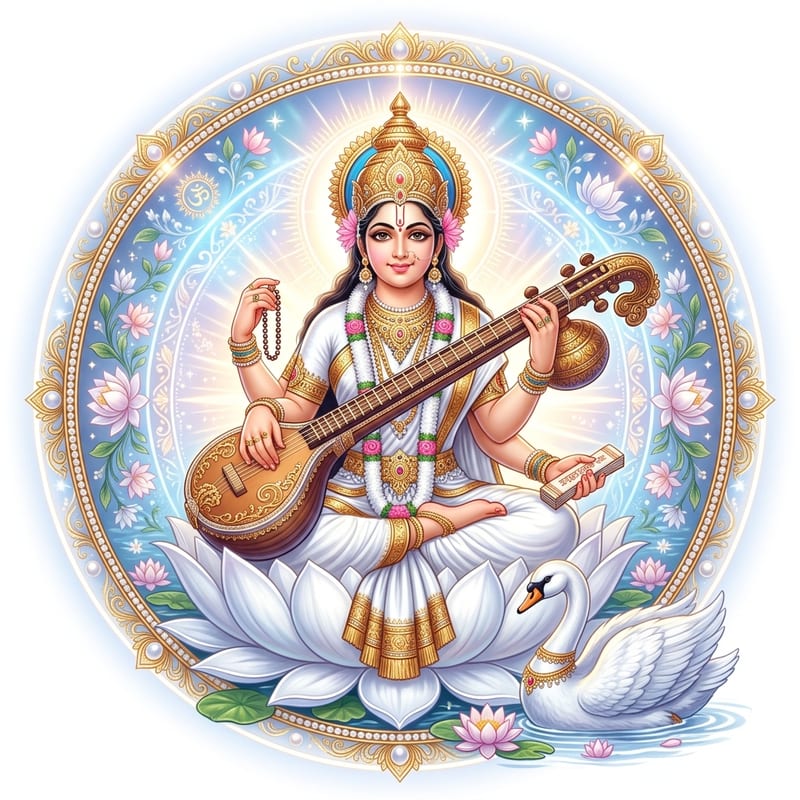
याज्ञवल्क्यकृत सरस्वती स्तवम् याज्ञवल्क्य उवाच
कृपां कुरु जगन्मातर्-मामेवं हततेजसम् ।
गुरुशापात् स्मृतिभ्रष्टं विद्याहीनं च दुःखितम् ॥ 1 ॥
गुरुशापात् स्मृतिभ्रष्टं विद्याहीनं च दुःखितम् ॥ 1 ॥
- yājñavalkya uvācha = Yājñavalkya spoke | kṛpāṃ kuru = show grace | jagat-mātar = O Mother of all worlds | māmēvaṃ = to me in this condition | hata-tējasam = robbed of brilliance/vigour | guru-śāpāt = by the guru's curse | smṛti-bhraṣṭaṃ = fallen from memory | vidyā-hīnaṃ = devoid of learning | cha duḥkhitam = and sorrowful
ज्ञानं देहि स्मृतिं विद्यां शक्तिं शिष्य प्रबोधिनीम् ।
ग्रन्थकर्तृत्व शक्तिं च सुशिष्यं सुप्रतिष्ठितम् ॥ 2 ॥
ग्रन्थकर्तृत्व शक्तिं च सुशिष्यं सुप्रतिष्ठितम् ॥ 2 ॥
- jñānaṃ dēhi = grant knowledge | smṛtiṃ = memory | vidyāṃ = learning | śaktiṃ śiṣya-prabōdhinīm = the power to enlighten/awaken disciples | grantha-kartṛtva-śaktiṃ = the power of authorship | suśiṣyaṃ = a good disciple | supratiṣṭhitam = well-established
प्रतिभां सत्सभायां च विचारक्षमतां शुभाम् ।
लुप्तं सर्वं दैव योगा-न्नवीभूतं पुनः कुरु ॥ 3 ॥
लुप्तं सर्वं दैव योगा-न्नवीभूतं पुनः कुरु ॥ 3 ॥
- pratibhāṃ = poetic genius, creative inspiration | satsabhāyāṃ = in the assembly of the good/learned | vichāra-kṣamatāṃ śubhām = the auspicious capacity for reflection | luptaṃ sarvaṃ = all that was lost | daiva-yōgāt = by divine ordination | navī-bhūtaṃ = become new | punaḥ kuru = make once again
यथाङ्कुरं भस्मनि च करोति देवता पुनः ।
ब्रह्मस्वरूपा परमा ज्योतीरूपा सनातनी ॥ 4 ॥
ब्रह्मस्वरूपा परमा ज्योतीरूपा सनातनी ॥ 4 ॥
- yathā = just as | aṅkuram = a sprout | bhasmani = in ashes | cha karōti = makes to arise | dēvatā punaḥ = a divine being once again | brahma-svarūpā = O you of the form of Brahman | paramā = the Supreme | jyōtī-rūpā = of the form of light | sanātanī = the eternal one
सर्वविद्याधिदेवी या तस्यै वाण्यै नमो नमः ।
विसर्ग बिन्दुमात्रासु यदधिष्ठानमेवच ॥ 5 ॥
विसर्ग बिन्दुमात्रासु यदधिष्ठानमेवच ॥ 5 ॥
- sarva-vidyā-adhidēvī = presiding Goddess of all knowledge | yā = she who | tasyai vāṇyai = to that Vāṇī (Sarasvatī) | namō namaḥ = salutation, salutation | visarga = the double-dot mark (:) in Sanskrit | bindu = the nasal dot (ṁ) | mātrāsu = in the marks | yat adhiṣṭhānam = what presiding presence | ēva cha = also
तदधिष्ठात्री या देवी तस्यै वाण्यै नमो नमः ।
व्याख्यास्वरूपा सा देवी व्याख्याधिष्ठातृरूपिणी ॥ 6 ॥
व्याख्यास्वरूपा सा देवी व्याख्याधिष्ठातृरूपिणी ॥ 6 ॥
- tat-adhiṣṭhātrī yā dēvī = the Goddess who presides over that | tasyai vāṇyai namō namaḥ = salutation, salutation to that Vāṇī | vyākhyā-svarūpā = she who has the form of commentary/explanation | sā dēvī = that Goddess | vyākhyā-adhiṣṭhātṛ-rūpiṇī = having the form of the presiding deity of commentary
यया विना प्रसङ्ख्यावान् सङ्ख्यां कर्तुं न शक्यते ।
कालसङ्ख्या स्वरूपा या तस्यै देव्यै नमो नमः ॥ 7 ॥
कालसङ्ख्या स्वरूपा या तस्यै देव्यै नमो नमः ॥ 7 ॥
- yayā vinā = without whom | prasaṅkhyāvān = even the most learned in reckoning | saṅkhyāṃ kartuṃ = to make calculations | na śakyatē = is not capable | kāla-saṅkhyā-svarūpā = she who has the form of temporal calculation | yā = she who | tasyai dēvyai namō namaḥ = salutation, salutation to that Goddess
भ्रम सिद्धान्तरूपा या तस्यै देव्यै नमो नमः ।
स्मृतिशक्ति ज्ञानशक्ति बुद्धिशक्ति स्वरूपिणी ॥ 8 ॥
स्मृतिशक्ति ज्ञानशक्ति बुद्धिशक्ति स्वरूपिणी ॥ 8 ॥
- bhrama-siddhānta-rūpā = she of the form of the resolution of misconceptions | yā = she who | tasyai dēvyai namō namaḥ = salutation, salutation to that Goddess | smṛti-śakti = power of memory | jñāna-śakti = power of knowledge | buddhi-śakti = power of intellect | svarūpiṇī = she who has that form
प्रतिभाकल्पनाशक्तिर्-या च तस्यै नमोनमः ।
सनत्कुमारो ब्रह्माणं ज्ञानं पप्रच्छ यत्र वै ॥ 9 ॥
सनत्कुमारो ब्रह्माणं ज्ञानं पप्रच्छ यत्र वै ॥ 9 ॥
- pratibhā-kalpanā-śaktiḥ = the power of creative imagination/conception | yā cha = and she who | tasyai namō namaḥ = salutation, salutation to her | sanatkumāraḥ = Sanatkumāra (one of the four mind-born sons of Brahmā) | brahmāṇaṃ = Brahmā | jñānaṃ = about knowledge | paprachCha = asked | yatra vai = where indeed
बभूव मूकवत्सोस्पि सिद्धान्तं कर्तु मक्षमः ।
तदाष्जगाम भगवा-नात्मा श्रीकृष्ण ईश्वरः ॥ 10 ॥
तदाष्जगाम भगवा-नात्मा श्रीकृष्ण ईश्वरः ॥ 10 ॥
- babhūva = became | mūka-vat = like a mute | aspi = even he | siddhāntaṃ = the doctrine/resolution | kartum = to make/compose | akṣamaḥ = incapable | tadā = then | ājagāma = came | bhagavān = the Lord | ātmā = the Supreme Self | śrī-kṛṣṇa-īśvaraḥ = Śrī Kṛṣṇa, the Supreme Lord
उवाचस च तां स्तौहि वाणी मिष्टां प्रजापते ।
स च तुष्टाव तां ब्रह्मा चाज्ञया परमात्मनः ॥ 11 ॥
स च तुष्टाव तां ब्रह्मा चाज्ञया परमात्मनः ॥ 11 ॥
- uvācha = said | sa cha = and he | tāṃ stauhi = praise her | vāṇīm = that Vāṇī (Sarasvatī) | iṣṭāṃ = the most beloved | prajāpatē = O Lord of Creatures (Brahmā) | sa cha = and he | tuṣṭāva tāṃ = praised her | brahmā = Brahmā | cha ājñayā = by the command | paramātmanaḥ = of the Supreme Self
चकार तत्प्रसादेन तदा सिद्धान्त मुत्तमम् ।
यदाप्यनन्तं पप्रच्छ ज्ञानमेकं वसुन्धरा ॥ 12 ॥
यदाप्यनन्तं पप्रच्छ ज्ञानमेकं वसुन्धरा ॥ 12 ॥
- chakāra = composed | tat-prasādēna = by her grace | tadā = then | siddhāntam uttamam = the excellent doctrine | yadā api = and when | anantaṃ = Ananta (the thousand-headed serpent bearing the earth) | paprachCha = asked | jñānam ēkaṃ = a single [piece of] knowledge | vasundharā = the earth
बभूव मूकवत्सोस्पि सिद्धान्तं कर्तु मक्षमः ।
तदा तां च स तुष्टाव सन्त्रस्तः कश्यपाज्ञया ॥ 13 ॥
तदा तां च स तुष्टाव सन्त्रस्तः कश्यपाज्ञया ॥ 13 ॥
- babhūva = became | mūka-vat = like a mute | aspi = even she | siddhāntaṃ = the doctrine | kartum akṣamaḥ = incapable of composing | tadā = then | tāṃ cha = and her | sa tuṣṭāva = he praised | santrastaḥ = frightened | kaśyapa-ājñayā = by Kaśyapa's instruction
तत श्चकार सिद्धान्तं निर्मलं भ्रम भञ्जनम् ।
व्यासः पुराणसूत्रं च पप्रच्छ वाल्मीकिं यदा ॥ 14 ॥
व्यासः पुराणसूत्रं च पप्रच्छ वाल्मीकिं यदा ॥ 14 ॥
- tataḥ = then | chakāra = composed | siddhāntaṃ = the doctrine | nirmalaṃ = pure | bhrama-bhañjanam = dispelling errors/misconceptions | vyāsaḥ = Vyāsa | purāṇa-sūtraṃ = the Purāṇa-sūtra | cha paprachCha = also asked | vālmīkiṃ = Vālmīki | yadā = when
मौनीभूत श्च सस्मार तामेव जगदम्बिकाम् ।
तदा चकार सिद्धान्तं तद्वरेण मुनीश्वरः ॥ 15 ॥
तदा चकार सिद्धान्तं तद्वरेण मुनीश्वरः ॥ 15 ॥
- maunī-bhūtaḥ = having become silent | cha sasmāra = and recalled | tām ēva = that very [Sarasvatī] | jagad-ambikām = the Mother of the World | tadā = then | chakāra = composed | siddhāntaṃ = the doctrine | tat-varēṇa = by her boon | munīśvaraḥ = the foremost of sages
सम्प्राप्य निर्मलं ज्ञानं भ्रमान्ध्य ध्वंसदीपकम् ।
पुराणसूत्रं श्रुत्वा च व्यासः कृष्णकलोद्भवः ॥ 16 ॥
पुराणसूत्रं श्रुत्वा च व्यासः कृष्णकलोद्भवः ॥ 16 ॥
- samprāpya = having received | nirmalaṃ jñānaṃ = pure knowledge | bhramāndhya-dhvaṃsa-dīpakam = the lamp that dispels the blindness of confusion | purāṇa-sūtraṃ śrutvā cha = and having heard the Purāṇa-sūtra | vyāsaḥ = Vyāsa | kṛṣṇa-kala-udbhavaḥ = born of a fraction (kalā) of Kṛṣṇa
तां शिवां वेद दध्यौ च शतवर्षं च पुष्करे ।
तदा त्वत्तो वरं प्राप्य सत्कवीन्द्रो बभूव ह ॥ 17 ॥
तदा त्वत्तो वरं प्राप्य सत्कवीन्द्रो बभूव ह ॥ 17 ॥
- tāṃ śivāṃ = that auspicious Goddess | vēda = knew | dadhyau = meditated | cha = and | śata-varṣaṃ = for a hundred years | puṣkarē = at Puṣkara (the sacred lake in Rājasthān) | tadā tvattō = then from you | varaṃ prāpya = having received a boon | sat-kavīndraḥ = foremost among good poets | babhūva = became | ha = indeed
तदा वेदविभागं च पुराणं च चकार सः ।
यदा महेन्द्रः पप्रच्छ तत्त्वज्ञानं सदाशिवम् ॥ 18 ॥
यदा महेन्द्रः पप्रच्छ तत्त्वज्ञानं सदाशिवम् ॥ 18 ॥
- tadā = then | vēda-vibhāgaṃ = the division of the Vedas | purāṇaṃ = the Purāṇas | cha chakāra = also composed | yadā = when | mahēndraḥ = Mahēndra (Indra) | paprachCha = asked | tattva-jñānaṃ = the knowledge of truth | sadāśivam = Sadāśiva (the eternally auspicious, highest form of Śiva)
क्षणं तामेव सञ्चिन्त्य तस्मै ज्ञानं ददौ विभुः ।
पप्रच्छ शब्दशास्त्रं च महेन्द्र श्च बृहस्पतिम् ॥ 19 ॥
पप्रच्छ शब्दशास्त्रं च महेन्द्र श्च बृहस्पतिम् ॥ 19 ॥
- kṣaṇaṃ = for a moment | tām ēva = that very [Sarasvatī] | sañchintya = having recalled | tasmai = to him | jñānaṃ dadau = gave knowledge | vibhuḥ = the all-powerful [Sadāśiva] | paprachCha = asked | śabda-śāstraṃ = grammar/the science of language | cha = and | mahēndraḥ = Mahēndra | cha bṛhaspatim = and Bṛhaspati
दिव्य वर्ष सहस्रं च स त्वां दध्यौ च पुष्करे ।
तदा त्वत्तो वरं प्राप्य दिव्यवर्षसहस्रकम् ॥ 20 ॥
तदा त्वत्तो वरं प्राप्य दिव्यवर्षसहस्रकम् ॥ 20 ॥
- divya-varṣa-sahasraṃ = for a thousand divine years | cha = and | saḥ = he | tvāṃ dadhyau = meditated on you | cha puṣkarē = at Puṣkara lake | tadā = then | tvattō varaṃ prāpya = having received a boon from you | divya-varṣa-sahasrakam = [corresponding to] a thousand divine years
उवाचशब्द शास्त्रं च तदर्थं च सुरेश्वरम् ।
अध्यापिताश्च ये शिष्या यैरधीतं मुनीश्वरैः ॥ 21 ॥
अध्यापिताश्च ये शिष्या यैरधीतं मुनीश्वरैः ॥ 21 ॥
- uvācha = taught | śabda-śāstraṃ cha = the science of language and | tat-arthaṃ = its meaning | surēśvaraṃ = to the lord of gods (Indra) | adhyāpitāḥ = those taught | cha yē śiṣyāḥ = and those disciples | yaiḥ adhītaṃ = by whom it was learned | munīśvaraiḥ = by the great sages
ते च तां परिसञ्चित्य प्रवर्तन्ते सुरेश्वरीम् ।
त्वं संस्तुता पूजिता च मुनीन्द्रै र्मनु मानवैः ॥ 22 ॥
त्वं संस्तुता पूजिता च मुनीन्द्रै र्मनु मानवैः ॥ 22 ॥
- tē cha = and they | tāṃ parisañchintya = meditating on that Goddess | pravartantē = proceed in their work | surēśvarīm = O Surēśvarī | tvaṃ = you | saṃstutā = are praised | pūjitā cha = and worshipped | munīndraiḥ = by the great sages | manu-mānavaiḥ = by Manu and humanity
दैत्येन्द्रै श्च सुरैश्चापि ब्रह्म विष्णुशिवादिभिः ।
जडीभूत स्सहस्रास्यः पञ्चवक्त्र श्चतुर्मुखः ॥ 23 ॥
जडीभूत स्सहस्रास्यः पञ्चवक्त्र श्चतुर्मुखः ॥ 23 ॥
- daityēndraiḥ = by the lords of demons | suraiḥ = by the gods | brahma-viṣṇu-śivādibhiḥ = by Brahmā, Viṣṇu, Śiva, and others | jaḍī-bhūtaḥ = become speechless/paralysed | sahasra-āsyaḥ = thousand-mouthed [Ananta] | pañca-vaktraḥ = five-faced [Śiva] | chatur-mukhaḥ = four-faced [Brahmā]
यां स्तोतुं कि महं स्तौमि तामेकास्येन मानवः ।
इत्युक्त्वा याज्ञवल्क्य श्च भक्तिनम्रात्म कन्धरः ॥ 24 ॥
इत्युक्त्वा याज्ञवल्क्य श्च भक्तिनम्रात्म कन्धरः ॥ 24 ॥
- yāṃ stōtuṃ = to praise whom | kim = what [can I do] | ahaṃ staumi = I praise | tām ēka-āsyēna = her with a single mouth | mānavaḥ = a human being | ity uktvā = having said this | yājñavalkyaḥ = Yājñavalkya | cha = and | bhakti-namra-ātma-kandhara = with neck bowed in devotion
प्रणनाम निराहारो रुरोद च मुहुर्मुहुः ।
ज्योतीरूपा महामाया तेन दृष्टा7प्युवाचतम् ॥ 25 ॥
ज्योतीरूपा महामाया तेन दृष्टा7प्युवाचतम् ॥ 25 ॥
- praṇanāma = bowed in prostration | nirāhāraḥ = fasting | rurōda = wept | cha muhurmuhuḥ = and again and again | jyōtī-rūpā = of the form of light | mahā-māyā = the Great Māyā (Sarasvatī) | tēna dṛṣṭā = seen by him | api = even so | uvācha = spoke | tam = to him
सुकवीन्द्रो भवेत्युक्त्वा वैकुण्ठं च जगाम ह ।
याज्ञवल्क्य कृतं वाणी स्तोत्रमेतत्तु यः पठेत् ॥ 26 ॥
याज्ञवल्क्य कृतं वाणी स्तोत्रमेतत्तु यः पठेत् ॥ 26 ॥
- sukavīndraḥ bhava = become the foremost among good poets | ity uktvā = having said this | vaikuṇṭhaṃ = Vaikuṇṭha (the divine abode) | cha jagāma = went | ha = indeed | yājñavalkya-kṛtaṃ = composed by Yājñavalkya | vāṇī-stōtram = this Vāṇī stotram | ētat tu yaḥ paṭhēt = whoever reads this
स कवीन्द्रो महावाग्मी बृहस्पतिसमो भवेत् ।
महा मूर्खश्च दुर्बुद्धिर्-वर्षमेकं यदा पठेत् ।
स पण्डितश्च मेधावी सुकवीन्द्रो भवेद्ध्रुवम् ॥ 27 ॥
महा मूर्खश्च दुर्बुद्धिर्-वर्षमेकं यदा पठेत् ।
स पण्डितश्च मेधावी सुकवीन्द्रो भवेद्ध्रुवम् ॥ 27 ॥
- sa = he | kavīndraḥ = foremost among poets | mahā-vāgmī = great orator | bṛhaspati-samaḥ = equal to Bṛhaspati | bhavēt = will become | mahā-mūrkhaḥ = a great fool | cha durbuddhiḥ = and of poor understanding | varṣam ēkaṃ = for one year | yadā paṭhēt = if reads | sa paṇḍitaḥ = will be a scholar | mēdhāvī = mentally sharp | sukavīndraḥ = foremost among good poets | bhavēt = will become | dhruvam = certainly
इति श्री देवी भागवते महापुराणे नवमस्कन्धे
सरस्वतीस्तवं नाम पञ्चमोध्यायः ।
सरस्वती कटाक्ष सिद्धिरस्तु ।
इदं मयाकृतं पारायणं
श्रीसद्गुरु चरणारविन्दार्पणमस्तु ।