
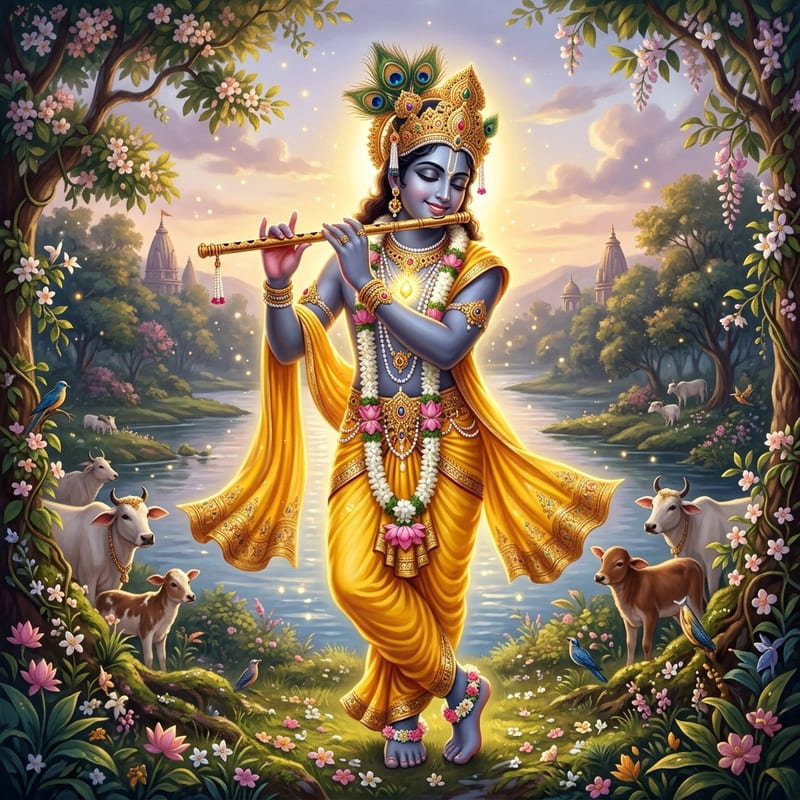
karata āratī navabrajanārī |
agara kapūra sugaṃdhita būkā,
bibidha bhā~ti kī sā~jhā sa~vārī||
agara kapūra sugaṃdhita būkā,
bibidha bhā~ti kī sā~jhā sa~vārī||
ghaṃṭā jhālara śaṃkha nṛsiṃghā,
bijai ghaṃṭa dhuni parama sukhārī|
baṃśī bīna mṛdaṃga ta~būrā,
sahanāī bājata hai nyārī||
bijai ghaṃṭa dhuni parama sukhārī|
baṃśī bīna mṛdaṃga ta~būrā,
sahanāī bājata hai nyārī||
barasata phūla gaganasoṃ suragana,
devabadhū nācata dai tārī|
haraṣata sakhī karata nyochāvara,
nārāyaṇa hovaiṃ balihārī||
devabadhū nācata dai tārī|
haraṣata sakhī karata nyochāvara,
nārāyaṇa hovaiṃ balihārī||
|| iti saṃpūrṇaṃm ||