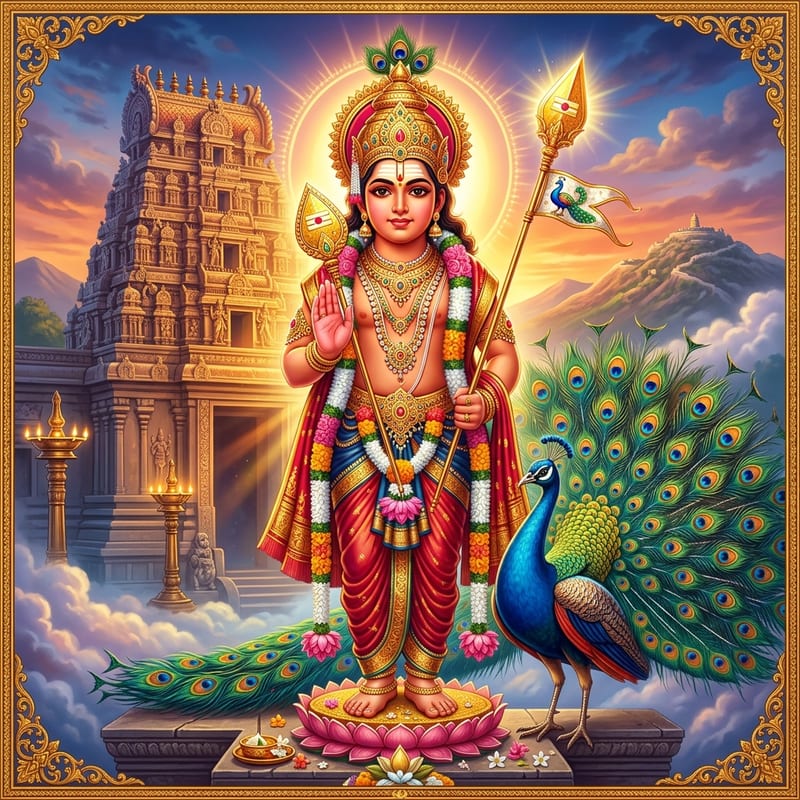
śrīsubrahmaṇyasahasranāmastotram
Sri Subrahmanya Sahasranama Stotram
ṛṣaya ūcuḥ -
sarvaśāstrārthatattvajña sarvalokopakāraka |
vayaṃ cātithayaḥ prāptā ātitheyo'si suvrata || 1 ||
The Rishis said: O Knower of the essence of all scriptures, O benefactor of all worlds, we have arrived as guests; O one of noble vows, you are our host.
jñānadānena saṃsārasāgarāttārayasva naḥ |
kalau kaluṣacittā ye narāḥ pāparatāḥ sadā || 2 ||
By bestowing knowledge, rescue us from the ocean of worldly existence. In the Kali age, those people whose minds are impure are always engaged in sinful acts.
kena stotreṇa mucyante sarvapātakabandhanaiḥ |
iṣṭasiddhikaraṃ puṇyaṃ duḥkhadāridryanāśanam || 3 ||
By which hymn are they released from the bonds of all sins? (Tell us a hymn that is) capable of granting desired results, is meritorious, and destroys sorrow and poverty.
sarvarogaharaṃ stotraṃ sūta no vaktumarhasi |
śrīsūta uvāca-
śṛṇudhvam ṛṣayaḥ sarve naimiṣāraṇyavāsinaḥ || 4 ||
O Suta, you should tell us a hymn that destroys all diseases. Sri Suta said: Listen, O all Rishis residing in the Naimisha forest.
tattvajñānatapaniṣṭhāḥ sarvaśāstraviśāradāḥ |
svayambhuvā purā proktaṃ nāradāya mahātmane || 5 ||
You who are devoted to the knowledge of truth and penance, and are experts in all scriptures; this was told long ago by the Self-born (Brahma) to the great-souled Narada.
tadahaṃ sampravakṣyāmi śrotuṃ kautūhalaṃ yadi |
ṛṣaya ūcuḥ -
kimāha bhagavānbrahmā nāradāya mahātmane || 6 ||
I shall narrate that if you have the curiosity to hear it. The Rishis said: What did Lord Brahma say to the great-souled Narada?
sūtaputra mahābhāga vaktumarhasi sāmpratam |
śrīsūta uvāca-
divyasiṃhāsanāsīnaṃ sarvadevairabhiṣṭutam || 7 ||
O son of Suta, O highly fortunate one, you should tell us now. Sri Suta said: (Narada approached) Him who was seated on a divine throne and praised by all the gods.
sāṣṭāṅgapraṇipatyainaṃ brahmāṇaṃ bhuvaneśvaram |
nāradaḥ paripapraccha kṛtāñjilarupasthitaḥ || 8 ||
Having prostrated with eight limbs before Brahma, the Lord of the worlds, Narada stood with folded hands and asked.
nārada uvāca-
lokanātha suraśreṣṭha sarvajña karuṇākara |
ṣaṇmukhasya paraṃ stotraṃ pāvanaṃ pāpanāśanam || 9 ||
Narada said: O Lord of the worlds, O best of gods, O all-knowing one, O compassionate one, (tell me) the supreme hymn of Shanmukha (Subrahmanya), which is purifying and destroys sins.
dhātastvaṃ putravātsalyāttadvada praṇatāya me |
upadiśya tu māṃ deva rakṣa rakṣa kṛpānidhe || 10 ||
O Creator, out of your affection for your son, please tell me this. O Lord, treasure of compassion, instruct me and protect me, protect me.
śṛṇu vakṣyāmi devarṣe stavarājamimaṃ param |
mātṛkāmālikāyuktaṃ jñānamokṣasukhapradam || 11 ||
Listen, O divine sage, I shall tell you this supreme king of hymns, which is endowed with the garland of Matrikas (letters) and bestows knowledge, liberation, and happiness.
sahasrāṇi ca nāmāni ṣaṇmukhasya mahātmanaḥ |
yāni nāmāni divyāni duḥkharogaharāṇi ca || 12 ||
The thousand names of the great-souled Shanmukha (six-faced one), which are divine and destroy sorrows and diseases.
tāni nāmāni vakṣyāmi kṛpayā tvayi nārada |
japamātreṇa sidhyanti manasā cintitānyapi || 13 ||
I shall tell you those names out of compassion, O Narada. By mere chanting, even those things contemplated in the mind are accomplished.
ihāmutra paraṃ bhogaṃ labhate nātra saṃśayaḥ |
idaṃ stotraṃ paraṃ puṇyaṃ koṭiyajñaphalapradam |
sandeho nātra kartavyaḥ śṛṇu me niścitaṃ vacaḥ || 14 ||
One attains enjoyment here and in the hereafter, there is no doubt about this. This hymn is supreme, holy, and grants the fruit of a crore of sacrifices. Do not have any doubt about this; listen to my definitive word.
asya śrīsubrahmaṇyasahasranāmastotramahāmantrasya |
brahmā ṛṣiḥ |
anuṣṭupchandaḥ |
subrahmaṇyo devatā |
śarajanmākṣaya iti bījam |
śaktidharo'kṣaya iti śaktiḥ |
kārtikeya iti kīlakam |
krauñcabhedītyargalam |
śikhivāhana iti kavacam |
ṣaṇmukha iti dhyānam |
śrīsubrahmaṇyaprasādasiddhyarthe jape viniyogaḥ |
Of this great mantra of Sri Subrahmanya Sahasranama Stotram, Brahma is the Rishi (seer), Anushtup is the meter, Subrahmanya is the deity. 'Sharajanmakshaya' is the seed, 'Shaktidharokshaya' is the power, 'Kartikeya' is the pin (kilaka), 'Kraunchabhedi' is the bolt (argala), 'Shikhivahana' is the armor (kavacha), 'Shanmukha' is the meditation. It is used in the japa for the attainment of the grace of Sri Subrahmanya.
karanyāsaḥ -
Karanyasa (Hand gestures/consecration) -
oṃ śaṃ oṅkārasvarūpāya ojodharāya ojasvine suhṛdāya hṛṣṭacittātmane bhāsvadrūpāya aṅguṣṭhābhyāṃ namaḥ |
Om Sham, salutations to the thumbs, to the one who is the form of Omkara, the bearer of vigor, the radiant one, the well-wisher, the one with a joyful mind, and the one with a shining form.
oṃ raṃ ṣaḍkoṇamadhyanilayāya ṣaḍkīṭadharāya śrīmate ṣaḍādhārāya ṣaḍānanāya lalāṭaṣaṇnetrāya abhayavaradahastāya tarjanībhyāṃ namaḥ |
Om Ram, salutations to the index fingers, to the one who dwells in the center of the six-pointed star, the bearer of the six-fold energy, the glorious one, the support of the six centers, the six-faced one, the one with six eyes on the forehead, and the one whose hands grant fearlessness and boons.
oṃ vaṃ ṣaṇmukhāya śarajanmane śubhalakṣaṇāya śikhivāhanaya ṣaḍakṣarāya svāmināthāya madhyamābhyāṃ namaḥ |
Om Vam, salutations to the middle fingers, to the six-faced one, the one born in the reeds, the one with auspicious marks, the one who rides a peacock, the one with six syllables, and the Lord of Lords (Swaminatha).
oṃ paṃ kṛśānusambhavāya kavacine kukuṭadhvajāya śūramardanāya kumārāya subrahmaṇyaya anāmikābhyāṃ namaḥ |
Om Pam, salutations to the ring fingers, to the one born of fire (Agni), the armored one, the one with the rooster flag, the destroyer of the brave (demons), the youthful one, and the one who is Subrahmanya.
oṃ bhaṃ kandarpakoṭidivyavigrahāya dviṣadbāhave dvādaśākṣarāya nityajñānasvarūpāya dvādaśākṣāya mūlaprakṛtihitāya kaniṣṭhikābhyāṃ namaḥ |
Om Bham, salutations to the little fingers, to the one whose divine form is like a crore of Cupids, the one with twelve arms, the one with twelve syllables, the one who is the form of eternal knowledge, the one with twelve eyes, and the one who is beneficial to the primordial nature.
oṃ vaṃ saccidānandasvarūpāya sarvarūpātmane kheṭadharāya khaḍgine śaktihastāya brahmaikarūpiṇe karatalakarapṛṣṭhābhyāṃ namaḥ ||
Om Vam, salutations to the one who is the embodiment of Existence-Consciousness-Bliss, who is the soul of all forms, who holds a shield and a sword, who holds a spear in his hand, and who is the singular form of Brahman, to the palms and the back of the hands.
aṅganyāsaḥ -
Anganyasa (Ritual of touching parts of the body)
oṃ śaṃ oṃkārasvarūpāya ojodharāya ojasvine suhṛdyāya hṛṣṭacittātmane bhāsvadrūpāya hṛdayāya namaḥ |
Om Sham, salutations to the heart, to the one who is the form of Omkara, the bearer of vigor, the radiant one, the well-hearted one, the one with a joyful mind, and the one with a luminous form.
oṃ raṃ ṣaḍkoṇamadhyanilayāya ṣaḍkīṭadharāya śrīmate ṣaḍādhārāya ṣaḍānanāya lalāṭaṣaṇnetrāya abhayavaradahastāya śirase svāhā |
Om Ram, Svaha to the head, to the one who dwells in the center of the hexagram, the bearer of the six-fold energy, the glorious one, the support of the six chakras, the six-faced one, the one with six eyes on his forehead, and whose hands grant fearlessness and boons.
oṃ vaṃ ṣaṇmukhāya śarajanmane śubhalakṣaṇāya śikhivāhanāya ṣaḍakṣarāya svāmināthāya śikhāyai vaṣaṭ |
Om Vam, Vashat to the tuft of hair, to the six-faced one, the one born in the reeds, the one with auspicious marks, the one who rides a peacock, the six-syllabled one, and the Lord of Lords.
oṃ ṇaṃ kṛśānausmbhavāya kavacine kukuṭadhvajāya śūramardanāya kumārāya subrahmaṇyaya kavacāya hum |
Om Nam, Hum to the armor, to the one born from fire (Agni), the armored one, the one with a rooster banner, the destroyer of the brave (demons), the youthful one, and the auspicious Brahman (Subrahmanya).
oṃ bhaṃ kandarpakoṭidivyavigrahāya dviṣbāhave dvādaśākṣarāya nityajñānasvarūpāya dvādaśākṣāya mūlaprakṛtihitāya netratrayāya vauṣaṭ |
Om Bham, Vaushat to the three eyes, to the one whose divine form surpasses millions of Cupids, the twelve-armed one, the twelve-syllabled one, the embodiment of eternal knowledge, the twelve-eyed one, and the one who is beneficial to the primordial nature.
oṃ vaṃ saccidānandasvarūpāya sarvarūpātmane kheṭadharāya khaḍgine śaktihastāya brahmaikarūpiṇe astrāya phaṭ ||
Om Vam, Phat to the weapon, to the one who is the embodiment of Existence-Consciousness-Bliss, who is the soul of all forms, who holds a shield and a sword, who holds a spear in his hand, and who is the singular form of Brahman.
oṃ bhūrbhuvassuvaroṃ iti digbandhaḥ ||
Om Bhurbhuvassuvarom, this is the binding of the directions.
dhyāyetṣaṇmukhamindukoṭisadṛśaṃ ratnaprabhāśobhitaṃ bālārkadyutiṣaḍkīṭavilasatkeyūrahārānvitam |
karṇālambitakuṇḍalapravilasadgaṇḍasthalāśobhitaṃ kāñcīkaṅkaṇakiṅkiṇīravayutaṃ śatraṅgārasārodayam ||
One should meditate on the six-faced Lord, who is as radiant as millions of moons, adorned with the luster of gems, wearing armlets and necklaces shining like the morning sun. His cheeks are beautified by dangling earrings, and he is adorned with a waist-girdle, bracelets, and tinkling bells, representing the essence of all beauty.
ṣaḍvaktraṃ śikhivāhanaṃ trinayanaṃ citrāmbarālaṅkṛtaṃ vajraṃ śaktimasiṃ triśūlamabhayaṃ kheṭaṃ dhanuścakrakam |
pāśaṃ kukkuṭamaṅkuśaṃ ca varadaṃ dorbhirdadhānaṃ sadā dhyāyāmīpsita siddhidaṃ śivasutaṃ śrīdvādaśākṣaṃ guham ||
I always meditate on Guha, the son of Shiva, who has six faces, rides a peacock, has three eyes, is adorned with colorful garments, and holds in his hands a vajra, spear, sword, trident, fearlessness mudra, shield, bow, discus, noose, rooster, and goad, while granting boons and fulfilling all desired attainments.
pañcapūjā -
Panchapuja (Five-fold worship)
laṃ pṛthivyātmane gandhaṃ kalpayāmi |
Lam, I offer sandalwood paste to the one who is the soul of the earth element.
haṃ ākāśātmane puṣpāṇi kalpayāmi |
Ham, I offer flowers to the one who is the soul of the ether element.
yaṃ vāyvātmane dhūpaṃ kalpayāmi |
Yam, I offer incense to the one who is the soul of the air element.
raṃ adhyātmane dīpaṃ kalpayāmi |
I offer this lamp to the Supreme Self (Adhyatman).
vaṃ amṛtātmane amṛtaṃ mahānaivedyaṃ kalpayāmi |
I offer this nectar-like great food offering to the Immortal Self (Amritatman).
saṃ sarvātmane tāmbūlādi sarvopacārapūjān kalpayāmi |
I offer betel leaves and all other ritual services to the Self of all (Sarvatman).
|| atha subrahmaṇyasahasranāmastotram ||
Here begins the Subrahmanya Sahasranama Stotram.
oṃ acintyaśaktiranaghastvakṣobhyastvaparājitaḥ |
anāthavatsalo'moghastvaśoko'pyajaro'bhayaḥ || 1 ||
Om. He who has unthinkable power, who is sinless, who is unshakeable, who is unconquered, who is kind to the helpless, who is unfailing, who is free from sorrow, who is ageless, and who is fearless.
atyudāro hyaghaharastvagragaṇyo'drijāsutaḥ |
anantamahimā'pāro'nantasaukhyaprado'vyayaḥ || 2 ||
He who is extremely generous, who destroys sins, who is foremost, who is the son of the daughter of the mountain (Parvati), whose glory is infinite, who is boundless, who grants infinite happiness, and who is imperishable.
anantamokṣado'nādiraprameyo'kṣaro'cyutaḥ |
akalpaṣo'bhirāmo'gradhuryaścāmitavikramaḥ || 3 ||
He who grants infinite liberation, who is beginningless, who is immeasurable, who is indestructible, who is firm, who is without blemish, who is delightful, who is the foremost leader, and who has immeasurable prowess.
anāthanātho hyamalo hyapramatto'maraprabhuḥ |
arindamo'khilādhārastvaṇimādiguṇo'graṇīḥ || 4 ||
He who is the lord of the helpless, who is pure, who is vigilant, who is the lord of the immortals, who is the destroyer of enemies, who is the support of all, who possesses the qualities of Anima (atomic size) etc., and who is the leader.
acañcalo'marastutyo hyakalaṅko'mitāśanaḥ |
abhibhūranavadyāṅgo hyadbhuto'bhīṣṭadāyakaḥ || 5 ||
He who is steady, who is praised by the immortals, who is without stain, who consumes immeasurable (or is the lord of the immeasurable), who is the conqueror, who has a flawless body, who is wonderful, and who grants desired boons.
atīndriyo'prameyātmā hyadṛśyo'vyaktalakṣaṇaḥ |
āpaddināśakastvārya ādya āgamasaṃstutaḥ || 6 ||
He who is beyond the senses, whose nature is immeasurable, who is invisible, whose characteristics are unmanifest, who is the destroyer of calamities, who is noble, who is the primordial one, and who is praised by the Agamas.
ārtasaṃrakṣaṇatvādya ānandastvāryasevitaḥ |
āśriteṣṭārthavarada ānandyārtaphalapradaḥ || 7 ||
He who is the protector of the distressed, who is bliss, who is served by the noble, who grants the desired boons to those who seek refuge, and who grants the fruits of joy to the distressed.
āścaryarūpa ānanda āpannārtivināśanaḥ |
ibhavakrānujastvaṣṭa ibhāsuraharātmajaḥ || 8 ||
He who is of wonderful form, who is bliss, who destroys the suffering of those in trouble, who is the younger brother of the elephant-faced one (Ganesha), who is the creator, and who is the son of the destroyer of the elephant demon (Shiva).
itihāsaśrutistutya indrabhogaphalapradaḥ |
iṣṭāpūrtaphalaprāptiriṣṭeṣṭavaradāyakaḥ || 9 ||
He who is praised by history and the Vedas, who grants the fruits of Indra's enjoyments, who grants the fruits of sacrifices and charitable works, and who grants the desired boons to those who seek them.
ihāmutreṣṭaphalada iṣṭadastvandravanditaḥ |
īḍanīyastvīśaputra īpsitārthapradāyakaḥ || 10 ||
He who grants desired fruits in this world and the next, who is the giver of desires, who is worshipped by Indra, who is worthy of praise, who is the son of the Lord (Shiva), and who grants desired objects.
ītibhītiharaśceḍya īṣaṇātrayavarjitaḥ |
udārakīrtirudyogī cotkṛṣṭoruparākramaḥ || 11 ||
He who removes calamities and fears, who is worthy of praise, who is free from the three desires (for wealth, progeny, and heaven), whose fame is generous, who is industrious, and who possesses excellent and great prowess.
utkṛṣṭaśaktirutsāha udāraścotsavapriyaḥ |
ujjṛmbha uddhavaśroya udayaścogralocanaḥ || 12 ||
He who has excellent power, who is enthusiasm, who is generous, who is fond of festivals, who is expanding, who is the source of prosperity, who is rising, and who has fierce eyes.
unmatta ugraśamana udvegaghno'geśvaraḥ |
uraprabhāvaścodīrṇa umāputra udāradhīḥ || 13 ||
He who is maddened (with divine bliss), the destroyer of ferocity, the destroyer of agitation, the Lord of the mountains. He who has immense influence, who is exalted, the son of Uma, and of noble intellect.
ūrdhvaretāḥ sutastūrdhvagatidastūrjapālakaḥ |
ūrjitastūrdhvagastūrdhva ūrdhvalokaikanāyakaḥ || 14 ||
He who preserves his vital energy, the son who grants higher paths, the protector of strength. He who is powerful, who ascends upwards, who is supreme, and the sole leader of the higher worlds.
ūrjivāānūrjitodāra ūrjitorjitaśāsanaḥ |
ṛṣidevagaṇastutya ṛṇatrayavimocanaḥ || 15 ||
He who is full of energy, powerful and generous, whose commands are mighty and exalted. He who is praised by sages and groups of gods, and who liberates one from the three debts.
ṛjurūpo hyṛjukara ṛjumārgapradarśanaḥ |
ṛtambharo hyṛjuprīta ṛṣabhastvṛddhidastvṛtaḥ || 16 ||
He who has a straightforward form, who acts righteously, who shows the path of righteousness. He who bears the truth, who is pleased by righteousness, the best among all, the giver of prosperity, and the truth itself.
lulitoddhārako lūtabhavapāśaprabhañjanaḥ |
eṇāṅkadharasatputra eka enovināśanaḥ || 17 ||
He who rescues the distressed, who breaks the bonds of worldly existence. The noble son of Shiva (the one who wears the moon), the unique one, and the destroyer of sins.
aiśvaryadaścendrabhogī caitihyaścendravanditaḥ |
ojasvī cauṣadhisthānamojodaścaudanapradaḥ || 18 ||
He who grants prosperity, who enjoys the senses (or is the lord of Indra), who is traditional, and worshipped by Indra. He who is full of vigor, the abode of medicinal herbs, the giver of vitality, and the provider of sustenance.
audāryaśīla aumeya augra aunnatadāyakaḥ |
audārya auṣadhakara auṣadhaṃ cauṣadhākaraḥ || 19 ||
He who is generous by nature, the son of Uma, fierce, and the giver of elevation. He who is magnanimous, the creator of medicine, the medicine itself, and the source of all medicinal herbs.
aṃśumālyaṃśumālīḍya ambikātanayo'ṅgadaḥ |
anyakārisuto'ndhatvahārī cāmbujalocanaḥ || 20 ||
He who is radiant like the sun, praised by the sun, the son of Ambika, and the giver of ornaments. The son of the enemy of the blind (Shiva), the remover of darkness (ignorance), and the lotus-eyed one.
astamāyo'marādhīśo hyaspaṣṭo'stokapuṇyadaḥ |
astamitro'starūpaścāskhalatsugatidāyakaḥ || 21 ||
He whose illusion has set (vanished), the Lord of the immortals, the unmanifest, and the giver of immense merit. He who has set aside enemies, whose form is beyond setting, and the giver of an unfailing, auspicious path.
kārtikeyaḥ kāmarūpaḥ kumāraḥ krauñcadāraṇaḥ |
kāmadaḥ kāraṇaṃ kāmyaḥ kamanīyaḥ kṛpākaraḥ || 22 ||
Kartikeya, he who can assume any form, the eternal youth, the splitter of the Krauncha mountain. The fulfiller of desires, the cause of all, the desirable one, the beautiful one, and the ocean of compassion.
kāñcanābhaḥ kāntiyuktaḥ kāmī kāmapradaḥ kaviḥ |
kīrtikṛtkukkuṭadharaḥ kūṭasthaḥ kuvaleṣaṇaḥ || 23 ||
He who has a golden luster, full of radiance, the lover, the giver of desires, the wise one. The creator of fame, the bearer of the rooster banner, the immutable one, and the lotus-eyed one.
kuṅkumāṅgaḥ kramaharaḥ kuśalaḥ kukkuṭadhvajaḥ |
kuśānusambhavaḥ krūraḥ krūraghnaḥ kalitāpahat || 24 ||
He whose body is smeared with saffron, the remover of obstacles, the expert, the one with the rooster flag. Born of Agni (fire), the fierce one, the destroyer of the fierce, and the remover of the impurities of the Kali age.
kāmarūpaḥ kalpataruḥ kāntaḥ kāmitadāyakaḥ |
kalyāṇakṛtkleśanāśaḥ kṛpāluḥ karuṇākaraḥ || 25 ||
He who can assume any form, the wish-fulfilling tree, the beloved, the giver of desired objects. The doer of good, the destroyer of suffering, the compassionate one, and the source of mercy.
kaluṣaghnaḥ kriyāśaktiḥ kaṭhoraḥ kavacī kṛtī |
The destroyer of sins, the power of action, the firm one, the one wearing armor, and the accomplished one.
komalāṅgaḥ kuśaprītaḥ kutsitaghnaḥ kalādharaḥ || 26 ||
He who has a delicate body, who is fond of the sacred Kusa grass, who destroys the wicked, and who bears the crescent moon.
khyātaḥ kheṭadharaḥ khaḍgī khaḍgāṅgī khalanigrahaḥ |
khyātipradaḥ khecareśaḥ khyātehaḥ khecarastutaḥ || 27 ||
He who is famous, who holds a shield, who carries a sword, who is adorned with a sword, who suppresses the wicked, who bestows fame, who is the Lord of the celestial beings, whose actions are renowned, and who is praised by the celestial beings.
kharatāpaharaḥ svasthaḥ khecaraḥ khecarāśrayaḥ |
khaṇḍendumaulitanayaḥ khelaḥ khecarapālakaḥ || 28 ||
He who removes the harshness (of life), who is self-established, who moves in the sky, who is the refuge of the celestial beings, who is the son of Lord Shiva (who wears the crescent moon), who is playful, and who protects the celestial beings.
khasthalaḥ khaṇḍitārkaśca khecarījanapūjitaḥ |
gāṅgeyo girijāputro gaṇanāthānujo guhaḥ || 29 ||
He who resides in the sky, who destroys the darkness (like the sun), who is worshipped by the celestial damsels, who is the son of Ganga, the son of Girija (Parvati), the younger brother of Ganesha, and who is known as Guha.
goptā gīrvāṇasaṃsevyo guṇātīto guhāśrayaḥ |
gatiprado guṇanidhiḥ gambhīro girijātmajaḥ || 30 ||
He who is the protector, who is served by the gods, who is beyond the three Gunas, who dwells in the cave (of the heart), who grants liberation, who is the treasure of virtues, who is profound, and who is the son of Girija.
gūḍharūpo gadaharo guṇādhīśo guṇāgraṇīḥ |
godharo gahano gupto garvaghno guṇavardhanaḥ || 31 ||
He who has a mysterious form, who removes diseases, who is the Lord of virtues, who is the foremost among the virtuous, who supports the earth, who is unfathomable, who is hidden, who destroys pride, and who increases virtues.
guhyo guṇajño gītijño gatātaṅko guṇāśrayaḥ |
gadyapadyapriyo guṇyo gostuto gaganecaraḥ || 32 ||
He who is secret, who knows the virtues, who is a connoisseur of music, who is free from fear, who is the abode of virtues, who loves prose and poetry, who is virtuous, who is praised by the earth/cows, and who moves in the sky.
gaṇanīyacaritraśca gatakleśo guṇārṇavaḥ |
ghūrṇitākṣo ghṛṇinidhiḥ ghanagambhīraghoṣaṇaḥ || 33 ||
He whose character is worth contemplating, who is free from suffering, who is an ocean of virtues, whose eyes are rolling (in divine ecstasy), who is a treasure of compassion, and whose voice is deep like the clouds.
ghaṇṭānādapriyo ghoṣo ghorāghaughavināśanaḥ |
ghanānnando dharmahantā ghṛṇāvān ghṛṣṭipātakaḥ || 34 ||
He who loves the sound of bells, who is the sound itself, who destroys the multitude of terrible sins, who is the joy of the clouds, who destroys unrighteousness, who is compassionate, and who destroys the sins of the arrogant.
ghṛṇī ghṛṇākaro ghoro ghoradaityaprahārakaḥ |
ghaṭitaiśvaryasandeho ghanārtho ghanasaṅgamaḥ || 35 ||
He who is radiant, who is the source of compassion, who is formidable, who strikes down terrible demons, who possesses all divine opulence, who is the ultimate wealth, and who is the union of the dense (divine) essence.
citrakṛccitravarṇaśca cañcalaścapaladyutiḥ |
cinmayaścitsvarūpaśca cirānandaścirantanaḥ || 36 ||
He who is the creator of wonders, who has a wonderful complexion, who is dynamic, who has a flickering radiance, who is full of consciousness, who is the form of pure intelligence, who is eternal bliss, and who is ancient.
citrakeliścitrataraścintanīyaścamatkṛtiḥ |
coraghnaścaturaścāruścāmīkaravibhūṣaṇaḥ || 37 ||
He who engages in wonderful play, who is more wonderful, who is worthy of contemplation, who is a marvel, who destroys thieves, who is clever, who is beautiful, and who is adorned with gold ornaments.
candrārkakoṭisadṛśaścandramaulitanūbhavaḥ |
chāditāṅgaśchadmahantā cheditākhilapātakaḥ || 38 ||
He who is equal to crores of suns and moons, who is the son of the one who wears the moon (Shiva), whose body is covered (in glory), who destroys deception, and who cuts through all sins.
chedīkṛtatamaḥkleśaśchatrīkṛtamahāyaśāḥ |
chāditāśeṣasantāpaścaritāmṛtasāgaraḥ || 39 ||
He who cuts through the darkness of suffering, who is sheltered by great fame, who covers all sorrows, and who is an ocean of the nectar of divine stories.
channatraiguṇyarūpaśca chāteharichannasaṃśayaḥ |
chandomayaśchandagāmī chinnapāśaśchaviśchadaḥ || 40 ||
He whose form is beyond the three Gunas (modes of nature), who destroys the ignorance of the devotees, who removes all doubts. He who is the embodiment of the Vedas, who moves according to his own will, who cuts the bonds of worldly existence, and who is the splendor itself.
jagaddhito jagatpūjyo jagajyeṣṭho jaganmayaḥ |
janako jāhnavīsūnurjitāmitro jagadguruḥ || 41 ||
He who is the well-wisher of the world, who is worshipped by the world, who is the eldest in the world, and who is the world itself. He who is the creator, the son of the Ganga (Kartikeya), the conqueror of enemies, and the teacher of the world.
jayī jitendriyo jaitro jarāmaraṇavarjitaḥ |
jyotirmayo jagannātho jagajjīvo janāśrayaḥ || 42 ||
He who is victorious, who has conquered his senses, who is triumphant, and who is devoid of old age and death. He who is full of light, the Lord of the world, the life of the world, and the refuge of the people.
jagatsevyo jagatkartā jagatsākṣī jagatriyaḥ |
jambhārivandyo jayado jaganmanoharaḥ || 43 ||
He who is served by the world, the creator of the world, the witness of the world, and the lord of the three worlds. He who is worshipped by Indra (the enemy of Jambhasura), the giver of victory, and the one who captivates the mind of the world.
jagadānandajanako janajāḍyāpahārakaḥ |
japākusumasaṃkāśo janalocanaśobhanaḥ || 44 ||
He who creates bliss in the world and removes the ignorance (dullness) of the people. He who shines like the Japa flower (hibiscus) and is beautiful to the eyes of the people.
janeśvarau jitakrodho janajanmanibarhaṇaḥ |
jayado jantutāpaghno jitadaityamahāvrajaḥ || 45 ||
He who is the Lord of the people, who has conquered anger, and who destroys the cycle of birth and death for the people. He who grants victory, destroys the suffering of living beings, and has conquered the great hordes of demons.
jitamāyo jitakrodho jitasaṅgo janapriyaḥ |
jhaṅjhānilamahāvego jharitāśeṣapātakaḥ || 46 ||
He who has conquered Maya (illusion), conquered anger, conquered attachments, and is dear to the people. He who has the great speed of a storm and who washes away all sins.
jhaṅjharīkṛtadaityaugho jhallarīvādyasampriyaḥ |
jñānamūrtirjñānagamyo jñānī jñānamahānidhiḥ || 47 ||
He who has shattered the hordes of demons, who is fond of the sound of the Jhallari (cymbals/drums). He who is the embodiment of knowledge, attainable through knowledge, the wise one, and the great treasure of knowledge.
ṭaṅkāranṛttavibhavaḥ ṭaṅkavajradhvajāṅkitaḥ |
ṭaṅkitākhilalokaśca ṭaṅkitainastamoraviḥ || 48 ||
He whose glory is manifested in the sound of his bowstring (Tankara), who is marked by the thunderbolt and flag. He who has carved/shaped the entire world and is the sun that dispels the darkness of sin.
ḍamvaraprabhavo ḍambho ḍambo ḍamarukapriyaḥ |
ḍamarotkaṭasannādo ḍimbharūpasvarūpakaḥ || 49 ||
He who is the source of the universe, who is majestic, who is the sound 'Damba', and who is fond of the Damaru. He who has a fierce sound like the Damaru and who takes the form of a child (Skanda).
ḍhakānādaprītikaro ḍhālitāsurasaṅkulaḥ |
ḍhaukitāmarasandoho ḍhuṇḍivighneśvarānujaḥ || 50 ||
He who is pleased by the sound of the Dhakka (drum), who has scattered the crowds of demons. He who is approached by the multitude of gods and is the younger brother of Dhundhi (Ganesha).
tatvajñastatvagastīvrastapostapomayaḥ |
trayīmayastrikālajñastrimūrtistriguṇātmakaḥ || 51 ||
He who is the knower of truth, who has attained the truth, who is intense, and who is the embodiment of penance. He who is the embodiment of the three Vedas, the knower of the three times, the Trimurti, and the one who possesses the three Gunas.
tridaśeśastārakāristāpaghnastāpasapriyaḥ |
tuṣṭidastuṣṭikṛttīkṣṇastapostapastrikālavit || 52 ||
He who is the Lord of the gods, the slayer of Taraka, the destroyer of suffering, and dear to the ascetics. He who grants satisfaction, who creates satisfaction, who is sharp/intense, and who is the knower of the three times.
stotā stavyaḥ stavaprīta: stutiḥ stotraṃ stutipriyaḥ |
sthitaḥ sthāyī sthāpakaśca sthūlasūkṣmapradarśakaḥ || 53 ||
He who is the praiser, the one to be praised, pleased by hymns, the praise itself, the hymn, and fond of praise. He who is established, permanent, the founder, and the one who reveals both the gross and the subtle.
sthaviṣṭhaḥ sthaviraḥ sthūlaḥ sthānadaḥ sthairyadaḥ sthiraḥ |
dānto dayāparo dātā duritaghno durāsadaḥ || 54 ||
He who is the most massive, the ancient, the gross, the giver of place, the giver of stability, and the steady. He who is self-controlled, compassionate, the giver, the destroyer of sins, and difficult to approach.
darśanīyo dayāsāro devadevo dayānidhiḥ |
durādharṣo durvigāhyo dakṣo darpaṇaśobhitaḥ || 55 ||
He who is worth seeing, the essence of compassion, the God of gods, and the treasure of mercy. He who is invincible, difficult to fathom, the expert, and adorned like a mirror.
durdharo dānaśīlaśca dvādaśākṣo dviṣadbhujaḥ |
dviṣadghno dviṣadbāhurdinasantāpanāśanaḥ || 56 ||
He who is difficult to hold, generous, twelve-eyed, and the destroyer of enemies. He who destroys enemies, has arms to defeat enemies, and destroys the suffering of the day.
dandaśūkeśvaro devo divyo divyākṛtirdam |
dīrghavṛtto dīrghabāhurdīrghadṛṣṭirdivaspatiḥ || 57 ||
He who is the Lord of serpents, the divine, the one with a divine form. He who is long-rounded, long-armed, far-sighted, and the Lord of heaven.
daṇḍo damayitā darpo devasiṃho dṛḍhavrataḥ |
durlabho durgamo dīkṣo duṣyekṣyo divyamaṇḍanaḥ || 58 ||
He who is the rod of punishment, the subduer, pride, the lion among gods, and firm in his vows. He who is difficult to attain, difficult to reach, the initiator, difficult to look at, and adorned with divine ornaments.
durodaraghno duḥkhaghno durārighno diśāmpatiḥ |
durjayo devaseneśo durjñeyo duratikramaḥ || 59 ||
He who destroys gambling, destroys sorrow, destroys difficult enemies, and is the Lord of the directions. He who is invincible, the Lord of the divine army, difficult to know, and difficult to transgress.
dambho daptaśca devarṣirdevajño daivacintakaḥ |
dhurandharo dharmaparo dhanado dhṛtivardhanaḥ || 60 ||
He who is pride, the proud, the sage among gods, the knower of gods, and the thinker of destiny. He who is the bearer of burdens, devoted to righteousness, the giver of wealth, and the enhancer of courage.
dharmeśo dharmaśāstrajño dhanvī dharmaparāyaṇaḥ |
dhanādhyakṣo dhanapatirdhṛtimāndhūtakilbiṣaḥ || 61 ||
He who is the Lord of righteousness, the knower of scriptures, the archer, and devoted to righteousness. He who is the overseer of wealth, the Lord of wealth, the courageous, and the one who has shaken off all sins.
dharmaheturdharmaśūro dharmakṛddharmavid dhruvaḥ |
dhātā dhīmāndharmacārī dhanyo dhuryo dhṛtavrataḥ || 62 ||
He who is the cause of righteousness, the hero of righteousness, the performer of righteousness, the knower of righteousness, and the eternal. He who is the creator, the wise, the follower of righteousness, the blessed, the leader, and firm in his vows.
nityotsavo nityatṛpto nirlepo niścalātmakaḥ |
niravadyo nirādhāro niṣkalaṅko nirañjanaḥ || 63 ||
He who is the eternal festival, eternally satisfied, untainted, and of a steady nature. He who is blameless, without support, stainless, and pure.
nirmamo nirahaṅkāro nirmoho nirupadravaḥ |
nityānando nirāttaṅko niṣprapañco nirāmayaḥ || 64 ||
He who is without attachment, without ego, without delusion, and without disturbance. He who is eternal bliss, without fear, beyond the world, and free from disease.
niravadyo nirīhaśca nirdaśo nirmalātmakaḥ |
nityānando nirjareśo niḥsaṅgo nigamastutaḥ || 65 ||
He who is blameless, desireless, without blemish, and of a pure nature. He who is eternal bliss, the Lord of the gods, detached, and praised by the Vedas.
niṣkaṇṭako nirālambo niṣpratyūho niruddhavaḥ |
nityo niyatakalyāṇo nirvikalpo nirāśrayaḥ || 66 ||
He who is without thorns (obstacles), without support, without obstruction, and unhindered. He who is eternal, always auspicious, without doubt, and without refuge (as he is the refuge).
netā nidhirnaikarūpo nirākāro nadīsutaḥ |
He who is the leader, the treasure, of many forms, formless, and the son of the river (Ganga).
pulindakanyāramaṇaḥ purujitaparamapriyaḥ || 67||
He who is the beloved of the Pulinda maiden (Valli), who is the conqueror of many, and who is supremely dear.
pratyakṣamūrtiḥ pratyakṣaḥ pareśaḥ pūrṇapuṇyadaḥ |
puṇyākaraḥ puṇyarūpaḥ puṇyaḥ puṇyaparāyaṇaḥ || 68||
He whose form is manifest, who is visible, the supreme Lord, the bestower of complete merit. He is the mine of merit, the embodiment of merit, the holy one, and devoted to merit.
puṇyodayaḥ paraṃ jyotiḥ puṇyakṛtpuṇyavardhanaḥ |
parānandaḥ parataraḥ puṇyakīrtiḥ purātanaḥ || 69||
He who is the rise of merit, the supreme light, the performer of meritorious deeds, and the increaser of merit. He is supreme bliss, the highest, of holy fame, and the ancient one.
prasannarūpaḥ prāṇeśaḥ pannagaḥ pāpanāśanaḥ |
praṇatārtiharaḥ pūrṇaḥ pārvatīnandanaḥ prabhuḥ || 70||
He of a pleasant form, the Lord of life, the serpent (or one who moves in the sky), the destroyer of sins. He who removes the distress of those who bow to him, the complete one, the son of Parvati, the Lord.
pūtātmā puruṣaḥ prāṇaḥ prabhavaḥ puruṣottamaḥ |
prasannaḥ paramaspaṣṭaḥ paraḥ parivṛḍhaḥ paraḥ || 71||
He of a pure soul, the Supreme Being, the life-breath, the source of creation, the best of men. He is pleased, supremely clear, the supreme, the sovereign, the highest.
paramātmā parabrahma parārthaḥ priyadarśanaḥ |
pavitraḥ puṣṭidaḥ pūrtiḥ piṅgalaḥ puṣṭivardhanaḥ || 72||
The Supreme Soul, the Supreme Brahman, the goal of the highest, of pleasing appearance. He is pure, the bestower of nourishment, fulfillment, the tawny-colored one, and the increaser of nourishment.
pāpahārī pāśadharaḥ pramattāsuraśikṣakaḥ |
pāvanaḥ pāvakaḥ pūjyaḥ pūrṇānandaḥ parātparaḥ || 73||
The destroyer of sins, the wielder of the noose, the teacher (punisher) of the arrogant demons. He is the purifier, the fire, the adorable one, the bliss of completeness, the highest of the high.
puṣkalaḥ pravaraḥ pūrvaḥ pitṛbhaktaḥ purogamaḥ |
prāṇadaḥ prāṇijanakaḥ pradiṣṭaḥ pāvakodbhavaḥ || 74||
He who is abundant, the best, the primordial, devoted to his parents, the leader. He is the giver of life, the creator of living beings, the well-known one, born of fire (Agni).
parabrahmasvarūpaśca parameśvaryakāraṇam |
pararddhiḥ puṣṭikaraḥ prakāśātmā pratāpavān || 75||
He who is of the nature of the Supreme Brahman, the cause of supreme sovereignty. He is supreme prosperity, the bestower of nourishment, the soul of light, and the glorious one.
prajñāparaḥ prakṛtārthaḥ pṛthuḥ pṛthuparākramaḥ |
phaṇīśvaraḥ phaṇivaraḥ phaṇāmaṇivibhūṣaṇaḥ || 76||
He who is supreme in wisdom, the essence of nature, the vast one, of vast prowess. The Lord of serpents, the best of serpents, adorned with the jewel on the hood.
phaladaḥ phalahastaśca phullāmbujavilocanaḥ |
phaḍuccāṭitapāpaughaḥ phaṇilokavibhūṣaṇaḥ || 77||
The bestower of fruits, he who holds the fruit in his hand, with eyes like a blossomed lotus. He who destroys the multitude of sins with a 'phat' sound, the ornament of the serpent world.
bāhuleyo bṛhadrūpo baliṣṭho balavān balī |
brahmeśaviṣṇurūpaśca buddho buddhimatāṃ varaḥ || 78||
Born of the Krittikas (Bahuleya), of a vast form, the strongest, the powerful, the mighty. He is the form of Brahma, Shiva, and Vishnu, the enlightened one, the best among the wise.
bālarūpo brahmagarbho brahmacārī budhapriyaḥ |
bahuśruto bahumato brahmaṇyo brāhmaṇapriyaḥ || 79||
He who has the form of a child, who contains the universe (Brahma) within, the celibate, the beloved of the wise. He who is learned, highly esteemed, devoted to Brahman, and dear to the Brahmins.
balapramathano brahmā bahurūpo bahupradaḥ |
bṛhaddānutanudbhūto bṛhatseno bileśayaḥ || 80||
The destroyer of the demon Bala, the creator, of many forms, the great bestower. Born of the great Danu (or the great one), the leader of the great army, he who dwells in the cave (or the earth).
bahubāhurbalaśrīmān bahudaityavināśakaḥ |
biladvārāntarāstho bṛhacchaktidhanurdharaḥ || 81 ||
He who has many arms, who is powerful and glorious, who is the destroyer of many demons. He who resides within the entrance of the cave, and who wields the great spear (Shakti) and bow.
bālārkadyutimān bālo bṛhadrakṣā bṛhaddhanuḥ |
bhavyo bhogīśvaro bhāvyo bhavanāśo bhavapriyaḥ || 82 ||
He who has the radiance of the rising sun, who is youthful, who is the great protector, and who possesses a great bow. He who is magnificent, the Lord of enjoyments, the one to be meditated upon, the destroyer of worldly existence, and the beloved of the universe.
bhaktigamyo bhayaharo bhāvajño bhaktasupriyaḥ |
bhuktimuktiprado bhogī bhagavān bhāgyavardhanaḥ || 83 ||
He who is attained through devotion, who removes fear, who knows the hearts of all, and who is very dear to his devotees. He who grants both worldly enjoyment and liberation, who is the enjoyer, the Lord, and the enhancer of good fortune.
bhrājiṣṇurbhāvano bhartā bhīmo bhīmaparākramaḥ |
bhūtido bhūtikṛdbhartā bhūtātmā bhuvaneśvaraḥ || 84 ||
He who is resplendent, the creator, the supporter, the formidable one, and the one of terrible prowess. He who grants prosperity, who creates wealth, who supports all, who is the soul of all beings, and the Lord of the worlds.
bhāvako bhīkaro bhīṣmo bhāvakeṣṭo bhavodbhavaḥ |
bhavatāpapraśamano bhogavān bhūtabhāvanaḥ || 85 ||
He who manifests, who is terrifying, who is awe-inspiring, who is desired by the devotees, and who is the origin of existence. He who pacifies the sorrows of worldly life, who possesses enjoyments, and who is the creator of all beings.
bhojyaprado bhrāntināśo bhānumān bhuvanāśrayaḥ |
bhūribhogaprado bhadro bhajanīyo bhiṣagvaraḥ || 86 ||
He who provides food/enjoyment, who destroys delusion, who is radiant like the sun, and who is the refuge of the worlds. He who grants abundant enjoyments, who is auspicious, worthy of worship, and the best of physicians.
mahāseno mahodāro mahāśaktirmahādyutiḥ |
mahābuddhirmahāvīryo mahotsāho mahābalaḥ || 87 ||
He who is the commander of the great army, who is extremely generous, who possesses great power, and who has great radiance. He who has great intellect, great valor, great enthusiasm, and great strength.
mahābhogī mahāmāyī medhāvī mekhalī mahān |
munistuto mahāmānyo mahānando mahāyaśāḥ || 88 ||
He who is the great enjoyer, the master of great illusion, the intelligent one, the one wearing a girdle, and the great one. He who is praised by sages, highly venerable, the source of great bliss, and of great fame.
mahojarjito mānanidhirmanorathaphalapradaḥ |
mahodayo mahāpuṇyo mahābalaparākramaḥ || 89 ||
He who is highly energetic, the treasure of honor, and the granter of the fruits of desires. He who is of great prosperity, highly meritorious, and of great strength and prowess.
mānado matido mālī muktāmālāvibhūṣaṇaḥ |
manoharo mahāmukhyau maharddhimūrtimānmuniḥ || 90 ||
He who gives honor, who gives wisdom, who wears a garland, and who is adorned with a garland of pearls. He who is captivating, the great leader, the one with great prosperity and form, and the silent sage.
mahottamo mahopāyo mokṣado maṅgalapradaḥ |
mudākaro muktidātā mahābhogo mahoragaḥ || 91 ||
He who is the supreme, the great means, the granter of liberation, and the bestower of auspiciousness. He who causes joy, the giver of liberation, the one with great enjoyments, and the great serpent.
yaśaskaro yogayoniryogiṣṭho yamināṃ varaḥ |
yaśasvī yogapuruṣo yogyo yoganidhiryamī || 92 ||
He who brings fame, the source of Yoga, the most excellent among Yogis, and the best among those who practice self-control. He who is famous, the personification of Yoga, the worthy one, the treasure of Yoga, and the self-controlled one.
yatisevyo yogayukto yogavidyogasiddhidaḥ |
yantro yantrī ca yantrajño yantravānyantravāhakaḥ || 93 ||
He who is served by ascetics, who is united with Yoga, the knower of Yoga, and the granter of Yogic accomplishments. He who is the instrument, the controller of instruments, the knower of instruments, the possessor of instruments, and the bearer of instruments.
yātanāhito yogī yogīśo yogināṃ varaḥ |
ramaṇīyo ramyarūpo rasajño rasabhāvanaḥ || 94 ||
He who is free from suffering, the Yogi, the Lord of Yogis, and the best among Yogis. He who is delightful, of beautiful form, the knower of essence, and the creator of essence.
rañjano rañjito rāgī ruciro rudrasambhavaḥ |
raṇapriyo raṇodāro rāgadveṣavināśanaḥ || 95 ||
He who delights (others), who is delighted, who is full of passion (for devotees), who is beautiful, and who is born of Rudra. He who is fond of battle, who is noble in battle, and who destroys attachment and aversion.
ratnārcī ruciro ramyo rūpalāvaṇyavigrahaḥ |
ratnāṅgadharo ratnabhūṣaṇo ramaṇīyakaḥ || 96 ||
He who has the radiance of gems, who is beautiful, who is charming, and whose form is the embodiment of grace and beauty. He who wears gem-studded limbs, who is adorned with gems, and who is delightful.
rucikṛdrocamānaśca rañjito roganāśanaḥ |
rājīvākṣo rājarājo raktamālyānulepanaḥ || 97 ||
He who creates beauty, who is resplendent, who is delighted, and who destroys diseases. He who has lotus-like eyes, who is the king of kings, and who is anointed with red garlands and sandal paste.
rājadvedāgamastutyo rajaḥsattvaguṇānvitaḥ |
rajanīśakalāramyo ratnakuṇḍalamāṇḍitaḥ || 98 ||
He who is praised by the king of Vedas and Agamas, who is endowed with the qualities of Rajas and Sattva. He who is as charming as the crescent moon, and who is adorned with gem-studded earrings.
ratnasanmauliśobhāḍhyo raṇanmañjīrabhūṣaṇaḥ |
lokaikanātho lokeśo lalito lokanāyakaḥ || 99 ||
He who is resplendent with a crown of gems, and who wears jingling anklets. He who is the sole Lord of the worlds, the Lord of the universe, the graceful one, and the leader of the worlds.
lokarakṣo lokaśikṣo lokalocanarañjitaḥ |
lokabandhurlokadhātā lokatrayamahāhitaḥ || 100 ||
He who protects the worlds, who teaches the worlds, and who delights the eyes of the worlds. He who is the friend of the worlds, the supporter of the worlds, and the great benefactor of the three worlds.
lokacūḍāmaṇilokavandyo lāvaṇyavigrahaḥ |
lokādhyakṣastu līlāvānllokottaraguṇānvitaḥ || 101 ||
He who is the crest jewel of the worlds, who is worshipped by the worlds, and whose form is the embodiment of beauty. He who is the overseer of the worlds, who performs divine plays, and who is endowed with transcendental qualities.
variṣṭho varado vaidyo viśiṣṭo vikramo vibhuḥ |
vibudhāgracaro vaśyo vikalpaparivarjitaḥ || 102 ||
He who is the most excellent, the bestower of boons, the supreme physician, the distinguished one, the valiant one, and the all-pervading Lord. He who moves at the head of the gods, who is easily attained, and who is devoid of duality.
vipāśo vigatataṅko vicitrāṅgo virocanaḥ |
vidyādharo viśuddhātmā vedāṅgo vibudhapriyaḥ || 103 ||
He who is free from bonds, free from fear, of wonderful limbs, and the radiant one. He who is the possessor of knowledge, of pure soul, the embodiment of the limbs of the Vedas, and dear to the gods.
vacaskaro vyāpakaśca vijñānī vinayānvitaḥ |
vidvattamo virodhighno vīro vigatarāgavān || 104 ||
He who is the creator of speech, the all-pervading, the wise one, and endowed with humility. He who is the most learned, the destroyer of enemies, the heroic one, and free from attachment.
vītabhāvo vinītātmā vedagarbho vasupradaḥ |
viśvadīptirviśālākṣo vijitātmā vibhāvanaḥ || 105 ||
He who is free from worldly states, of humble soul, the womb of the Vedas, and the bestower of wealth. He who is the light of the universe, the large-eyed one, the conqueror of the self, and the creator.
vedavedyo vidheyātmā vītadoṣaśca vedavit |
viśvakarmā vītabhayo vāgīśo vāsavārcitaḥ || 106 ||
He who is to be known by the Vedas, whose soul is obedient (to devotees), free from faults, and the knower of the Vedas. He who is the architect of the universe, free from fear, the Lord of speech, and worshipped by Indra.
vīradhvaṃso viśvamūrtirviśvarūpo varāsanaḥ |
viśākho vimalo vāgmī vidvānvedadharo vaṭuḥ || 107 ||
He who destroys the heroic, whose form is the universe, who has the universal form, and who sits on an excellent throne. He who is Vishakha, the pure one, the eloquent speaker, the learned one, the bearer of the Vedas, and the celibate youth.
vīracūḍāmaṇirvīro vigeśo vibudhāśrayaḥ |
He who is the crest jewel of heroes, the heroic one, the Lord of the universe, and the refuge of the gods.
vijayī vinayī vettā varīyānvirajā vasuḥ || 108 ||
He who is victorious, humble, the knower, the most excellent, free from passion, and the wealth of the universe.
vīraghno vijvaro vedyo vegavānvīryavānvaśī |
varaśīlo varaguṇo viśoko vajradhārakaḥ || 109 ||
He who destroys the heroic, is free from fever (distress), is to be known, is swift, powerful, and self-controlled. He who has excellent character, excellent qualities, is free from sorrow, and bears the thunderbolt.
śarajanmā śaktidharaḥ śatrughnaḥ śikhivāhanaḥ |
śrīmāndiṣṭaḥ śuciḥ śuddhaḥ śāśvato śrutisāgaraḥ || 110 ||
He who was born in the reeds, bears the spear (Shakti), destroys enemies, and has a peacock as his vehicle. He who is glorious, destined, pure, holy, eternal, and the ocean of the Vedas.
śaraṇyaḥ śubhadaḥ śarma śiṣṭaḥ śubhalakṣaṇaḥ |
śāntaḥ śūladharaḥ śreṣṭhaḥ śuddhātmā śaṅkaraḥ śivaḥ || 111 ||
He who is the refuge, the giver of auspiciousness, happiness, is disciplined, and has auspicious marks. He who is peaceful, bears the trident, is the best, pure-souled, the benefactor, and auspicious.
śitikaṇṭhātmajaḥ śūraḥ śāntidaḥ śokanāśanaḥ |
ṣāṇmāturaḥ ṣaṇmukhaśca ṣaḍguṇaiśvaryasaṃyutaḥ || 112 ||
He who is the son of Shiva (blue-throated), heroic, the giver of peace, and the destroyer of sorrow. He who has six mothers, six faces, and is endowed with the six divine qualities and opulence.
ṣaḍkasthaḥ ṣaḍūrmighnaḥ ṣaḍaṅgaśrutipāragaḥ |
ṣaḍāvarahitaḥ ṣaḍkaḥ ṣaḍāstrasmṛtipāragaḥ || 113 ||
He who resides in the six (chakras), destroys the six waves (of existence), and is the master of the six limbs of the Vedas. He who is free from the six (passions), is the six-fold one, and is the master of the six scriptures.
ṣaḍargadātā ṣaḍjīvaḥ ṣaḍarinnaḥ ṣaḍāśrayaḥ |
ṣaḍgirīṭadharaḥ śrīmān ṣaḍādhāraśca ṣaḍgamaḥ || 114 ||
He who is the giver of the six goals, the life of the six, the enemy of the six (foes), and the refuge of the six. He who wears the six-fold crown, is glorious, the support of the six, and the path to the six.
ṣaḍkoṇamadhyanilayaḥ ṣaṇḍatvaparihārakaḥ |
senānīḥ subhagaḥ skandaḥ surānandaḥ satāṃ gatiḥ || 115 ||
He who dwells in the center of the hexagram and removes impotence. He who is the commander of the army, beautiful, Skanda, the joy of the gods, and the refuge of the virtuous.
subrahmaṇyaḥ surādhyakṣaḥ sarvajñaḥ sarvadaḥ sukhī |
sulabhaḥ siddhidaḥ saumyaḥ siddheśaḥ siddhisādhanaḥ || 116 ||
He who is Subrahmanya, the lord of the gods, omniscient, the giver of all, and happy. He who is easily attained, the giver of success, gentle, the lord of the perfected ones, and the means to success.
siddhārthaḥ siddhasaṅkalpaḥ siddhasādhuḥ sureśvaraḥ |
subhujaḥ sarvadṛksākṣī suprasādaḥ sanātanaḥ || 117 ||
He whose goals are accomplished, whose resolve is fulfilled, who is the perfected sage, and the lord of the gods. He who has beautiful arms, is the witness of all, is very gracious, and eternal.
sudhāpatiḥ svayaṃjyotiḥ svayambhūḥ sarvatomukhaḥ |
samarthaḥ satkṛtiḥ sūkṣmaḥ sughoṣaḥ sukhadaḥ suhṛt || 118 ||
He who is the lord of nectar, self-luminous, self-born, and faces all directions. He who is capable, the good deed, subtle, has a beautiful sound, is the giver of happiness, and a good friend.
suprasannaḥ suraśreṣṭhaḥ suśīlaḥ satyasādhakaḥ |
sambhāvyaḥ sumanāḥ sevyaḥ sakalāgamapāragaḥ || 119 ||
He who is very pleased, the best of gods, of good character, and the seeker of truth. He who is worthy of respect, kind-hearted, to be worshipped, and the master of all scriptures.
suvyaktaḥ saccidānandaḥ suvīraḥ sujanāśrayaḥ |
sarvalakṣaṇasampannaḥ satyadharmaparāyaṇaḥ || 120 ||
He who is clearly manifest, existence-consciousness-bliss, a great hero, and the refuge of good people. He who is endowed with all auspicious marks and is devoted to truth and righteousness.
sarvadevamayaḥ satyaḥ sadā mṛṣṭānnadāyakaḥ |
sudhāpī sumatiḥ satyaḥ sarvavighnavināśanaḥ || 121 ||
He who is the embodiment of all gods, truth, and always the giver of delicious food. He who drinks nectar, has a good mind, is truth, and the destroyer of all obstacles.
sarvaduḥkhapraśamanaḥ sukumāraḥ sulocanaḥ |
sugrīvaḥ sudhṛtiḥ sāraḥ surārādhyaḥ suvikramaḥ || 122 ||
He who pacifies all sorrows, who is delicate/youthful, who has beautiful eyes. He who has a beautiful neck, who is well-composed, who is the essence, who is worshipped by the Devas, and who is of great prowess.
surārighnaḥ svarṇavarṇaḥ sarparājaḥ sadā śuciḥ |
saptārcirbhūḥ suravaraḥ sarvāyudhaviśāradaḥ || 123 ||
He who destroys the enemies of the Devas, who is golden-colored, who is the king of serpents, who is always pure. He who is the source of the seven flames (Agni), who is the best among Devas, and who is skilled in all weapons.
hasticarmāmbarasuto hastivāhanasevitaḥ |
hastacitrāyudhadharo hatāgho hasitānanaḥ || 124 ||
He who is the son of the one wearing elephant skin (Shiva), who is served by those riding elephants. He who holds wonderful weapons in his hands, who destroys sins, and who has a smiling face.
hemabhūṣo haridvarṇo hṛṣṭido hṛṣṭivardhanaḥ |
hemādribhiddhaṃsarūpo huṅkārahatakilbiṣaḥ || 125 ||
He who is adorned with gold, who is green-colored, who gives joy, who increases joy. He who is the destroyer of the golden mountain (or demon), who has the form of a swan, and whose sins are destroyed by his 'Hum' sound.
himādrijātānujo harikeśo hiraṇmayaḥ |
hṛdyo hṛṣṭo harisakho haṃso haṃsagatirhaviḥ || 126 ||
He who is the younger brother of the daughter of the Himalayas (Parvati), who has golden hair, who is made of gold. He who is dear to the heart, who is joyful, who is the friend of Vishnu, who is the swan, who has the gait of a swan, and who is the sacrificial offering.
hiraṇyavarṇo hitakṛddharṣado hemabhūṣaṇaḥ |
harapriyo hitakaro hatapāpo harodbhavaḥ || 127 ||
He who is golden-colored, who does good, who gives joy, who is adorned with gold. He who is dear to Shiva, who does good, who has destroyed sins, and who is born from Shiva.
kṣemadaḥ kṣemakṛtkṣemyaḥ kṣetrajñaḥ kṣāmavarjitaḥ |
kṣetrapālaḥ kṣamādhāraḥ kṣamakṣetraḥ kṣamākaraḥ || 128 ||
He who gives welfare, who creates welfare, who is auspicious, who is the knower of the field (body/soul), who is devoid of weakness. He who is the protector of the field, who is the support of the earth, who is the field of patience, and who is the bestower of patience.
kṣudraghnaḥ kṣāntidaḥ kṣemaḥ kṣitibhūḥ kṣamāśrayaḥ |
kṣālitāghaḥ kṣitidharaḥ kṣīṇasaṃrakṣaṇakṣamaḥ || 129 ||
He who destroys the petty/wicked, who gives patience, who is welfare, who is the lord of the earth, who is the refuge of patience. He who washes away sins, who supports the earth, and who is capable of protecting the weak.
kṣaṇabhaṅgurasannaddhaghanaśobhikapardakaḥ |
kṣitibhṛnnāthatanayāmukhapaṅkajabhāskaraḥ || 130 ||
He whose matted hair shines like a dense cloud that is fleeting. He who is the sun to the lotus-face of the daughter of the king of mountains (Parvati).
kṣatāhitaḥ kṣaraḥ kṣantā kṣatadoṣaḥ kṣamānidhiḥ |
kṣapitākhilasantāpaḥ kṣapānāthasamānanaḥ || 131 ||
He who has destroyed enemies, who is the imperishable, who is forgiving, who has destroyed faults, who is the treasure of patience. He who has destroyed all sorrows, and who has a face like the moon.
phalaśruti -
Phalashruti (The fruits of reciting this hymn) -
iti nāmnāṃ sahasrāṇi ṣaṇmukhasya ca nārada |
yaḥ paṭhecchṛṇuyādvāpi bhaktiyuktena cetasā || 1 ||
O Narada, whoever reads or listens to these thousand names of Shanmukha with a heart full of devotion...
sa sadyo mucyate pāpairmanovākāyasambhavaiḥ |
āyurvṛddhikaraṃ puṃsāṃ sthairyavīryavivardhanam || 2 ||
...is immediately freed from sins committed by mind, speech, and body. It increases the lifespan of men and enhances their stability and vigor.
vākyenaikena vakṣyāmi vāñchitārthaṃ prayacchati |
tasmātsarvātmanā brahmanniyamena japetsudhīḥ || 3 ||
I shall say in one sentence: it grants all desired objects. Therefore, O Brahmana, the wise one should chant it with full devotion and discipline.
|| iti śrīskānde mahāpurāṇe īśvaraprokte brahmanāradasaṃvāde
Thus ends the dialogue between Brahma and Narada, spoken by Ishwara, in the Sri Skanda Mahapurana.
ṣaṇmukhasahasranāmastotraṃ sampūrṇam ||
The Shanmukha Sahasranama Stotram is complete.
śaṅkarasaṃhitāyāṃ śivarahasyakhaṇḍe śrīsubrahmaṇyamātṛkāmalikāsahasranāmastotraṃ
In the Shankara Samhita, within the Shiva Rahasya Khanda, is the Sri Subrahmanya Matruka Malika Sahasranama Stotram.