
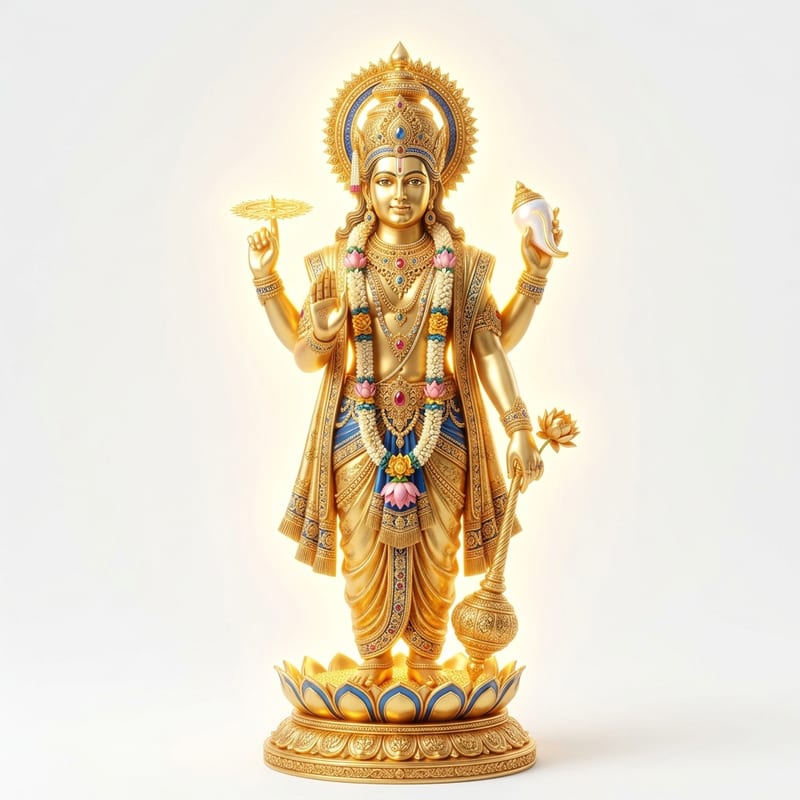
- dhyānammeditation
anvaya dhyānam
note A heading. The two verses that follow are the dhyāna, the picture of the god that is held in mind before the mantras are said.
rogānme nāśayā'śeṣānāśu dhanvantare hare |
ārogyaṃ dīrghamāyuṣyaṃ balaṃ tejo dhiyaṃ śriyaṃ
svabhaktebhyo'nugṛhṇantaṃ vande dhanvantariṃ harim ||
- acyutaO Achyuta, who never slips
- anantaO Ananta, who has no end
- govindaO Govinda
- viṣṇoO Vishnu
- nārāyaṇaO Narayana
- amṛtaO nectar of life
- rogānthe diseases
- memy
- nāśayaput an end to
- aśeṣānall of them
- āśuquickly
- dhanvantareO Dhanvantari
- hareO Hari
- ārogyamhealth
- dīrghamlong
- āyuṣyamlife
- balamstrength
- tejaḥbrightness
- dhiyamunderstanding
- śriyamprosperity
- svabhaktebhyaḥon those who love him
- anugṛhṇantamwho gives all this freely
- vandeI bow to
- dhanvantarimDhanvantari
- harimHari
anvaya acyuta ananta govinda viṣṇo nārāyaṇa amṛta dhanvantare hare me aśeṣān rogān āśu nāśaya svabhaktebhyaḥ ārogyam dīrgham āyuṣyam balam tejaḥ dhiyam śriyam anugṛhṇantam dhanvantarim harim vande
chandas Anuṣṭubh, 8 syllables to a pāda; the block holds two verses
dhanvantare O Dhanvantari — The physician of the gods, who came up out of the churned sea holding the pot of nectar. Ayurveda is taught in his name.
amṛta O nectar of life — Amṛta is what does not die, and the drink that keeps death away. It is one of the six names the first line calls him by.
anugṛhṇantam who gives all this freely — Anugraha is the favour shown by someone in a position to withhold it. Six things are asked for, health first.
note The first half calls on him by six names and asks for the diseases to go. The second half lists what is asked for in their place and ends with the bow.
sūkṣmasvacchātihṛdyāṃśuka parivilasanmaulimambhojanetram |
kālāmbhodojjvalāṅgaṃ kaṭitaṭavilasaccārupītāmbarāḍhyam |
vande dhanvantariṃ taṃ nikhilagadavanaprauḍhadāvāgnilīlam ||
- śaṅkhama conch
- cakrama discus
- jalaukāma leech
- dadhatholding
- amṛtaghaṭamthe pot of nectar
- cārudorbhiḥwith fine arms
- caturbhiḥfour
- sūkṣmasvacchātihṛdyāṃśukaparivilasanmaulimabout whose head a soft, clear, very pleasing cloth shines
- ambhojanetramwhose eyes are lotuses
- kālāmbhodojjvalāṅgamwhose body shines like a dark rain cloud
- kaṭitaṭavilasaccārupītāmbarāḍhyamrich with a fine yellow cloth bright at the waist
- vandeI bow to
- dhanvantarimDhanvantari
- tamthat one
- nikhilagadavanaprauḍhadāvāgnilīlamwhose play is the full-grown forest fire in the thicket of every disease
anvaya caturbhiḥ cārudorbhiḥ śaṅkham cakram jalaukām amṛtaghaṭam dadhat sūkṣmasvacchātihṛdyāṃśukaparivilasanmaulim ambhojanetram kālāmbhodojjvalāṅgam kaṭitaṭavilasaccārupītāmbarāḍhyam nikhilagadavanaprauḍhadāvāgnilīlam tam dhanvantarim vande
chandas Sragdharā, 21 syllables in each of 4 pādas
jalaukām a leech — Two of his four hands hold Vishnu's conch and discus. The other two hold a physician's kit: the leech used for drawing blood, and the pot of medicine.
dāvāgni a forest fire — Disease is pictured as a thicket of trees and his work as the fire that goes through it. The word līlā at the end makes it something he does easily.
kālāmbhoda a dark rain cloud — Kāla is black and ambhoda a cloud. It is the colour Vishnu is described in, and it also promises rain.
note The metre changes to Sragdharā, whose long pādas let the whole figure be described in one sweep, head to waist and then what he does.
anārogyaṃ na teṣāṃ syāt sukhaṃ jīvanti te ciram ||
- dhanvantareḥof Dhanvantari
- imamthis
- ślokamverse
- bhaktyāwith love
- nityamevery day
- paṭhantirecite
- yethose who
- anārogyamill health
- nanot
- teṣāmfor them
- syātwould there be
- sukhamin comfort
- jīvantithey live
- tethey
- ciramfor a long time
anvaya ye dhanvantareḥ imam ślokam bhaktyā nityam paṭhanti teṣām anārogyam na syāt te ciram sukham jīvanti
chandas Anuṣṭubh, 8 syllables in each of 4 pādas
anārogyam ill health — Said the long way round, as the absence of ārogya, health. Ārogya itself is built the same way, from roga, disease.
note The phalashruti of the two dhyāna verses. What follows it is no longer verse but the mantras themselves.
- mantramthe mantra
anvaya mantram
note A heading for the prose mantra below it.
- oṃOm
- namaḥsalutation
- bhagavateto the Lord
- vāsudevāyato Vasudeva
- dhanvantarayeto Dhanvantari
- amṛtakalaśahastāyato the one with the pot of nectar in his hand
- vajrajalaukahastāyato the one with the diamond leech in his hand
- sarvāmayavināśanāyato the destroyer of every illness
- trailokyanāthāyato the lord of the three worlds
- śrīmahāviṣṇaveto Shri Mahavishnu
- svāhāsvaha
anvaya oṃ bhagavate vāsudevāya dhanvantaraye amṛtakalaśahastāya vajrajalaukahastāya sarvāmayavināśanāya trailokyanāthāya śrīmahāviṣṇave namaḥ svāhā
svāhā svaha — The word said as an offering goes into the fire. It has no meaning to translate and is left as the sound it is.
vajrajalaukahastāya to the one with the diamond leech in his hand — Printed in brackets as another reading for अमृतकलशहस्ताय. Both hands are a physician's: the pot in one reading, the leech in the other.
note This is prose rather than verse, so there is no metre to give. The mantra is a string of datives, and the namaḥ at the front and the svāhā at the end hold them all.
- pāṭhāntaraḥanother reading
anvaya pāṭhāntaraḥ
note A note in the text itself, marking the longer form of the mantra that follows as a variant of the one above.
- oṃOm
- namaḥsalutation
- bhagavateto the Lord
- mahāsudarśanāyato the great Sudarshana
- vāsudevāyato Vasudeva
- dhanvantarayeto Dhanvantari
- amṛtakalaśahastāyato the one with the pot of nectar in his hand
- sarvabhayavināśāyato the undoing of every fear
- sarvaroganivāraṇāyato the one who keeps off every disease
- trailokyapatayeto the master of the three worlds
- trailokyanidhayeto the store of the three worlds
- śrīmahāviṣṇusvarūpaO form of Shri Mahavishnu
- śrīdhanvantarīsvarūpaO form of Shri Dhanvantari
- śrīShri
- śrīShri
- śrīShri
- auṣadhacakranārāyaṇāyato Narayana of the wheel of medicines
- svāhāsvaha
anvaya oṃ bhagavate mahāsudarśanāya vāsudevāya dhanvantaraye amṛtakalaśahastāya sarvabhayavināśāya sarvaroganivāraṇāya trailokyapataye trailokyanidhaye śrīmahāviṣṇusvarūpa śrīdhanvantarīsvarūpa śrī śrī śrī auṣadhacakranārāyaṇāya namaḥ svāhā
mahāsudarśanāya to the great Sudarshana — Sudarshana is Vishnu's discus, worshipped as a deity in its own right. Bringing it into a healing mantra puts a weapon on the side of the patient.
auṣadhacakranārāyaṇāya to Narayana of the wheel of medicines — Auṣadha is a herb or a drug. The wheel of medicines sets the discus and the pharmacy side by side.
śrī śrī śrī Shri, three times — Said three times as a mark of honour, the way a title is written out in full at the head of a letter.
note The longer of the two forms, and the one used where the shorter is thought too brief. It names the fears and the diseases it is against, which the shorter form leaves unsaid.
- gāyatrīGayatri
- mantramthe mantra
anvaya gāyatrī mantram
note A heading. What follows is a deity gayatri, built on the pattern of the Gayatri mantra with this god's names put into it.
tanno dhanvantariḥ pracodayāt |
- oṃOm
- vāsudevāyaof Vasudeva
- vidmahemay we know
- sudhāhastāyaof the one with nectar in his hand
- dhīmahiwe meditate
- tatthat
- naḥus
- dhanvantariḥDhanvantari
- pracodayātmay he set moving
anvaya oṃ vāsudevāya vidmahe sudhāhastāya dhīmahi tat dhanvantariḥ naḥ pracodayāt
chandas Gāyatrī, 3 pādas of 8 syllables
vidmahe dhīmahi may we know, we meditate — The two verbs of the Gayatri mantra, kept in place. A deity gayatri changes the names and leaves this frame standing.
sudhāhastāya of the one with nectar in his hand — Sudhā is nectar, another word for amṛta. The hand that holds it is what marks Dhanvantari out.
pracodayāt may he set moving — The last word of the Gayatri mantra, kept here as it stands. What is asked is that he start the mind going.
note Every god has a gayatri made this way, on the frame of Rig Veda 3.62.10. Read against that verse, the changes are the whole content.
oṃ dhaṃ dhanvantaraye namaḥ |
- tārakamantramthe taraka mantra
- oṃOm
- dhaṃdhaṃ
- dhanvantarayeto Dhanvantari
- namaḥsalutation
anvaya tārakamantram oṃ dhaṃ dhanvantaraye namaḥ
dhaṃ dhaṃ — A bija, a seed sound. It is the first sound of the name Dhanvantari made into a syllable of its own, and it is left as a sound rather than given a meaning.
tārakamantram the taraka mantra — From tāraka, what carries across. It is the shortest of the forms here, meant to be said many times over.
note The last of the four mantras and the shortest: the seed sound, the name and the bow.