
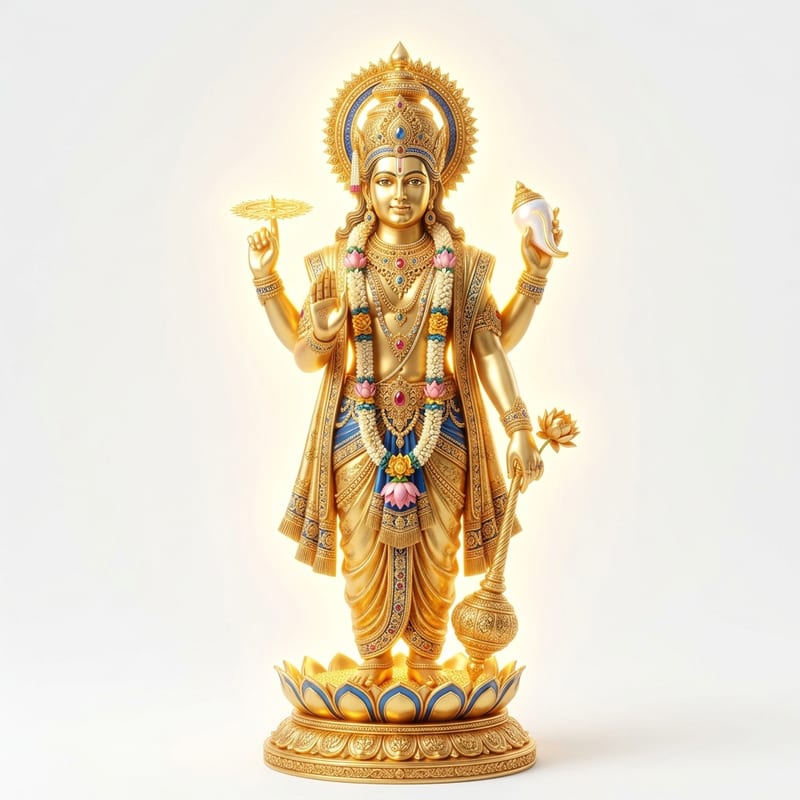
- ધ્યાનમ્ (dhyānam)meditation
anvaya ધ્યાનમ્
note A heading. The two verses that follow are the dhyāna, the picture of the god that is held in mind before the mantras are said.
રોગાન્મે નાશયાઽશેષાનાશુ ધન્વન્તરે હરે ।
આરોગ્યં દીર્ઘમાયુષ્યં બલં તેજો ધિયં શ્રિયં
સ્વભક્તેભ્યોઽનુગૃહ્ણન્તં વન્દે ધન્વન્તરિં હરિમ્ ॥
- અચ્યુત (acyuta)O Achyuta, who never slips
- અનન્ત (ananta)O Ananta, who has no end
- ગોવિન્દ (govinda)O Govinda
- વિષ્ણો (viṣṇo)O Vishnu
- નારાયણ (nārāyaṇa)O Narayana
- અમૃત (amṛta)O nectar of life
- રોગાન્ (rogān)the diseases
- મે (me)my
- નાશય (nāśaya)put an end to
- અશેષાન્ (aśeṣān)all of them
- આશુ (āśu)quickly
- ધન્વન્તરે (dhanvantare)O Dhanvantari
- હરે (hare)O Hari
- આરોગ્યમ્ (ārogyam)health
- દીર્ઘમ્ (dīrgham)long
- આયુષ્યમ્ (āyuṣyam)life
- બલમ્ (balam)strength
- તેજઃ (tejaḥ)brightness
- ધિયમ્ (dhiyam)understanding
- શ્રિયમ્ (śriyam)prosperity
- સ્વભક્તેભ્યઃ (svabhaktebhyaḥ)on those who love him
- અનુગૃહ્ણન્તમ્ (anugṛhṇantam)who gives all this freely
- વન્દે (vande)I bow to
- ધન્વન્તરિમ્ (dhanvantarim)Dhanvantari
- હરિમ્ (harim)Hari
anvaya અચ્યુત અનન્ત ગોવિન્દ વિષ્ણો નારાયણ અમૃત ધન્વન્તરે હરે મે અશેષાન્ રોગાન્ આશુ નાશય સ્વભક્તેભ્યઃ આરોગ્યમ્ દીર્ઘમ્ આયુષ્યમ્ બલમ્ તેજઃ ધિયમ્ શ્રિયમ્ અનુગૃહ્ણન્તમ્ ધન્વન્તરિમ્ હરિમ્ વન્દે
chandas Anuṣṭubh, 8 syllables to a pāda; the block holds two verses
ધન્વન્તરે O Dhanvantari — The physician of the gods, who came up out of the churned sea holding the pot of nectar. Ayurveda is taught in his name.
અમૃત O nectar of life — Amṛta is what does not die, and the drink that keeps death away. It is one of the six names the first line calls him by.
અનુગૃહ્ણન્તમ્ who gives all this freely — Anugraha is the favour shown by someone in a position to withhold it. Six things are asked for, health first.
note The first half calls on him by six names and asks for the diseases to go. The second half lists what is asked for in their place and ends with the bow.
સૂક્ષ્મસ્વચ્છાતિહૃદ્યાંશુક પરિવિલસન્મૌલિમમ્ભોજનેત્રમ્ ।
કાલામ્ભોદોજ્જ્વલાઙ્ગં કટિતટવિલસચ્ચારુપીતામ્બરાઢ્યમ્ ।
વન્દે ધન્વન્તરિં તં નિખિલગદવનપ્રૌઢદાવાગ્નિલીલમ્ ॥
- શઙ્ખમ્ (śaṅkham)a conch
- ચક્રમ્ (cakram)a discus
- જલૌકામ્ (jalaukām)a leech
- દધત્ (dadhat)holding
- અમૃતઘટમ્ (amṛtaghaṭam)the pot of nectar
- ચારુદોર્ભિઃ (cārudorbhiḥ)with fine arms
- ચતુર્ભિઃ (caturbhiḥ)four
- સૂક્ષ્મસ્વચ્છાતિહૃદ્યાંશુકપરિવિલસન્મૌલિમ્ (sūkṣmasvacchātihṛdyāṃśukaparivilasanmaulim)about whose head a soft, clear, very pleasing cloth shines
- અમ્ભોજનેત્રમ્ (ambhojanetram)whose eyes are lotuses
- કાલામ્ભોદોજ્જ્વલાઙ્ગમ્ (kālāmbhodojjvalāṅgam)whose body shines like a dark rain cloud
- કટિતટવિલસચ્ચારુપીતામ્બરાઢ્યમ્ (kaṭitaṭavilasaccārupītāmbarāḍhyam)rich with a fine yellow cloth bright at the waist
- વન્દે (vande)I bow to
- ધન્વન્તરિમ્ (dhanvantarim)Dhanvantari
- તમ્ (tam)that one
- નિખિલગદવનપ્રૌઢદાવાગ્નિલીલમ્ (nikhilagadavanaprauḍhadāvāgnilīlam)whose play is the full-grown forest fire in the thicket of every disease
anvaya ચતુર્ભિઃ ચારુદોર્ભિઃ શઙ્ખમ્ ચક્રમ્ જલૌકામ્ અમૃતઘટમ્ દધત્ સૂક્ષ્મસ્વચ્છાતિહૃદ્યાંશુકપરિવિલસન્મૌલિમ્ અમ્ભોજનેત્રમ્ કાલામ્ભોદોજ્જ્વલાઙ્ગમ્ કટિતટવિલસચ્ચારુપીતામ્બરાઢ્યમ્ નિખિલગદવનપ્રૌઢદાવાગ્નિલીલમ્ તમ્ ધન્વન્તરિમ્ વન્દે
chandas Sragdharā, 21 syllables in each of 4 pādas
જલૌકામ્ a leech — Two of his four hands hold Vishnu's conch and discus. The other two hold a physician's kit: the leech used for drawing blood, and the pot of medicine.
દાવાગ્નિ a forest fire — Disease is pictured as a thicket of trees and his work as the fire that goes through it. The word līlā at the end makes it something he does easily.
કાલામ્ભોદ a dark rain cloud — Kāla is black and ambhoda a cloud. It is the colour Vishnu is described in, and it also promises rain.
note The metre changes to Sragdharā, whose long pādas let the whole figure be described in one sweep, head to waist and then what he does.
અનારોગ્યં ન તેષાં સ્યાત્ સુખં જીવન્તિ તે ચિરમ્ ॥
- ધન્વન્તરેઃ (dhanvantareḥ)of Dhanvantari
- ઇમમ્ (imam)this
- શ્લોકમ્ (ślokam)verse
- ભક્ત્યા (bhaktyā)with love
- નિત્યમ્ (nityam)every day
- પઠન્તિ (paṭhanti)recite
- યે (ye)those who
- અનારોગ્યમ્ (anārogyam)ill health
- ન (na)not
- તેષામ્ (teṣām)for them
- સ્યાત્ (syāt)would there be
- સુખમ્ (sukham)in comfort
- જીવન્તિ (jīvanti)they live
- તે (te)they
- ચિરમ્ (ciram)for a long time
anvaya યે ધન્વન્તરેઃ ઇમમ્ શ્લોકમ્ ભક્ત્યા નિત્યમ્ પઠન્તિ તેષામ્ અનારોગ્યમ્ ન સ્યાત્ તે ચિરમ્ સુખમ્ જીવન્તિ
chandas Anuṣṭubh, 8 syllables in each of 4 pādas
અનારોગ્યમ્ ill health — Said the long way round, as the absence of ārogya, health. Ārogya itself is built the same way, from roga, disease.
note The phalashruti of the two dhyāna verses. What follows it is no longer verse but the mantras themselves.
- મન્ત્રમ્ (mantram)the mantra
anvaya મન્ત્રમ્
note A heading for the prose mantra below it.
- ૐ (oṃ)Om
- નમઃ (namaḥ)salutation
- ભગવતે (bhagavate)to the Lord
- વાસુદેવાય (vāsudevāya)to Vasudeva
- ધન્વન્તરયે (dhanvantaraye)to Dhanvantari
- અમૃતકલશહસ્તાય (amṛtakalaśahastāya)to the one with the pot of nectar in his hand
- વજ્રજલૌકહસ્તાય (vajrajalaukahastāya)to the one with the diamond leech in his hand
- સર્વામયવિનાશનાય (sarvāmayavināśanāya)to the destroyer of every illness
- ત્રૈલોક્યનાથાય (trailokyanāthāya)to the lord of the three worlds
- શ્રીમહાવિષ્ણવે (śrīmahāviṣṇave)to Shri Mahavishnu
- સ્વાહા (svāhā)svaha
anvaya ૐ ભગવતે વાસુદેવાય ધન્વન્તરયે અમૃતકલશહસ્તાય વજ્રજલૌકહસ્તાય સર્વામયવિનાશનાય ત્રૈલોક્યનાથાય શ્રીમહાવિષ્ણવે નમઃ સ્વાહા
સ્વાહા svaha — The word said as an offering goes into the fire. It has no meaning to translate and is left as the sound it is.
વજ્રજલૌકહસ્તાય to the one with the diamond leech in his hand — Printed in brackets as another reading for अमृतकलशहस्ताय. Both hands are a physician's: the pot in one reading, the leech in the other.
note This is prose rather than verse, so there is no metre to give. The mantra is a string of datives, and the નમઃ at the front and the સ્વાહા at the end hold them all.
- પાઠાન્તરઃ (pāṭhāntaraḥ)another reading
anvaya પાઠાન્તરઃ
note A note in the text itself, marking the longer form of the mantra that follows as a variant of the one above.
- ૐ (oṃ)Om
- નમઃ (namaḥ)salutation
- ભગવતે (bhagavate)to the Lord
- મહાસુદર્શનાય (mahāsudarśanāya)to the great Sudarshana
- વાસુદેવાય (vāsudevāya)to Vasudeva
- ધન્વન્તરયે (dhanvantaraye)to Dhanvantari
- અમૃતકલશહસ્તાય (amṛtakalaśahastāya)to the one with the pot of nectar in his hand
- સર્વભયવિનાશાય (sarvabhayavināśāya)to the undoing of every fear
- સર્વરોગનિવારણાય (sarvaroganivāraṇāya)to the one who keeps off every disease
- ત્રૈલોક્યપતયે (trailokyapataye)to the master of the three worlds
- ત્રૈલોક્યનિધયે (trailokyanidhaye)to the store of the three worlds
- શ્રીમહાવિષ્ણુસ્વરૂપ (śrīmahāviṣṇusvarūpa)O form of Shri Mahavishnu
- શ્રીધન્વન્તરીસ્વરૂપ (śrīdhanvantarīsvarūpa)O form of Shri Dhanvantari
- શ્રી (śrī)Shri
- શ્રી (śrī)Shri
- શ્રી (śrī)Shri
- ઔષધચક્રનારાયણાય (auṣadhacakranārāyaṇāya)to Narayana of the wheel of medicines
- સ્વાહા (svāhā)svaha
anvaya ૐ ભગવતે મહાસુદર્શનાય વાસુદેવાય ધન્વન્તરયે અમૃતકલશહસ્તાય સર્વભયવિનાશાય સર્વરોગનિવારણાય ત્રૈલોક્યપતયે ત્રૈલોક્યનિધયે શ્રીમહાવિષ્ણુસ્વરૂપ શ્રીધન્વન્તરીસ્વરૂપ શ્રી શ્રી શ્રી ઔષધચક્રનારાયણાય નમઃ સ્વાહા
મહાસુદર્શનાય to the great Sudarshana — Sudarshana is Vishnu's discus, worshipped as a deity in its own right. Bringing it into a healing mantra puts a weapon on the side of the patient.
ઔષધચક્રનારાયણાય to Narayana of the wheel of medicines — Auṣadha is a herb or a drug. The wheel of medicines sets the discus and the pharmacy side by side.
શ્રી શ્રી શ્રી Shri, three times — Said three times as a mark of honour, the way a title is written out in full at the head of a letter.
note The longer of the two forms, and the one used where the shorter is thought too brief. It names the fears and the diseases it is against, which the shorter form leaves unsaid.
- ગાયત્રી (gāyatrī)Gayatri
- મન્ત્રમ્ (mantram)the mantra
anvaya ગાયત્રી મન્ત્રમ્
note A heading. What follows is a deity gayatri, built on the pattern of the Gayatri mantra with this god's names put into it.
તન્નો ધન્વન્તરિઃ પ્રચોદયાત્ ।
- ૐ (oṃ)Om
- વાસુદેવાય (vāsudevāya)of Vasudeva
- વિદ્મહે (vidmahe)may we know
- સુધાહસ્તાય (sudhāhastāya)of the one with nectar in his hand
- ધીમહિ (dhīmahi)we meditate
- તત્ (tat)that
- નઃ (naḥ)us
- ધન્વન્તરિઃ (dhanvantariḥ)Dhanvantari
- પ્રચોદયાત્ (pracodayāt)may he set moving
anvaya ૐ વાસુદેવાય વિદ્મહે સુધાહસ્તાય ધીમહિ તત્ ધન્વન્તરિઃ નઃ પ્રચોદયાત્
chandas Gāyatrī, 3 pādas of 8 syllables
વિદ્મહે ધીમહિ may we know, we meditate — The two verbs of the Gayatri mantra, kept in place. A deity gayatri changes the names and leaves this frame standing.
સુધાહસ્તાય of the one with nectar in his hand — Sudhā is nectar, another word for amṛta. The hand that holds it is what marks Dhanvantari out.
પ્રચોદયાત્ may he set moving — The last word of the Gayatri mantra, kept here as it stands. What is asked is that he start the mind going.
note Every god has a gayatri made this way, on the frame of Rig Veda 3.62.10. Read against that verse, the changes are the whole content.
ૐ ધં ધન્વન્તરયે નમઃ ।
- તારકમન્ત્રમ્ (tārakamantram)the taraka mantra
- ૐ (oṃ)Om
- ધં (dhaṃ)dhaṃ
- ધન્વન્તરયે (dhanvantaraye)to Dhanvantari
- નમઃ (namaḥ)salutation
anvaya તારકમન્ત્રમ્ ૐ ધં ધન્વન્તરયે નમઃ
ધં dhaṃ — A bija, a seed sound. It is the first sound of the name Dhanvantari made into a syllable of its own, and it is left as a sound rather than given a meaning.
તારકમન્ત્રમ્ the taraka mantra — From tāraka, what carries across. It is the shortest of the forms here, meant to be said many times over.
note The last of the four mantras and the shortest: the seed sound, the name and the bow.