
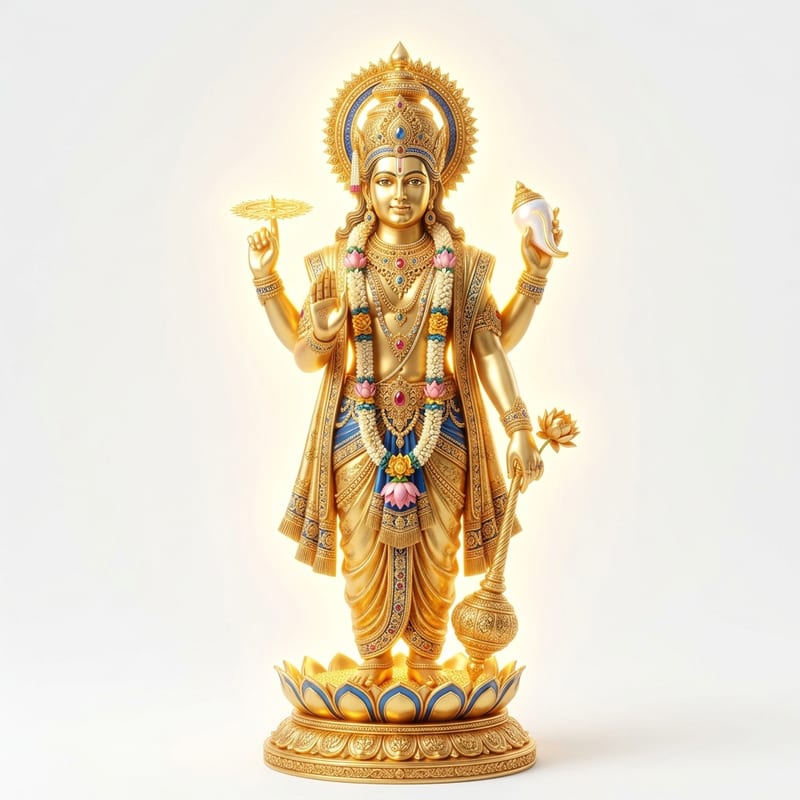
- ധ്യാനമ് (dhyānam)meditation
anvaya ധ്യാനമ്
note A heading. The two verses that follow are the dhyāna, the picture of the god that is held in mind before the mantras are said.
രോഗാന്മേ നാശയാഽശേഷാനാശു ധന്വന്തരേ ഹരേ ।
ആരോഗ്യം ദീര്ഘമായുഷ്യം ബലം തേജോ ധിയം ശ്രിയം
സ്വഭക്തേഭ്യോഽനുഗൃഹ്ണന്തം വന്ദേ ധന്വന്തരിം ഹരിമ് ॥
- അച്യുത (acyuta)O Achyuta, who never slips
- അനന്ത (ananta)O Ananta, who has no end
- ഗോവിന്ദ (govinda)O Govinda
- വിഷ്ണോ (viṣṇo)O Vishnu
- നാരായണ (nārāyaṇa)O Narayana
- അമൃത (amṛta)O nectar of life
- രോഗാന് (rogān)the diseases
- മേ (me)my
- നാശയ (nāśaya)put an end to
- അശേഷാന് (aśeṣān)all of them
- ആശു (āśu)quickly
- ധന്വന്തരേ (dhanvantare)O Dhanvantari
- ഹരേ (hare)O Hari
- ആരോഗ്യമ് (ārogyam)health
- ദീര്ഘമ് (dīrgham)long
- ആയുഷ്യമ് (āyuṣyam)life
- ബലമ് (balam)strength
- തേജഃ (tejaḥ)brightness
- ധിയമ് (dhiyam)understanding
- ശ്രിയമ് (śriyam)prosperity
- സ്വഭക്തേഭ്യഃ (svabhaktebhyaḥ)on those who love him
- അനുഗൃഹ്ണന്തമ് (anugṛhṇantam)who gives all this freely
- വന്ദേ (vande)I bow to
- ധന്വന്തരിമ് (dhanvantarim)Dhanvantari
- ഹരിമ് (harim)Hari
anvaya അച്യുത അനന്ത ഗോവിന്ദ വിഷ്ണോ നാരായണ അമൃത ധന്വന്തരേ ഹരേ മേ അശേഷാന് രോഗാന് ആശു നാശയ സ്വഭക്തേഭ്യഃ ആരോഗ്യമ് ദീര്ഘമ് ആയുഷ്യമ് ബലമ് തേജഃ ധിയമ് ശ്രിയമ് അനുഗൃഹ്ണന്തമ് ധന്വന്തരിമ് ഹരിമ് വന്ദേ
chandas Anuṣṭubh, 8 syllables to a pāda; the block holds two verses
ധന്വന്തരേ O Dhanvantari — The physician of the gods, who came up out of the churned sea holding the pot of nectar. Ayurveda is taught in his name.
അമൃത O nectar of life — Amṛta is what does not die, and the drink that keeps death away. It is one of the six names the first line calls him by.
അനുഗൃഹ്ണന്തമ് who gives all this freely — Anugraha is the favour shown by someone in a position to withhold it. Six things are asked for, health first.
note The first half calls on him by six names and asks for the diseases to go. The second half lists what is asked for in their place and ends with the bow.
സൂക്ഷ്മസ്വച്ഛാതിഹൃദ്യാംശുക പരിവിലസന്മൌലിമമ്ഭോജനേത്രമ് ।
കാലാമ്ഭോദോജ്ജ്വലാങ്ഗം കടിതടവിലസച്ചാരുപീതാമ്ബരാഢ്യമ് ।
വന്ദേ ധന്വന്തരിം തം നിഖിലഗദവനപ്രൌഢദാവാഗ്നിലീലമ് ॥
- ശങ്ഖമ് (śaṅkham)a conch
- ചക്രമ് (cakram)a discus
- ജലൌകാമ് (jalaukām)a leech
- ദധത് (dadhat)holding
- അമൃതഘടമ് (amṛtaghaṭam)the pot of nectar
- ചാരുദോര്ഭിഃ (cārudorbhiḥ)with fine arms
- ചതുര്ഭിഃ (caturbhiḥ)four
- സൂക്ഷ്മസ്വച്ഛാതിഹൃദ്യാംശുകപരിവിലസന്മൌലിമ് (sūkṣmasvacchātihṛdyāṃśukaparivilasanmaulim)about whose head a soft, clear, very pleasing cloth shines
- അമ്ഭോജനേത്രമ് (ambhojanetram)whose eyes are lotuses
- കാലാമ്ഭോദോജ്ജ്വലാങ്ഗമ് (kālāmbhodojjvalāṅgam)whose body shines like a dark rain cloud
- കടിതടവിലസച്ചാരുപീതാമ്ബരാഢ്യമ് (kaṭitaṭavilasaccārupītāmbarāḍhyam)rich with a fine yellow cloth bright at the waist
- വന്ദേ (vande)I bow to
- ധന്വന്തരിമ് (dhanvantarim)Dhanvantari
- തമ് (tam)that one
- നിഖിലഗദവനപ്രൌഢദാവാഗ്നിലീലമ് (nikhilagadavanaprauḍhadāvāgnilīlam)whose play is the full-grown forest fire in the thicket of every disease
anvaya ചതുര്ഭിഃ ചാരുദോര്ഭിഃ ശങ്ഖമ് ചക്രമ് ജലൌകാമ് അമൃതഘടമ് ദധത് സൂക്ഷ്മസ്വച്ഛാതിഹൃദ്യാംശുകപരിവിലസന്മൌലിമ് അമ്ഭോജനേത്രമ് കാലാമ്ഭോദോജ്ജ്വലാങ്ഗമ് കടിതടവിലസച്ചാരുപീതാമ്ബരാഢ്യമ് നിഖിലഗദവനപ്രൌഢദാവാഗ്നിലീലമ് തമ് ധന്വന്തരിമ് വന്ദേ
chandas Sragdharā, 21 syllables in each of 4 pādas
ജലൌകാമ് a leech — Two of his four hands hold Vishnu's conch and discus. The other two hold a physician's kit: the leech used for drawing blood, and the pot of medicine.
ദാവാഗ്നി a forest fire — Disease is pictured as a thicket of trees and his work as the fire that goes through it. The word līlā at the end makes it something he does easily.
കാലാമ്ഭോദ a dark rain cloud — Kāla is black and ambhoda a cloud. It is the colour Vishnu is described in, and it also promises rain.
note The metre changes to Sragdharā, whose long pādas let the whole figure be described in one sweep, head to waist and then what he does.
അനാരോഗ്യം ന തേഷാം സ്യാത് സുഖം ജീവന്തി തേ ചിരമ് ॥
- ധന്വന്തരേഃ (dhanvantareḥ)of Dhanvantari
- ഇമമ് (imam)this
- ശ്ലോകമ് (ślokam)verse
- ഭക്ത്യാ (bhaktyā)with love
- നിത്യമ് (nityam)every day
- പഠന്തി (paṭhanti)recite
- യേ (ye)those who
- അനാരോഗ്യമ് (anārogyam)ill health
- ന (na)not
- തേഷാമ് (teṣām)for them
- സ്യാത് (syāt)would there be
- സുഖമ് (sukham)in comfort
- ജീവന്തി (jīvanti)they live
- തേ (te)they
- ചിരമ് (ciram)for a long time
anvaya യേ ധന്വന്തരേഃ ഇമമ് ശ്ലോകമ് ഭക്ത്യാ നിത്യമ് പഠന്തി തേഷാമ് അനാരോഗ്യമ് ന സ്യാത് തേ ചിരമ് സുഖമ് ജീവന്തി
chandas Anuṣṭubh, 8 syllables in each of 4 pādas
അനാരോഗ്യമ് ill health — Said the long way round, as the absence of ārogya, health. Ārogya itself is built the same way, from roga, disease.
note The phalashruti of the two dhyāna verses. What follows it is no longer verse but the mantras themselves.
- മന്ത്രമ് (mantram)the mantra
anvaya മന്ത്രമ്
note A heading for the prose mantra below it.
- ഓം (oṃ)Om
- നമഃ (namaḥ)salutation
- ഭഗവതേ (bhagavate)to the Lord
- വാസുദേവായ (vāsudevāya)to Vasudeva
- ധന്വന്തരയേ (dhanvantaraye)to Dhanvantari
- അമൃതകലശഹസ്തായ (amṛtakalaśahastāya)to the one with the pot of nectar in his hand
- വജ്രജലൌകഹസ്തായ (vajrajalaukahastāya)to the one with the diamond leech in his hand
- സര്വാമയവിനാശനായ (sarvāmayavināśanāya)to the destroyer of every illness
- ത്രൈലോക്യനാഥായ (trailokyanāthāya)to the lord of the three worlds
- ശ്രീമഹാവിഷ്ണവേ (śrīmahāviṣṇave)to Shri Mahavishnu
- സ്വാഹാ (svāhā)svaha
anvaya ഓം ഭഗവതേ വാസുദേവായ ധന്വന്തരയേ അമൃതകലശഹസ്തായ വജ്രജലൌകഹസ്തായ സര്വാമയവിനാശനായ ത്രൈലോക്യനാഥായ ശ്രീമഹാവിഷ്ണവേ നമഃ സ്വാഹാ
സ്വാഹാ svaha — The word said as an offering goes into the fire. It has no meaning to translate and is left as the sound it is.
വജ്രജലൌകഹസ്തായ to the one with the diamond leech in his hand — Printed in brackets as another reading for अमृतकलशहस्ताय. Both hands are a physician's: the pot in one reading, the leech in the other.
note This is prose rather than verse, so there is no metre to give. The mantra is a string of datives, and the നമഃ at the front and the സ്വാഹാ at the end hold them all.
- പാഠാന്തരഃ (pāṭhāntaraḥ)another reading
anvaya പാഠാന്തരഃ
note A note in the text itself, marking the longer form of the mantra that follows as a variant of the one above.
- ഓം (oṃ)Om
- നമഃ (namaḥ)salutation
- ഭഗവതേ (bhagavate)to the Lord
- മഹാസുദര്ശനായ (mahāsudarśanāya)to the great Sudarshana
- വാസുദേവായ (vāsudevāya)to Vasudeva
- ധന്വന്തരയേ (dhanvantaraye)to Dhanvantari
- അമൃതകലശഹസ്തായ (amṛtakalaśahastāya)to the one with the pot of nectar in his hand
- സര്വഭയവിനാശായ (sarvabhayavināśāya)to the undoing of every fear
- സര്വരോഗനിവാരണായ (sarvaroganivāraṇāya)to the one who keeps off every disease
- ത്രൈലോക്യപതയേ (trailokyapataye)to the master of the three worlds
- ത്രൈലോക്യനിധയേ (trailokyanidhaye)to the store of the three worlds
- ശ്രീമഹാവിഷ്ണുസ്വരൂപ (śrīmahāviṣṇusvarūpa)O form of Shri Mahavishnu
- ശ്രീധന്വന്തരീസ്വരൂപ (śrīdhanvantarīsvarūpa)O form of Shri Dhanvantari
- ശ്രീ (śrī)Shri
- ശ്രീ (śrī)Shri
- ശ്രീ (śrī)Shri
- ഔഷധചക്രനാരായണായ (auṣadhacakranārāyaṇāya)to Narayana of the wheel of medicines
- സ്വാഹാ (svāhā)svaha
anvaya ഓം ഭഗവതേ മഹാസുദര്ശനായ വാസുദേവായ ധന്വന്തരയേ അമൃതകലശഹസ്തായ സര്വഭയവിനാശായ സര്വരോഗനിവാരണായ ത്രൈലോക്യപതയേ ത്രൈലോക്യനിധയേ ശ്രീമഹാവിഷ്ണുസ്വരൂപ ശ്രീധന്വന്തരീസ്വരൂപ ശ്രീ ശ്രീ ശ്രീ ഔഷധചക്രനാരായണായ നമഃ സ്വാഹാ
മഹാസുദര്ശനായ to the great Sudarshana — Sudarshana is Vishnu's discus, worshipped as a deity in its own right. Bringing it into a healing mantra puts a weapon on the side of the patient.
ഔഷധചക്രനാരായണായ to Narayana of the wheel of medicines — Auṣadha is a herb or a drug. The wheel of medicines sets the discus and the pharmacy side by side.
ശ്രീ ശ്രീ ശ്രീ Shri, three times — Said three times as a mark of honour, the way a title is written out in full at the head of a letter.
note The longer of the two forms, and the one used where the shorter is thought too brief. It names the fears and the diseases it is against, which the shorter form leaves unsaid.
- ഗായത്രീ (gāyatrī)Gayatri
- മന്ത്രമ് (mantram)the mantra
anvaya ഗായത്രീ മന്ത്രമ്
note A heading. What follows is a deity gayatri, built on the pattern of the Gayatri mantra with this god's names put into it.
തന്നോ ധന്വന്തരിഃ പ്രചോദയാത് ।
- ഓം (oṃ)Om
- വാസുദേവായ (vāsudevāya)of Vasudeva
- വിദ്മഹേ (vidmahe)may we know
- സുധാഹസ്തായ (sudhāhastāya)of the one with nectar in his hand
- ധീമഹി (dhīmahi)we meditate
- തത് (tat)that
- നഃ (naḥ)us
- ധന്വന്തരിഃ (dhanvantariḥ)Dhanvantari
- പ്രചോദയാത് (pracodayāt)may he set moving
anvaya ഓം വാസുദേവായ വിദ്മഹേ സുധാഹസ്തായ ധീമഹി തത് ധന്വന്തരിഃ നഃ പ്രചോദയാത്
chandas Gāyatrī, 3 pādas of 8 syllables
വിദ്മഹേ ധീമഹി may we know, we meditate — The two verbs of the Gayatri mantra, kept in place. A deity gayatri changes the names and leaves this frame standing.
സുധാഹസ്തായ of the one with nectar in his hand — Sudhā is nectar, another word for amṛta. The hand that holds it is what marks Dhanvantari out.
പ്രചോദയാത് may he set moving — The last word of the Gayatri mantra, kept here as it stands. What is asked is that he start the mind going.
note Every god has a gayatri made this way, on the frame of Rig Veda 3.62.10. Read against that verse, the changes are the whole content.
ഓം ധം ധന്വന്തരയേ നമഃ ।
- താരകമന്ത്രമ് (tārakamantram)the taraka mantra
- ഓം (oṃ)Om
- ധം (dhaṃ)dhaṃ
- ധന്വന്തരയേ (dhanvantaraye)to Dhanvantari
- നമഃ (namaḥ)salutation
anvaya താരകമന്ത്രമ് ഓം ധം ധന്വന്തരയേ നമഃ
ധം dhaṃ — A bija, a seed sound. It is the first sound of the name Dhanvantari made into a syllable of its own, and it is left as a sound rather than given a meaning.
താരകമന്ത്രമ് the taraka mantra — From tāraka, what carries across. It is the shortest of the forms here, meant to be said many times over.
note The last of the four mantras and the shortest: the seed sound, the name and the bow.