
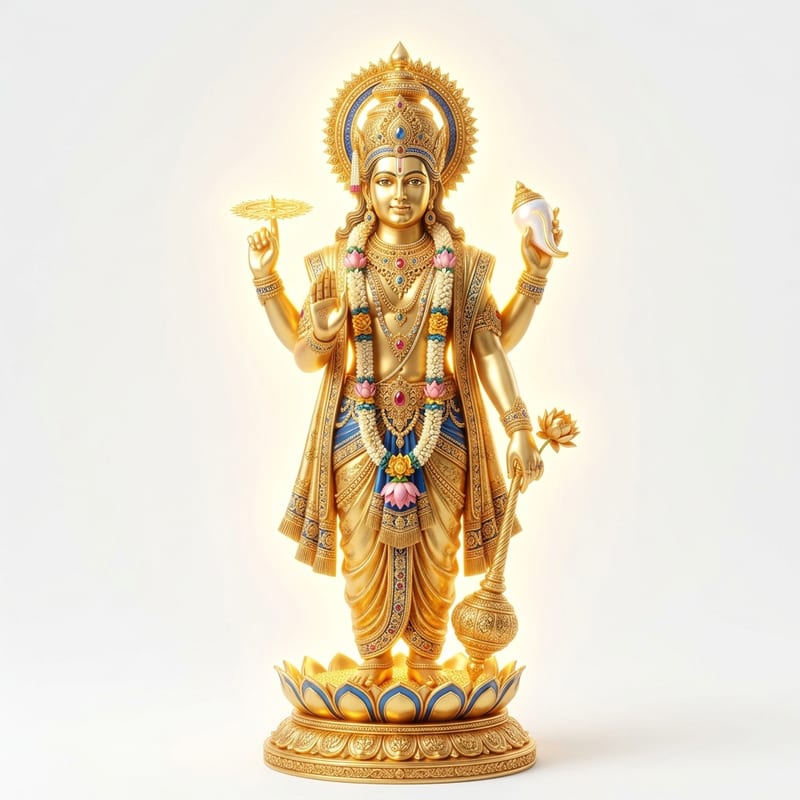
- த்யாநம் (dhyānam)meditation
anvaya த்யாநம்
note A heading. The two verses that follow are the dhyāna, the picture of the god that is held in mind before the mantras are said.
ரோகாந்மே நாஶயா'ஶேஷாநாஶு தந்வந்தரே ஹரே ।
ஆரோக்யம் தீர்கமாயுஷ்யம் பலம் தேஜோ தியம் ஶ்ரியம்
ஸ்வபக்தேப்யோ'நுக்ரு'ஹ்ணந்தம் வந்தே தந்வந்தரிம் ஹரிம் ॥
- அச்யுத (acyuta)O Achyuta, who never slips
- அநந்த (ananta)O Ananta, who has no end
- கோவிந்த (govinda)O Govinda
- விஷ்ணோ (viṣṇo)O Vishnu
- நாராயண (nārāyaṇa)O Narayana
- அம்ரு'த (amṛta)O nectar of life
- ரோகாந் (rogān)the diseases
- மே (me)my
- நாஶய (nāśaya)put an end to
- அஶேஷாந் (aśeṣān)all of them
- ஆஶு (āśu)quickly
- தந்வந்தரே (dhanvantare)O Dhanvantari
- ஹரே (hare)O Hari
- ஆரோக்யம் (ārogyam)health
- தீர்கம் (dīrgham)long
- ஆயுஷ்யம் (āyuṣyam)life
- பலம் (balam)strength
- தேஜஃ (tejaḥ)brightness
- தியம் (dhiyam)understanding
- ஶ்ரியம் (śriyam)prosperity
- ஸ்வபக்தேப்யஃ (svabhaktebhyaḥ)on those who love him
- அநுக்ரு'ஹ்ணந்தம் (anugṛhṇantam)who gives all this freely
- வந்தே (vande)I bow to
- தந்வந்தரிம் (dhanvantarim)Dhanvantari
- ஹரிம் (harim)Hari
anvaya அச்யுத அநந்த கோவிந்த விஷ்ணோ நாராயண அம்ரு'த தந்வந்தரே ஹரே மே அஶேஷாந் ரோகாந் ஆஶு நாஶய ஸ்வபக்தேப்யஃ ஆரோக்யம் தீர்கம் ஆயுஷ்யம் பலம் தேஜஃ தியம் ஶ்ரியம் அநுக்ரு'ஹ்ணந்தம் தந்வந்தரிம் ஹரிம் வந்தே
chandas Anuṣṭubh, 8 syllables to a pāda; the block holds two verses
தந்வந்தரே O Dhanvantari — The physician of the gods, who came up out of the churned sea holding the pot of nectar. Ayurveda is taught in his name.
அம்ரு'த O nectar of life — Amṛta is what does not die, and the drink that keeps death away. It is one of the six names the first line calls him by.
அநுக்ரு'ஹ்ணந்தம் who gives all this freely — Anugraha is the favour shown by someone in a position to withhold it. Six things are asked for, health first.
note The first half calls on him by six names and asks for the diseases to go. The second half lists what is asked for in their place and ends with the bow.
ஸூக்ஷ்மஸ்வச்சாதிஹ்ரு'த்யாம்ஶுக பரிவிலஸந்மௌலிமம்போஜநேத்ரம் ।
காலாம்போதோஜ்ஜ்வலாங்கம் கடிதடவிலஸச்சாருபீதாம்பராட்யம் ।
வந்தே தந்வந்தரிம் தம் நிகிலகதவநப்ரௌடதாவாக்நிலீலம் ॥
- ஶங்கம் (śaṅkham)a conch
- சக்ரம் (cakram)a discus
- ஜலௌகாம் (jalaukām)a leech
- ததத் (dadhat)holding
- அம்ரு'தகடம் (amṛtaghaṭam)the pot of nectar
- சாருதோர்பிஃ (cārudorbhiḥ)with fine arms
- சதுர்பிஃ (caturbhiḥ)four
- ஸூக்ஷ்மஸ்வச்சாதிஹ்ரு'த்யாம்ஶுகபரிவிலஸந்மௌலிம் (sūkṣmasvacchātihṛdyāṃśukaparivilasanmaulim)about whose head a soft, clear, very pleasing cloth shines
- அம்போஜநேத்ரம் (ambhojanetram)whose eyes are lotuses
- காலாம்போதோஜ்ஜ்வலாங்கம் (kālāmbhodojjvalāṅgam)whose body shines like a dark rain cloud
- கடிதடவிலஸச்சாருபீதாம்பராட்யம் (kaṭitaṭavilasaccārupītāmbarāḍhyam)rich with a fine yellow cloth bright at the waist
- வந்தே (vande)I bow to
- தந்வந்தரிம் (dhanvantarim)Dhanvantari
- தம் (tam)that one
- நிகிலகதவநப்ரௌடதாவாக்நிலீலம் (nikhilagadavanaprauḍhadāvāgnilīlam)whose play is the full-grown forest fire in the thicket of every disease
anvaya சதுர்பிஃ சாருதோர்பிஃ ஶங்கம் சக்ரம் ஜலௌகாம் அம்ரு'தகடம் ததத் ஸூக்ஷ்மஸ்வச்சாதிஹ்ரு'த்யாம்ஶுகபரிவிலஸந்மௌலிம் அம்போஜநேத்ரம் காலாம்போதோஜ்ஜ்வலாங்கம் கடிதடவிலஸச்சாருபீதாம்பராட்யம் நிகிலகதவநப்ரௌடதாவாக்நிலீலம் தம் தந்வந்தரிம் வந்தே
chandas Sragdharā, 21 syllables in each of 4 pādas
ஜலௌகாம் a leech — Two of his four hands hold Vishnu's conch and discus. The other two hold a physician's kit: the leech used for drawing blood, and the pot of medicine.
தாவாக்நி a forest fire — Disease is pictured as a thicket of trees and his work as the fire that goes through it. The word līlā at the end makes it something he does easily.
காலாம்போத a dark rain cloud — Kāla is black and ambhoda a cloud. It is the colour Vishnu is described in, and it also promises rain.
note The metre changes to Sragdharā, whose long pādas let the whole figure be described in one sweep, head to waist and then what he does.
அநாரோக்யம் ந தேஷாம் ஸ்யாத் ஸுகம் ஜீவந்தி தே சிரம் ॥
- தந்வந்தரேஃ (dhanvantareḥ)of Dhanvantari
- இமம் (imam)this
- ஶ்லோகம் (ślokam)verse
- பக்த்யா (bhaktyā)with love
- நித்யம் (nityam)every day
- படந்தி (paṭhanti)recite
- யே (ye)those who
- அநாரோக்யம் (anārogyam)ill health
- ந (na)not
- தேஷாம் (teṣām)for them
- ஸ்யாத் (syāt)would there be
- ஸுகம் (sukham)in comfort
- ஜீவந்தி (jīvanti)they live
- தே (te)they
- சிரம் (ciram)for a long time
anvaya யே தந்வந்தரேஃ இமம் ஶ்லோகம் பக்த்யா நித்யம் படந்தி தேஷாம் அநாரோக்யம் ந ஸ்யாத் தே சிரம் ஸுகம் ஜீவந்தி
chandas Anuṣṭubh, 8 syllables in each of 4 pādas
அநாரோக்யம் ill health — Said the long way round, as the absence of ārogya, health. Ārogya itself is built the same way, from roga, disease.
note The phalashruti of the two dhyāna verses. What follows it is no longer verse but the mantras themselves.
- மந்த்ரம் (mantram)the mantra
anvaya மந்த்ரம்
note A heading for the prose mantra below it.
- ௐ (oṃ)Om
- நமஃ (namaḥ)salutation
- பகவதே (bhagavate)to the Lord
- வாஸுதேவாய (vāsudevāya)to Vasudeva
- தந்வந்தரயே (dhanvantaraye)to Dhanvantari
- அம்ரு'தகலஶஹஸ்தாய (amṛtakalaśahastāya)to the one with the pot of nectar in his hand
- வஜ்ரஜலௌகஹஸ்தாய (vajrajalaukahastāya)to the one with the diamond leech in his hand
- ஸர்வாமயவிநாஶநாய (sarvāmayavināśanāya)to the destroyer of every illness
- த்ரைலோக்யநாதாய (trailokyanāthāya)to the lord of the three worlds
- ஶ்ரீமஹாவிஷ்ணவே (śrīmahāviṣṇave)to Shri Mahavishnu
- ஸ்வாஹா (svāhā)svaha
anvaya ௐ பகவதே வாஸுதேவாய தந்வந்தரயே அம்ரு'தகலஶஹஸ்தாய வஜ்ரஜலௌகஹஸ்தாய ஸர்வாமயவிநாஶநாய த்ரைலோக்யநாதாய ஶ்ரீமஹாவிஷ்ணவே நமஃ ஸ்வாஹா
ஸ்வாஹா svaha — The word said as an offering goes into the fire. It has no meaning to translate and is left as the sound it is.
வஜ்ரஜலௌகஹஸ்தாய to the one with the diamond leech in his hand — Printed in brackets as another reading for अमृतकलशहस्ताय. Both hands are a physician's: the pot in one reading, the leech in the other.
note This is prose rather than verse, so there is no metre to give. The mantra is a string of datives, and the நமஃ at the front and the ஸ்வாஹா at the end hold them all.
- பாடாந்தரஃ (pāṭhāntaraḥ)another reading
anvaya பாடாந்தரஃ
note A note in the text itself, marking the longer form of the mantra that follows as a variant of the one above.
- ௐ (oṃ)Om
- நமஃ (namaḥ)salutation
- பகவதே (bhagavate)to the Lord
- மஹாஸுதர்ஶநாய (mahāsudarśanāya)to the great Sudarshana
- வாஸுதேவாய (vāsudevāya)to Vasudeva
- தந்வந்தரயே (dhanvantaraye)to Dhanvantari
- அம்ரு'தகலஶஹஸ்தாய (amṛtakalaśahastāya)to the one with the pot of nectar in his hand
- ஸர்வபயவிநாஶாய (sarvabhayavināśāya)to the undoing of every fear
- ஸர்வரோகநிவாரணாய (sarvaroganivāraṇāya)to the one who keeps off every disease
- த்ரைலோக்யபதயே (trailokyapataye)to the master of the three worlds
- த்ரைலோக்யநிதயே (trailokyanidhaye)to the store of the three worlds
- ஶ்ரீமஹாவிஷ்ணுஸ்வரூப (śrīmahāviṣṇusvarūpa)O form of Shri Mahavishnu
- ஶ்ரீதந்வந்தரீஸ்வரூப (śrīdhanvantarīsvarūpa)O form of Shri Dhanvantari
- ஶ்ரீ (śrī)Shri
- ஶ்ரீ (śrī)Shri
- ஶ்ரீ (śrī)Shri
- ஔஷதசக்ரநாராயணாய (auṣadhacakranārāyaṇāya)to Narayana of the wheel of medicines
- ஸ்வாஹா (svāhā)svaha
anvaya ௐ பகவதே மஹாஸுதர்ஶநாய வாஸுதேவாய தந்வந்தரயே அம்ரு'தகலஶஹஸ்தாய ஸர்வபயவிநாஶாய ஸர்வரோகநிவாரணாய த்ரைலோக்யபதயே த்ரைலோக்யநிதயே ஶ்ரீமஹாவிஷ்ணுஸ்வரூப ஶ்ரீதந்வந்தரீஸ்வரூப ஶ்ரீ ஶ்ரீ ஶ்ரீ ஔஷதசக்ரநாராயணாய நமஃ ஸ்வாஹா
மஹாஸுதர்ஶநாய to the great Sudarshana — Sudarshana is Vishnu's discus, worshipped as a deity in its own right. Bringing it into a healing mantra puts a weapon on the side of the patient.
ஔஷதசக்ரநாராயணாய to Narayana of the wheel of medicines — Auṣadha is a herb or a drug. The wheel of medicines sets the discus and the pharmacy side by side.
ஶ்ரீ ஶ்ரீ ஶ்ரீ Shri, three times — Said three times as a mark of honour, the way a title is written out in full at the head of a letter.
note The longer of the two forms, and the one used where the shorter is thought too brief. It names the fears and the diseases it is against, which the shorter form leaves unsaid.
- காயத்ரீ (gāyatrī)Gayatri
- மந்த்ரம் (mantram)the mantra
anvaya காயத்ரீ மந்த்ரம்
note A heading. What follows is a deity gayatri, built on the pattern of the Gayatri mantra with this god's names put into it.
தந்நோ தந்வந்தரிஃ ப்ரசோதயாத் ।
- ௐ (oṃ)Om
- வாஸுதேவாய (vāsudevāya)of Vasudeva
- வித்மஹே (vidmahe)may we know
- ஸுதாஹஸ்தாய (sudhāhastāya)of the one with nectar in his hand
- தீமஹி (dhīmahi)we meditate
- தத் (tat)that
- நஃ (naḥ)us
- தந்வந்தரிஃ (dhanvantariḥ)Dhanvantari
- ப்ரசோதயாத் (pracodayāt)may he set moving
anvaya ௐ வாஸுதேவாய வித்மஹே ஸுதாஹஸ்தாய தீமஹி தத் தந்வந்தரிஃ நஃ ப்ரசோதயாத்
chandas Gāyatrī, 3 pādas of 8 syllables
வித்மஹே தீமஹி may we know, we meditate — The two verbs of the Gayatri mantra, kept in place. A deity gayatri changes the names and leaves this frame standing.
ஸுதாஹஸ்தாய of the one with nectar in his hand — Sudhā is nectar, another word for amṛta. The hand that holds it is what marks Dhanvantari out.
ப்ரசோதயாத் may he set moving — The last word of the Gayatri mantra, kept here as it stands. What is asked is that he start the mind going.
note Every god has a gayatri made this way, on the frame of Rig Veda 3.62.10. Read against that verse, the changes are the whole content.
ௐ தம் தந்வந்தரயே நமஃ ।
- தாரகமந்த்ரம் (tārakamantram)the taraka mantra
- ௐ (oṃ)Om
- தம் (dhaṃ)dhaṃ
- தந்வந்தரயே (dhanvantaraye)to Dhanvantari
- நமஃ (namaḥ)salutation
anvaya தாரகமந்த்ரம் ௐ தம் தந்வந்தரயே நமஃ
தம் dhaṃ — A bija, a seed sound. It is the first sound of the name Dhanvantari made into a syllable of its own, and it is left as a sound rather than given a meaning.
தாரகமந்த்ரம் the taraka mantra — From tāraka, what carries across. It is the shortest of the forms here, meant to be said many times over.
note The last of the four mantras and the shortest: the seed sound, the name and the bow.