
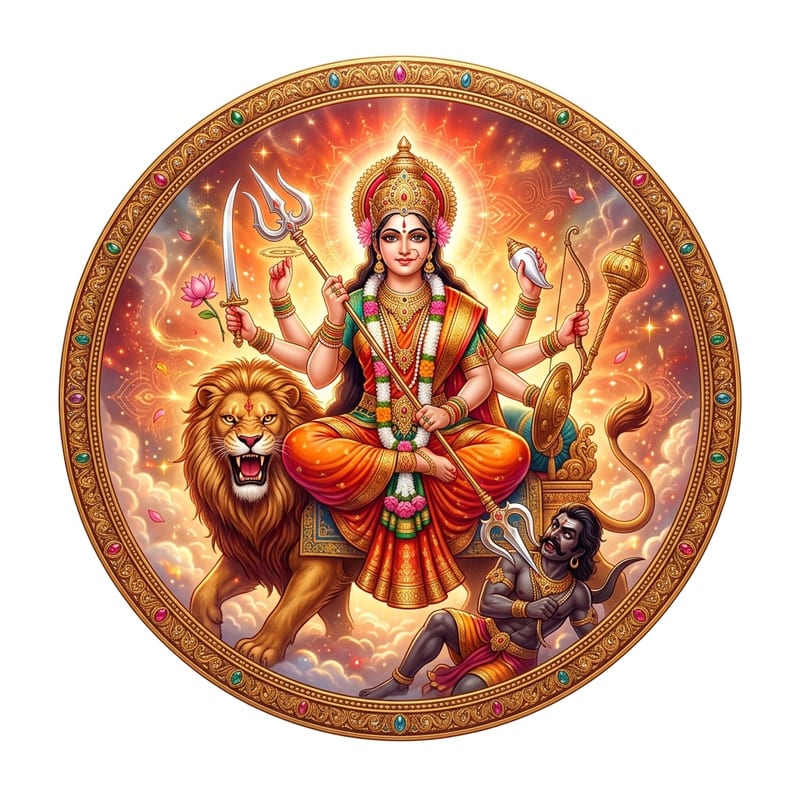
- ईश्वरः (īśvaraḥ)Ishvara, Shiva
- उवाच (uvāca)said
anvaya ईश्वरः उवाच
note The whole kavacha is spoken by Shiva to the Goddess, so everything that follows is his speech to her.
पठित्वा पाठयित्वा च नरो मुच्येत सङ्कटात् ॥ 1 ॥
- शृणु (śṛṇu)listen
- देवि (devi)O Devi
- प्रवक्ष्यामि (pravakṣyāmi)I shall tell
- कवचम् (kavacam)the armour
- सर्वसिद्धिदम् (sarvasiddhidam)which gives every kind of success
- पठित्वा (paṭhitvā)having recited it
- पाठयित्वा (pāṭhayitvā)having had it recited
- च (ca)and
- नरः (naraḥ)a man
- मुच्येत (mucyeta)would be set free
- सङ्कटात् (saṅkaṭāt)from the tight place he is in
anvaya देवि शृणु सर्वसिद्धिदम् कवचम् प्रवक्ष्यामि नरः पठित्वा पाठयित्वा च सङ्कटात् मुच्येत
chandas Anuṣṭubh, 8 syllables in each of 4 pādas
कवचम् armour — A kavacha is a hymn that puts a guard on the body part by part, each part given to one form of the deity. It is armour put on by saying it.
सङ्कटात् from the tight place — Saṅkaṭa is a narrow pass, and from that any fix a person cannot get out of.
पाठयित्वा having had it recited — The causative form. Having someone else recite it on your behalf is counted alongside reciting it yourself.
note Shiva opens by saying what the armour is for. The promise is set out before a single guard is named.
न चाप्नोति फलं तस्य परं च नरकं व्रजेत् ॥ 2 ॥
- अज्ञात्वा (ajñātvā)without knowing
- कवचम् (kavacam)the armour
- देवि (devi)O Devi
- दुर्गामन्त्रम् (durgāmantram)the Durga mantra
- च (ca)and
- यः (yaḥ)whoever
- जपेत् (japet)says over
- न (na)not
- च (ca)and
- आप्नोति (āpnoti)gets
- फलम् (phalam)the fruit
- तस्य (tasya)of it
- परम् (param)afterwards
- च (ca)and
- नरकम् (narakam)hell
- व्रजेत् (vrajet)would go to
anvaya देवि यः कवचम् अज्ञात्वा दुर्गामन्त्रम् च जपेत् तस्य फलम् न आप्नोति च परम् नरकम् च व्रजेत्
chandas Anuṣṭubh, 8 syllables in each of 4 pādas
जपेत् would say over — Japa is the repeating of a mantra under the breath, counted on the fingers or on beads.
अज्ञात्वा without knowing — The armour is meant to be learned first and the mantra taken up after it. The verse states the order as a warning.
note A verse of this kind stands at the head of most kavachas. It is there to keep the order of learning: armour first, mantra after.
चक्षुषी खेचरी पातु कर्णौ चत्वरवासिनी ॥ 3 ॥
- उमादेवी (umādevī)Uma Devi
- शिरः (śiraḥ)the head
- पातु (pātu)may she guard
- ललाटे (lalāṭe)at the forehead
- शूलधारिणी (śūladhāriṇī)she who holds the spear
- चक्षुषी (cakṣuṣī)the two eyes
- खेचरी (khecarī)Khechari, who goes through the sky
- पातु (pātu)may she guard
- कर्णौ (karṇau)the two ears
- चत्वरवासिनी (catvaravāsinī)she who lives at the crossroads
anvaya उमादेवी शिरः पातु शूलधारिणी ललाटे [पातु] खेचरी चक्षुषी पातु चत्वरवासिनी कर्णौ [पातु]
chandas Anuṣṭubh, 8 syllables in each of 4 pādas
पातु may she guard — The one verb the whole kavacha runs on. From here to the end it is understood in every line even where it is not written.
खेचरी Khechari — She who moves in the open sky, kha. She is set to guard the eyes, which are what travel furthest of the senses.
चत्वरवासिनी she who lives at the crossroads — Catvara is an open square or a crossing. A goddess of the crossing guards the ears, where everything said in the street comes in.
note The guarding starts here and works down the body, head to feet. Each part is handed to one form of the Goddess, and the names are chosen to suit what they guard.
जिह्वां च चण्डिकादेवी ग्रीवां सौभद्रिका तथा ॥ 4 ॥
- सुगन्धा (sugandhā)Sugandha, the sweet-scented one
- नासिकम् (nāsikam)the nose
- पातु (pātu)may she guard
- वदनम् (vadanam)the face
- सर्वधारिणी (sarvadhāriṇī)Sarvadharini, who holds everything up
- जिह्वाम् (jihvām)the tongue
- च (ca)and
- चण्डिकादेवी (caṇḍikādevī)Chandika Devi
- ग्रीवाम् (grīvām)the neck
- सौभद्रिका (saubhadrikā)Saubhadrika
- तथा (tathā)likewise
anvaya सुगन्धा नासिकम् पातु सर्वधारिणी वदनम् चण्डिकादेवी च जिह्वाम् तथा सौभद्रिका ग्रीवाम्
chandas Anuṣṭubh, 8 syllables in each of 4 pādas
सुगन्धा the sweet-scented one — Given the nose to guard. The fit between the name and the part is the pattern the whole hymn is built on.
चण्डिकादेवी Chandika Devi — Caṇḍa is fierce or hot-tempered. The fierce one is given the tongue, which is where a temper shows first.
note Four parts of the face and throat, four forms of the Goddess, in the order a person would touch them.
हृदयं ललितादेवी उदरं सिंहवाहिनी ॥ 5 ॥
- अशोकवासिनी (aśokavāsinī)she who lives in the ashoka tree
- चेतः (cetaḥ)the mind
- द्वौ (dvau)the two
- बाहू (bāhū)arms
- वज्रधारिणी (vajradhāriṇī)she who holds the thunderbolt
- हृदयम् (hṛdayam)the heart
- ललितादेवी (lalitādevī)Lalita Devi
- उदरम् (udaram)the belly
- सिंहवाहिनी (siṃhavāhinī)she who rides the lion
anvaya अशोकवासिनी चेतः [पातु] वज्रधारिणी द्वौ बाहू ललितादेवी हृदयम् सिंहवाहिनी उदरम्
chandas Anuṣṭubh, 8 syllables in each of 4 pādas
अशोकवासिनी she who lives in the ashoka tree — A-śoka means without sorrow. She is given the mind, and the name says what the mind is being guarded from.
सिंहवाहिनी she who rides the lion — Durga's own mount. The form named for the middle of the body is the one who rides into battle.
note The verb पातु is dropped in this verse and the next. It is carried over from the verse before and understood in each line.
महाबला च जङ्घे द्वे पादौ भूतलवासिनी ॥ 6 ॥
- कटिम् (kaṭim)the waist
- भगवती (bhagavatī)Bhagavati
- देवी (devī)the Goddess
- द्वौ (dvau)the two
- ऊरू (ūrū)thighs
- विन्ध्यवासिनी (vindhyavāsinī)she who lives in the Vindhya hills
- महाबला (mahābalā)Mahabala, the greatly strong
- च (ca)and
- जङ्घे (jaṅghe)the two shins
- द्वे (dve)the two
- पादौ (pādau)the two feet
- भूतलवासिनी (bhūtalavāsinī)she who lives on the face of the earth
anvaya भगवती देवी कटिम् [पातु] विन्ध्यवासिनी द्वौ ऊरू महाबला च द्वे जङ्घे भूतलवासिनी पादौ
chandas Anuṣṭubh, 8 syllables in each of 4 pādas
विन्ध्यवासिनी she who lives in the Vindhya hills — Her shrine is at Vindhyachal near Mirzapur, one of the old seats of the Goddess.
भूतलवासिनी she who lives on the face of the earth — Bhūtala is the surface of the ground. The feet, which are what touch it, are given to her.
note The last of the body verses. It ends at the feet, so the armour is complete from the head down.
रक्ष मां सर्वगात्रेषु दुर्गे देवि नमोऽस्तु ते ॥ 7 ॥
- एवम् (evam)in this way
- स्थिता (sthitā)standing
- असि (asi)you are
- देवि (devi)O Devi
- त्वम् (tvam)you
- त्रैलोक्ये (trailokye)in the three worlds
- रक्षणात्मिका (rakṣaṇātmikā)whose very self is the guarding
- रक्ष (rakṣa)guard
- माम् (mām)me
- सर्वगात्रेषु (sarvagātreṣu)in every limb
- दुर्गे (durge)O Durga
- देवि (devi)O Devi
- नमः (namaḥ)salutation
- अस्तु (astu)let there be
- ते (te)to you
anvaya देवि त्वम् एवम् स्थिता असि त्रैलोक्ये रक्षणात्मिका दुर्गे देवि माम् सर्वगात्रेषु रक्ष ते नमः अस्तु
chandas Anuṣṭubh, 8 syllables in each of 4 pādas
रक्षणात्मिका whose very self is the guarding — Not one who guards among other things. The guarding is what she is.
सर्वगात्रेषु in every limb — The closing request gathers the separate guards of the earlier verses into one.
note The last verse turns from the list to the Goddess herself, and the armour is fastened with a salutation.