
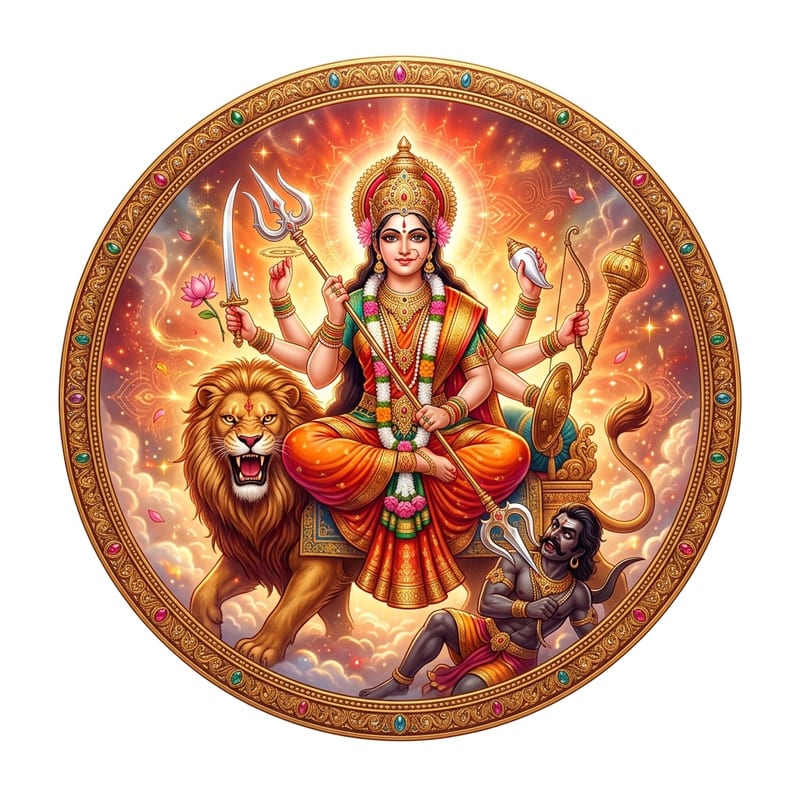
- īśvaraḥIshvara, Shiva
- uvācasaid
anvaya īśvaraḥ uvāca
note The whole kavacha is spoken by Shiva to the Goddess, so everything that follows is his speech to her.
paṭhitvā pāṭhayitvā ca naro mucyeta saṅkaṭāt || 1 ||
- śṛṇulisten
- deviO Devi
- pravakṣyāmiI shall tell
- kavacamthe armour
- sarvasiddhidamwhich gives every kind of success
- paṭhitvāhaving recited it
- pāṭhayitvāhaving had it recited
- caand
- naraḥa man
- mucyetawould be set free
- saṅkaṭātfrom the tight place he is in
anvaya devi śṛṇu sarvasiddhidam kavacam pravakṣyāmi naraḥ paṭhitvā pāṭhayitvā ca saṅkaṭāt mucyeta
chandas Anuṣṭubh, 8 syllables in each of 4 pādas
kavacam armour — A kavacha is a hymn that puts a guard on the body part by part, each part given to one form of the deity. It is armour put on by saying it.
saṅkaṭāt from the tight place — Saṅkaṭa is a narrow pass, and from that any fix a person cannot get out of.
pāṭhayitvā having had it recited — The causative form. Having someone else recite it on your behalf is counted alongside reciting it yourself.
note Shiva opens by saying what the armour is for. The promise is set out before a single guard is named.
na cāpnoti phalaṃ tasya paraṃ ca narakaṃ vrajet || 2 ||
- ajñātvāwithout knowing
- kavacamthe armour
- deviO Devi
- durgāmantramthe Durga mantra
- caand
- yaḥwhoever
- japetsays over
- nanot
- caand
- āpnotigets
- phalamthe fruit
- tasyaof it
- paramafterwards
- caand
- narakamhell
- vrajetwould go to
anvaya devi yaḥ kavacam ajñātvā durgāmantram ca japet tasya phalam na āpnoti ca param narakam ca vrajet
chandas Anuṣṭubh, 8 syllables in each of 4 pādas
japet would say over — Japa is the repeating of a mantra under the breath, counted on the fingers or on beads.
ajñātvā without knowing — The armour is meant to be learned first and the mantra taken up after it. The verse states the order as a warning.
note A verse of this kind stands at the head of most kavachas. It is there to keep the order of learning: armour first, mantra after.
cakṣuṣī khecarī pātu karṇau catvaravāsinī || 3 ||
- umādevīUma Devi
- śiraḥthe head
- pātumay she guard
- lalāṭeat the forehead
- śūladhāriṇīshe who holds the spear
- cakṣuṣīthe two eyes
- khecarīKhechari, who goes through the sky
- pātumay she guard
- karṇauthe two ears
- catvaravāsinīshe who lives at the crossroads
anvaya umādevī śiraḥ pātu śūladhāriṇī lalāṭe [pātu] khecarī cakṣuṣī pātu catvaravāsinī karṇau [pātu]
chandas Anuṣṭubh, 8 syllables in each of 4 pādas
pātu may she guard — The one verb the whole kavacha runs on. From here to the end it is understood in every line even where it is not written.
khecarī Khechari — She who moves in the open sky, kha. She is set to guard the eyes, which are what travel furthest of the senses.
catvaravāsinī she who lives at the crossroads — Catvara is an open square or a crossing. A goddess of the crossing guards the ears, where everything said in the street comes in.
note The guarding starts here and works down the body, head to feet. Each part is handed to one form of the Goddess, and the names are chosen to suit what they guard.
jihvāṃ ca caṇḍikādevī grīvāṃ saubhadrikā tathā || 4 ||
- sugandhāSugandha, the sweet-scented one
- nāsikamthe nose
- pātumay she guard
- vadanamthe face
- sarvadhāriṇīSarvadharini, who holds everything up
- jihvāmthe tongue
- caand
- caṇḍikādevīChandika Devi
- grīvāmthe neck
- saubhadrikāSaubhadrika
- tathālikewise
anvaya sugandhā nāsikam pātu sarvadhāriṇī vadanam caṇḍikādevī ca jihvām tathā saubhadrikā grīvām
chandas Anuṣṭubh, 8 syllables in each of 4 pādas
sugandhā the sweet-scented one — Given the nose to guard. The fit between the name and the part is the pattern the whole hymn is built on.
caṇḍikādevī Chandika Devi — Caṇḍa is fierce or hot-tempered. The fierce one is given the tongue, which is where a temper shows first.
note Four parts of the face and throat, four forms of the Goddess, in the order a person would touch them.
hṛdayaṃ lalitādevī udaraṃ siṃhavāhinī || 5 ||
- aśokavāsinīshe who lives in the ashoka tree
- cetaḥthe mind
- dvauthe two
- bāhūarms
- vajradhāriṇīshe who holds the thunderbolt
- hṛdayamthe heart
- lalitādevīLalita Devi
- udaramthe belly
- siṃhavāhinīshe who rides the lion
anvaya aśokavāsinī cetaḥ [pātu] vajradhāriṇī dvau bāhū lalitādevī hṛdayam siṃhavāhinī udaram
chandas Anuṣṭubh, 8 syllables in each of 4 pādas
aśokavāsinī she who lives in the ashoka tree — A-śoka means without sorrow. She is given the mind, and the name says what the mind is being guarded from.
siṃhavāhinī she who rides the lion — Durga's own mount. The form named for the middle of the body is the one who rides into battle.
note The verb pātu is dropped in this verse and the next. It is carried over from the verse before and understood in each line.
mahābalā ca jaṅghe dve pādau bhūtalavāsinī || 6 ||
- kaṭimthe waist
- bhagavatīBhagavati
- devīthe Goddess
- dvauthe two
- ūrūthighs
- vindhyavāsinīshe who lives in the Vindhya hills
- mahābalāMahabala, the greatly strong
- caand
- jaṅghethe two shins
- dvethe two
- pādauthe two feet
- bhūtalavāsinīshe who lives on the face of the earth
anvaya bhagavatī devī kaṭim [pātu] vindhyavāsinī dvau ūrū mahābalā ca dve jaṅghe bhūtalavāsinī pādau
chandas Anuṣṭubh, 8 syllables in each of 4 pādas
vindhyavāsinī she who lives in the Vindhya hills — Her shrine is at Vindhyachal near Mirzapur, one of the old seats of the Goddess.
bhūtalavāsinī she who lives on the face of the earth — Bhūtala is the surface of the ground. The feet, which are what touch it, are given to her.
note The last of the body verses. It ends at the feet, so the armour is complete from the head down.
rakṣa māṃ sarvagātreṣu durge devi namo'stu te || 7 ||
- evamin this way
- sthitāstanding
- asiyou are
- deviO Devi
- tvamyou
- trailokyein the three worlds
- rakṣaṇātmikāwhose very self is the guarding
- rakṣaguard
- māmme
- sarvagātreṣuin every limb
- durgeO Durga
- deviO Devi
- namaḥsalutation
- astulet there be
- teto you
anvaya devi tvam evam sthitā asi trailokye rakṣaṇātmikā durge devi mām sarvagātreṣu rakṣa te namaḥ astu
chandas Anuṣṭubh, 8 syllables in each of 4 pādas
rakṣaṇātmikā whose very self is the guarding — Not one who guards among other things. The guarding is what she is.
sarvagātreṣu in every limb — The closing request gathers the separate guards of the earlier verses into one.
note The last verse turns from the list to the Goddess herself, and the armour is fastened with a salutation.