
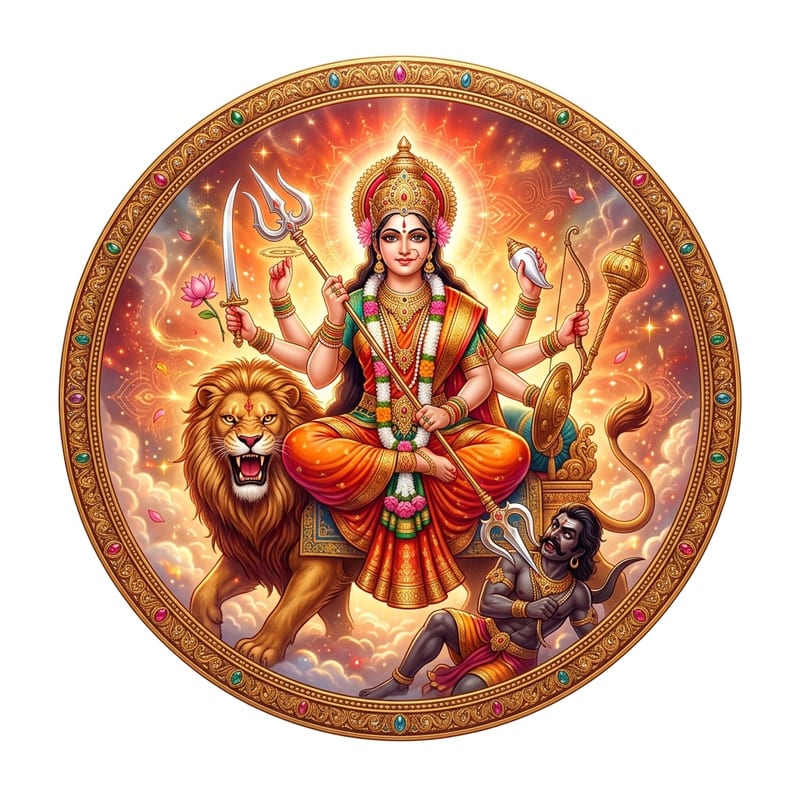
- ঈশ্বরঃ (īśvaraḥ)Ishvara, Shiva
- উবাচ (uvāca)said
anvaya ঈশ্বরঃ উবাচ
note The whole kavacha is spoken by Shiva to the Goddess, so everything that follows is his speech to her.
পঠিত্বা পাঠযিত্বা চ নরো মুচ্যেত সঙ্কটাত্ ॥ 1 ॥
- শৃণু (śṛṇu)listen
- দেবি (devi)O Devi
- প্রবক্ষ্যামি (pravakṣyāmi)I shall tell
- কবচম্ (kavacam)the armour
- সর্বসিদ্ধিদম্ (sarvasiddhidam)which gives every kind of success
- পঠিত্বা (paṭhitvā)having recited it
- পাঠযিত্বা (pāṭhayitvā)having had it recited
- চ (ca)and
- নরঃ (naraḥ)a man
- মুচ্যেত (mucyeta)would be set free
- সঙ্কটাত্ (saṅkaṭāt)from the tight place he is in
anvaya দেবি শৃণু সর্বসিদ্ধিদম্ কবচম্ প্রবক্ষ্যামি নরঃ পঠিত্বা পাঠযিত্বা চ সঙ্কটাত্ মুচ্যেত
chandas Anuṣṭubh, 8 syllables in each of 4 pādas
কবচম্ armour — A kavacha is a hymn that puts a guard on the body part by part, each part given to one form of the deity. It is armour put on by saying it.
সঙ্কটাত্ from the tight place — Saṅkaṭa is a narrow pass, and from that any fix a person cannot get out of.
পাঠযিত্বা having had it recited — The causative form. Having someone else recite it on your behalf is counted alongside reciting it yourself.
note Shiva opens by saying what the armour is for. The promise is set out before a single guard is named.
ন চাপ্নোতি ফলং তস্য পরং চ নরকং ব্রজেত্ ॥ 2 ॥
- অজ্ঞাত্বা (ajñātvā)without knowing
- কবচম্ (kavacam)the armour
- দেবি (devi)O Devi
- দুর্গামন্ত্রম্ (durgāmantram)the Durga mantra
- চ (ca)and
- যঃ (yaḥ)whoever
- জপেত্ (japet)says over
- ন (na)not
- চ (ca)and
- আপ্নোতি (āpnoti)gets
- ফলম্ (phalam)the fruit
- তস্য (tasya)of it
- পরম্ (param)afterwards
- চ (ca)and
- নরকম্ (narakam)hell
- ব্রজেত্ (vrajet)would go to
anvaya দেবি যঃ কবচম্ অজ্ঞাত্বা দুর্গামন্ত্রম্ চ জপেত্ তস্য ফলম্ ন আপ্নোতি চ পরম্ নরকম্ চ ব্রজেত্
chandas Anuṣṭubh, 8 syllables in each of 4 pādas
জপেত্ would say over — Japa is the repeating of a mantra under the breath, counted on the fingers or on beads.
অজ্ঞাত্বা without knowing — The armour is meant to be learned first and the mantra taken up after it. The verse states the order as a warning.
note A verse of this kind stands at the head of most kavachas. It is there to keep the order of learning: armour first, mantra after.
চক্ষুষী খেচরী পাতু কর্ণৌ চত্বরবাসিনী ॥ 3 ॥
- উমাদেবী (umādevī)Uma Devi
- শিরঃ (śiraḥ)the head
- পাতু (pātu)may she guard
- ললাটে (lalāṭe)at the forehead
- শূলধারিণী (śūladhāriṇī)she who holds the spear
- চক্ষুষী (cakṣuṣī)the two eyes
- খেচরী (khecarī)Khechari, who goes through the sky
- পাতু (pātu)may she guard
- কর্ণৌ (karṇau)the two ears
- চত্বরবাসিনী (catvaravāsinī)she who lives at the crossroads
anvaya উমাদেবী শিরঃ পাতু শূলধারিণী ললাটে [পাতু] খেচরী চক্ষুষী পাতু চত্বরবাসিনী কর্ণৌ [পাতু]
chandas Anuṣṭubh, 8 syllables in each of 4 pādas
পাতু may she guard — The one verb the whole kavacha runs on. From here to the end it is understood in every line even where it is not written.
খেচরী Khechari — She who moves in the open sky, kha. She is set to guard the eyes, which are what travel furthest of the senses.
চত্বরবাসিনী she who lives at the crossroads — Catvara is an open square or a crossing. A goddess of the crossing guards the ears, where everything said in the street comes in.
note The guarding starts here and works down the body, head to feet. Each part is handed to one form of the Goddess, and the names are chosen to suit what they guard.
জিহ্বাং চ চণ্ডিকাদেবী গ্রীবাং সৌভদ্রিকা তথা ॥ 4 ॥
- সুগন্ধা (sugandhā)Sugandha, the sweet-scented one
- নাসিকম্ (nāsikam)the nose
- পাতু (pātu)may she guard
- বদনম্ (vadanam)the face
- সর্বধারিণী (sarvadhāriṇī)Sarvadharini, who holds everything up
- জিহ্বাম্ (jihvām)the tongue
- চ (ca)and
- চণ্ডিকাদেবী (caṇḍikādevī)Chandika Devi
- গ্রীবাম্ (grīvām)the neck
- সৌভদ্রিকা (saubhadrikā)Saubhadrika
- তথা (tathā)likewise
anvaya সুগন্ধা নাসিকম্ পাতু সর্বধারিণী বদনম্ চণ্ডিকাদেবী চ জিহ্বাম্ তথা সৌভদ্রিকা গ্রীবাম্
chandas Anuṣṭubh, 8 syllables in each of 4 pādas
সুগন্ধা the sweet-scented one — Given the nose to guard. The fit between the name and the part is the pattern the whole hymn is built on.
চণ্ডিকাদেবী Chandika Devi — Caṇḍa is fierce or hot-tempered. The fierce one is given the tongue, which is where a temper shows first.
note Four parts of the face and throat, four forms of the Goddess, in the order a person would touch them.
হৃদযং ললিতাদেবী উদরং সিংহবাহিনী ॥ 5 ॥
- অশোকবাসিনী (aśokavāsinī)she who lives in the ashoka tree
- চেতঃ (cetaḥ)the mind
- দ্বৌ (dvau)the two
- বাহূ (bāhū)arms
- বজ্রধারিণী (vajradhāriṇī)she who holds the thunderbolt
- হৃদযম্ (hṛdayam)the heart
- ললিতাদেবী (lalitādevī)Lalita Devi
- উদরম্ (udaram)the belly
- সিংহবাহিনী (siṃhavāhinī)she who rides the lion
anvaya অশোকবাসিনী চেতঃ [পাতু] বজ্রধারিণী দ্বৌ বাহূ ললিতাদেবী হৃদযম্ সিংহবাহিনী উদরম্
chandas Anuṣṭubh, 8 syllables in each of 4 pādas
অশোকবাসিনী she who lives in the ashoka tree — A-śoka means without sorrow. She is given the mind, and the name says what the mind is being guarded from.
সিংহবাহিনী she who rides the lion — Durga's own mount. The form named for the middle of the body is the one who rides into battle.
note The verb পাতু is dropped in this verse and the next. It is carried over from the verse before and understood in each line.
মহাবলা চ জঙ্ঘে দ্বে পাদৌ ভূতলবাসিনী ॥ 6 ॥
- কটিম্ (kaṭim)the waist
- ভগবতী (bhagavatī)Bhagavati
- দেবী (devī)the Goddess
- দ্বৌ (dvau)the two
- ঊরূ (ūrū)thighs
- বিন্ধ্যবাসিনী (vindhyavāsinī)she who lives in the Vindhya hills
- মহাবলা (mahābalā)Mahabala, the greatly strong
- চ (ca)and
- জঙ্ঘে (jaṅghe)the two shins
- দ্বে (dve)the two
- পাদৌ (pādau)the two feet
- ভূতলবাসিনী (bhūtalavāsinī)she who lives on the face of the earth
anvaya ভগবতী দেবী কটিম্ [পাতু] বিন্ধ্যবাসিনী দ্বৌ ঊরূ মহাবলা চ দ্বে জঙ্ঘে ভূতলবাসিনী পাদৌ
chandas Anuṣṭubh, 8 syllables in each of 4 pādas
বিন্ধ্যবাসিনী she who lives in the Vindhya hills — Her shrine is at Vindhyachal near Mirzapur, one of the old seats of the Goddess.
ভূতলবাসিনী she who lives on the face of the earth — Bhūtala is the surface of the ground. The feet, which are what touch it, are given to her.
note The last of the body verses. It ends at the feet, so the armour is complete from the head down.
রক্ষ মাং সর্বগাত্রেষু দুর্গে দেবি নমোঽস্তু তে ॥ 7 ॥
- এবম্ (evam)in this way
- স্থিতা (sthitā)standing
- অসি (asi)you are
- দেবি (devi)O Devi
- ত্বম্ (tvam)you
- ত্রৈলোক্যে (trailokye)in the three worlds
- রক্ষণাত্মিকা (rakṣaṇātmikā)whose very self is the guarding
- রক্ষ (rakṣa)guard
- মাম্ (mām)me
- সর্বগাত্রেষু (sarvagātreṣu)in every limb
- দুর্গে (durge)O Durga
- দেবি (devi)O Devi
- নমঃ (namaḥ)salutation
- অস্তু (astu)let there be
- তে (te)to you
anvaya দেবি ত্বম্ এবম্ স্থিতা অসি ত্রৈলোক্যে রক্ষণাত্মিকা দুর্গে দেবি মাম্ সর্বগাত্রেষু রক্ষ তে নমঃ অস্তু
chandas Anuṣṭubh, 8 syllables in each of 4 pādas
রক্ষণাত্মিকা whose very self is the guarding — Not one who guards among other things. The guarding is what she is.
সর্বগাত্রেষু in every limb — The closing request gathers the separate guards of the earlier verses into one.
note The last verse turns from the list to the Goddess herself, and the armour is fastened with a salutation.