
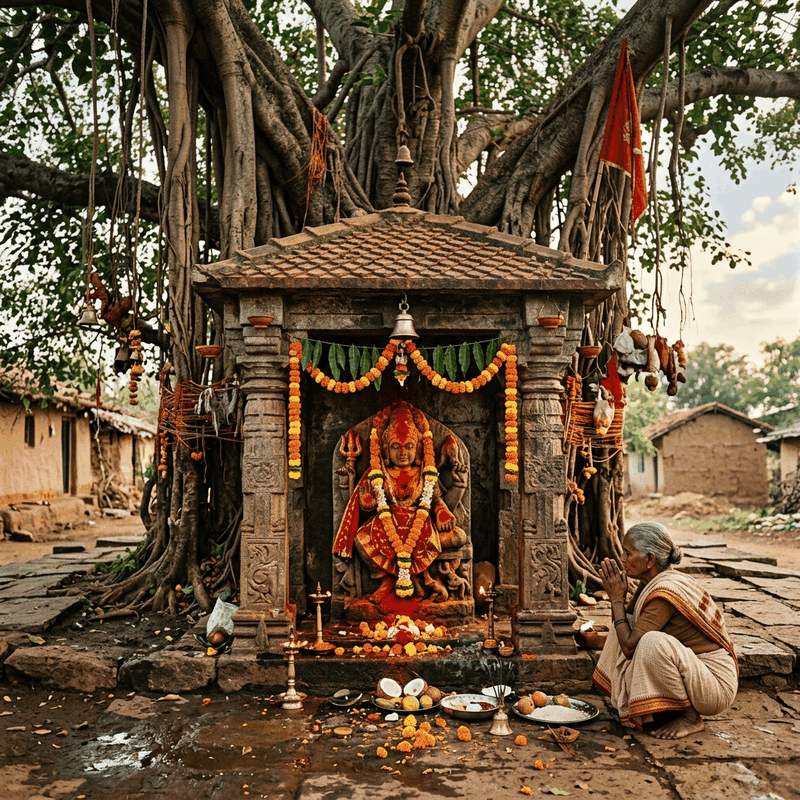
suna merī devī parvatavāsini, terā pāra na pāyā||
pāna supārī dhvajā nāriyala, le terī bheṃṭa caṛhāyā||
suvā colī tere aṃga virājai, kesara tilaka lagāyā|
naṃge pā~va tere akabara āyā, sone kā chatra caṛhāyā||
ū~ce-ū~ce parvata banyā devālaya, nīce śahara basāyā|
satayuga, tretā, dvāpara madhye, kaliyuga rāja savāyā||
dhūpa dīpa naivedya āratī, mohana bhoga lagāyā|
dhyānū bhagata maiyā terā guṇa gāvai, mana vāñchita phala pāyā||