
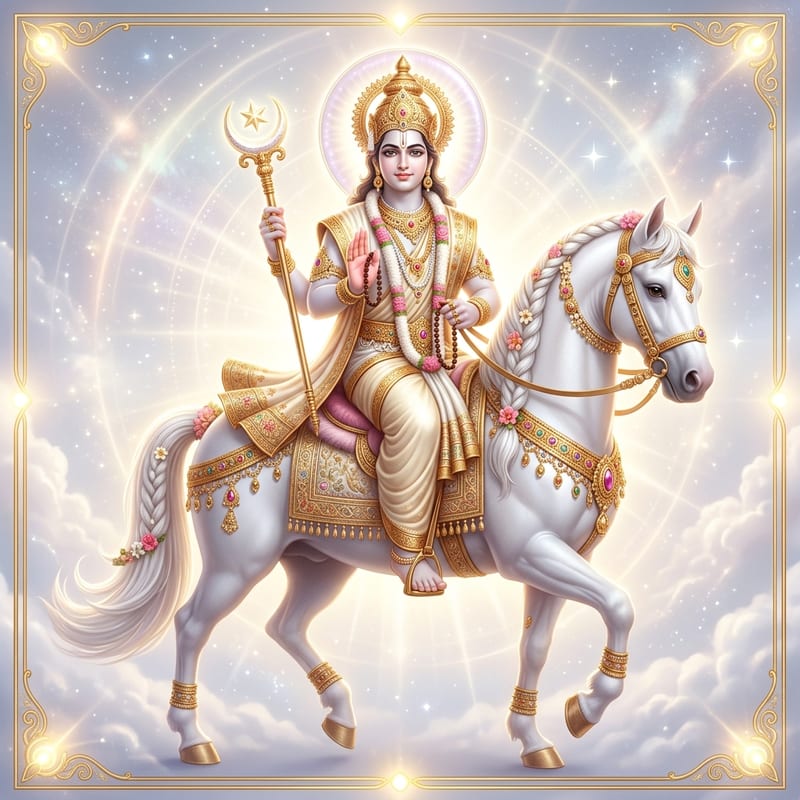
॥ শ্রী শুক্র নাম স্তোত্রম্ ॥
॥ শ্রীস্কন্দপুরাণে ॥
॥ ষোডশ নামানি ॥
শুক্রঃ কাব্যঃ শুক্ররেতা শুক্লাম্বরধরঃ সুধী ।
হিমাভঃ কুন্দধবলঃ শুভ্রাংশুঃ শুক্লভূষণঃ ॥ ১ ॥
হিমাভঃ কুন্দধবলঃ শুভ্রাংশুঃ শুক্লভূষণঃ ॥ ১ ॥
নীতিজ্ঞো নীতিকৃন্নীতিমার্গগামী গ্রহাধিপঃ ।
উশনা বেদবেদাঙ্গপারগঃ কবিরাত্মবিত্ ॥ ২ ॥
উশনা বেদবেদাঙ্গপারগঃ কবিরাত্মবিত্ ॥ ২ ॥
ভার্গবঃ করুণাঃ সিন্ধুর্জ্ঞানগম্যঃ সুতপ্রদঃ ।
শুক্রস্যৈতানি নামানি শুক্রং স্মৃত্বা তু যঃ পঠেত্ ॥ ৩ ॥
শুক্রস্যৈতানি নামানি শুক্রং স্মৃত্বা তু যঃ পঠেত্ ॥ ৩ ॥
॥ ফলশ্রুতি ॥
আযুর্ধনং সুখং পুত্রং লক্ষ্মী বসতিমুত্তমাম্ ।
বিদ্যাং চৈব স্বযং তস্মৈ শুক্রস্তুষ্টো দদাতি চ ॥ ৪ ॥
বিদ্যাং চৈব স্বযং তস্মৈ শুক্রস্তুষ্টো দদাতি চ ॥ ৪ ॥
॥ ইতি শ্রীস্কন্দপুরাণে শ্রী শুক্র স্তোত্রম্ সম্পূর্ণম্ ॥