
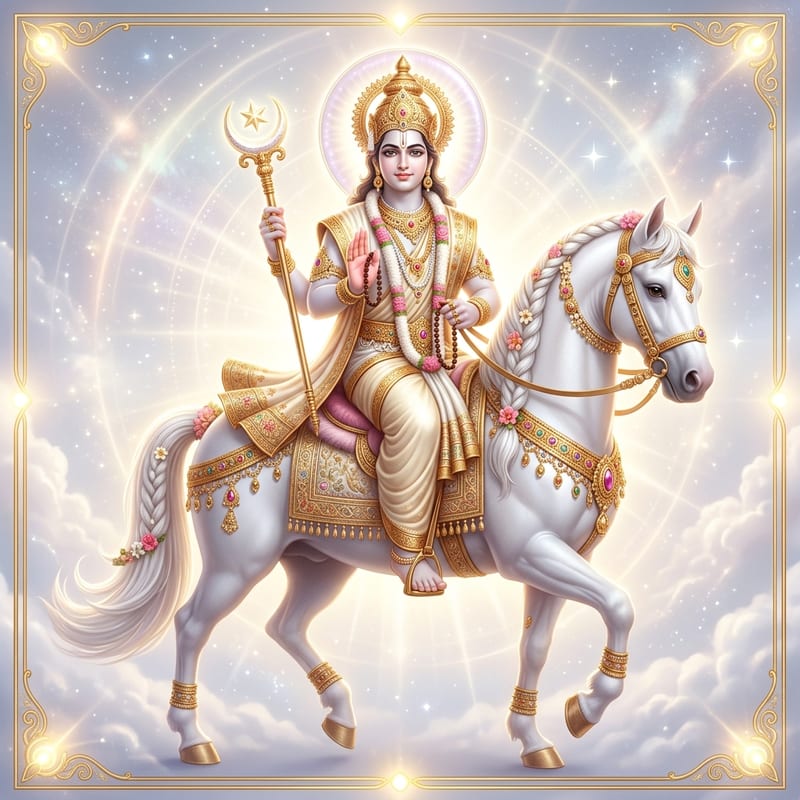
|| śrī śukra nāma stotram ||
|| śrīskandapurāṇe ||
|| ṣoḍaśa nāmāni ||
śukraḥ kāvyaḥ śukraretā śuklāmbaradharaḥ sudhī |
himābhaḥ kundadhavalaḥ śubhrāṃśuḥ śuklabhūṣaṇaḥ || 1 ||
himābhaḥ kundadhavalaḥ śubhrāṃśuḥ śuklabhūṣaṇaḥ || 1 ||
nītijño nītikṛnnītimārgagāmī grahādhipaḥ |
uśanā vedavedāṅgapāragaḥ kavirātmavit || 2 ||
uśanā vedavedāṅgapāragaḥ kavirātmavit || 2 ||
bhārgavaḥ karuṇāḥ sindhurjñānagamyaḥ sutapradaḥ |
śukrasyaitāni nāmāni śukraṃ smṛtvā tu yaḥ paṭhet || 3 ||
śukrasyaitāni nāmāni śukraṃ smṛtvā tu yaḥ paṭhet || 3 ||
|| phalaśruti ||
āyurdhanaṃ sukhaṃ putraṃ lakṣmī vasatimuttamām |
vidyāṃ caiva svayaṃ tasmai śukrastuṣṭo dadāti ca || 4 ||
vidyāṃ caiva svayaṃ tasmai śukrastuṣṭo dadāti ca || 4 ||
|| iti śrīskandapurāṇe śrī śukra stotram sampūrṇam ||