
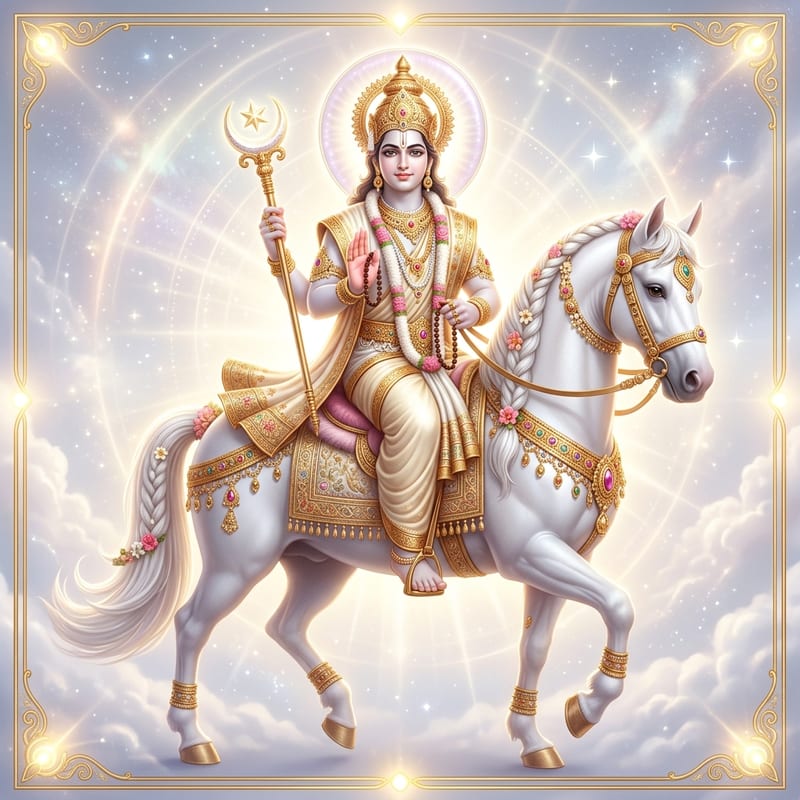
॥ ಶ್ರೀ ಶುಕ್ರ ನಾಮ ಸ್ತೋತ್ರಮ್ ॥
॥ ಶ್ರೀಸ್ಕನ್ದಪುರಾಣೇ ॥
॥ ಷೋಡಶ ನಾಮಾನಿ ॥
ಶುಕ್ರಃ ಕಾವ್ಯಃ ಶುಕ್ರರೇತಾ ಶುಕ್ಲಾಮ್ಬರಧರಃ ಸುಧೀ ।
ಹಿಮಾಭಃ ಕುನ್ದಧವಲಃ ಶುಭ್ರಾಂಶುಃ ಶುಕ್ಲಭೂಷಣಃ ॥ ೧ ॥
ಹಿಮಾಭಃ ಕುನ್ದಧವಲಃ ಶುಭ್ರಾಂಶುಃ ಶುಕ್ಲಭೂಷಣಃ ॥ ೧ ॥
ನೀತಿಜ್ಞೋ ನೀತಿಕೃನ್ನೀತಿಮಾರ್ಗಗಾಮೀ ಗ್ರಹಾಧಿಪಃ ।
ಉಶನಾ ವೇದವೇದಾಙ್ಗಪಾರಗಃ ಕವಿರಾತ್ಮವಿತ್ ॥ ೨ ॥
ಉಶನಾ ವೇದವೇದಾಙ್ಗಪಾರಗಃ ಕವಿರಾತ್ಮವಿತ್ ॥ ೨ ॥
ಭಾರ್ಗವಃ ಕರುಣಾಃ ಸಿನ್ಧುರ್ಜ್ಞಾನಗಮ್ಯಃ ಸುತಪ್ರದಃ ।
ಶುಕ್ರಸ್ಯೈತಾನಿ ನಾಮಾನಿ ಶುಕ್ರಂ ಸ್ಮೃತ್ವಾ ತು ಯಃ ಪಠೇತ್ ॥ ೩ ॥
ಶುಕ್ರಸ್ಯೈತಾನಿ ನಾಮಾನಿ ಶುಕ್ರಂ ಸ್ಮೃತ್ವಾ ತು ಯಃ ಪಠೇತ್ ॥ ೩ ॥
॥ ಫಲಶ್ರುತಿ ॥
ಆಯುರ್ಧನಂ ಸುಖಂ ಪುತ್ರಂ ಲಕ್ಷ್ಮೀ ವಸತಿಮುತ್ತಮಾಮ್ ।
ವಿದ್ಯಾಂ ಚೈವ ಸ್ವಯಂ ತಸ್ಮೈ ಶುಕ್ರಸ್ತುಷ್ಟೋ ದದಾತಿ ಚ ॥ ೪ ॥
ವಿದ್ಯಾಂ ಚೈವ ಸ್ವಯಂ ತಸ್ಮೈ ಶುಕ್ರಸ್ತುಷ್ಟೋ ದದಾತಿ ಚ ॥ ೪ ॥
॥ ಇತಿ ಶ್ರೀಸ್ಕನ್ದಪುರಾಣೇ ಶ್ರೀ ಶುಕ್ರ ಸ್ತೋತ್ರಮ್ ಸಮ್ಪೂರ್ಣಮ್ ॥