
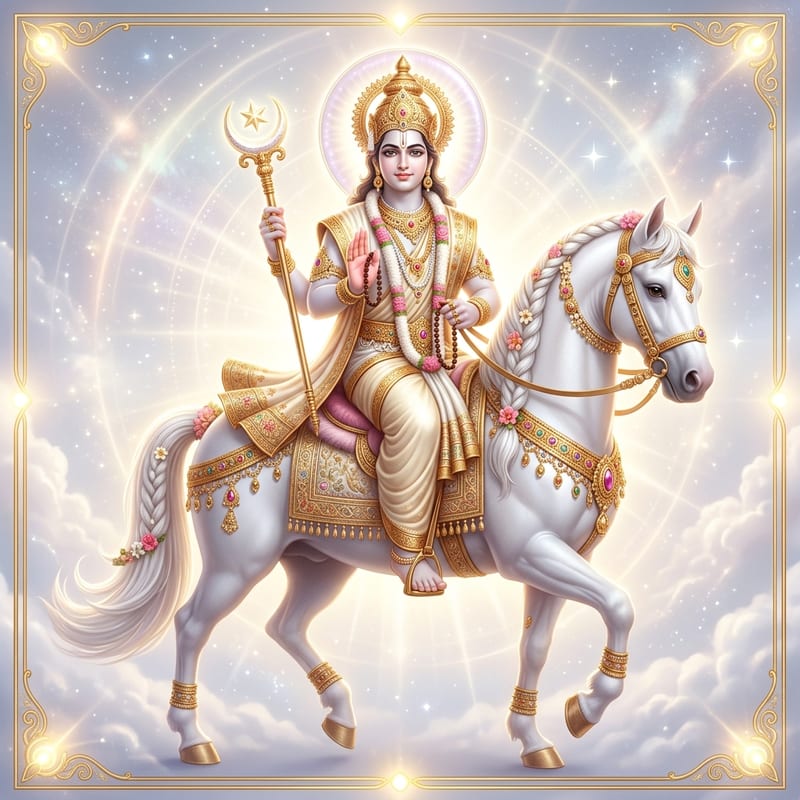
॥ ஶ்ரீ ஶுக்ர நாம ஸ்தோத்ரம் ॥
॥ ஶ்ரீஸ்கந்தபுராணே ॥
॥ ஷோடஶ நாமாநி ॥
ஶுக்ரஃ காவ்யஃ ஶுக்ரரேதா ஶுக்லாம்பரதரஃ ஸுதீ ।
ஹிமாபஃ குந்ததவலஃ ஶுப்ராம்ஶுஃ ஶுக்லபூஷணஃ ॥ ௧ ॥
ஹிமாபஃ குந்ததவலஃ ஶுப்ராம்ஶுஃ ஶுக்லபூஷணஃ ॥ ௧ ॥
நீதிஜ்ஞோ நீதிக்ரு'ந்நீதிமார்ககாமீ க்ரஹாதிபஃ ।
உஶநா வேதவேதாங்கபாரகஃ கவிராத்மவித் ॥ ௨ ॥
உஶநா வேதவேதாங்கபாரகஃ கவிராத்மவித் ॥ ௨ ॥
பார்கவஃ கருணாஃ ஸிந்துர்ஜ்ஞாநகம்யஃ ஸுதப்ரதஃ ।
ஶுக்ரஸ்யைதாநி நாமாநி ஶுக்ரம் ஸ்ம்ரு'த்வா து யஃ படேத் ॥ ௩ ॥
ஶுக்ரஸ்யைதாநி நாமாநி ஶுக்ரம் ஸ்ம்ரு'த்வா து யஃ படேத் ॥ ௩ ॥
॥ பலஶ்ருதி ॥
ஆயுர்தநம் ஸுகம் புத்ரம் லக்ஷ்மீ வஸதிமுத்தமாம் ।
வித்யாம் சைவ ஸ்வயம் தஸ்மை ஶுக்ரஸ்துஷ்டோ ததாதி ச ॥ ௪ ॥
வித்யாம் சைவ ஸ்வயம் தஸ்மை ஶுக்ரஸ்துஷ்டோ ததாதி ச ॥ ௪ ॥
॥ இதி ஶ்ரீஸ்கந்தபுராணே ஶ்ரீ ஶுக்ர ஸ்தோத்ரம் ஸம்பூர்ணம் ॥