
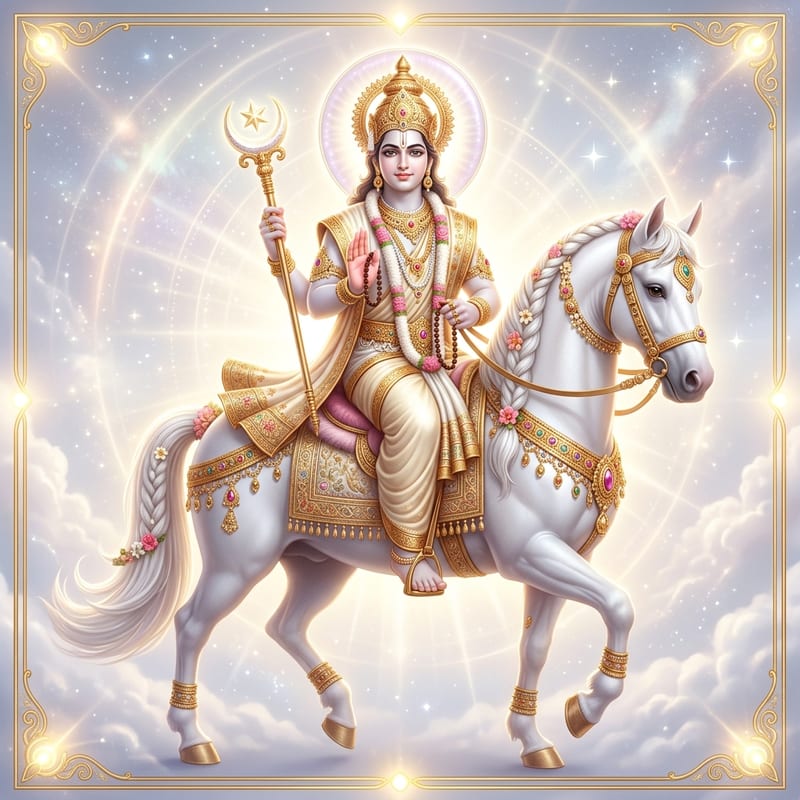
॥ શ્રી શુક્ર નામ સ્તોત્રમ્ ॥
॥ શ્રીસ્કન્દપુરાણે ॥
॥ ષોડશ નામાનિ ॥
શુક્રઃ કાવ્યઃ શુક્રરેતા શુક્લામ્બરધરઃ સુધી ।
હિમાભઃ કુન્દધવલઃ શુભ્રાંશુઃ શુક્લભૂષણઃ ॥ ૧ ॥
હિમાભઃ કુન્દધવલઃ શુભ્રાંશુઃ શુક્લભૂષણઃ ॥ ૧ ॥
નીતિજ્ઞો નીતિકૃન્નીતિમાર્ગગામી ગ્રહાધિપઃ ।
ઉશના વેદવેદાઙ્ગપારગઃ કવિરાત્મવિત્ ॥ ૨ ॥
ઉશના વેદવેદાઙ્ગપારગઃ કવિરાત્મવિત્ ॥ ૨ ॥
ભાર્ગવઃ કરુણાઃ સિન્ધુર્જ્ઞાનગમ્યઃ સુતપ્રદઃ ।
શુક્રસ્યૈતાનિ નામાનિ શુક્રં સ્મૃત્વા તુ યઃ પઠેત્ ॥ ૩ ॥
શુક્રસ્યૈતાનિ નામાનિ શુક્રં સ્મૃત્વા તુ યઃ પઠેત્ ॥ ૩ ॥
॥ ફલશ્રુતિ ॥
આયુર્ધનં સુખં પુત્રં લક્ષ્મી વસતિમુત્તમામ્ ।
વિદ્યાં ચૈવ સ્વયં તસ્મૈ શુક્રસ્તુષ્ટો દદાતિ ચ ॥ ૪ ॥
વિદ્યાં ચૈવ સ્વયં તસ્મૈ શુક્રસ્તુષ્ટો દદાતિ ચ ॥ ૪ ॥
॥ ઇતિ શ્રીસ્કન્દપુરાણે શ્રી શુક્ર સ્તોત્રમ્ સમ્પૂર્ણમ્ ॥