
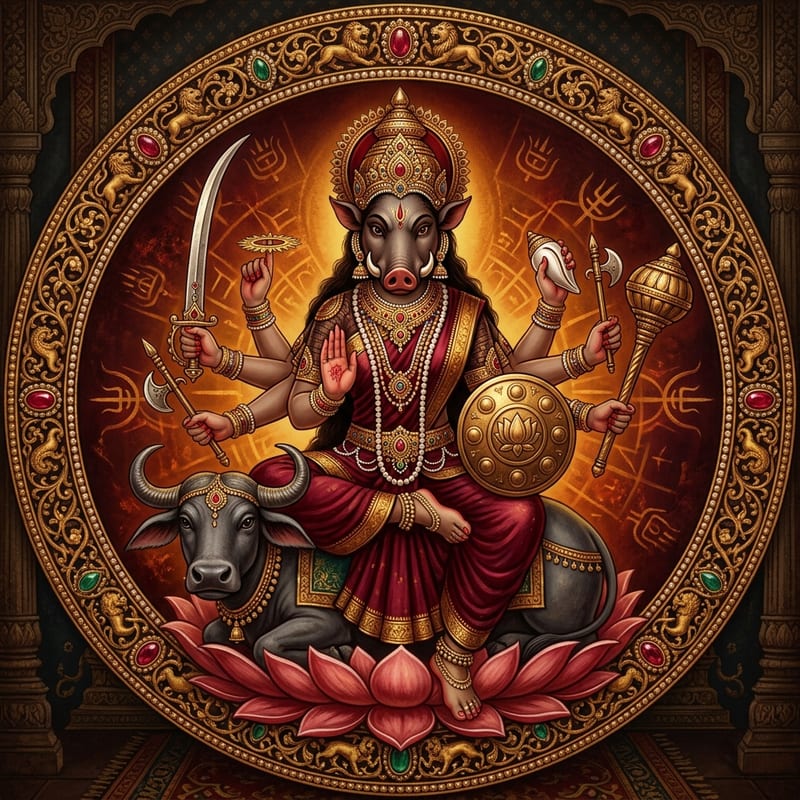
|| śrī vārāhyanugrahāṣṭakam ||
|| īśvara uvāca||
mātarjagadracananāṭakasūtradhāra-stvadrūpamākalayituṃ paramārthato'yam |
īśo'pyamīśvarapadaṃ samupaiti tādṛk ko'nyaḥ stavaṃ kimiva tāvakamādadhātu || 1 ||
īśo'pyamīśvarapadaṃ samupaiti tādṛk ko'nyaḥ stavaṃ kimiva tāvakamādadhātu || 1 ||
nāmāni kintu gṛṇatastava lokatuṇḍe nāḍambaraṃ spṛśati daṇḍadharasya daṇḍaḥ |
yalleśalambitabhavāmbunidhiryato'yat tvannāmasaṃsmṛtiriyaṃ na nunaḥ stutiste || 2 ||
yalleśalambitabhavāmbunidhiryato'yat tvannāmasaṃsmṛtiriyaṃ na nunaḥ stutiste || 2 ||
tvaccintanādarasamullasadaprameyā-''nandodayātsamuditaḥ sphuṭaromaharṣaḥ |
mātarnamāmi sudināni sadetyamuṃ tvā-mabhyarthaye'rthamiti pūrayatāddayālo || 3 ||
mātarnamāmi sudināni sadetyamuṃ tvā-mabhyarthaye'rthamiti pūrayatāddayālo || 3 ||
indrendumaulividhikeśavamauliratna-rociścayojjvalitapādasarojayugme |
ceto natau mama sadā pratibimbitā tvaṃ bhūyā bhavānī bhavanāśini bhāvaye tvām || 4 ||
ceto natau mama sadā pratibimbitā tvaṃ bhūyā bhavānī bhavanāśini bhāvaye tvām || 4 ||
līloddhṛtakṣititalasya varāhamūrte-rvārāhamūrtirakhilārthakarī tvameva |
prāleyaraśmisukalollasitāvataṃsā tvaṃ devi vāmatanubhāgaharā harasya || 5 ||
prāleyaraśmisukalollasitāvataṃsā tvaṃ devi vāmatanubhāgaharā harasya || 5 ||
tvāmamba taptakanakojjvalakāntimanta-rye cintayanti yuvatītanu māgalāntām |
cakrāyudhāṃ trinayanāṃ varapotṛvaktrāṃ teṣāṃ padāmbujayugaṃ praṇamanti devāḥ || 6 ||
cakrāyudhāṃ trinayanāṃ varapotṛvaktrāṃ teṣāṃ padāmbujayugaṃ praṇamanti devāḥ || 6 ||
tvatsevanaskhalitapāpacayasya māta-rmokṣo'pi yasya na sato gaṇanāmupaiti |
devāsuroraganṛpūjitapādapīṭhaḥ kasyāḥ śriyaḥ sa khalu bhājanatāṃ na dhatte || 7 ||
devāsuroraganṛpūjitapādapīṭhaḥ kasyāḥ śriyaḥ sa khalu bhājanatāṃ na dhatte || 7 ||
kiṃ duṣkaraṃ tvayi manoviṣayaṃ gatāyāṃ kiṃ durlabhaṃ tvayi vidhānuvadarcitāyām |
kiṃ durbharaṃ tvayi sakṛt smṛtimāgatāyāṃ kiṃ durjayaṃ tvayi kṛtastutivādapuṃsām || 8 ||
kiṃ durbharaṃ tvayi sakṛt smṛtimāgatāyāṃ kiṃ durjayaṃ tvayi kṛtastutivādapuṃsām || 8 ||
|| iti śrī vārāhyanugrahāṣṭakam sampūrṇam ||