
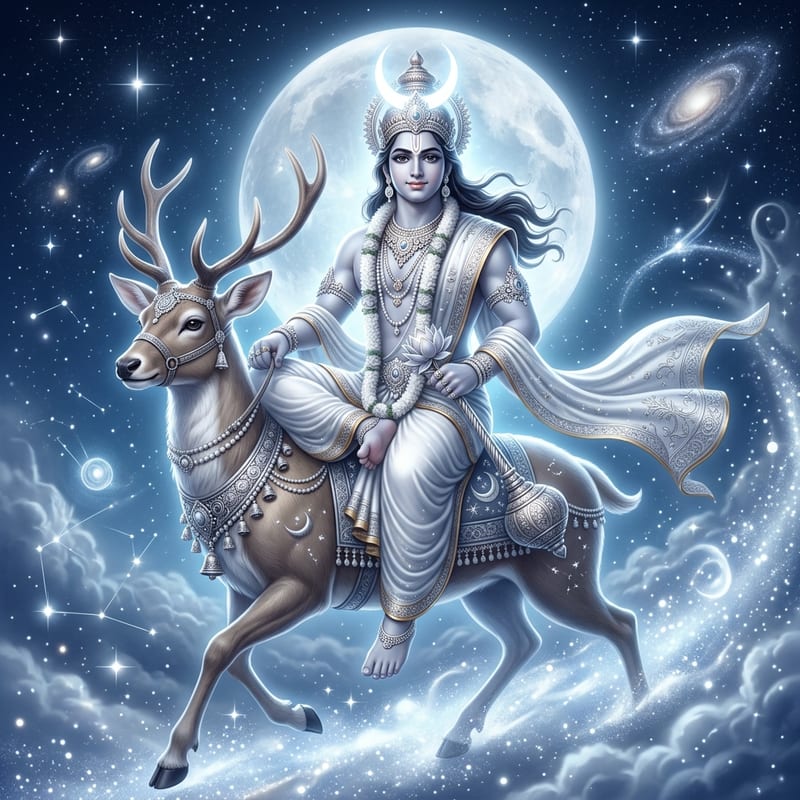
|| dohā ||
jaya-jaya caṃdā! śrī candramā, jaya-jaya amṛta-aṃśu-ujāgara|
jayati śaśāṃka! kalā-nidhi, tuma ho nitya sudhā-sāgara||
jayati śaśāṃka! kalā-nidhi, tuma ho nitya sudhā-sāgara||
|| caupāī ||
jaya-jaya candra! deva! hitakārī,
jayati niśākara! śubha-ujiyārī||
tumase rātri śobhā pātī,
kiraṇa tumhārī mana ko bhātī||
kṣīra-siṃdhu se tuma upajāe,
kahe jāta ho atri-suta-āe||
viṣṇu-vāma-dṛga-aṃśa svarūpā,
viśva-moda-kāraka! tava rūpā||
jayati niśākara! śubha-ujiyārī||
tumase rātri śobhā pātī,
kiraṇa tumhārī mana ko bhātī||
kṣīra-siṃdhu se tuma upajāe,
kahe jāta ho atri-suta-āe||
viṣṇu-vāma-dṛga-aṃśa svarūpā,
viśva-moda-kāraka! tava rūpā||
śveta-varṇa, dasa-aśva-yukta-ratha,
vicarata nabha meṃ sabake patha-ratha||
amṛta-kiraṇoṃ se mana harate,
sabakī pīṛā tuma hara lete||
jaba tuma udita gagana meṃ hote,
puṣpa, latā saba harṣita hote||
sabhī jīva-jaṃtu sukha pāte,
śītala- maṃda-pavana-laharāte||
vicarata nabha meṃ sabake patha-ratha||
amṛta-kiraṇoṃ se mana harate,
sabakī pīṛā tuma hara lete||
jaba tuma udita gagana meṃ hote,
puṣpa, latā saba harṣita hote||
sabhī jīva-jaṃtu sukha pāte,
śītala- maṃda-pavana-laharāte||
tuma ho sattāisa-nakṣatreśa,
tuma hī ho saba deva-maheśa||
tuma ho solaha-kalā-yukta-svāmī,
ghaṭate-baṛhate antaryāmī||
jaba-jaba tuma pūre ho jāte,
vividha-utsava taba haiṃ manāte||
tuma para jaba rāhu caṛha ātā,
pūrṇa-grahaṇa jaga meṃ kahalātā||
tuma hī ho saba deva-maheśa||
tuma ho solaha-kalā-yukta-svāmī,
ghaṭate-baṛhate antaryāmī||
jaba-jaba tuma pūre ho jāte,
vividha-utsava taba haiṃ manāte||
tuma para jaba rāhu caṛha ātā,
pūrṇa-grahaṇa jaga meṃ kahalātā||
tumase hī sāre vrata hote,
tere bina saba niṣphala hote||
tuma ho auṣadhi-vana ke svāmī,
tuma bina vyartha sabhī phala-kāmī||
tumase varṣā-ṛtu kahalātī,
tumhārī kalā anna upajātī||
phasaleṃ tumase bala haiṃ pātī,
dharatī para hariyālī chātī||
tere bina saba niṣphala hote||
tuma ho auṣadhi-vana ke svāmī,
tuma bina vyartha sabhī phala-kāmī||
tumase varṣā-ṛtu kahalātī,
tumhārī kalā anna upajātī||
phasaleṃ tumase bala haiṃ pātī,
dharatī para hariyālī chātī||
tuma hī pitaroṃ ke ho pyāre,
tumase saba haiṃ bhāgya-sa~vāre||
ho mana ke svāmī tuma devā,
karate sura-nara-muni saba sevā||
rohiṇī-priya, deva! hamāre,
saba saṃkaṭa-vipadā ko ṭāre||
jo koī japatā nāma tumhārā,
hara lete ho saba duḥkha sārā||
tumase saba haiṃ bhāgya-sa~vāre||
ho mana ke svāmī tuma devā,
karate sura-nara-muni saba sevā||
rohiṇī-priya, deva! hamāre,
saba saṃkaṭa-vipadā ko ṭāre||
jo koī japatā nāma tumhārā,
hara lete ho saba duḥkha sārā||
rogī ho yā koī nirdhana,
tuma hara lete ho saba kraṃdana||
jisa para hove kṛpā tumhārī,
vipadā use na vyāpai bhārī||
jo nara japatā candra-maṃtra ko,
pātā hai vaha sakala-sukha-taṃtra ko||
jisakī hove daśā tumhārī,
use na koī ciṃtā bhārī||
tuma hara lete ho saba kraṃdana||
jisa para hove kṛpā tumhārī,
vipadā use na vyāpai bhārī||
jo nara japatā candra-maṃtra ko,
pātā hai vaha sakala-sukha-taṃtra ko||
jisakī hove daśā tumhārī,
use na koī ciṃtā bhārī||
somavāra kā vrata jo karatā,
usakī tuma pīṛā saba haratā||
śveta-puṣpa, akṣata, dadhi-mevā,
karate haiṃ saba tumhārī sevā||
cālīsā jo paṛhe-sunāve,
saba sukha-bhoga, parama-pada pāve||
‘lakhi’ dīna kī suno kahānī,
jaya-jaya candradeva! sukhakhānī||
usakī tuma pīṛā saba haratā||
śveta-puṣpa, akṣata, dadhi-mevā,
karate haiṃ saba tumhārī sevā||
cālīsā jo paṛhe-sunāve,
saba sukha-bhoga, parama-pada pāve||
‘lakhi’ dīna kī suno kahānī,
jaya-jaya candradeva! sukhakhānī||
|| dohā ||
śaśi-suta! ‘budha’ ke pitā ho, he śaśi! tuma mama-trāṇa|
śaraṇāgata kī rakṣā karo, he amṛta kī khāna||
śaraṇāgata kī rakṣā karo, he amṛta kī khāna||