
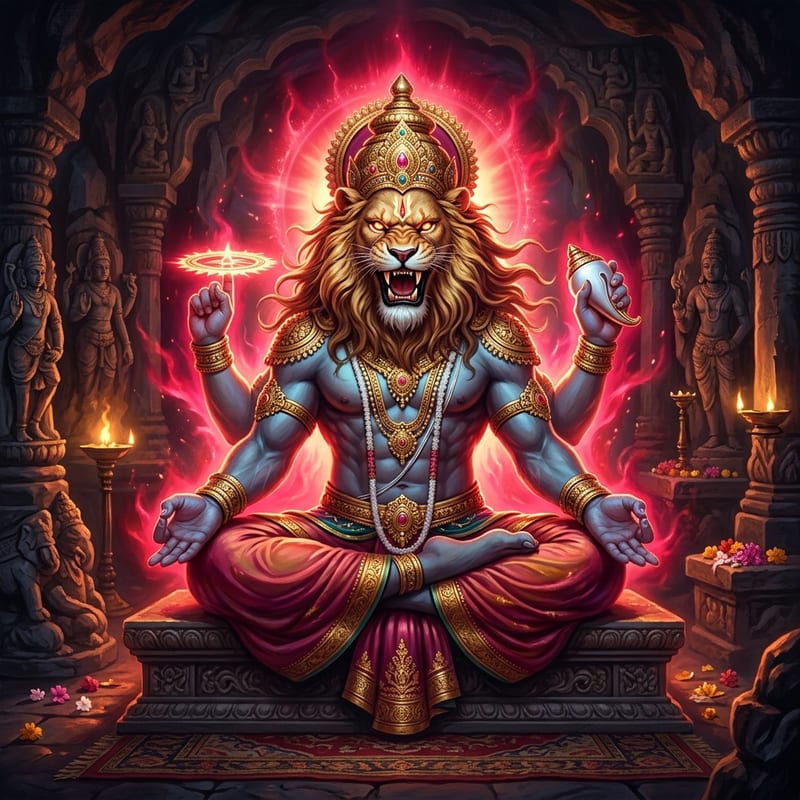
श्रुतीनामुत्तरं भागं वेगवत्याश्च दक्षिणम् ।
कामादधिवसन् जीयात् कश्चिदद्भुत केसरी ॥ 1 ॥
कामादधिवसन् जीयात् कश्चिदद्भुत केसरी ॥ 1 ॥
तपनेन्द्वग्निनयनः तापानपचिनोतु नः ।
तापनीयरहस्यानां सारः कामासिका हरिः ॥ 2 ॥
तापनीयरहस्यानां सारः कामासिका हरिः ॥ 2 ॥
आकण्ठमादिपुरुषं
कण्ठीरवमुपरि कुण्ठितारातिम् ।
वेगोपकण्ठसङ्गात्
विमुक्तवैकुण्ठबहुमतिमुपासे ॥ 3 ॥
कण्ठीरवमुपरि कुण्ठितारातिम् ।
वेगोपकण्ठसङ्गात्
विमुक्तवैकुण्ठबहुमतिमुपासे ॥ 3 ॥
बन्धुमखिलस्य जन्तोः
बन्धुरपर्यङ्कबन्धरमणीयम् ।
विषमविलोचनमीडे
वेगवतीपुलिनकेलिनरसिंहम् ॥ 4 ॥
बन्धुरपर्यङ्कबन्धरमणीयम् ।
विषमविलोचनमीडे
वेगवतीपुलिनकेलिनरसिंहम् ॥ 4 ॥
स्वस्थानेषु मरुद्गणान् नियमयन् स्वाधीनसर्वेन्द्रियः
पर्यङ्कस्थिरधारणा प्रकटितप्रत्यङ्मुखावस्थितिः ।
प्रायेण प्रणिपेदुषः प्रभुरसौ योगं निजं शिक्षयन्
कामानातनुतादशेषजगतां कामासिका केसरी ॥ 5 ॥
पर्यङ्कस्थिरधारणा प्रकटितप्रत्यङ्मुखावस्थितिः ।
प्रायेण प्रणिपेदुषः प्रभुरसौ योगं निजं शिक्षयन्
कामानातनुतादशेषजगतां कामासिका केसरी ॥ 5 ॥
विकस्वरनखस्वरुक्षतहिरण्यवक्षःस्थली-
-निरर्गलविनिर्गलद्रुधिरसिन्धुसन्ध्यायिताः ।
अवन्तु मदनासिकामनुजपञ्चवक्त्रस्य मां
अहम्प्रथमिकामिथः प्रकटिताहवा बाहवः ॥ 6 ॥
-निरर्गलविनिर्गलद्रुधिरसिन्धुसन्ध्यायिताः ।
अवन्तु मदनासिकामनुजपञ्चवक्त्रस्य मां
अहम्प्रथमिकामिथः प्रकटिताहवा बाहवः ॥ 6 ॥
सटापटलभीषणे सरभसाट्टहासोद्भटे
स्फुरत् क्रुधिपरिस्फुट भ्रुकुटिकेऽपि वक्त्रे कृते ।
कृपाकपटकेसरिन् दनुजडिम्भदत्तस्तना
सरोजसदृशा दृशा व्यतिविषज्य ते व्यज्यते ॥ 7 ॥
स्फुरत् क्रुधिपरिस्फुट भ्रुकुटिकेऽपि वक्त्रे कृते ।
कृपाकपटकेसरिन् दनुजडिम्भदत्तस्तना
सरोजसदृशा दृशा व्यतिविषज्य ते व्यज्यते ॥ 7 ॥
त्वयि रक्षति रक्षकैः किमन्यै-
-स्त्वयि चारक्षति रक्षकैः किमन्यैः ।
इति निश्चितधीः श्रयामि नित्यं
नृहरे वेगवतीतटाश्रयं त्वाम् ॥ 8 ॥
-स्त्वयि चारक्षति रक्षकैः किमन्यैः ।
इति निश्चितधीः श्रयामि नित्यं
नृहरे वेगवतीतटाश्रयं त्वाम् ॥ 8 ॥
इत्थं स्तुतः सकृदिहाष्टभिरेष पद्यैः
श्रीवेङ्कटेशरचितैस्त्रिदशेन्द्रवन्द्यः ।
दुर्दान्तघोरदुरितद्विरदेन्द्रभेदी
कामासिकानरहरिर्वितनोतु कामान् ॥ 9 ॥
श्रीवेङ्कटेशरचितैस्त्रिदशेन्द्रवन्द्यः ।
दुर्दान्तघोरदुरितद्विरदेन्द्रभेदी
कामासिकानरहरिर्वितनोतु कामान् ॥ 9 ॥
इति श्रीवेदान्तदेशिककृतं कामासिकाष्टकम् ।