
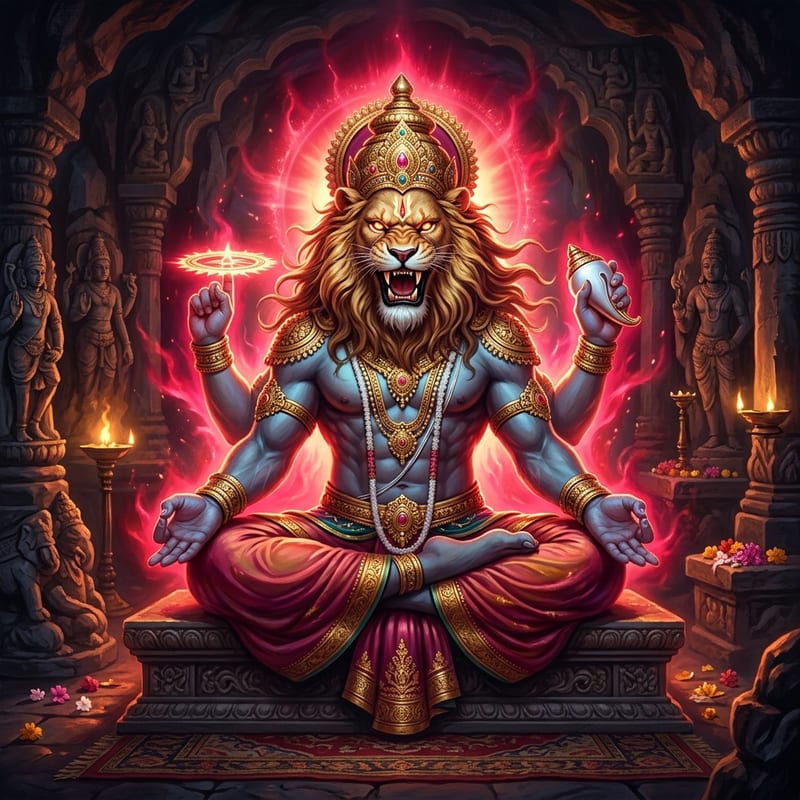
śrutīnāmuttaraṃ bhāgaṃ vegavatyāśca dakṣiṇam |
kāmādadhivasan jīyāt kaścidadbhuta kesarī || 1 ||
kāmādadhivasan jīyāt kaścidadbhuta kesarī || 1 ||
tapanendvagninayanaḥ tāpānapacinotu naḥ |
tāpanīyarahasyānāṃ sāraḥ kāmāsikā hariḥ || 2 ||
tāpanīyarahasyānāṃ sāraḥ kāmāsikā hariḥ || 2 ||
ākaṇṭhamādipuruṣaṃ
kaṇṭhīravamupari kuṇṭhitārātim |
vegopakaṇṭhasaṅgāt
vimuktavaikuṇṭhabahumatimupāse || 3 ||
kaṇṭhīravamupari kuṇṭhitārātim |
vegopakaṇṭhasaṅgāt
vimuktavaikuṇṭhabahumatimupāse || 3 ||
bandhumakhilasya jantoḥ
bandhuraparyaṅkabandharamaṇīyam |
viṣamavilocanamīḍe
vegavatīpulinakelinarasiṃham || 4 ||
bandhuraparyaṅkabandharamaṇīyam |
viṣamavilocanamīḍe
vegavatīpulinakelinarasiṃham || 4 ||
svasthāneṣu marudgaṇān niyamayan svādhīnasarvendriyaḥ
paryaṅkasthiradhāraṇā prakaṭitapratyaṅmukhāvasthitiḥ |
prāyeṇa praṇipeduṣaḥ prabhurasau yogaṃ nijaṃ śikṣayan
kāmānātanutādaśeṣajagatāṃ kāmāsikā kesarī || 5 ||
paryaṅkasthiradhāraṇā prakaṭitapratyaṅmukhāvasthitiḥ |
prāyeṇa praṇipeduṣaḥ prabhurasau yogaṃ nijaṃ śikṣayan
kāmānātanutādaśeṣajagatāṃ kāmāsikā kesarī || 5 ||
vikasvaranakhasvarukṣatahiraṇyavakṣaḥsthalī-
-nirargalavinirgaladrudhirasindhusandhyāyitāḥ |
avantu madanāsikāmanujapañcavaktrasya māṃ
ahamprathamikāmithaḥ prakaṭitāhavā bāhavaḥ || 6 ||
-nirargalavinirgaladrudhirasindhusandhyāyitāḥ |
avantu madanāsikāmanujapañcavaktrasya māṃ
ahamprathamikāmithaḥ prakaṭitāhavā bāhavaḥ || 6 ||
saṭāpaṭalabhīṣaṇe sarabhasāṭṭahāsodbhaṭe
sphurat krudhiparisphuṭa bhrukuṭike'pi vaktre kṛte |
kṛpākapaṭakesarin danujaḍimbhadattastanā
sarojasadṛśā dṛśā vyativiṣajya te vyajyate || 7 ||
sphurat krudhiparisphuṭa bhrukuṭike'pi vaktre kṛte |
kṛpākapaṭakesarin danujaḍimbhadattastanā
sarojasadṛśā dṛśā vyativiṣajya te vyajyate || 7 ||
tvayi rakṣati rakṣakaiḥ kimanyai-
-stvayi cārakṣati rakṣakaiḥ kimanyaiḥ |
iti niścitadhīḥ śrayāmi nityaṃ
nṛhare vegavatītaṭāśrayaṃ tvām || 8 ||
-stvayi cārakṣati rakṣakaiḥ kimanyaiḥ |
iti niścitadhīḥ śrayāmi nityaṃ
nṛhare vegavatītaṭāśrayaṃ tvām || 8 ||
itthaṃ stutaḥ sakṛdihāṣṭabhireṣa padyaiḥ
śrīveṅkaṭeśaracitaistridaśendravandyaḥ |
durdāntaghoraduritadviradendrabhedī
kāmāsikānaraharirvitanotu kāmān || 9 ||
śrīveṅkaṭeśaracitaistridaśendravandyaḥ |
durdāntaghoraduritadviradendrabhedī
kāmāsikānaraharirvitanotu kāmān || 9 ||
iti śrīvedāntadeśikakṛtaṃ kāmāsikāṣṭakam |