
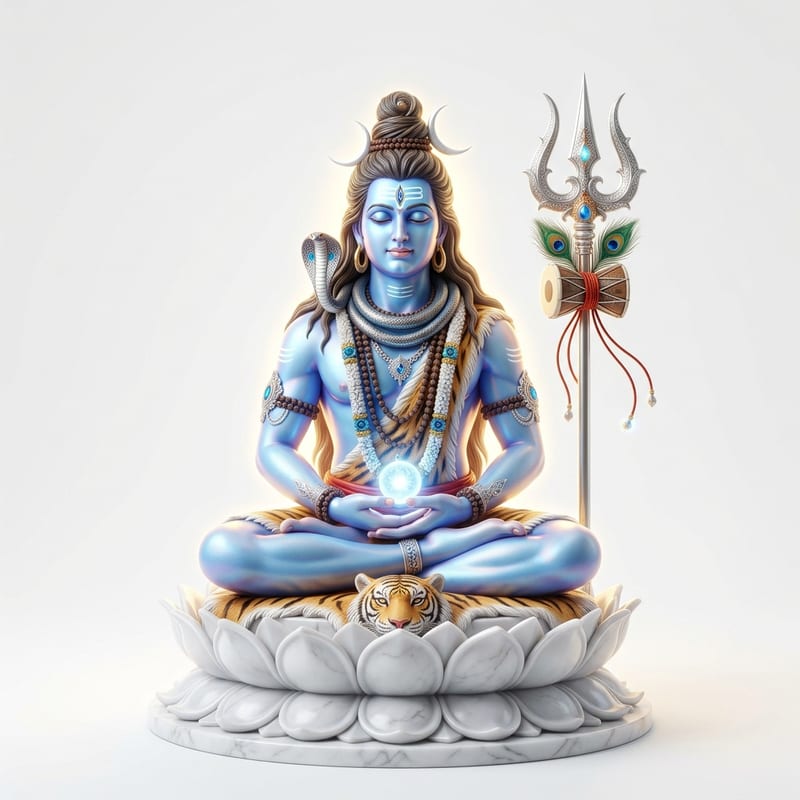
नानारत्न विभूषितं मृगमदामोदाङ्कितं चन्दनम् ।
जाती चम्पक बिल्वपत्र रचितं पुष्पं च धूपं तथा
दीपं देव दयानिधे पशुपते हृत्कल्पितं गृह्यताम् ॥ 1 ॥
- रत्नैः (ratnaiḥ)with jewels
- कल्पितम् (kalpitam)made ready
- आसनम् (āsanam)a seat
- हिमजलैः (himajalaiḥ)with cold water
- स्नानम् (snānam)a bath
- च (ca)and
- दिव्याम्बरम् (divyāmbaram)divine clothes
- नानारत्नविभूषितम् (nānāratnavibhūṣitam)worked with gems of every kind
- मृगमदामोदाङ्कितम् (mṛgamadāmodāṅkitam)carrying the scent of musk
- चन्दनम् (candanam)sandal paste
- जातीचम्पकबिल्वपत्ररचितम् (jātīcampakabilvapatraracitam)made of jasmine, champak and bilva leaves
- पुष्पम् (puṣpam)flowers
- च (ca)and
- धूपम् (dhūpam)incense
- तथा (tathā)and
- दीपम् (dīpam)a lamp
- देव (deva)O God
- दयानिधे (dayānidhe)O sea of kindness
- पशुपते (paśupate)O Pashupati
- हृत्कल्पितम् (hṛtkalpitam)all of it made ready in the heart
- गृह्यताम् (gṛhyatām)let it be taken
anvaya देव दयानिधे पशुपते रत्नैः कल्पितम् आसनम् हिमजलैः स्नानम् नानारत्नविभूषितम् दिव्याम्बरम् च मृगमदामोदाङ्कितम् चन्दनम् जातीचम्पकबिल्वपत्ररचितम् पुष्पम् धूपम् तथा च दीपम् हृत्कल्पितम् गृह्यताम्
chandas Śārdūlavikrīḍita, 19 syllables in each of 4 pādas
हृत्कल्पितम् made ready in the heart — Kalpita is what has been put together or arranged. Every offering in this hymn is arranged in the mind, and this word is what holds the whole piece together.
मृगमदामोदाङ्कितम् carrying the scent of musk — Mṛgamada is musk. Sandal paste for worship is often mixed with it.
बिल्वपत्र bilva leaf — The leaf Shiva is worshipped with. Naming it here, among jasmine and champak, marks the worship as his.
पशुपते O Pashupati — Lord of the paśus, the living beings who are held as if tethered. It is one of Shiva's oldest names.
note The verse walks through the first offerings of a temple puja in their usual order: a seat, water for bathing, clothes, sandal paste, flowers, incense, a lamp. Each one is built in the mind and then handed over.
भक्ष्यं पञ्चविधं पयोदधियुतं रम्भाफलं पानकम् ।
शाकानामयुतं जलं रुचिकरं कर्पूर खण्डोज्ज्वलं
ताम्बूलं मनसा मया विरचितं भक्त्या प्रभो स्वीकुरु ॥ 2 ॥
- सौवर्णे (sauvarṇe)in a golden
- नवरत्नखण्डरचिते (navaratnakhaṇḍaracite)inlaid with pieces of the nine gems
- पात्रे (pātre)bowl
- घृतम् (ghṛtam)ghee
- पायसम् (pāyasam)sweet milk-rice
- भक्ष्यम् (bhakṣyam)food
- पञ्चविधम् (pañcavidham)of five kinds
- पयोदधियुतम् (payodadhiyutam)made with milk and curds
- रम्भाफलम् (rambhāphalam)a plantain
- पानकम् (pānakam)a sweet drink
- शाकानाम् (śākānām)of vegetable dishes
- अयुतम् (ayutam)any number
- जलम् (jalam)water
- रुचिकरम् (rucikaram)cool and pleasing
- कर्पूरखण्डोज्ज्वलम् (karpūrakhaṇḍojjvalam)bright with a piece of camphor
- ताम्बूलम् (tāmbūlam)betel leaf
- मनसा (manasā)in the mind
- मया (mayā)by me
- विरचितम् (viracitam)put together
- भक्त्या (bhaktyā)with love
- प्रभो (prabho)O Lord
- स्वीकुरु (svīkuru)accept it
anvaya प्रभो सौवर्णे नवरत्नखण्डरचिते पात्रे घृतम् पायसम् पयोदधियुतम् पञ्चविधम् भक्ष्यम् रम्भाफलम् पानकम् शाकानाम् अयुतम् रुचिकरम् जलम् कर्पूरखण्डोज्ज्वलम् ताम्बूलम् मया मनसा भक्त्या विरचितम् स्वीकुरु
chandas Śārdūlavikrīḍita, 19 syllables in each of 4 pādas
पायसम् rice cooked in milk — The sweet dish of rice boiled in milk with sugar, the usual offering at a temple meal.
ताम्बूलम् betel leaf with areca nut — Offered at the end of a meal, which is where it comes in the puja too.
अयुतम् ten thousand — Used here for a great number of vegetable dishes rather than a count.
note This is the naivedya, the meal. It runs from ghee and sweet rice through savoury dishes and cool water to the betel leaf a meal ends with. All of it, the verse says again, was put together in the mind.
वीणा भेरि मृदङ्ग काहलकला गीतं च नृत्यं तथा ।
साष्टाङ्गं प्रणतिः स्तुति-र्बहुविधा-ह्येतत्-समस्तं मया
सङ्कल्पेन समर्पितं तव विभो पूजां गृहाण प्रभो ॥ 3 ॥
- छत्रम् (chatram)an umbrella
- चामरयोः (cāmarayoḥ)of two yak tails
- युगम् (yugam)a pair
- व्यजनकम् (vyajanakam)a fan
- च (ca)and
- आदर्शकम् (ādarśakam)a mirror
- निर्मलम् (nirmalam)spotless
- वीणाभेरिमृदङ्गकाहलकलाः (vīṇābherimṛdaṅgakāhalakalāḥ)the arts of vina, kettledrum, mridanga and horn
- गीतम् (gītam)song
- च (ca)and
- नृत्यम् (nṛtyam)dance
- तथा (tathā)and
- साष्टाङ्गम् (sāṣṭāṅgam)touching the ground at eight points
- प्रणतिः (praṇatiḥ)a bow
- स्तुतिः (stutiḥ)praise
- बहुविधा (bahuvidhā)of many kinds
- हि (hi)indeed
- एतत् (etat)this
- समस्तम् (samastam)all of it
- मया (mayā)by me
- सङ्कल्पेन (saṅkalpena)by the resolve alone
- समर्पितम् (samarpitam)offered
- तव (tava)to you
- विभो (vibho)O you who are everywhere
- पूजाम् (pūjām)the worship
- गृहाण (gṛhāṇa)take
- प्रभो (prabho)O Lord
anvaya विभो प्रभो छत्रम् चामरयोः युगम् व्यजनकम् निर्मलम् आदर्शकम् च वीणाभेरिमृदङ्गकाहलकलाः गीतम् नृत्यम् च तथा साष्टाङ्गम् प्रणतिः बहुविधा स्तुतिः हि एतत् समस्तम् मया सङ्कल्पेन तव समर्पितम् पूजाम् गृहाण
chandas Śārdūlavikrīḍita, 19 syllables in each of 4 pādas
चामरयोः युगम् a pair of yak-tail whisks — Waved beside a deity or a king as a mark of honour.
साष्टाङ्गम् प्रणतिः the bow that touches down at eight points — Feet, knees, hands, chest, head all meet the ground, with the words and the mind joined to it.
सङ्कल्पेन by the resolve alone — Saṅkalpa is the intention a rite opens with. Here it is the whole rite, since nothing is set out by hand.
note The honours given to a deity after the meal: umbrella, whisks, fan, mirror, then music, dance, a full bow and praise. The verse ends by handing over everything at once as the puja itself.
पूजा ते विषयोपभोग-रचना निद्रा समाधिस्थितिः ।
सञ्चारः पदयोः प्रदक्षिणविधिः स्तोत्राणि सर्वा गिरो
यद्यत्कर्म करोमि तत्तदखिलं शम्भो तवाराधनम् ॥ 4 ॥
- आत्मा (ātmā)the self
- त्वम् (tvam)you
- गिरिजा (girijā)Girija
- मतिः (matiḥ)the mind
- सहचराः (sahacarāḥ)companions
- प्राणाः (prāṇāḥ)the breaths
- शरीरम् (śarīram)the body
- गृहम् (gṛham)the house
- पूजा (pūjā)worship
- ते (te)of you
- विषयोपभोगरचना (viṣayopabhogaracanā)the use I make of the things I enjoy
- निद्रा (nidrā)sleep
- समाधिस्थितिः (samādhisthitiḥ)being settled in samadhi
- सञ्चारः (sañcāraḥ)walking about
- पदयोः (padayoḥ)of the feet
- प्रदक्षिणविधिः (pradakṣiṇavidhiḥ)the circling of the shrine
- स्तोत्राणि (stotrāṇi)hymns
- सर्वाः (sarvāḥ)all
- गिरः (giraḥ)words
- यद्यत् (yadyat)whatever
- कर्म (karma)work
- करोमि (karomi)I do
- तत्तत् (tattat)all of that
- अखिलम् (akhilam)every bit of it
- शम्भो (śambho)O Shambhu
- तव (tava)your
- आराधनम् (ārādhanam)worship
anvaya शम्भो त्वम् आत्मा गिरिजा मतिः प्राणाः सहचराः शरीरम् गृहम् विषयोपभोगरचना ते पूजा निद्रा समाधिस्थितिः पदयोः सञ्चारः प्रदक्षिणविधिः सर्वाः गिरः स्तोत्राणि यद्यत् कर्म करोमि तत्तत् अखिलम् तव आराधनम्
chandas Śārdūlavikrīḍita, 19 syllables in each of 4 pādas
गिरिजा Parvati — The mountain's daughter. She is matched here with mati, the thinking mind, as Shiva is matched with the self.
समाधिस्थितिः staying in samadhi — Sleep is read as the mind settled and still, which is what samadhi is.
प्रदक्षिणविधिः the circling of the shrine — Walking round a shrine with the right side turned towards it. Here every step taken anywhere counts as that.
note The turn of the whole hymn. Having offered a puja in the mind, the poet finds that the puja was already going on: the body is the shrine, sleep is meditation, walking is circumambulation, speech is praise, and whatever he does is worship.
श्रवण नयनजं वा मानसं वापराधम् ।
विहितमविहितं वा सर्वमेतत्-क्षमस्व
जय जय करुणाब्धे श्री महादेव शम्भो ॥ 5 ॥
- करचरणकृतम् (karacaraṇakṛtam)done by hands and feet
- वाक्कायजम् (vākkāyajam)coming of speech or body
- कर्मजम् (karmajam)coming of what I did
- वा (vā)or
- श्रवणनयनजम् (śravaṇanayanajam)coming in through ear or eye
- वा (vā)or
- मानसम् (mānasam)staying in the mind
- वा (vā)or
- अपराधम् (aparādham)the wrong
- विहितम् (vihitam)what I did
- अविहितम् (avihitam)what I left undone
- वा (vā)or
- सर्वम् (sarvam)all
- एतत् (etat)of this
- क्षमस्व (kṣamasva)forgive
- जय (jaya)victory to you
- जय (jaya)victory
- करुणाब्धे (karuṇābdhe)O sea of kindness
- श्री (śrī)Shri
- महादेव (mahādeva)Mahadeva
- शम्भो (śambho)O Shambhu
anvaya श्री महादेव शम्भो करुणाब्धे करचरणकृतम् वाक्कायजम् कर्मजम् वा श्रवणनयनजम् वा मानसम् वा विहितम् अविहितम् वा अपराधम् एतत् सर्वम् क्षमस्व जय जय
chandas Mālinī, 15 syllables in each of 4 pādas
विहितम् अविहितम् what was laid down and what was not — Vihita is what the rules ask for. The pair covers both a duty left undone and a thing done that should not have been.
करुणाब्धे O sea of kindness — Abdhi is the sea, what holds the waters. The address answers the plea for pardon in the same breath.
note The closing verse asks pardon for every wrong, counted by the part of the person it came through: hands and feet, speech, body, deeds, ears, eyes, mind. The metre changes to Mālinī here, so the verse is heard as a different movement from the four before it.