
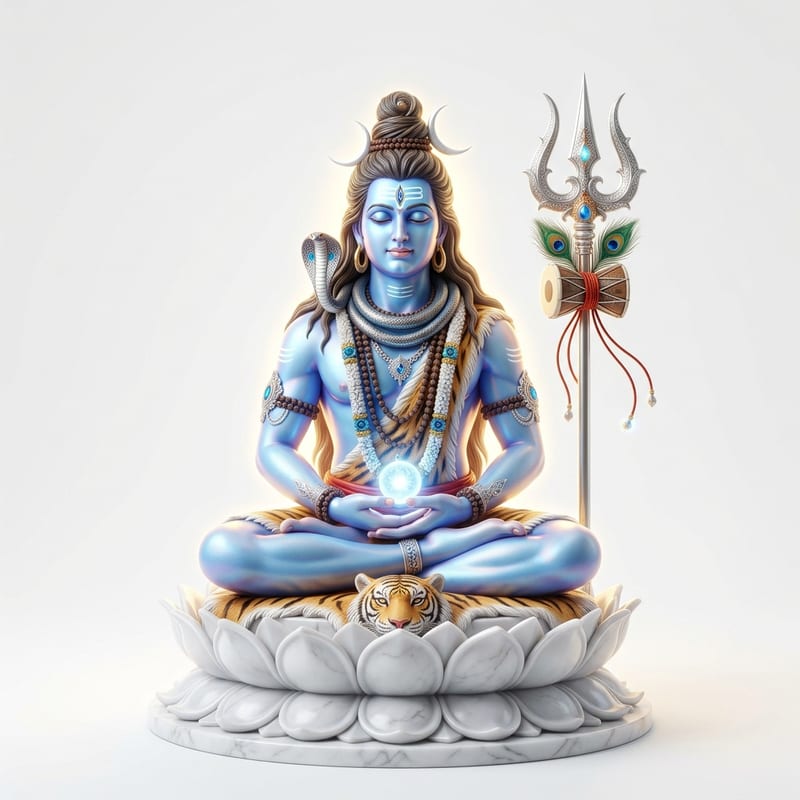
নানারত্ন বিভূষিতং মৃগমদামোদাঙ্কিতং চন্দনম্ ।
জাতী চম্পক বিল্বপত্র রচিতং পুষ্পং চ ধূপং তথা
দীপং দেব দযানিধে পশুপতে হৃত্কল্পিতং গৃহ্যতাম্ ॥ 1 ॥
- রত্নৈঃ (ratnaiḥ)with jewels
- কল্পিতম্ (kalpitam)made ready
- আসনম্ (āsanam)a seat
- হিমজলৈঃ (himajalaiḥ)with cold water
- স্নানম্ (snānam)a bath
- চ (ca)and
- দিব্যাম্বরম্ (divyāmbaram)divine clothes
- নানারত্নবিভূষিতম্ (nānāratnavibhūṣitam)worked with gems of every kind
- মৃগমদামোদাঙ্কিতম্ (mṛgamadāmodāṅkitam)carrying the scent of musk
- চন্দনম্ (candanam)sandal paste
- জাতীচম্পকবিল্বপত্ররচিতম্ (jātīcampakabilvapatraracitam)made of jasmine, champak and bilva leaves
- পুষ্পম্ (puṣpam)flowers
- চ (ca)and
- ধূপম্ (dhūpam)incense
- তথা (tathā)and
- দীপম্ (dīpam)a lamp
- দেব (deva)O God
- দযানিধে (dayānidhe)O sea of kindness
- পশুপতে (paśupate)O Pashupati
- হৃত্কল্পিতম্ (hṛtkalpitam)all of it made ready in the heart
- গৃহ্যতাম্ (gṛhyatām)let it be taken
anvaya দেব দযানিধে পশুপতে রত্নৈঃ কল্পিতম্ আসনম্ হিমজলৈঃ স্নানম্ নানারত্নবিভূষিতম্ দিব্যাম্বরম্ চ মৃগমদামোদাঙ্কিতম্ চন্দনম্ জাতীচম্পকবিল্বপত্ররচিতম্ পুষ্পম্ ধূপম্ তথা চ দীপম্ হৃত্কল্পিতম্ গৃহ্যতাম্
chandas Śārdūlavikrīḍita, 19 syllables in each of 4 pādas
হৃত্কল্পিতম্ made ready in the heart — Kalpita is what has been put together or arranged. Every offering in this hymn is arranged in the mind, and this word is what holds the whole piece together.
মৃগমদামোদাঙ্কিতম্ carrying the scent of musk — Mṛgamada is musk. Sandal paste for worship is often mixed with it.
বিল্বপত্র bilva leaf — The leaf Shiva is worshipped with. Naming it here, among jasmine and champak, marks the worship as his.
পশুপতে O Pashupati — Lord of the paśus, the living beings who are held as if tethered. It is one of Shiva's oldest names.
note The verse walks through the first offerings of a temple puja in their usual order: a seat, water for bathing, clothes, sandal paste, flowers, incense, a lamp. Each one is built in the mind and then handed over.
ভক্ষ্যং পঞ্চবিধং পযোদধিযুতং রম্ভাফলং পানকম্ ।
শাকানামযুতং জলং রুচিকরং কর্পূর খণ্ডোজ্জ্বলং
তাম্বূলং মনসা মযা বিরচিতং ভক্ত্যা প্রভো স্বীকুরু ॥ 2 ॥
- সৌবর্ণে (sauvarṇe)in a golden
- নবরত্নখণ্ডরচিতে (navaratnakhaṇḍaracite)inlaid with pieces of the nine gems
- পাত্রে (pātre)bowl
- ঘৃতম্ (ghṛtam)ghee
- পাযসম্ (pāyasam)sweet milk-rice
- ভক্ষ্যম্ (bhakṣyam)food
- পঞ্চবিধম্ (pañcavidham)of five kinds
- পযোদধিযুতম্ (payodadhiyutam)made with milk and curds
- রম্ভাফলম্ (rambhāphalam)a plantain
- পানকম্ (pānakam)a sweet drink
- শাকানাম্ (śākānām)of vegetable dishes
- অযুতম্ (ayutam)any number
- জলম্ (jalam)water
- রুচিকরম্ (rucikaram)cool and pleasing
- কর্পূরখণ্ডোজ্জ্বলম্ (karpūrakhaṇḍojjvalam)bright with a piece of camphor
- তাম্বূলম্ (tāmbūlam)betel leaf
- মনসা (manasā)in the mind
- মযা (mayā)by me
- বিরচিতম্ (viracitam)put together
- ভক্ত্যা (bhaktyā)with love
- প্রভো (prabho)O Lord
- স্বীকুরু (svīkuru)accept it
anvaya প্রভো সৌবর্ণে নবরত্নখণ্ডরচিতে পাত্রে ঘৃতম্ পাযসম্ পযোদধিযুতম্ পঞ্চবিধম্ ভক্ষ্যম্ রম্ভাফলম্ পানকম্ শাকানাম্ অযুতম্ রুচিকরম্ জলম্ কর্পূরখণ্ডোজ্জ্বলম্ তাম্বূলম্ মযা মনসা ভক্ত্যা বিরচিতম্ স্বীকুরু
chandas Śārdūlavikrīḍita, 19 syllables in each of 4 pādas
পাযসম্ rice cooked in milk — The sweet dish of rice boiled in milk with sugar, the usual offering at a temple meal.
তাম্বূলম্ betel leaf with areca nut — Offered at the end of a meal, which is where it comes in the puja too.
অযুতম্ ten thousand — Used here for a great number of vegetable dishes rather than a count.
note This is the naivedya, the meal. It runs from ghee and sweet rice through savoury dishes and cool water to the betel leaf a meal ends with. All of it, the verse says again, was put together in the mind.
বীণা ভেরি মৃদঙ্গ কাহলকলা গীতং চ নৃত্যং তথা ।
সাষ্টাঙ্গং প্রণতিঃ স্তুতি-র্বহুবিধা-হ্যেতত্-সমস্তং মযা
সঙ্কল্পেন সমর্পিতং তব বিভো পূজাং গৃহাণ প্রভো ॥ 3 ॥
- ছত্রম্ (chatram)an umbrella
- চামরযোঃ (cāmarayoḥ)of two yak tails
- যুগম্ (yugam)a pair
- ব্যজনকম্ (vyajanakam)a fan
- চ (ca)and
- আদর্শকম্ (ādarśakam)a mirror
- নির্মলম্ (nirmalam)spotless
- বীণাভেরিমৃদঙ্গকাহলকলাঃ (vīṇābherimṛdaṅgakāhalakalāḥ)the arts of vina, kettledrum, mridanga and horn
- গীতম্ (gītam)song
- চ (ca)and
- নৃত্যম্ (nṛtyam)dance
- তথা (tathā)and
- সাষ্টাঙ্গম্ (sāṣṭāṅgam)touching the ground at eight points
- প্রণতিঃ (praṇatiḥ)a bow
- স্তুতিঃ (stutiḥ)praise
- বহুবিধা (bahuvidhā)of many kinds
- হি (hi)indeed
- এতত্ (etat)this
- সমস্তম্ (samastam)all of it
- মযা (mayā)by me
- সঙ্কল্পেন (saṅkalpena)by the resolve alone
- সমর্পিতম্ (samarpitam)offered
- তব (tava)to you
- বিভো (vibho)O you who are everywhere
- পূজাম্ (pūjām)the worship
- গৃহাণ (gṛhāṇa)take
- প্রভো (prabho)O Lord
anvaya বিভো প্রভো ছত্রম্ চামরযোঃ যুগম্ ব্যজনকম্ নির্মলম্ আদর্শকম্ চ বীণাভেরিমৃদঙ্গকাহলকলাঃ গীতম্ নৃত্যম্ চ তথা সাষ্টাঙ্গম্ প্রণতিঃ বহুবিধা স্তুতিঃ হি এতত্ সমস্তম্ মযা সঙ্কল্পেন তব সমর্পিতম্ পূজাম্ গৃহাণ
chandas Śārdūlavikrīḍita, 19 syllables in each of 4 pādas
চামরযোঃ যুগম্ a pair of yak-tail whisks — Waved beside a deity or a king as a mark of honour.
সাষ্টাঙ্গম্ প্রণতিঃ the bow that touches down at eight points — Feet, knees, hands, chest, head all meet the ground, with the words and the mind joined to it.
সঙ্কল্পেন by the resolve alone — Saṅkalpa is the intention a rite opens with. Here it is the whole rite, since nothing is set out by hand.
note The honours given to a deity after the meal: umbrella, whisks, fan, mirror, then music, dance, a full bow and praise. The verse ends by handing over everything at once as the puja itself.
পূজা তে বিষযোপভোগ-রচনা নিদ্রা সমাধিস্থিতিঃ ।
সঞ্চারঃ পদযোঃ প্রদক্ষিণবিধিঃ স্তোত্রাণি সর্বা গিরো
যদ্যত্কর্ম করোমি তত্তদখিলং শম্ভো তবারাধনম্ ॥ 4 ॥
- আত্মা (ātmā)the self
- ত্বম্ (tvam)you
- গিরিজা (girijā)Girija
- মতিঃ (matiḥ)the mind
- সহচরাঃ (sahacarāḥ)companions
- প্রাণাঃ (prāṇāḥ)the breaths
- শরীরম্ (śarīram)the body
- গৃহম্ (gṛham)the house
- পূজা (pūjā)worship
- তে (te)of you
- বিষযোপভোগরচনা (viṣayopabhogaracanā)the use I make of the things I enjoy
- নিদ্রা (nidrā)sleep
- সমাধিস্থিতিঃ (samādhisthitiḥ)being settled in samadhi
- সঞ্চারঃ (sañcāraḥ)walking about
- পদযোঃ (padayoḥ)of the feet
- প্রদক্ষিণবিধিঃ (pradakṣiṇavidhiḥ)the circling of the shrine
- স্তোত্রাণি (stotrāṇi)hymns
- সর্বাঃ (sarvāḥ)all
- গিরঃ (giraḥ)words
- যদ্যত্ (yadyat)whatever
- কর্ম (karma)work
- করোমি (karomi)I do
- তত্তত্ (tattat)all of that
- অখিলম্ (akhilam)every bit of it
- শম্ভো (śambho)O Shambhu
- তব (tava)your
- আরাধনম্ (ārādhanam)worship
anvaya শম্ভো ত্বম্ আত্মা গিরিজা মতিঃ প্রাণাঃ সহচরাঃ শরীরম্ গৃহম্ বিষযোপভোগরচনা তে পূজা নিদ্রা সমাধিস্থিতিঃ পদযোঃ সঞ্চারঃ প্রদক্ষিণবিধিঃ সর্বাঃ গিরঃ স্তোত্রাণি যদ্যত্ কর্ম করোমি তত্তত্ অখিলম্ তব আরাধনম্
chandas Śārdūlavikrīḍita, 19 syllables in each of 4 pādas
গিরিজা Parvati — The mountain's daughter. She is matched here with mati, the thinking mind, as Shiva is matched with the self.
সমাধিস্থিতিঃ staying in samadhi — Sleep is read as the mind settled and still, which is what samadhi is.
প্রদক্ষিণবিধিঃ the circling of the shrine — Walking round a shrine with the right side turned towards it. Here every step taken anywhere counts as that.
note The turn of the whole hymn. Having offered a puja in the mind, the poet finds that the puja was already going on: the body is the shrine, sleep is meditation, walking is circumambulation, speech is praise, and whatever he does is worship.
শ্রবণ নযনজং বা মানসং বাপরাধম্ ।
বিহিতমবিহিতং বা সর্বমেতত্-ক্ষমস্ব
জয জয করুণাব্ধে শ্রী মহাদেব শম্ভো ॥ 5 ॥
- করচরণকৃতম্ (karacaraṇakṛtam)done by hands and feet
- বাক্কাযজম্ (vākkāyajam)coming of speech or body
- কর্মজম্ (karmajam)coming of what I did
- বা (vā)or
- শ্রবণনযনজম্ (śravaṇanayanajam)coming in through ear or eye
- বা (vā)or
- মানসম্ (mānasam)staying in the mind
- বা (vā)or
- অপরাধম্ (aparādham)the wrong
- বিহিতম্ (vihitam)what I did
- অবিহিতম্ (avihitam)what I left undone
- বা (vā)or
- সর্বম্ (sarvam)all
- এতত্ (etat)of this
- ক্ষমস্ব (kṣamasva)forgive
- জয (jaya)victory to you
- জয (jaya)victory
- করুণাব্ধে (karuṇābdhe)O sea of kindness
- শ্রী (śrī)Shri
- মহাদেব (mahādeva)Mahadeva
- শম্ভো (śambho)O Shambhu
anvaya শ্রী মহাদেব শম্ভো করুণাব্ধে করচরণকৃতম্ বাক্কাযজম্ কর্মজম্ বা শ্রবণনযনজম্ বা মানসম্ বা বিহিতম্ অবিহিতম্ বা অপরাধম্ এতত্ সর্বম্ ক্ষমস্ব জয জয
chandas Mālinī, 15 syllables in each of 4 pādas
বিহিতম্ অবিহিতম্ what was laid down and what was not — Vihita is what the rules ask for. The pair covers both a duty left undone and a thing done that should not have been.
করুণাব্ধে O sea of kindness — Abdhi is the sea, what holds the waters. The address answers the plea for pardon in the same breath.
note The closing verse asks pardon for every wrong, counted by the part of the person it came through: hands and feet, speech, body, deeds, ears, eyes, mind. The metre changes to Mālinī here, so the verse is heard as a different movement from the four before it.