
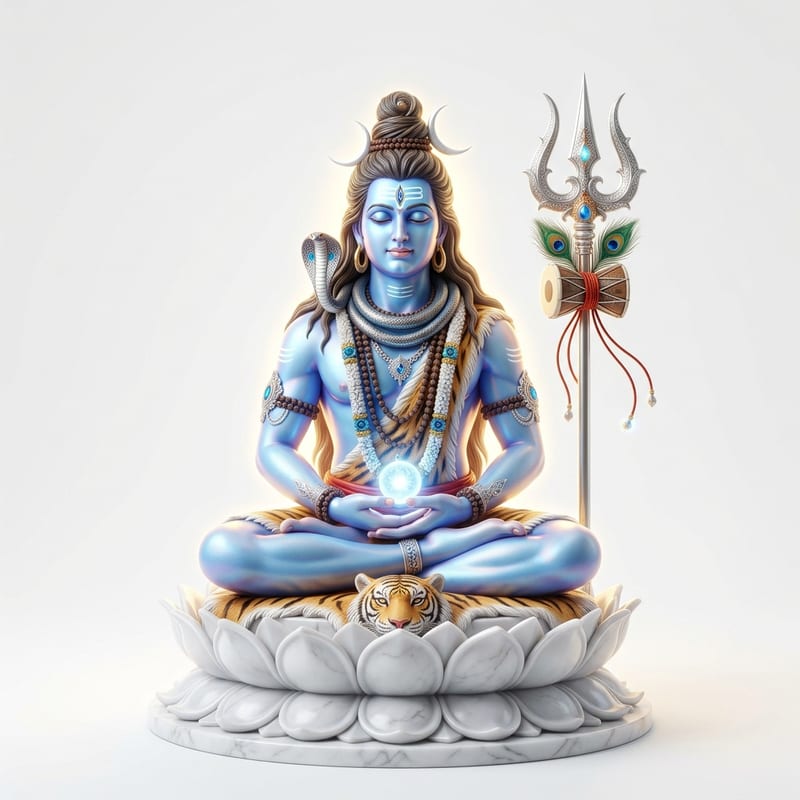
nānāratna vibhūṣitaṃ mṛgamadāmodāṅkitaṃ candanam |
jātī campaka bilvapatra racitaṃ puṣpaṃ ca dhūpaṃ tathā
dīpaṃ deva dayānidhe paśupate hṛtkalpitaṃ gṛhyatām || 1 ||
- ratnaiḥwith jewels
- kalpitammade ready
- āsanama seat
- himajalaiḥwith cold water
- snānama bath
- caand
- divyāmbaramdivine clothes
- nānāratnavibhūṣitamworked with gems of every kind
- mṛgamadāmodāṅkitamcarrying the scent of musk
- candanamsandal paste
- jātīcampakabilvapatraracitammade of jasmine, champak and bilva leaves
- puṣpamflowers
- caand
- dhūpamincense
- tathāand
- dīpama lamp
- devaO God
- dayānidheO sea of kindness
- paśupateO Pashupati
- hṛtkalpitamall of it made ready in the heart
- gṛhyatāmlet it be taken
anvaya deva dayānidhe paśupate ratnaiḥ kalpitam āsanam himajalaiḥ snānam nānāratnavibhūṣitam divyāmbaram ca mṛgamadāmodāṅkitam candanam jātīcampakabilvapatraracitam puṣpam dhūpam tathā ca dīpam hṛtkalpitam gṛhyatām
chandas Śārdūlavikrīḍita, 19 syllables in each of 4 pādas
hṛtkalpitam made ready in the heart — Kalpita is what has been put together or arranged. Every offering in this hymn is arranged in the mind, and this word is what holds the whole piece together.
mṛgamadāmodāṅkitam carrying the scent of musk — Mṛgamada is musk. Sandal paste for worship is often mixed with it.
bilvapatra bilva leaf — The leaf Shiva is worshipped with. Naming it here, among jasmine and champak, marks the worship as his.
paśupate O Pashupati — Lord of the paśus, the living beings who are held as if tethered. It is one of Shiva's oldest names.
note The verse walks through the first offerings of a temple puja in their usual order: a seat, water for bathing, clothes, sandal paste, flowers, incense, a lamp. Each one is built in the mind and then handed over.
bhakṣyaṃ pañcavidhaṃ payodadhiyutaṃ rambhāphalaṃ pānakam |
śākānāmayutaṃ jalaṃ rucikaraṃ karpūra khaṇḍojjvalaṃ
tāmbūlaṃ manasā mayā viracitaṃ bhaktyā prabho svīkuru || 2 ||
- sauvarṇein a golden
- navaratnakhaṇḍaraciteinlaid with pieces of the nine gems
- pātrebowl
- ghṛtamghee
- pāyasamsweet milk-rice
- bhakṣyamfood
- pañcavidhamof five kinds
- payodadhiyutammade with milk and curds
- rambhāphalama plantain
- pānakama sweet drink
- śākānāmof vegetable dishes
- ayutamany number
- jalamwater
- rucikaramcool and pleasing
- karpūrakhaṇḍojjvalambright with a piece of camphor
- tāmbūlambetel leaf
- manasāin the mind
- mayāby me
- viracitamput together
- bhaktyāwith love
- prabhoO Lord
- svīkuruaccept it
anvaya prabho sauvarṇe navaratnakhaṇḍaracite pātre ghṛtam pāyasam payodadhiyutam pañcavidham bhakṣyam rambhāphalam pānakam śākānām ayutam rucikaram jalam karpūrakhaṇḍojjvalam tāmbūlam mayā manasā bhaktyā viracitam svīkuru
chandas Śārdūlavikrīḍita, 19 syllables in each of 4 pādas
pāyasam rice cooked in milk — The sweet dish of rice boiled in milk with sugar, the usual offering at a temple meal.
tāmbūlam betel leaf with areca nut — Offered at the end of a meal, which is where it comes in the puja too.
ayutam ten thousand — Used here for a great number of vegetable dishes rather than a count.
note This is the naivedya, the meal. It runs from ghee and sweet rice through savoury dishes and cool water to the betel leaf a meal ends with. All of it, the verse says again, was put together in the mind.
vīṇā bheri mṛdaṅga kāhalakalā gītaṃ ca nṛtyaṃ tathā |
sāṣṭāṅgaṃ praṇatiḥ stuti-rbahuvidhā-hyetat-samastaṃ mayā
saṅkalpena samarpitaṃ tava vibho pūjāṃ gṛhāṇa prabho || 3 ||
- chatraman umbrella
- cāmarayoḥof two yak tails
- yugama pair
- vyajanakama fan
- caand
- ādarśakama mirror
- nirmalamspotless
- vīṇābherimṛdaṅgakāhalakalāḥthe arts of vina, kettledrum, mridanga and horn
- gītamsong
- caand
- nṛtyamdance
- tathāand
- sāṣṭāṅgamtouching the ground at eight points
- praṇatiḥa bow
- stutiḥpraise
- bahuvidhāof many kinds
- hiindeed
- etatthis
- samastamall of it
- mayāby me
- saṅkalpenaby the resolve alone
- samarpitamoffered
- tavato you
- vibhoO you who are everywhere
- pūjāmthe worship
- gṛhāṇatake
- prabhoO Lord
anvaya vibho prabho chatram cāmarayoḥ yugam vyajanakam nirmalam ādarśakam ca vīṇābherimṛdaṅgakāhalakalāḥ gītam nṛtyam ca tathā sāṣṭāṅgam praṇatiḥ bahuvidhā stutiḥ hi etat samastam mayā saṅkalpena tava samarpitam pūjām gṛhāṇa
chandas Śārdūlavikrīḍita, 19 syllables in each of 4 pādas
cāmarayoḥ yugam a pair of yak-tail whisks — Waved beside a deity or a king as a mark of honour.
sāṣṭāṅgam praṇatiḥ the bow that touches down at eight points — Feet, knees, hands, chest, head all meet the ground, with the words and the mind joined to it.
saṅkalpena by the resolve alone — Saṅkalpa is the intention a rite opens with. Here it is the whole rite, since nothing is set out by hand.
note The honours given to a deity after the meal: umbrella, whisks, fan, mirror, then music, dance, a full bow and praise. The verse ends by handing over everything at once as the puja itself.
pūjā te viṣayopabhoga-racanā nidrā samādhisthitiḥ |
sañcāraḥ padayoḥ pradakṣiṇavidhiḥ stotrāṇi sarvā giro
yadyatkarma karomi tattadakhilaṃ śambho tavārādhanam || 4 ||
- ātmāthe self
- tvamyou
- girijāGirija
- matiḥthe mind
- sahacarāḥcompanions
- prāṇāḥthe breaths
- śarīramthe body
- gṛhamthe house
- pūjāworship
- teof you
- viṣayopabhogaracanāthe use I make of the things I enjoy
- nidrāsleep
- samādhisthitiḥbeing settled in samadhi
- sañcāraḥwalking about
- padayoḥof the feet
- pradakṣiṇavidhiḥthe circling of the shrine
- stotrāṇihymns
- sarvāḥall
- giraḥwords
- yadyatwhatever
- karmawork
- karomiI do
- tattatall of that
- akhilamevery bit of it
- śambhoO Shambhu
- tavayour
- ārādhanamworship
anvaya śambho tvam ātmā girijā matiḥ prāṇāḥ sahacarāḥ śarīram gṛham viṣayopabhogaracanā te pūjā nidrā samādhisthitiḥ padayoḥ sañcāraḥ pradakṣiṇavidhiḥ sarvāḥ giraḥ stotrāṇi yadyat karma karomi tattat akhilam tava ārādhanam
chandas Śārdūlavikrīḍita, 19 syllables in each of 4 pādas
girijā Parvati — The mountain's daughter. She is matched here with mati, the thinking mind, as Shiva is matched with the self.
samādhisthitiḥ staying in samadhi — Sleep is read as the mind settled and still, which is what samadhi is.
pradakṣiṇavidhiḥ the circling of the shrine — Walking round a shrine with the right side turned towards it. Here every step taken anywhere counts as that.
note The turn of the whole hymn. Having offered a puja in the mind, the poet finds that the puja was already going on: the body is the shrine, sleep is meditation, walking is circumambulation, speech is praise, and whatever he does is worship.
śravaṇa nayanajaṃ vā mānasaṃ vāparādham |
vihitamavihitaṃ vā sarvametat-kṣamasva
jaya jaya karuṇābdhe śrī mahādeva śambho || 5 ||
- karacaraṇakṛtamdone by hands and feet
- vākkāyajamcoming of speech or body
- karmajamcoming of what I did
- vāor
- śravaṇanayanajamcoming in through ear or eye
- vāor
- mānasamstaying in the mind
- vāor
- aparādhamthe wrong
- vihitamwhat I did
- avihitamwhat I left undone
- vāor
- sarvamall
- etatof this
- kṣamasvaforgive
- jayavictory to you
- jayavictory
- karuṇābdheO sea of kindness
- śrīShri
- mahādevaMahadeva
- śambhoO Shambhu
anvaya śrī mahādeva śambho karuṇābdhe karacaraṇakṛtam vākkāyajam karmajam vā śravaṇanayanajam vā mānasam vā vihitam avihitam vā aparādham etat sarvam kṣamasva jaya jaya
chandas Mālinī, 15 syllables in each of 4 pādas
vihitam avihitam what was laid down and what was not — Vihita is what the rules ask for. The pair covers both a duty left undone and a thing done that should not have been.
karuṇābdhe O sea of kindness — Abdhi is the sea, what holds the waters. The address answers the plea for pardon in the same breath.
note The closing verse asks pardon for every wrong, counted by the part of the person it came through: hands and feet, speech, body, deeds, ears, eyes, mind. The metre changes to Mālinī here, so the verse is heard as a different movement from the four before it.