
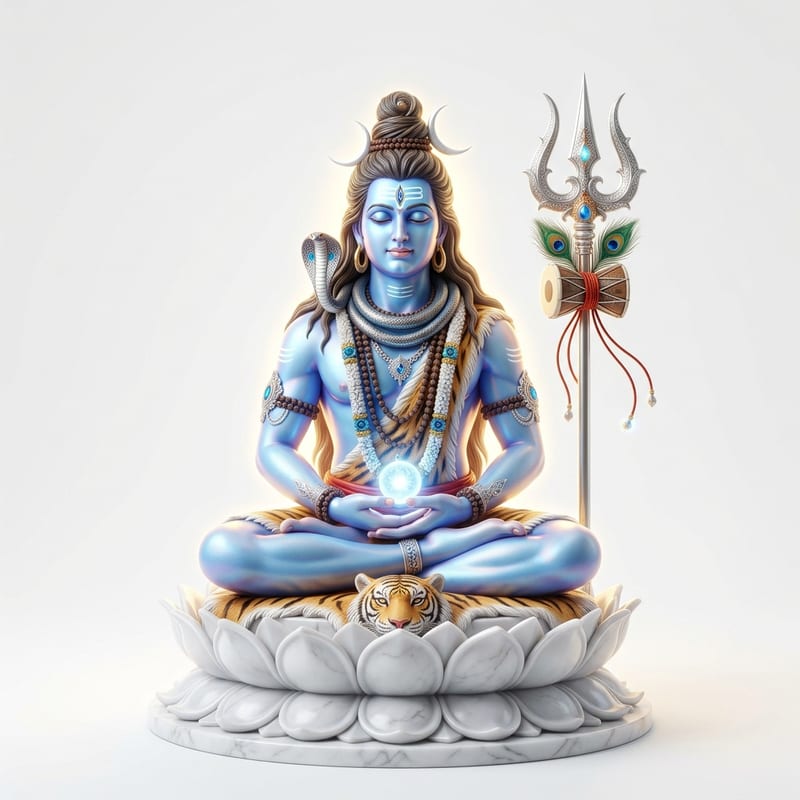
നാനാരത്ന വിഭൂഷിതം മൃഗമദാമോദാങ്കിതം ചന്ദനമ് ।
ജാതീ ചമ്പക ബില്വപത്ര രചിതം പുഷ്പം ച ധൂപം തഥാ
ദീപം ദേവ ദയാനിധേ പശുപതേ ഹൃത്കല്പിതം ഗൃഹ്യതാമ് ॥ 1 ॥
- രത്നൈഃ (ratnaiḥ)with jewels
- കല്പിതമ് (kalpitam)made ready
- ആസനമ് (āsanam)a seat
- ഹിമജലൈഃ (himajalaiḥ)with cold water
- സ്നാനമ് (snānam)a bath
- ച (ca)and
- ദിവ്യാമ്ബരമ് (divyāmbaram)divine clothes
- നാനാരത്നവിഭൂഷിതമ് (nānāratnavibhūṣitam)worked with gems of every kind
- മൃഗമദാമോദാങ്കിതമ് (mṛgamadāmodāṅkitam)carrying the scent of musk
- ചന്ദനമ് (candanam)sandal paste
- ജാതീചമ്പകബില്വപത്രരചിതമ് (jātīcampakabilvapatraracitam)made of jasmine, champak and bilva leaves
- പുഷ്പമ് (puṣpam)flowers
- ച (ca)and
- ധൂപമ് (dhūpam)incense
- തഥാ (tathā)and
- ദീപമ് (dīpam)a lamp
- ദേവ (deva)O God
- ദയാനിധേ (dayānidhe)O sea of kindness
- പശുപതേ (paśupate)O Pashupati
- ഹൃത്കല്പിതമ് (hṛtkalpitam)all of it made ready in the heart
- ഗൃഹ്യതാമ് (gṛhyatām)let it be taken
anvaya ദേവ ദയാനിധേ പശുപതേ രത്നൈഃ കല്പിതമ് ആസനമ് ഹിമജലൈഃ സ്നാനമ് നാനാരത്നവിഭൂഷിതമ് ദിവ്യാമ്ബരമ് ച മൃഗമദാമോദാങ്കിതമ് ചന്ദനമ് ജാതീചമ്പകബില്വപത്രരചിതമ് പുഷ്പമ് ധൂപമ് തഥാ ച ദീപമ് ഹൃത്കല്പിതമ് ഗൃഹ്യതാമ്
chandas Śārdūlavikrīḍita, 19 syllables in each of 4 pādas
ഹൃത്കല്പിതമ് made ready in the heart — Kalpita is what has been put together or arranged. Every offering in this hymn is arranged in the mind, and this word is what holds the whole piece together.
മൃഗമദാമോദാങ്കിതമ് carrying the scent of musk — Mṛgamada is musk. Sandal paste for worship is often mixed with it.
ബില്വപത്ര bilva leaf — The leaf Shiva is worshipped with. Naming it here, among jasmine and champak, marks the worship as his.
പശുപതേ O Pashupati — Lord of the paśus, the living beings who are held as if tethered. It is one of Shiva's oldest names.
note The verse walks through the first offerings of a temple puja in their usual order: a seat, water for bathing, clothes, sandal paste, flowers, incense, a lamp. Each one is built in the mind and then handed over.
ഭക്ഷ്യം പഞ്ചവിധം പയോദധിയുതം രമ്ഭാഫലം പാനകമ് ।
ശാകാനാമയുതം ജലം രുചികരം കര്പൂര ഖണ്ഡോജ്ജ്വലം
താമ്ബൂലം മനസാ മയാ വിരചിതം ഭക്ത്യാ പ്രഭോ സ്വീകുരു ॥ 2 ॥
- സൌവര്ണേ (sauvarṇe)in a golden
- നവരത്നഖണ്ഡരചിതേ (navaratnakhaṇḍaracite)inlaid with pieces of the nine gems
- പാത്രേ (pātre)bowl
- ഘൃതമ് (ghṛtam)ghee
- പായസമ് (pāyasam)sweet milk-rice
- ഭക്ഷ്യമ് (bhakṣyam)food
- പഞ്ചവിധമ് (pañcavidham)of five kinds
- പയോദധിയുതമ് (payodadhiyutam)made with milk and curds
- രമ്ഭാഫലമ് (rambhāphalam)a plantain
- പാനകമ് (pānakam)a sweet drink
- ശാകാനാമ് (śākānām)of vegetable dishes
- അയുതമ് (ayutam)any number
- ജലമ് (jalam)water
- രുചികരമ് (rucikaram)cool and pleasing
- കര്പൂരഖണ്ഡോജ്ജ്വലമ് (karpūrakhaṇḍojjvalam)bright with a piece of camphor
- താമ്ബൂലമ് (tāmbūlam)betel leaf
- മനസാ (manasā)in the mind
- മയാ (mayā)by me
- വിരചിതമ് (viracitam)put together
- ഭക്ത്യാ (bhaktyā)with love
- പ്രഭോ (prabho)O Lord
- സ്വീകുരു (svīkuru)accept it
anvaya പ്രഭോ സൌവര്ണേ നവരത്നഖണ്ഡരചിതേ പാത്രേ ഘൃതമ് പായസമ് പയോദധിയുതമ് പഞ്ചവിധമ് ഭക്ഷ്യമ് രമ്ഭാഫലമ് പാനകമ് ശാകാനാമ് അയുതമ് രുചികരമ് ജലമ് കര്പൂരഖണ്ഡോജ്ജ്വലമ് താമ്ബൂലമ് മയാ മനസാ ഭക്ത്യാ വിരചിതമ് സ്വീകുരു
chandas Śārdūlavikrīḍita, 19 syllables in each of 4 pādas
പായസമ് rice cooked in milk — The sweet dish of rice boiled in milk with sugar, the usual offering at a temple meal.
താമ്ബൂലമ് betel leaf with areca nut — Offered at the end of a meal, which is where it comes in the puja too.
അയുതമ് ten thousand — Used here for a great number of vegetable dishes rather than a count.
note This is the naivedya, the meal. It runs from ghee and sweet rice through savoury dishes and cool water to the betel leaf a meal ends with. All of it, the verse says again, was put together in the mind.
വീണാ ഭേരി മൃദങ്ഗ കാഹലകലാ ഗീതം ച നൃത്യം തഥാ ।
സാഷ്ടാങ്ഗം പ്രണതിഃ സ്തുതി-ര്ബഹുവിധാ-ഹ്യേതത്-സമസ്തം മയാ
സങ്കല്പേന സമര്പിതം തവ വിഭോ പൂജാം ഗൃഹാണ പ്രഭോ ॥ 3 ॥
- ഛത്രമ് (chatram)an umbrella
- ചാമരയോഃ (cāmarayoḥ)of two yak tails
- യുഗമ് (yugam)a pair
- വ്യജനകമ് (vyajanakam)a fan
- ച (ca)and
- ആദര്ശകമ് (ādarśakam)a mirror
- നിര്മലമ് (nirmalam)spotless
- വീണാഭേരിമൃദങ്ഗകാഹലകലാഃ (vīṇābherimṛdaṅgakāhalakalāḥ)the arts of vina, kettledrum, mridanga and horn
- ഗീതമ് (gītam)song
- ച (ca)and
- നൃത്യമ് (nṛtyam)dance
- തഥാ (tathā)and
- സാഷ്ടാങ്ഗമ് (sāṣṭāṅgam)touching the ground at eight points
- പ്രണതിഃ (praṇatiḥ)a bow
- സ്തുതിഃ (stutiḥ)praise
- ബഹുവിധാ (bahuvidhā)of many kinds
- ഹി (hi)indeed
- ഏതത് (etat)this
- സമസ്തമ് (samastam)all of it
- മയാ (mayā)by me
- സങ്കല്പേന (saṅkalpena)by the resolve alone
- സമര്പിതമ് (samarpitam)offered
- തവ (tava)to you
- വിഭോ (vibho)O you who are everywhere
- പൂജാമ് (pūjām)the worship
- ഗൃഹാണ (gṛhāṇa)take
- പ്രഭോ (prabho)O Lord
anvaya വിഭോ പ്രഭോ ഛത്രമ് ചാമരയോഃ യുഗമ് വ്യജനകമ് നിര്മലമ് ആദര്ശകമ് ച വീണാഭേരിമൃദങ്ഗകാഹലകലാഃ ഗീതമ് നൃത്യമ് ച തഥാ സാഷ്ടാങ്ഗമ് പ്രണതിഃ ബഹുവിധാ സ്തുതിഃ ഹി ഏതത് സമസ്തമ് മയാ സങ്കല്പേന തവ സമര്പിതമ് പൂജാമ് ഗൃഹാണ
chandas Śārdūlavikrīḍita, 19 syllables in each of 4 pādas
ചാമരയോഃ യുഗമ് a pair of yak-tail whisks — Waved beside a deity or a king as a mark of honour.
സാഷ്ടാങ്ഗമ് പ്രണതിഃ the bow that touches down at eight points — Feet, knees, hands, chest, head all meet the ground, with the words and the mind joined to it.
സങ്കല്പേന by the resolve alone — Saṅkalpa is the intention a rite opens with. Here it is the whole rite, since nothing is set out by hand.
note The honours given to a deity after the meal: umbrella, whisks, fan, mirror, then music, dance, a full bow and praise. The verse ends by handing over everything at once as the puja itself.
പൂജാ തേ വിഷയോപഭോഗ-രചനാ നിദ്രാ സമാധിസ്ഥിതിഃ ।
സഞ്ചാരഃ പദയോഃ പ്രദക്ഷിണവിധിഃ സ്തോത്രാണി സര്വാ ഗിരോ
യദ്യത്കര്മ കരോമി തത്തദഖിലം ശമ്ഭോ തവാരാധനമ് ॥ 4 ॥
- ആത്മാ (ātmā)the self
- ത്വമ് (tvam)you
- ഗിരിജാ (girijā)Girija
- മതിഃ (matiḥ)the mind
- സഹചരാഃ (sahacarāḥ)companions
- പ്രാണാഃ (prāṇāḥ)the breaths
- ശരീരമ് (śarīram)the body
- ഗൃഹമ് (gṛham)the house
- പൂജാ (pūjā)worship
- തേ (te)of you
- വിഷയോപഭോഗരചനാ (viṣayopabhogaracanā)the use I make of the things I enjoy
- നിദ്രാ (nidrā)sleep
- സമാധിസ്ഥിതിഃ (samādhisthitiḥ)being settled in samadhi
- സഞ്ചാരഃ (sañcāraḥ)walking about
- പദയോഃ (padayoḥ)of the feet
- പ്രദക്ഷിണവിധിഃ (pradakṣiṇavidhiḥ)the circling of the shrine
- സ്തോത്രാണി (stotrāṇi)hymns
- സര്വാഃ (sarvāḥ)all
- ഗിരഃ (giraḥ)words
- യദ്യത് (yadyat)whatever
- കര്മ (karma)work
- കരോമി (karomi)I do
- തത്തത് (tattat)all of that
- അഖിലമ് (akhilam)every bit of it
- ശമ്ഭോ (śambho)O Shambhu
- തവ (tava)your
- ആരാധനമ് (ārādhanam)worship
anvaya ശമ്ഭോ ത്വമ് ആത്മാ ഗിരിജാ മതിഃ പ്രാണാഃ സഹചരാഃ ശരീരമ് ഗൃഹമ് വിഷയോപഭോഗരചനാ തേ പൂജാ നിദ്രാ സമാധിസ്ഥിതിഃ പദയോഃ സഞ്ചാരഃ പ്രദക്ഷിണവിധിഃ സര്വാഃ ഗിരഃ സ്തോത്രാണി യദ്യത് കര്മ കരോമി തത്തത് അഖിലമ് തവ ആരാധനമ്
chandas Śārdūlavikrīḍita, 19 syllables in each of 4 pādas
ഗിരിജാ Parvati — The mountain's daughter. She is matched here with mati, the thinking mind, as Shiva is matched with the self.
സമാധിസ്ഥിതിഃ staying in samadhi — Sleep is read as the mind settled and still, which is what samadhi is.
പ്രദക്ഷിണവിധിഃ the circling of the shrine — Walking round a shrine with the right side turned towards it. Here every step taken anywhere counts as that.
note The turn of the whole hymn. Having offered a puja in the mind, the poet finds that the puja was already going on: the body is the shrine, sleep is meditation, walking is circumambulation, speech is praise, and whatever he does is worship.
ശ്രവണ നയനജം വാ മാനസം വാപരാധമ് ।
വിഹിതമവിഹിതം വാ സര്വമേതത്-ക്ഷമസ്വ
ജയ ജയ കരുണാബ്ധേ ശ്രീ മഹാദേവ ശമ്ഭോ ॥ 5 ॥
- കരചരണകൃതമ് (karacaraṇakṛtam)done by hands and feet
- വാക്കായജമ് (vākkāyajam)coming of speech or body
- കര്മജമ് (karmajam)coming of what I did
- വാ (vā)or
- ശ്രവണനയനജമ് (śravaṇanayanajam)coming in through ear or eye
- വാ (vā)or
- മാനസമ് (mānasam)staying in the mind
- വാ (vā)or
- അപരാധമ് (aparādham)the wrong
- വിഹിതമ് (vihitam)what I did
- അവിഹിതമ് (avihitam)what I left undone
- വാ (vā)or
- സര്വമ് (sarvam)all
- ഏതത് (etat)of this
- ക്ഷമസ്വ (kṣamasva)forgive
- ജയ (jaya)victory to you
- ജയ (jaya)victory
- കരുണാബ്ധേ (karuṇābdhe)O sea of kindness
- ശ്രീ (śrī)Shri
- മഹാദേവ (mahādeva)Mahadeva
- ശമ്ഭോ (śambho)O Shambhu
anvaya ശ്രീ മഹാദേവ ശമ്ഭോ കരുണാബ്ധേ കരചരണകൃതമ് വാക്കായജമ് കര്മജമ് വാ ശ്രവണനയനജമ് വാ മാനസമ് വാ വിഹിതമ് അവിഹിതമ് വാ അപരാധമ് ഏതത് സര്വമ് ക്ഷമസ്വ ജയ ജയ
chandas Mālinī, 15 syllables in each of 4 pādas
വിഹിതമ് അവിഹിതമ് what was laid down and what was not — Vihita is what the rules ask for. The pair covers both a duty left undone and a thing done that should not have been.
കരുണാബ്ധേ O sea of kindness — Abdhi is the sea, what holds the waters. The address answers the plea for pardon in the same breath.
note The closing verse asks pardon for every wrong, counted by the part of the person it came through: hands and feet, speech, body, deeds, ears, eyes, mind. The metre changes to Mālinī here, so the verse is heard as a different movement from the four before it.