
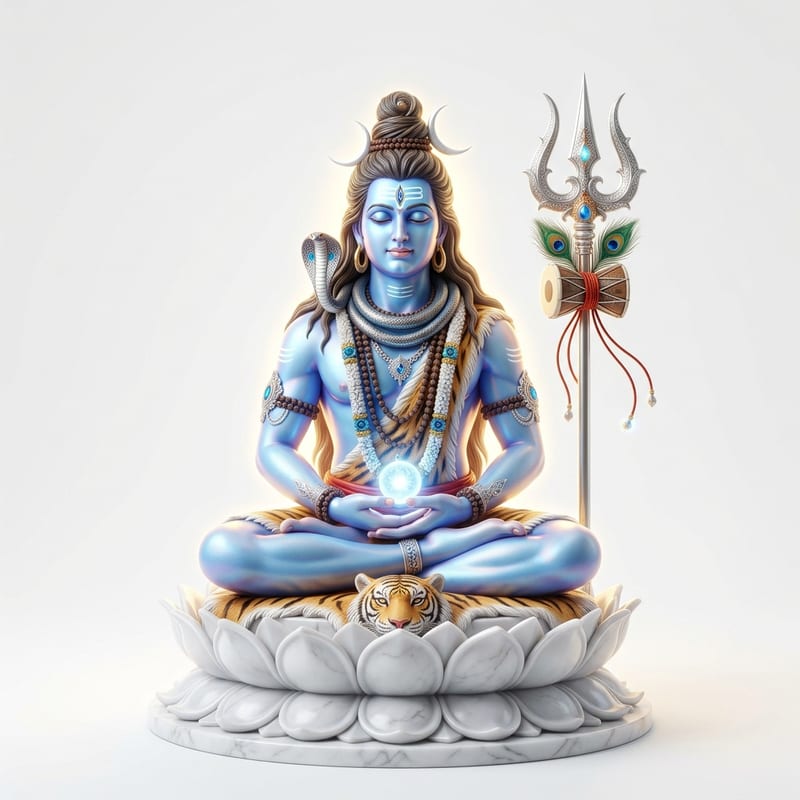
ନାନାରତ୍ନ ଵିଭୂଷିତଂ ମୃଗମଦାମୋଦାଙ୍କିତଂ ଚନ୍ଦନମ୍ ।
ଜାତୀ ଚମ୍ପକ ବିଲ୍ଵପତ୍ର ରଚିତଂ ପୁଷ୍ପଂ ଚ ଧୂପଂ ତଥା
ଦୀପଂ ଦେଵ ଦଯାନିଧେ ପଶୁପତେ ହୃତ୍କଲ୍ପିତଂ ଗୃହ୍ଯତାମ୍ ॥ 1 ॥
- ରତ୍ନୈଃ (ratnaiḥ)with jewels
- କଲ୍ପିତମ୍ (kalpitam)made ready
- ଆସନମ୍ (āsanam)a seat
- ହିମଜଲୈଃ (himajalaiḥ)with cold water
- ସ୍ନାନମ୍ (snānam)a bath
- ଚ (ca)and
- ଦିଵ୍ଯାମ୍ବରମ୍ (divyāmbaram)divine clothes
- ନାନାରତ୍ନଵିଭୂଷିତମ୍ (nānāratnavibhūṣitam)worked with gems of every kind
- ମୃଗମଦାମୋଦାଙ୍କିତମ୍ (mṛgamadāmodāṅkitam)carrying the scent of musk
- ଚନ୍ଦନମ୍ (candanam)sandal paste
- ଜାତୀଚମ୍ପକବିଲ୍ଵପତ୍ରରଚିତମ୍ (jātīcampakabilvapatraracitam)made of jasmine, champak and bilva leaves
- ପୁଷ୍ପମ୍ (puṣpam)flowers
- ଚ (ca)and
- ଧୂପମ୍ (dhūpam)incense
- ତଥା (tathā)and
- ଦୀପମ୍ (dīpam)a lamp
- ଦେଵ (deva)O God
- ଦଯାନିଧେ (dayānidhe)O sea of kindness
- ପଶୁପତେ (paśupate)O Pashupati
- ହୃତ୍କଲ୍ପିତମ୍ (hṛtkalpitam)all of it made ready in the heart
- ଗୃହ୍ଯତାମ୍ (gṛhyatām)let it be taken
anvaya ଦେଵ ଦଯାନିଧେ ପଶୁପତେ ରତ୍ନୈଃ କଲ୍ପିତମ୍ ଆସନମ୍ ହିମଜଲୈଃ ସ୍ନାନମ୍ ନାନାରତ୍ନଵିଭୂଷିତମ୍ ଦିଵ୍ଯାମ୍ବରମ୍ ଚ ମୃଗମଦାମୋଦାଙ୍କିତମ୍ ଚନ୍ଦନମ୍ ଜାତୀଚମ୍ପକବିଲ୍ଵପତ୍ରରଚିତମ୍ ପୁଷ୍ପମ୍ ଧୂପମ୍ ତଥା ଚ ଦୀପମ୍ ହୃତ୍କଲ୍ପିତମ୍ ଗୃହ୍ଯତାମ୍
chandas Śārdūlavikrīḍita, 19 syllables in each of 4 pādas
ହୃତ୍କଲ୍ପିତମ୍ made ready in the heart — Kalpita is what has been put together or arranged. Every offering in this hymn is arranged in the mind, and this word is what holds the whole piece together.
ମୃଗମଦାମୋଦାଙ୍କିତମ୍ carrying the scent of musk — Mṛgamada is musk. Sandal paste for worship is often mixed with it.
ବିଲ୍ଵପତ୍ର bilva leaf — The leaf Shiva is worshipped with. Naming it here, among jasmine and champak, marks the worship as his.
ପଶୁପତେ O Pashupati — Lord of the paśus, the living beings who are held as if tethered. It is one of Shiva's oldest names.
note The verse walks through the first offerings of a temple puja in their usual order: a seat, water for bathing, clothes, sandal paste, flowers, incense, a lamp. Each one is built in the mind and then handed over.
ଭକ୍ଷ୍ଯଂ ପଞ୍ଚଵିଧଂ ପଯୋଦଧିଯୁତଂ ରମ୍ଭାଫଲଂ ପାନକମ୍ ।
ଶାକାନାମଯୁତଂ ଜଲଂ ରୁଚିକରଂ କର୍ପୂର ଖଣ୍ଡୋଜ୍ଜ୍ଵଲଂ
ତାମ୍ବୂଲଂ ମନସା ମଯା ଵିରଚିତଂ ଭକ୍ତ୍ଯା ପ୍ରଭୋ ସ୍ଵୀକୁରୁ ॥ 2 ॥
- ସୌଵର୍ଣେ (sauvarṇe)in a golden
- ନଵରତ୍ନଖଣ୍ଡରଚିତେ (navaratnakhaṇḍaracite)inlaid with pieces of the nine gems
- ପାତ୍ରେ (pātre)bowl
- ଘୃତମ୍ (ghṛtam)ghee
- ପାଯସମ୍ (pāyasam)sweet milk-rice
- ଭକ୍ଷ୍ଯମ୍ (bhakṣyam)food
- ପଞ୍ଚଵିଧମ୍ (pañcavidham)of five kinds
- ପଯୋଦଧିଯୁତମ୍ (payodadhiyutam)made with milk and curds
- ରମ୍ଭାଫଲମ୍ (rambhāphalam)a plantain
- ପାନକମ୍ (pānakam)a sweet drink
- ଶାକାନାମ୍ (śākānām)of vegetable dishes
- ଅଯୁତମ୍ (ayutam)any number
- ଜଲମ୍ (jalam)water
- ରୁଚିକରମ୍ (rucikaram)cool and pleasing
- କର୍ପୂରଖଣ୍ଡୋଜ୍ଜ୍ଵଲମ୍ (karpūrakhaṇḍojjvalam)bright with a piece of camphor
- ତାମ୍ବୂଲମ୍ (tāmbūlam)betel leaf
- ମନସା (manasā)in the mind
- ମଯା (mayā)by me
- ଵିରଚିତମ୍ (viracitam)put together
- ଭକ୍ତ୍ଯା (bhaktyā)with love
- ପ୍ରଭୋ (prabho)O Lord
- ସ୍ଵୀକୁରୁ (svīkuru)accept it
anvaya ପ୍ରଭୋ ସୌଵର୍ଣେ ନଵରତ୍ନଖଣ୍ଡରଚିତେ ପାତ୍ରେ ଘୃତମ୍ ପାଯସମ୍ ପଯୋଦଧିଯୁତମ୍ ପଞ୍ଚଵିଧମ୍ ଭକ୍ଷ୍ଯମ୍ ରମ୍ଭାଫଲମ୍ ପାନକମ୍ ଶାକାନାମ୍ ଅଯୁତମ୍ ରୁଚିକରମ୍ ଜଲମ୍ କର୍ପୂରଖଣ୍ଡୋଜ୍ଜ୍ଵଲମ୍ ତାମ୍ବୂଲମ୍ ମଯା ମନସା ଭକ୍ତ୍ଯା ଵିରଚିତମ୍ ସ୍ଵୀକୁରୁ
chandas Śārdūlavikrīḍita, 19 syllables in each of 4 pādas
ପାଯସମ୍ rice cooked in milk — The sweet dish of rice boiled in milk with sugar, the usual offering at a temple meal.
ତାମ୍ବୂଲମ୍ betel leaf with areca nut — Offered at the end of a meal, which is where it comes in the puja too.
ଅଯୁତମ୍ ten thousand — Used here for a great number of vegetable dishes rather than a count.
note This is the naivedya, the meal. It runs from ghee and sweet rice through savoury dishes and cool water to the betel leaf a meal ends with. All of it, the verse says again, was put together in the mind.
ଵୀଣା ଭେରି ମୃଦଙ୍ଗ କାହଲକଲା ଗୀତଂ ଚ ନୃତ୍ଯଂ ତଥା ।
ସାଷ୍ଟାଙ୍ଗଂ ପ୍ରଣତିଃ ସ୍ତୁତି-ର୍ବହୁଵିଧା-ହ୍ଯେତତ୍-ସମସ୍ତଂ ମଯା
ସଙ୍କଲ୍ପେନ ସମର୍ପିତଂ ତଵ ଵିଭୋ ପୂଜାଂ ଗୃହାଣ ପ୍ରଭୋ ॥ 3 ॥
- ଛତ୍ରମ୍ (chatram)an umbrella
- ଚାମରଯୋଃ (cāmarayoḥ)of two yak tails
- ଯୁଗମ୍ (yugam)a pair
- ଵ୍ଯଜନକମ୍ (vyajanakam)a fan
- ଚ (ca)and
- ଆଦର୍ଶକମ୍ (ādarśakam)a mirror
- ନିର୍ମଲମ୍ (nirmalam)spotless
- ଵୀଣାଭେରିମୃଦଙ୍ଗକାହଲକଲାଃ (vīṇābherimṛdaṅgakāhalakalāḥ)the arts of vina, kettledrum, mridanga and horn
- ଗୀତମ୍ (gītam)song
- ଚ (ca)and
- ନୃତ୍ଯମ୍ (nṛtyam)dance
- ତଥା (tathā)and
- ସାଷ୍ଟାଙ୍ଗମ୍ (sāṣṭāṅgam)touching the ground at eight points
- ପ୍ରଣତିଃ (praṇatiḥ)a bow
- ସ୍ତୁତିଃ (stutiḥ)praise
- ବହୁଵିଧା (bahuvidhā)of many kinds
- ହି (hi)indeed
- ଏତତ୍ (etat)this
- ସମସ୍ତମ୍ (samastam)all of it
- ମଯା (mayā)by me
- ସଙ୍କଲ୍ପେନ (saṅkalpena)by the resolve alone
- ସମର୍ପିତମ୍ (samarpitam)offered
- ତଵ (tava)to you
- ଵିଭୋ (vibho)O you who are everywhere
- ପୂଜାମ୍ (pūjām)the worship
- ଗୃହାଣ (gṛhāṇa)take
- ପ୍ରଭୋ (prabho)O Lord
anvaya ଵିଭୋ ପ୍ରଭୋ ଛତ୍ରମ୍ ଚାମରଯୋଃ ଯୁଗମ୍ ଵ୍ଯଜନକମ୍ ନିର୍ମଲମ୍ ଆଦର୍ଶକମ୍ ଚ ଵୀଣାଭେରିମୃଦଙ୍ଗକାହଲକଲାଃ ଗୀତମ୍ ନୃତ୍ଯମ୍ ଚ ତଥା ସାଷ୍ଟାଙ୍ଗମ୍ ପ୍ରଣତିଃ ବହୁଵିଧା ସ୍ତୁତିଃ ହି ଏତତ୍ ସମସ୍ତମ୍ ମଯା ସଙ୍କଲ୍ପେନ ତଵ ସମର୍ପିତମ୍ ପୂଜାମ୍ ଗୃହାଣ
chandas Śārdūlavikrīḍita, 19 syllables in each of 4 pādas
ଚାମରଯୋଃ ଯୁଗମ୍ a pair of yak-tail whisks — Waved beside a deity or a king as a mark of honour.
ସାଷ୍ଟାଙ୍ଗମ୍ ପ୍ରଣତିଃ the bow that touches down at eight points — Feet, knees, hands, chest, head all meet the ground, with the words and the mind joined to it.
ସଙ୍କଲ୍ପେନ by the resolve alone — Saṅkalpa is the intention a rite opens with. Here it is the whole rite, since nothing is set out by hand.
note The honours given to a deity after the meal: umbrella, whisks, fan, mirror, then music, dance, a full bow and praise. The verse ends by handing over everything at once as the puja itself.
ପୂଜା ତେ ଵିଷଯୋପଭୋଗ-ରଚନା ନିଦ୍ରା ସମାଧିସ୍ଥିତିଃ ।
ସଞ୍ଚାରଃ ପଦଯୋଃ ପ୍ରଦକ୍ଷିଣଵିଧିଃ ସ୍ତୋତ୍ରାଣି ସର୍ଵା ଗିରୋ
ଯଦ୍ଯତ୍କର୍ମ କରୋମି ତତ୍ତଦଖିଲଂ ଶମ୍ଭୋ ତଵାରାଧନମ୍ ॥ 4 ॥
- ଆତ୍ମା (ātmā)the self
- ତ୍ଵମ୍ (tvam)you
- ଗିରିଜା (girijā)Girija
- ମତିଃ (matiḥ)the mind
- ସହଚରାଃ (sahacarāḥ)companions
- ପ୍ରାଣାଃ (prāṇāḥ)the breaths
- ଶରୀରମ୍ (śarīram)the body
- ଗୃହମ୍ (gṛham)the house
- ପୂଜା (pūjā)worship
- ତେ (te)of you
- ଵିଷଯୋପଭୋଗରଚନା (viṣayopabhogaracanā)the use I make of the things I enjoy
- ନିଦ୍ରା (nidrā)sleep
- ସମାଧିସ୍ଥିତିଃ (samādhisthitiḥ)being settled in samadhi
- ସଞ୍ଚାରଃ (sañcāraḥ)walking about
- ପଦଯୋଃ (padayoḥ)of the feet
- ପ୍ରଦକ୍ଷିଣଵିଧିଃ (pradakṣiṇavidhiḥ)the circling of the shrine
- ସ୍ତୋତ୍ରାଣି (stotrāṇi)hymns
- ସର୍ଵାଃ (sarvāḥ)all
- ଗିରଃ (giraḥ)words
- ଯଦ୍ଯତ୍ (yadyat)whatever
- କର୍ମ (karma)work
- କରୋମି (karomi)I do
- ତତ୍ତତ୍ (tattat)all of that
- ଅଖିଲମ୍ (akhilam)every bit of it
- ଶମ୍ଭୋ (śambho)O Shambhu
- ତଵ (tava)your
- ଆରାଧନମ୍ (ārādhanam)worship
anvaya ଶମ୍ଭୋ ତ୍ଵମ୍ ଆତ୍ମା ଗିରିଜା ମତିଃ ପ୍ରାଣାଃ ସହଚରାଃ ଶରୀରମ୍ ଗୃହମ୍ ଵିଷଯୋପଭୋଗରଚନା ତେ ପୂଜା ନିଦ୍ରା ସମାଧିସ୍ଥିତିଃ ପଦଯୋଃ ସଞ୍ଚାରଃ ପ୍ରଦକ୍ଷିଣଵିଧିଃ ସର୍ଵାଃ ଗିରଃ ସ୍ତୋତ୍ରାଣି ଯଦ୍ଯତ୍ କର୍ମ କରୋମି ତତ୍ତତ୍ ଅଖିଲମ୍ ତଵ ଆରାଧନମ୍
chandas Śārdūlavikrīḍita, 19 syllables in each of 4 pādas
ଗିରିଜା Parvati — The mountain's daughter. She is matched here with mati, the thinking mind, as Shiva is matched with the self.
ସମାଧିସ୍ଥିତିଃ staying in samadhi — Sleep is read as the mind settled and still, which is what samadhi is.
ପ୍ରଦକ୍ଷିଣଵିଧିଃ the circling of the shrine — Walking round a shrine with the right side turned towards it. Here every step taken anywhere counts as that.
note The turn of the whole hymn. Having offered a puja in the mind, the poet finds that the puja was already going on: the body is the shrine, sleep is meditation, walking is circumambulation, speech is praise, and whatever he does is worship.
ଶ୍ରଵଣ ନଯନଜଂ ଵା ମାନସଂ ଵାପରାଧମ୍ ।
ଵିହିତମଵିହିତଂ ଵା ସର୍ଵମେତତ୍-କ୍ଷମସ୍ଵ
ଜଯ ଜଯ କରୁଣାବ୍ଧେ ଶ୍ରୀ ମହାଦେଵ ଶମ୍ଭୋ ॥ 5 ॥
- କରଚରଣକୃତମ୍ (karacaraṇakṛtam)done by hands and feet
- ଵାକ୍କାଯଜମ୍ (vākkāyajam)coming of speech or body
- କର୍ମଜମ୍ (karmajam)coming of what I did
- ଵା (vā)or
- ଶ୍ରଵଣନଯନଜମ୍ (śravaṇanayanajam)coming in through ear or eye
- ଵା (vā)or
- ମାନସମ୍ (mānasam)staying in the mind
- ଵା (vā)or
- ଅପରାଧମ୍ (aparādham)the wrong
- ଵିହିତମ୍ (vihitam)what I did
- ଅଵିହିତମ୍ (avihitam)what I left undone
- ଵା (vā)or
- ସର୍ଵମ୍ (sarvam)all
- ଏତତ୍ (etat)of this
- କ୍ଷମସ୍ଵ (kṣamasva)forgive
- ଜଯ (jaya)victory to you
- ଜଯ (jaya)victory
- କରୁଣାବ୍ଧେ (karuṇābdhe)O sea of kindness
- ଶ୍ରୀ (śrī)Shri
- ମହାଦେଵ (mahādeva)Mahadeva
- ଶମ୍ଭୋ (śambho)O Shambhu
anvaya ଶ୍ରୀ ମହାଦେଵ ଶମ୍ଭୋ କରୁଣାବ୍ଧେ କରଚରଣକୃତମ୍ ଵାକ୍କାଯଜମ୍ କର୍ମଜମ୍ ଵା ଶ୍ରଵଣନଯନଜମ୍ ଵା ମାନସମ୍ ଵା ଵିହିତମ୍ ଅଵିହିତମ୍ ଵା ଅପରାଧମ୍ ଏତତ୍ ସର୍ଵମ୍ କ୍ଷମସ୍ଵ ଜଯ ଜଯ
chandas Mālinī, 15 syllables in each of 4 pādas
ଵିହିତମ୍ ଅଵିହିତମ୍ what was laid down and what was not — Vihita is what the rules ask for. The pair covers both a duty left undone and a thing done that should not have been.
କରୁଣାବ୍ଧେ O sea of kindness — Abdhi is the sea, what holds the waters. The address answers the plea for pardon in the same breath.
note The closing verse asks pardon for every wrong, counted by the part of the person it came through: hands and feet, speech, body, deeds, ears, eyes, mind. The metre changes to Mālinī here, so the verse is heard as a different movement from the four before it.