
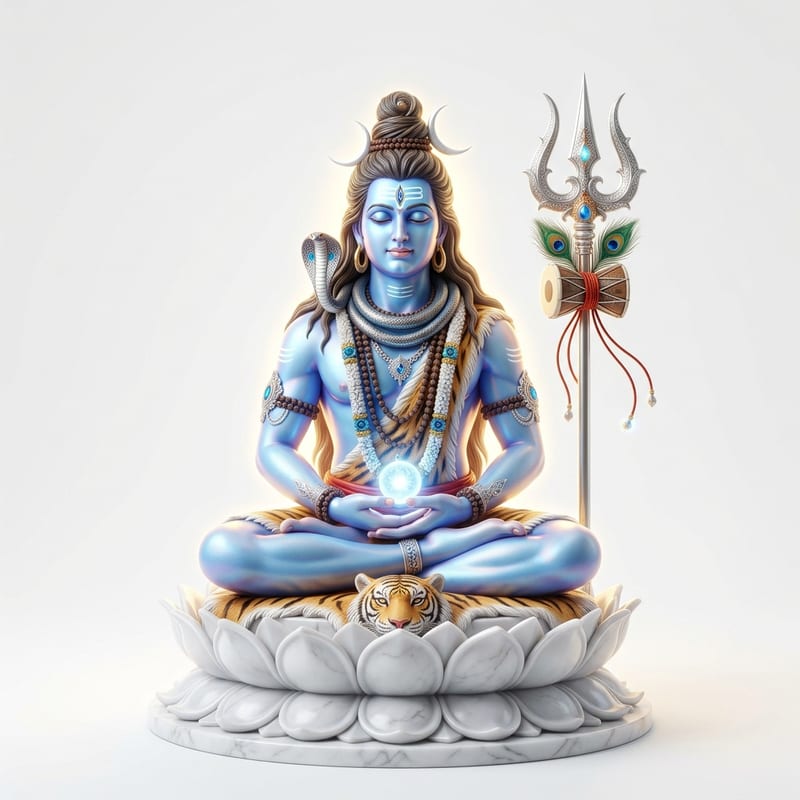
பவத்பவ்ய பூதேஶ்வரம் பூதநாதம், ஶிவம் ஶங்கரம் ஶம்பு மீஶாநமீடே ॥ 1 ॥
- ப்ரபும் (prabhum)the master
- ப்ராணநாதம் (prāṇanātham)lord of the life-breath
- விபும் (vibhum)present everywhere
- விஶ்வநாதம் (viśvanātham)lord of the world
- ஜகந்நாதநாதம் (jagannāthanātham)lord even of the world's lords
- ஸதாநந்தபாஜாம் (sadānandabhājām)of those who live in unbroken joy
- பவத்பவ்யபூதேஶ்வரம் (bhavadbhavyabhūteśvaram)ruler of what is, what will be and what has been
- பூதநாதம் (bhūtanātham)lord of the hosts
- ஶிவம் (śivam)Shiva
- ஶங்கரம் (śaṅkaram)Shankara
- ஶம்பும் (śambhum)Shambhu
- ஈஶாநம் (īśānam)Ishana
- ஈடே (īḍe)I praise
anvaya ப்ரபும் ப்ராணநாதம் விபும் விஶ்வநாதம் ஸதாநந்தபாஜாம் ஜகந்நாதநாதம் பவத்பவ்யபூதேஶ்வரம் பூதநாதம் ஶிவம் ஶங்கரம் ஶம்பும் ஈஶாநம் ஈடே
chandas Bhujaṅgaprayāta, 12 syllables in each of 4 pādas
ஈடே I praise — From the old root īḍ, to praise, the same root the Rig Veda opens with in agnim īḷe. It is the one verb in the verse and it carries all eight.
பவத்பவ்யபூத what is, what will be, what has been — Three time words in one compound: present, future, past.
பூதநாதம் lord of the hosts — The bhūtas are the attendants who go with Shiva. The word also means beings in general, and both senses are at work here.
note Every verse of the hymn ends on the same line, ஶிவம் ஶங்கரம் ஶம்புமீஶாநமீடே, four names of the one god and then the verb. The metre is Bhujaṅgaprayāta, whose name means the gliding of a snake, and the pace of the recitation comes from it.
ஜடாஜூட கங்கோத்தரங்கைர்விஶாலம், ஶிவம் ஶங்கரம் ஶம்பு மீஶாநமீடே ॥ 2॥
- கலே (gale)at his throat
- ருண்டமாலம் (ruṇḍamālam)wearing a garland of severed heads
- தநௌ (tanau)on his body
- ஸர்பஜாலம் (sarpajālam)a mesh of snakes
- மஹாகாலகாலம் (mahākālakālam)death to death itself
- கணேஶாதிபாலம் (gaṇeśādipālam)guardian of Ganesha and the rest
- ஜடாஜூடகங்கோத்தரங்கைஃ (jaṭājūṭagaṅgottaraṅgaiḥ)by the high waves of the Ganga in his coiled hair
- விஶாலம் (viśālam)made vast
- ஶிவம் (śivam)Shiva
- ஶங்கரம் (śaṅkaram)Shankara
- ஶம்பும் (śambhum)Shambhu
- ஈஶாநம் (īśānam)Ishana
- ஈடே (īḍe)I praise
anvaya கலே ருண்டமாலம் தநௌ ஸர்பஜாலம் மஹாகாலகாலம் கணேஶாதிபாலம் ஜடாஜூடகங்கோத்தரங்கைஃ விஶாலம் ஶிவம் ஶங்கரம் ஶம்பும் ஈஶாநம் ஈடே
chandas Bhujaṅgaprayāta, 12 syllables in each of 4 pādas
மஹாகாலகாலம் death to death itself — Kāla is time and also death. Mahākāla is death at its greatest, and Shiva is called the kāla of that.
ருண்டமாலம் wearing a garland of severed heads — Ruṇḍa is a headless body or a head cut from one. The ornament belongs to the same Shiva who lives at the burning ground.
கங்கோத்தரங்கைஃ with the Ganga's rising waves — The river came down from the sky and was caught in his hair, which is what keeps her fall from breaking the earth.
note The verse keeps the fierce side of Shiva and the protecting side in one breath: heads and snakes in the first line, the guarding of Ganesha and the gods in the second.
அநாதிம் ஹ்யபாரம் மஹா மோஹமாரம், ஶிவம் ஶங்கரம் ஶம்பு மீஶாநமீடே ॥ 3 ॥
- முதாம் (mudām)of gladness
- ஆகரம் (ākaram)the mine it is dug from
- மண்டநம் (maṇḍanam)the ornament itself
- மண்டயந்தம் (maṇḍayantam)who adorns
- மஹாமண்டலம் (mahāmaṇḍalam)this great round world
- பஸ்மபூஷாதரம் (bhasmabhūṣādharam)wearing ash for jewellery
- தம் (tam)him
- அநாதிம் (anādim)without beginning
- ஹி (hi)indeed
- அபாரம் (apāram)with no far shore
- மஹாமோஹமாரம் (mahāmohamāram)who kills the great confusion
- ஶிவம் (śivam)Shiva
- ஶங்கரம் (śaṅkaram)Shankara
- ஶம்பும் (śambhum)Shambhu
- ஈஶாநம் (īśānam)Ishana
- ஈடே (īḍe)I praise
anvaya முதாம் ஆகரம் மண்டநம் மஹாமண்டலம் மண்டயந்தம் பஸ்மபூஷாதரம் அநாதிம் ஹி அபாரம் மஹாமோஹமாரம் தம் ஶிவம் ஶங்கரம் ஶம்பும் ஈஶாநம் ஈடே
chandas Bhujaṅgaprayāta, 12 syllables in each of 4 pādas
பஸ்மபூஷாதரம் wearing ash for jewellery — The ash is from the burning ground, smeared on in place of ornaments. It is what is left when everything else has gone.
ஆகரம் a mine — The place a metal or a gem is taken out of. Gladness is dug out of him as ore is dug out of a hill.
மஹாமோஹமாரம் who kills the great confusion — Moha is the muddle in which a person takes one thing for another. Māra is the killing of it, from the same root as Kama's name Māra.
note The first line turns on one root: maṇḍana the ornament, maṇḍayantam adorning, mahāmaṇḍalam the great circle. Sanskrit poets prize that kind of play, and reading it aloud is where the effect is.
கிரீஶம் கணேஶம் ஸுரேஶம் மஹேஶம், ஶிவம் ஶங்கரம் ஶம்பு மீஶாநமீடே ॥ 4 ॥
- வடாதோநிவாஸம் (vaṭādhonivāsam)living at the foot of the banyan
- மஹாட்டாட்டஹாஸம் (mahāṭṭāṭṭahāsam)whose laughter rings out loud
- மஹாபாபநாஶம் (mahāpāpanāśam)who undoes the worst of wrongs
- ஸதா (sadā)always
- ஸுப்ரகாஶம் (suprakāśam)plain to see
- கிரீஶம் (girīśam)lord of the mountain
- கணேஶம் (gaṇeśam)lord of the hosts
- ஸுரேஶம் (sureśam)lord of the gods
- மஹேஶம் (maheśam)the great lord
- ஶிவம் (śivam)Shiva
- ஶங்கரம் (śaṅkaram)Shankara
- ஶம்பும் (śambhum)Shambhu
- ஈஶாநம் (īśānam)Ishana
- ஈடே (īḍe)I praise
anvaya வடாதோநிவாஸம் மஹாட்டாட்டஹாஸம் மஹாபாபநாஶம் ஸதா ஸுப்ரகாஶம் கிரீஶம் கணேஶம் ஸுரேஶம் மஹேஶம் ஶிவம் ஶங்கரம் ஶம்பும் ஈஶாநம் ஈடே
chandas Bhujaṅgaprayāta, 12 syllables in each of 4 pādas
வடாதோநிவாஸம் living at the foot of the banyan — Shiva as Dakshinamurti sits under a banyan and teaches four elderly sages without speaking.
அட்டாட்டஹாஸம் loud laughter — The word is made by doubling, and the sound of it is the laugh. His laughter is told of as shaking the worlds.
note The second line is four names built the same way, each ending in īśa, lord: of the mountain, of the hosts, of the gods, and then simply the great one.
பரப்ரஹ்ம ப்ரஹ்மாதிபிர்-வந்த்யமாநம், ஶிவம் ஶங்கரம் ஶம்பு மீஶாநமீடே ॥ 5 ॥
- கிரீந்த்ராத்மஜாஸங்க்ரு'ஹீதார்ததேஹம் (girīndrātmajāsaṅgṛhītārdhadeham)half of whose body the mountain king's daughter has taken
- கிரௌ (girau)on the hill
- ஸம்ஸ்திதம் (saṃsthitam)settled
- ஸர்வதா (sarvadā)always
- ஆபந்நகேஹம் (āpannageham)a house for those in trouble
- பரப்ரஹ்ம (parabrahma)the highest brahman
- ப்ரஹ்மாதிபிஃ (brahmādibhiḥ)by Brahma and the rest
- வந்த்யமாநம் (vandyamānam)being bowed to
- ஶிவம் (śivam)Shiva
- ஶங்கரம் (śaṅkaram)Shankara
- ஶம்பும் (śambhum)Shambhu
- ஈஶாநம் (īśānam)Ishana
- ஈடே (īḍe)I praise
anvaya கிரீந்த்ராத்மஜாஸங்க்ரு'ஹீதார்ததேஹம் கிரௌ ஸம்ஸ்திதம் ஸர்வதா ஆபந்நகேஹம் ப்ரஹ்மாதிபிஃ வந்த்யமாநம் பரப்ரஹ்ம ஶிவம் ஶங்கரம் ஶம்பும் ஈஶாநம் ஈடே
chandas Bhujaṅgaprayāta, 12 syllables in each of 4 pādas
கிரீந்த்ராத்மஜா the mountain king's daughter — Parvati, daughter of Himavat. Her name itself means of the mountain.
ஆபந்நகேஹம் a house for those in trouble — Āpanna is someone who has fallen into difficulty. The word for what he is to them is simply house.
note In the printed reading the third pāda sits a little loose against the metre. It is left as it stands.
பலீவர்தயாநம் ஸுராணாம் ப்ரதாநம், ஶிவம் ஶங்கரம் ஶம்பு மீஶாநமீடே ॥ 6 ॥
- கபாலம் (kapālam)a skull bowl
- த்ரிஶூலம் (triśūlam)a trident
- கராப்யாம் (karābhyām)in his two hands
- ததாநம் (dadhānam)holding
- பதாம்போஜநம்ராய (padāmbhojanamrāya)to the one who bows at his lotus feet
- காமம் (kāmam)what was asked for
- ததாநம் (dadānam)giving
- பலீவர்தயாநம் (balīvardhayānam)carried by the bull
- ஸுராணாம் (surāṇām)among the gods
- ப்ரதாநம் (pradhānam)the first
- ஶிவம் (śivam)Shiva
- ஶங்கரம் (śaṅkaram)Shankara
- ஶம்பும் (śambhum)Shambhu
- ஈஶாநம் (īśānam)Ishana
- ஈடே (īḍe)I praise
anvaya கராப்யாம் கபாலம் த்ரிஶூலம் ததாநம் பதாம்போஜநம்ராய காமம் ததாநம் பலீவர்தயாநம் ஸுராணாம் ப்ரதாநம் ஶிவம் ஶங்கரம் ஶம்பும் ஈஶாநம் ஈடே
chandas Bhujaṅgaprayāta, 12 syllables in each of 4 pādas
கபாலம் a skull bowl — The begging bowl of a skull, one of the marks of Shiva as the ascetic who owns nothing.
பலீவர்தயாநம் whose mount is the bull — Balīvarda is a bull. The bull is Nandi, who carries him and waits at the door of every Shiva shrine.
note Two hands, two things held, and between them the whole of him: the skull of the ascetic and the trident of the one who rules.
அபர்ணா கலத்ரம் ஸதா ஸச்சரித்ரம், ஶிவம் ஶங்கரம் ஶம்பு மீஶாநமீடே ॥ 7 ॥
- ஶரச்சந்த்ரகாத்ரம் (śaraccandragātram)whose body is the autumn moon
- கணாநந்தபாத்ரம் (gaṇānandapātram)the cup his hosts' gladness is poured into
- த்ரிநேத்ரம் (trinetram)three-eyed
- பவித்ரம் (pavitram)clean, and cleaning whoever comes near
- தநேஶஸ்ய (dhaneśasya)of the lord of wealth
- மித்ரம் (mitram)the friend
- அபர்ணாகலத்ரம் (aparṇākalatram)whose wife is Aparna
- ஸதா (sadā)always
- ஸச்சரித்ரம் (saccaritram)of good conduct
- ஶிவம் (śivam)Shiva
- ஶங்கரம் (śaṅkaram)Shankara
- ஶம்பும் (śambhum)Shambhu
- ஈஶாநம் (īśānam)Ishana
- ஈடே (īḍe)I praise
anvaya ஶரச்சந்த்ரகாத்ரம் கணாநந்தபாத்ரம் த்ரிநேத்ரம் பவித்ரம் தநேஶஸ்ய மித்ரம் அபர்ணாகலத்ரம் ஸதா ஸச்சரித்ரம் ஶிவம் ஶங்கரம் ஶம்பும் ஈஶாநம் ஈடே
chandas Bhujaṅgaprayāta, 12 syllables in each of 4 pādas
அபர்ணா Aparna, Parvati — Parṇa is a leaf, and a-parṇā is without one. The name comes from her long fast for Shiva, in which she gave up even leaves.
தநேஶஸ்ய மித்ரம் friend of the lord of wealth — Dhaneśa is Kubera, who keeps the wealth of the world. The god who owns nothing is his friend.
ஶரச்சந்த்ர the autumn moon — After the rains the air is clear, so the autumn moon is the brightest of the year.
note Every pāda of this verse closes on the sound -tram, and the rhyme runs through all four.
ஶ்மஶாநே வஸந்தம் மநோஜம் தஹந்தம், ஶிவம் ஶங்கரம் ஶம்பு மீஶாநமீடே ॥ 8 ॥
- ஹரம் (haram)who takes everything away
- ஸர்பஹாரம் (sarpahāram)wearing a snake for a necklace
- சிதாபூவிஹாரம் (citābhūvihāram)who walks where the pyres burn
- பவம் (bhavam)Bhava, being itself
- வேதஸாரம் (vedasāram)the pith of the Veda
- ஸதா (sadā)always
- நிர்விகாரம் (nirvikāram)unchanging
- ஶ்மஶாநே (śmaśāne)at the cremation ground
- வஸந்தம் (vasantam)living
- மநோஜம் (manojam)desire, born in the mind
- தஹந்தம் (dahantam)burning
- ஶிவம் (śivam)Shiva
- ஶங்கரம் (śaṅkaram)Shankara
- ஶம்பும் (śambhum)Shambhu
- ஈஶாநம் (īśānam)Ishana
- ஈடே (īḍe)I praise
anvaya ஹரம் ஸர்பஹாரம் சிதாபூவிஹாரம் பவம் வேதஸாரம் ஸதா நிர்விகாரம் ஶ்மஶாநே வஸந்தம் மநோஜம் தஹந்தம் ஶிவம் ஶங்கரம் ஶம்பும் ஈஶாநம் ஈடே
chandas Bhujaṅgaprayāta, 12 syllables in each of 4 pādas
மநோஜம் தஹந்தம் burning desire to ash — Manoja, born of the mind, is Kama. When he aimed at Shiva in meditation the third eye opened and burnt him where he stood.
ஹரம் who takes everything away — Hara is one of his commonest names. What he takes is read both as a person's wrongs and as everything that has an end.
நிர்விகாரம் unchanging — Vikāra is any change or alteration. The word puts the one who does all this outside change.
note The eighth and last verse of the set proper, and the one that stays longest at the burning ground. The verse after this one is the phalashruti and stands outside the eight.
ஸுபுத்ரம் ஸுதாந்யம் ஸுமித்ரம் கலத்ரம் விசித்ரைஸ்ஸமாராத்ய மோக்ஷம் ப்ரயாதி ॥
- ஸ்வயம் (svayam)himself
- யஃ (yaḥ)whoever
- ப்ரபாதே (prabhāte)at daybreak
- நரஃ (naraḥ)a person
- ஶூலபாணே (śūlapāṇe)O you who hold the spear
- படேத் (paṭhet)should recite
- ஸ்தோத்ரரத்நம் (stotraratnam)this jewel of a hymn
- து (tu)indeed
- இஹ (iha)here, in this life
- ப்ராப்யரத்நம் (prāpyaratnam)the jewel worth getting
- ஸுபுத்ரம் (suputram)a good son
- ஸுதாந்யம் (sudhānyam)good grain
- ஸுமித்ரம் (sumitram)good friends
- கலத்ரம் (kalatram)a wife
- விசித்ரைஃ (vicitraiḥ)with all these
- ஸமாராத்ய (samārādhya)having worshipped well
- மோக்ஷம் (mokṣam)release
- ப்ரயாதி (prayāti)goes on to
anvaya ஶூலபாணே யஃ நரஃ ப்ரபாதே ஸ்வயம் இஹ ப்ராப்யரத்நம் ஸ்தோத்ரரத்நம் து படேத் ஸுபுத்ரம் ஸுதாந்யம் ஸுமித்ரம் கலத்ரம் விசித்ரைஃ ஸமாராத்ய மோக்ஷம் ப்ரயாதி
chandas Bhujaṅgaprayāta, 12 syllables in each of 4 pādas
ஸ்தோத்ரரத்நம் jewel of a hymn — A hymn called a gem among hymns. The verse then plays on it: the jewel recited brings the jewel worth having.
ஶூலபாணே O you who hold the spear — The one address in the hymn spoken straight to Shiva. Everywhere else he is spoken of.
note The closing verse, which says what comes of reciting: household good first, and release after it. Printed நரஶ்ஶூல பாணே, which is நரஃ and ஶூலபாணே run together in the sandhi.